Meaning
A non-invasive measurement technique evaluates flow characteristics by emitting acoustic pulses into a fluid and recording backscattered echoes from particles or bubbles. Ultrasonic velocity profiling generates high-resolution maps of movement patterns by tracking these signals across multiple spatial locations. The system determines the time delay between transmission and reception to calculate speed along the acoustic axis.
It functions effectively in opaque media where light-based methods fail to provide accurate spatial data.
Acoustic Calibration
Operators determine signal integrity by measuring the transmission medium properties such as temperature and pressure. These variables influence sound propagation and require adjustments to the processing software for accurate depth mapping. Periodic verification of transducer alignment ensures that the beams intersect the flow path at predefined angles.
Successful integration relies on proper coupling between the sensor and the pipe wall to prevent signal attenuation or spurious reflections.
System Integration
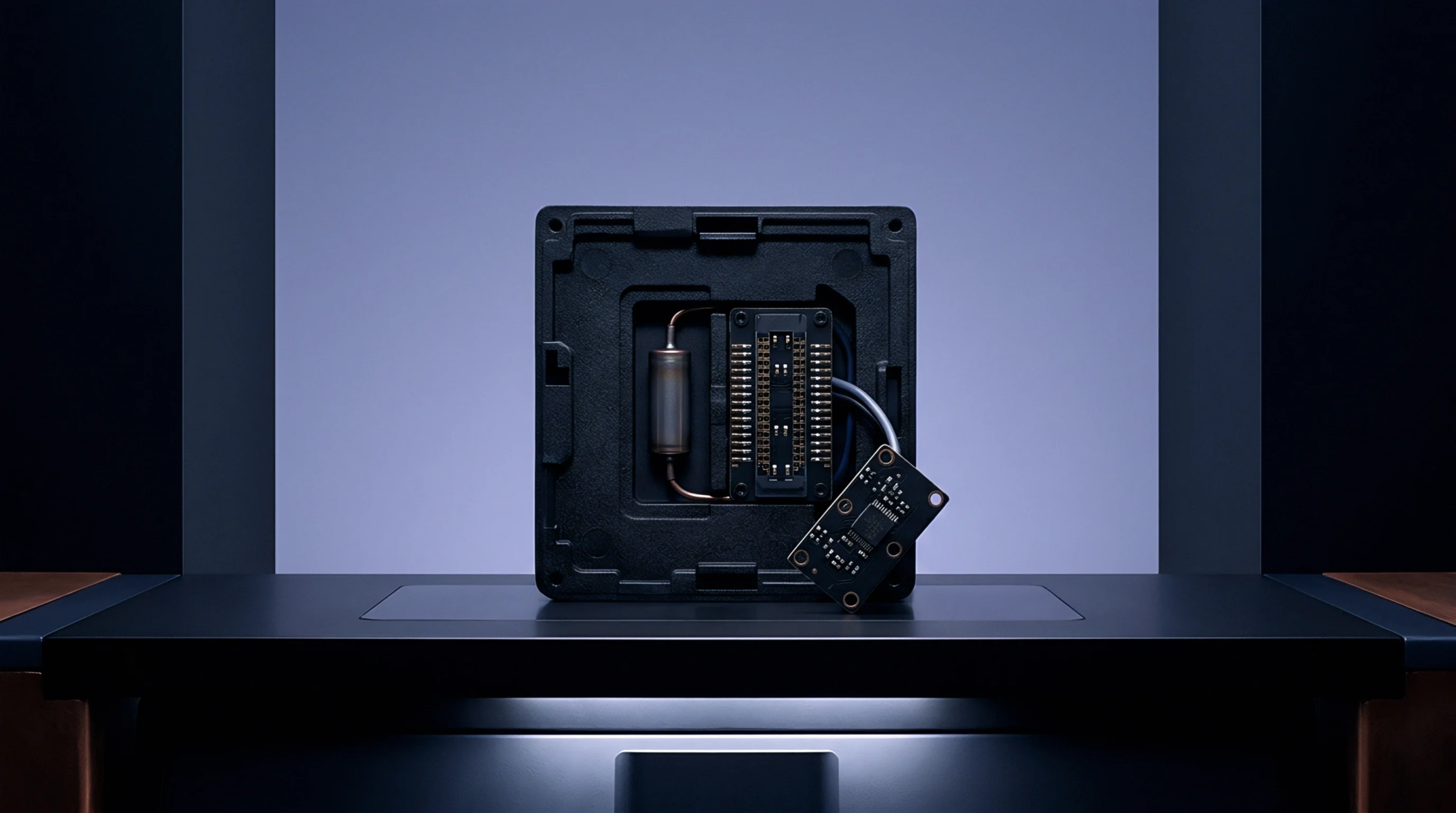
Mechanical housing requirements include precision mounting brackets to maintain consistent orientation during operation. Electronic controllers process raw wave data to output velocity fields for real-time visualization of laminar or turbulent regimes. Integration engineers prioritize the reduction of electrical noise interference from adjacent hardware to preserve the signal-to-noise ratio.
Proper configuration of the pulse repetition frequency avoids aliasing artifacts during high-speed fluid motion.
Performance Limitation
Spatial resolution depends on the length of the acoustic pulse and the sampling frequency of the detector. Depth range decreases as the frequency of the transducer increases because higher-frequency waves attenuate faster within the target medium. Turbulent eddies smaller than the measurement volume remain undetected by the hardware configuration.
Signal quality suffers when the concentration of scattering particles is insufficient to provide a return echo at the furthest range of the device.