Customs Ruling Appeals for Software Defined Radio Subassemblies with Dynamic Frequencies
Successful customs appeals for SDR subassemblies rely on physical condition at import, proving firmware absence and inert RF transmission without host code.

Intercept
Signal Paths and Border Seizure Realities
Twelve units from a pilot batch sit on an inspection table under static dissipation mats at a port of entry, their open-frame printed circuit boards exposed to an examining officer. Customs authorities halt shipments of dynamic-frequency software defined radio boards whenever they suspect tariff misclassification or missing transmission authorizations. The hardware pairs an RF agile transceiver operating across 70 MHz to 6 GHz with a field-programmable gate array.
Port agents run the board against the manifest, weighing line 8517.62 for telecommunication apparatus against heading 8526 for radar or heading 8543 for electrical apparatus with individual functions. When an SDR subassembly includes dynamic frequency selection and algorithmic band hopping, cargo inspectors rarely clear it on sight.
The classification dispute turns on whether programmable radio subassemblies count as finished transmission apparatus, baseband processing units, or general-purpose integrated circuits. Importers declare standard ad valorem rates under heading 8517, but a reclassification to 8525.50 or dual-use basket categories triggers immediate administrative holds, higher bond demands, and redelivery notices. Port officers then demand technical filings verifying operational limits, spectral occupancy parameters, and baseband firmware locks set at the factory.
A twenty-day response window under a standard port detention notice leaves no margin for fresh RF emissions sweeps.
Importers facing tariff reassessments under 19 U.S.C. 1499 or European Union Union Customs Code Article 116 run into rigid administrative deadlines. Port officers can seize uncertified intentional radiators if the entry packet lacks documented regulatory grant coverage. The dynamic frequency architecture complicates the defense: if an FPGA can retune its digital down-converter and local oscillator synthesizers outside industrial, scientific, and medical bands, customs compliance units treat the cargo as unlicensed military or telecommunications gear.
The importer of record bears the entire evidentiary burden in any subsequent petition.
Customs brokers frequently rely on boilerplate descriptions, which flag automated fraud filters and draw secondary audits. Resolving the dispute requires disclosing actual functional logic, modular test certificates, and hardware state diagrams showing that the subassembly stays electrically inert until connected to an application-specific external host.
Transceiver

Does Unloaded Baseband Code Alter Hardware Classification?
Dynamic frequency radio subassemblies sit awkwardly within standard customs schedules. The physical board carries wideband quadrature mixers, low-noise amplifiers, analog-to-digital converters, and an FPGA running dynamic frequency selection routines, yet it arrives at the border with nothing more than bootloader code in non-volatile flash. Customs laboratories test these boards on the theory that dormant transmission capabilities dictate the tariff heading, citing General Rules of Interpretation 2(a) for incomplete or unfinished articles possessing the essential character of the finished good.
An administrative appeal has to separate raw physical circuitry from host-dependent software execution. The bare assembly lacks an antenna, an enclosure, power conditioning, and a final amplification stage. Without licensed software loaded into host memory, the board functions only as a high-speed signal processing interface.
| Tariff Heading | Statutory Description | Duty Range | Primary Customs Contention Trigger |
|---|---|---|---|
| 8517.62.00 | Machines for the reception, conversion, and transmission of voice, images, or data | 0.0% | Direct connection to baseband data infrastructure |
| 8525.50.30 | Transmission apparatus for radio-broadcasting or television | 0.0% – 3.0% | Tunable transmission bandwidth extending into licensed spectrum |
| 8526.91.00 | Radio navigational aid apparatus | 0.0% – 1.4% | Frequency agility overlapping automated radar detection channels |
| 8542.31.00 | Electronic integrated circuits: Processors and controllers | 0.0% | Subassembly identified as mere carrier for hybrid microcircuits |
| 8543.70.99 | Electrical machines and apparatus having individual functions | 2.6% | Configurable RF output without dedicated single-purpose protocol |
Disputes between 8517.62 and 8543.70.99 drive substantial customs litigation. The Federal Circuit and national tax tribunals apply functional independence tests to determine tariff assignments: an SDR board that cannot execute operational code on its own has no individual function under heading 8543. When the host system dictates operational instructions, system timing, and user control, the hardware belongs under 8517.70 as a telecommunications unit or under 8471.80 as a computing peripheral.
The dynamic frequency selection block in the radio baseband exists to allow co-existence with primary radar installations under standard regulatory test regimes. Port laboratories often view these algorithmic frequency hops as markers of electronic surveillance or countermeasure systems. Technical briefs filed with rulings branches must explain the exact mechanics behind the scan routine.
- Radar Detection Threshold Circuits evaluate raw analog-to-digital samples for uniform pulse repetition intervals exceeding minus sixty-four decibels referenced to one milliwatt.
- Channel Availability Check Clocks enforce a mandatory sixty-second quiet listening phase prior to initiating any modulated burst transmission on dynamic frequencies.
- Uniform Spreading State Machines distribute pseudo-random channel occupancy across available spectrum slices to prevent sustained local interference.
- In-Service Monitoring Interrupts immediately cut RF output stage bias within two hundred milliseconds of intermittent pulse detection.
Explaining dynamic frequency routines as defensive compliance mechanisms counters the assumption that frequency agility implies evasive design. Channel hopping enforces spectrum exclusions by listening first. Detailing that architecture in the petition shows customs officers that frequency selection is a passive compliance control.
Broad claims about universal hardware flexibility reliably backfire. Emphasizing open-ended tuning ranges invites customs counsel to assign catch-all classifications with punitive duty rates. The filing must keep the board tethered to its factory filter topology and regional compliance lockouts.

Proofs

Laboratory Evidence and Declaratory Evidentiary Filings
Reversing an adverse customs determination requires chamber data and clean firmware traces rather than written assurances. Rulings branches judge petitions on reproducible lab records, which means the administrative dossier must document board behavior when unpowered, when configured, and at operational boundaries.
Harmonized system classification hinges on physical capability at importation rather than unexercised operational potentials.
Engineering exhibits rely on calibrated spectrum analyzers, signal generators, and vector network analyzers; customs examiners dismiss software simulations. An accredited lab report must measure conducted RF power across all claimed operating bands and verify zero carrier leakage when local oscillators sit unseeded. The dossier shows that without proprietary microcode loaded by the domestic end-user, high-speed serializer-deserializer links remain unconfigured and RF mixer outputs stay shut down.
- Establish Baseline Power Deprivation Data by connecting the unconfigured subassembly to a laboratory bench supply and measuring total quiescent current draw at nominal voltage rails.
- Record Spectrum Emissions Profiles from 9 kHz to 40 GHz with high-impedance probes while the device sits in factory bootloader states without host register allocation.
- Extract Non-Volatile Memory Partitions via automated JTAG scan boundary chains, saving cryptographically signed SHA-256 hashes of all installed factory microcode.
- Simulate Clock Synthesizer Behavior under open-loop control to prove phase-locked loops cannot lock onto transmission frequencies without active I2C register configuration strings from the baseband processor.
- Assemble Host Integration Schematics displaying the deliberate absence of on-board power amplifiers, final stage filters, and physical transmission line matching networks.
Dynamic frequency features require specific compliance filings under ETSI EN 301 893 for European entries or FCC Part 15 Subpart E for United States ports. When inspectors confuse civilian boards with dual-use hardware under Export Administration Regulations ECCN 5A001 or 5A002, the technical submission must provide radiated spurious emissions plots taken in an accredited semi-anechoic chamber. Proof that emissions stay below minus forty-one point three decibels referenced to one milliwatt per megahertz across restricted bands confirms civilian operating status.
Customs officers also inspect dynamic switching speeds to test for Commerce Control List overlap. If an SDR retunes across wide spectrum swaths in under one millisecond per hop, export enforcement freezes liquidation. The appeal counters this by documenting actual register switching latency inside the synthesizer phase-locked loop: a measured lock time of twelve milliseconds disproves tactical agility claims, insulating the entry from dual-use holds.
Standard commercial packaging does not shield bare subassemblies from physical classification reviews at the port.


Tribunal

How Do Administrative Appellate Bodies Evaluate Dynamic Radios?
Protesting an entry under 19 U.S.C. 1514 or appealing to the European Court of Justice requires arguments tied strictly to tariff precedent. Importers turn to headquarters rulings divisions to overturn port-level actions. When local import specialists shift an SDR board from a duty-free line into an unlisted basket heading with heavy duties, the brief must establish the part’s accepted commercial identity.
The Court of International Trade relies on common commercial meaning when statutory tariff terms do not define technical goods. Testimony from RF hardware engineers and component buyers establishes how the electronics trade categorizes dynamic frequency subassemblies. Judges inspect physical samples directly to determine whether an unpopulated board with an FPGA and an RF front-end qualifies as an unfinished transmitter under General Rule of Interpretation 2(a).
| Legal Precedent Principle | Judicial Forum Reference | Core Technical Determination | Classification Outcome |
|---|---|---|---|
| Essential Character Test | Court of International Trade | Silicon controller dominates monetary value and physical identity | Heading 8542 integrated circuits |
| Individual Function Doctrine | Customs Rulings Headquarters | Subassembly requires external host data to initiate any signal output | Rejection of Heading 8543 basket |
| Principal Use Evaluation | European Court of Justice | Radio subassembly designed solely for telecommunication host units | Heading 8517 telecommunication parts |
| Condition as Imported | Federal Circuit Precedents | Post-importation software compilation excluded from classification review | Unprogrammed state controls tariff |
Customs agencies frequently invoke the condition-as-imported rule to argue that raw hardware holds dormant transmission features. Importers can turn that same precedent back on the agency: goods must be assessed strictly by their physical capabilities at the border crossing. If an SDR subassembly cannot generate RF power or lock onto channels until an end user flashes custom code long after release, it is not an operable radio transmitter at importation.
Classifying an electronic component based on hypothetical software states violates established condition-as-imported legal doctrines.
Advance ruling requests filed under 19 CFR Part 177 secure binding decisions before shipments reach the pier. If an issue instead reaches formal protest after liquidation, the petition relies on a narrower claim: the board is an assembled circuit serving as a telecommunications interface subcomponent. A favorable ruling sets binding administrative precedent that protects subsequent entries from local port holds.
Missing the statutory protest deadline after an initial liquidation makes the higher assessment permanent and leaves past shipments open to retroactive duty adjustments during later audits.

Remedies
Operational Checkpoints for Importation Resiliency
Avoiding customs holds and prevailing on appeal requires aligning procurement practices with actual laboratory data. Leaving customs declarations entirely to freight forwarders is an unnecessary risk. Importers instead need verification checkpoints to ensure commercial invoices, component datasheets, and regulatory filings describe identical hardware states.
Procurement agreements should require suppliers to disclose hardware revisions, factory firmware hashes, and tuning thresholds. Purchase orders must specify the exact functional condition of the boards prior to export. When a vendor leaves dynamic-frequency test routines in flash memory after bench runs, those evaluation images invite immediate border seizures.
- Factory Firmware Sanitization wipes all operational transmission routines, leaving volatile register tables cleared prior to final packaging and crate sealing.
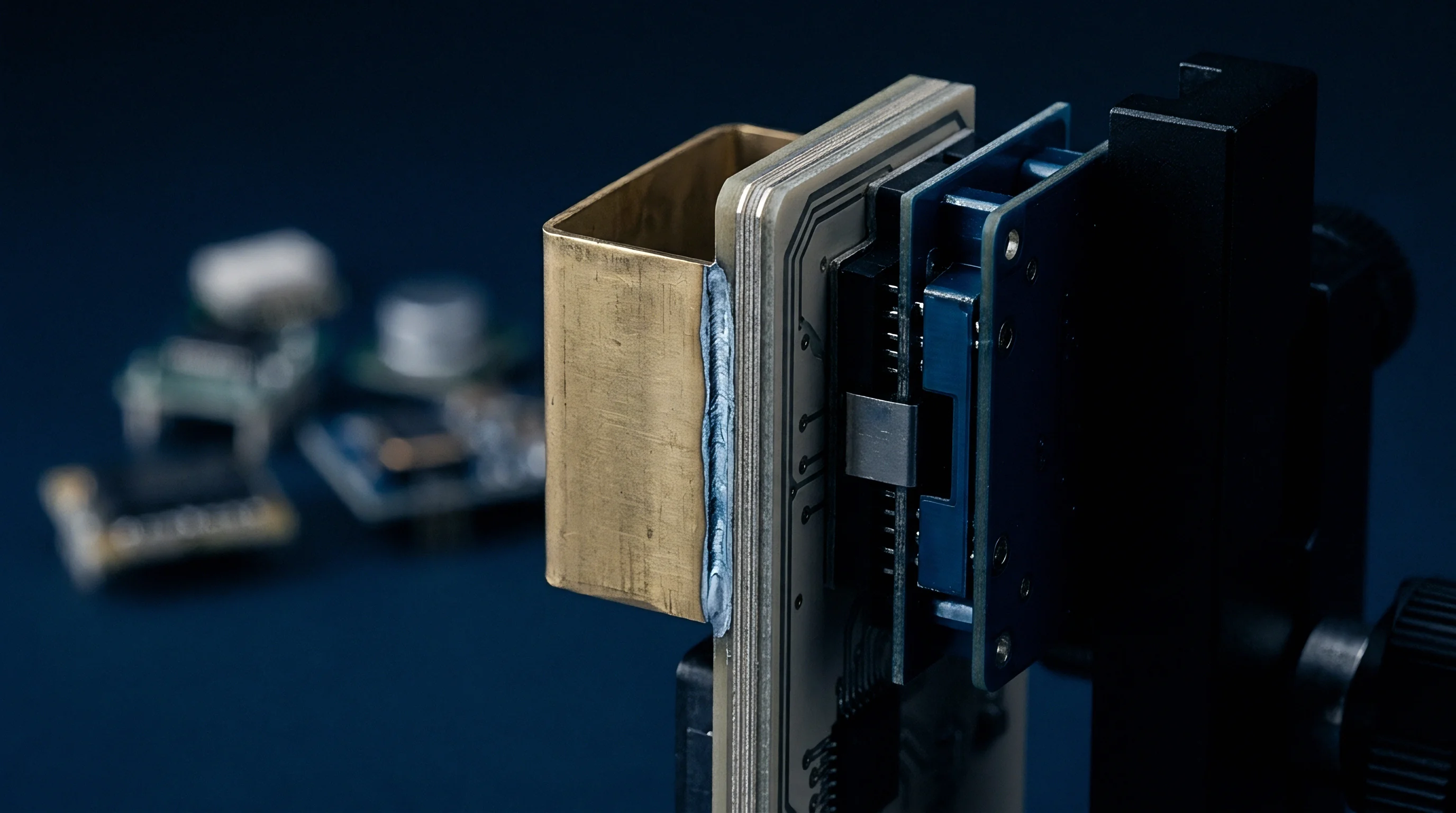
- Modular Compliance Labelling affixes regulatory identification marks to the RF shielding can, documenting that testing covers intentional radiation parameters.
- Commercial Invoice Harmonization specifies the exact nomenclature of populated circuit subassembly rather than broad marketing labels like dynamic SDR transmitter.
- Engineering Custody Records document that unpopulated antenna ports possess fifty-ohm terminations preventing unintended radiation during potential port bench testing.
When an enforcement division issues a detention notice or redelivery order, the compliance group pulls the archived cryptographic firmware hash for that specific production lot. Engineering and legal teams then request further review under customs rules, petitioning to transfer samples to an accredited agency laboratory rather than leaving measurements to field inspectors without RF test gear.
The importer logs all bond premiums and duty payments tendered under protest. Maintaining unbroken chain-of-custody records that match lab test serial numbers to specific entry summaries ensures that when an appeal succeeds, customs refunds the disputed deposits with accrued interest.
Section 1414 of the standard commercial purchase agreement specifies that the component supplier warrants the baseline physical goods remain free of active dual-use cryptographic frequency-hopping routines at delivery.