Determining Customs Classifications for High Density Electronic Component Packaging
Verify packaging internal discretes against HS Note 9(b)(4) before import to prevent reclassification from duty-free ICs into detained wireless apparatus.


Die
At the port of entry, customs inspectors classify a high density electronic package by its physical construction and circuit function, disregarding whatever marketing literature accompanied the order. That assessment decides whether the part enters duty-free under Chapter 85 semiconductor provisions or runs into intermediate tariffs and border checks for radio equipment. When silicon dies, passive discretes, and etched interconnects share a single ball grid array housing, authorities weigh the substrate, bond methods, and component count against strict nomenclature notes.
A wireless System in Package carrying an integrated radio transceiver, power management die, matching passives, and planar antenna structures illustrates the problem. Classified under heading 8542 as an electronic integrated circuit, the shipment clears with zero duty and skips pre-market telecommunications checks. Reclassified under heading 8517 as radio communication apparatus, that same package triggers documentary holds, unexpected tariffs, and immediate demands for verified equipment grants.
Physical packaging architecture establishes legal identity under the tariff. High density components fall into four recognized topologies: monolithic integrated circuits, multichip integrated circuits, hybrid integrated circuits, and multi-component integrated circuits. To place a part, customs officers look at cross-sections, verifying whether dies mount to a shared substrate by wire bonding, flip-chip bumping, or through-silicon vias.
The World Customs Organization drew these lines in Note 9(b) to Chapter 85 of the Harmonized System. Commercial trade names mean very little here. An importer might purchase an assembly sold as an advanced micro-module, but inspectors dismiss catalogue descriptions entirely.
If discrete components such as surface-mount inductors, bypass capacitors, or quartz crystals sit inside the encapsulation, the device immediately loses standard multichip integrated circuit status under heading 8542 unless it satisfies every condition laid down for multi-component integrated circuits.
Classification disputes collapse when packaging layers reveal discrete circuitry outside the statutory limits of Note 9(b).
Heterogeneous 2.5D and 3D integration pushes packaging density even further. Silicon interposers, embedded bridges, and fan-out wafer-level techniques squeeze multi-die subsystems into areas once reserved for single dies, blurring the division between bare semiconductor packaging and populated printed circuit boards. Multiple active dies mounted on a redistribution layer without passive elements will generally clear under heading 8542.31 through 8542.39 as integrated circuits.
Add a handful of discrete passives, however, and the part must run the statutory gauntlet for multi-component integrated circuits. When an engineering group picks an integrated subsystem simply to speed up board layout, procurement inherits whatever tariff classification that physical bill of materials compels.
The forwarder holds the shipment when the declared classification conflicts with the physical bill of materials.

Heading
Assigning the four-digit heading requires applying the General Rules for the Interpretation of the Harmonized System. Under General Interpretative Rule 1, classification is determined by the terms of the headings and the relevant section or chapter notes. For modern packaging, the main conflict lies between heading 8542, covering electronic integrated circuits, and heading 8517, which covers apparatus for transmitting or receiving voice, images, or other data.
Processing sub-assemblies and miscellaneous electrical units occasionally drift into heading 8473 or heading 8543 as well. Importers prefer heading 8542 because the 1996 Information Technology Agreement zeroed customs duties on electronic integrated circuits across participating economies.
Heading 8517 brings strict oversight for wireless parts. When a package combines high-frequency modulation, demodulation, and baseband processing to act as an autonomous transmitter or transceiver, customs officers challenge its classification as a simple component. Subheading 8517.62 covers machines for the reception, conversion, and transmission of data, capturing complete radio communication modules.
While tariffs under 8517 vary from duty-free treatment up to intermediate single-digit rates depending on the country, the larger risk is regulatory detention. Automated border systems in the United States, the European Union, Japan, and South Korea tie tariff codes directly to agency warning flags. Entering goods under 8517.62 prompts clearance software to demand equipment grants, declarations of conformity, or type approvals before cargo can move.
Goods filed under 8542 bypass those flags because unfinished integrated circuits are not treated as complete radio apparatus.
| Heading | Legal Nomenclature Description | Dominant Packaging Structures | Regulatory Border Check Trigger |
|---|---|---|---|
| 8542.31 | Processors and controllers, integrated circuits | Monolithic dies, flip-chip BGA, pure multi-die packaging | None; standard commercial clearance |
| 8542.39 | Other electronic integrated circuits | Multi-component integrated circuits meeting Note 9(b)(4) | None; exempt from wireless equipment holds |
| 8517.62 | Apparatus for transmission or conversion of data | Radio System in Package with shielding, passives, antenna | FCC Grant ID, CE RED Declaration, SRRC CMIIT ID |
| 8543.70 | Other electrical machines and apparatus | Custom hybrid modules failing 8542 and 8517 definitions | EMC compliance certificates, safety evaluations |
Reclassification causes immediate logistical disruption. If an importer declares ten thousand connectivity packages under 8542.39 and customs moves them to 8517.62, inspectors impound the freight unless valid radio approvals already exist under that precise model identifier. Customs agencies do not let importers fix labels or paperwork on the tarmac.
Where radio front-end circuitry is involved, the packaging engineer, customs broker, and regulatory manager review the very same schematic with incompatible objectives.
Section Notes dictate that heading terms override loose functional interpretations.
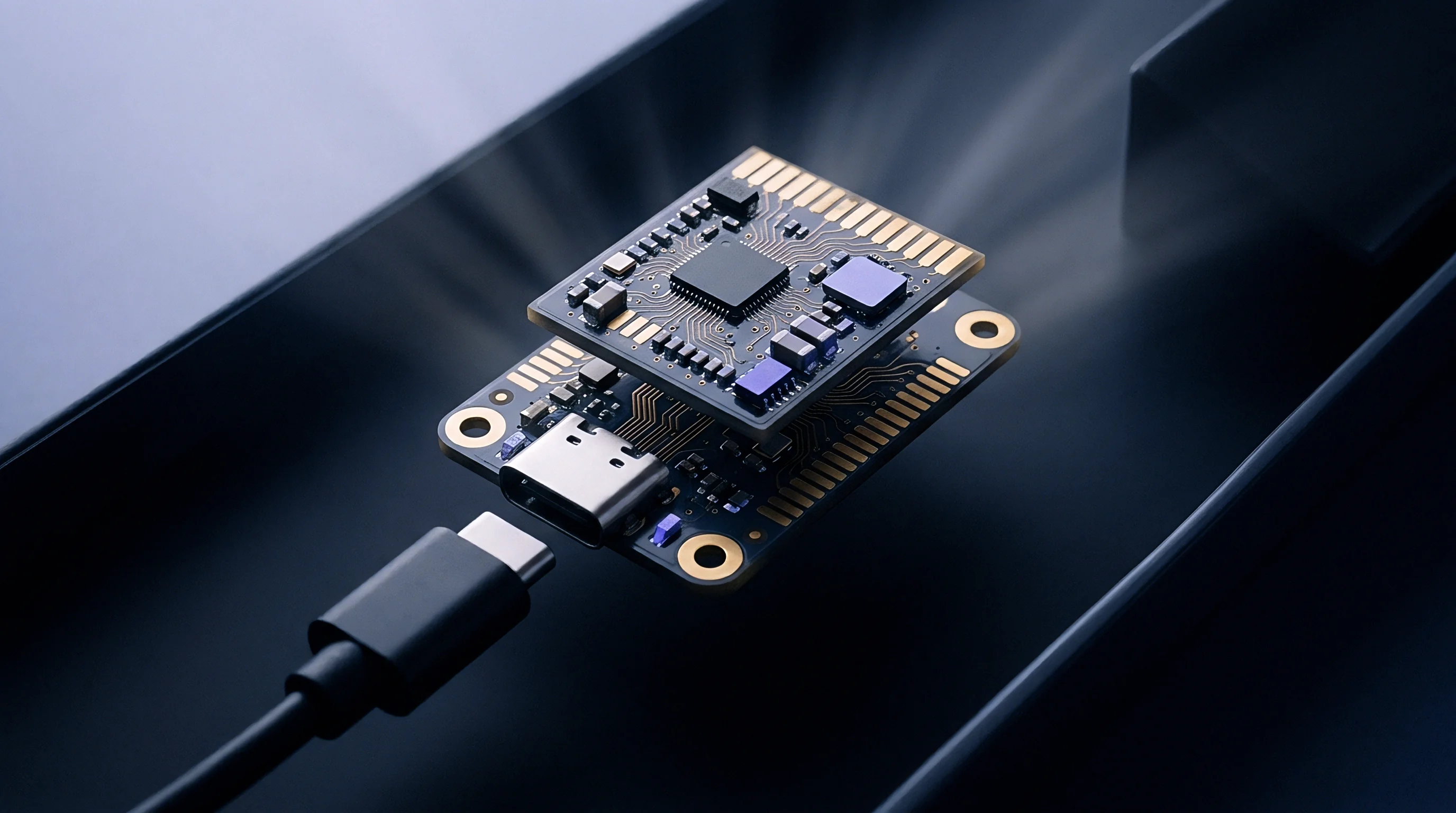
Criterion
Classification of high density packaging turns primarily on Note 9(b) to Chapter 85. In 2017, the Harmonized System added Note 9(b)(4), creating a distinct legal category under heading 8542 for multi-component integrated circuits. Before that update, any package incorporating discrete passives had to satisfy narrow hybrid circuit rules or face reclassification into finished equipment headings.
Note 9(b)(4) defines multi-component integrated circuits as combinations of one or more monolithic, hybrid, or multichip integrated circuits alongside specific discrete devices. Those allowable additions are strictly limited: silicon-based sensors, actuators, oscillators, resonators, and passive elements, all permanently assembled on a single substrate to form an indivisible unit.
Qualifying under this multi-component integrated circuit standard requires meeting five technical constraints:
- Component composition permits solely integrated circuits, discrete passives, silicon sensors, and MEMS devices within the encapsulant.
- Substrate continuity demands that all active and passive structures mount permanently to a single common base or leadframe.
- Package indivisibility insists that the finished construction forms a single mechanical unit incapable of non-destructive disassembly.
- Interconnect topology requires interconnection through wire bonds, solder bumps, redistribution layers, or conductive adhesive pathways.
- Functionality parameters bar the inclusion of bulk electromagnetic shielding cans or external antennas that establish independent finished apparatus scope.
Failing any single requirement disqualifies the package from heading 8542. Take a wireless module containing a baseband processor, a power amplifier die, discrete 0201 bypass capacitors, a thin-film matching inductor, and an integrated quartz crystal. Encapsulated on a multi-layer bismaleimide-triazine laminate substrate within a transfer-molded plastic body, the part satisfies the physical tests for a multi-component integrated circuit.
Solder a stamped brass shield over that same package prior to export, however, and customs agencies split. Inspection laboratories in several jurisdictions view the soldered can as an external sub-assembly housing, shifting the product into heading 8517. Other administrations accept conformal metal sputtering directly onto the plastic encapsulation as an ordinary semiconductor packaging method.
A brass shielding can soldered across a laminate substrate ejects the component from integrated circuit nomenclature across European inspection borders.
Etched substrate traces present an identical hazard. When packages incorporate redistribution layers designed as an antenna-in-package, inspectors evaluate the unit by its ultimate function. Because an antenna exists solely for wireless transmission and reception, customs authorities apply General Interpretative Rule 3(b), which classifies composite goods by the component that gives them their essential character.
Adding an on-package radiator pushes the component across the line from an integrated circuit into a dedicated radio communication apparatus.
| Physical Element | Permissible Under 8542.39 MCO Note | Disqualifying Structural Feature | Operational Classification Consequence |
|---|---|---|---|
| Substrate | Printed circuit laminate, silicon interposer, ceramic | Multiple separated substrates within module | Reclassification to 8517.62 or 8473.30 |
| Passive discretes | Chip capacitors, chip resistors, thin-film inductors | Wound wire coils, electrolytic capacitors | Immediate forfeiture of heading 8542 status |
| Shielding | Conformal metal sputtering over resin body | Mechanically crimped or soldered brass cans | Customs dispute over sub-assembly status |
| Antenna | None permitted under strict regional customs views | Planar inverted-F traces, ceramic patch radiators | Reclassification to dedicated wireless apparatus |
Customs laboratories routinely de-capsulate test samples with nitric acid to compare internal structures against declared invoices. If that acid bath reveals wound-wire inductors instead of thin-film planar passives, the multi-component integrated circuit declaration collapses on the spot. Officers reject the entry, hold the cargo for misdeclaration, and open an infraction file against the importer of record.
A component under ten millimeters is often assumed to qualify automatically as an integrated circuit, yet customs classification depends strictly on internal construction rather than external dimensions.

Detention
A border rejection brings immediate detention. Once clearance software flags an entry for tariff misdeclaration, problems compound across regulatory and financial fronts at once. If fifty thousand radio System in Package devices entered under 8542.39 are reclassified under 8517.62, missing wireless certifications immediately halt the freight.
Under United States Federal Communications Commission rules, importing radio-frequency devices requires either an active FCC Grant of Equipment Authorization or a bonded declaration certifying the units are for testing purposes only. Across Europe, border officers enforce Article 40 of the Radio Equipment Directive 2014/53/EU, detaining shipments that lack an EU Declaration of Conformity and appropriate CE marking on the packaging.
Detention follows an administrative schedule that quickly derails factory build plans:
- Customs hold notification issues within forty-eight hours of cargo arrival following automated tariff or manifest screening discrepancies.
- Documentary audit window consumes five to twelve business days while customs specialists demand technical drawings, package cross-sections, and laboratory test reports.
- Physical sample de-encapsulation extends the hold by fourteen to twenty-one business days if the customs laboratory conducts destructive cross-sectioning.
- Regulatory notification window adds two to four weeks as customs alerts national telecommunications authorities regarding uncertified radio apparatus imports.
- Final administrative adjudication forces the importer to pay retroactive tariffs, bonding penalties, or execute complete re-exportation under customs supervision.
Demurrage and storage charges accumulate every day cargo sits. Bonded warehouses bill storage based on pallet volume and valuation, routinely running up tens of thousands of dollars during a thirty-day quarantine. If the importer does not already hold a modular grant for the reclassified component, filing for emergency certification will not prevent seizure.
Complete radio certification requires three to six weeks for anechoic chamber testing, filing preparation, and Telecommunication Certification Body review. Bonded facilities will not hold air freight for six weeks; goods move directly into formal seizure or face an order for destruction.
A misdeclared packaging tariff stops manufacturing lines thirty days faster than an out-of-stock wafer lot.
Forced reclassification quickly upends the landed cost ledger. Reassigning a System in Package from heading 8542 to heading 8517 exposes the importer to severe trade remedies. Under United States Section 301 measures, Chinese-origin goods falling under heading 8517 incur tariffs up to twenty-five percent, whereas basic semiconductor devices under heading 8542 have often qualified for separate exclusion treatment.
A retroactive twenty-five percent tariff on a two million dollars shipment translates into an immediate half-million-dollar cash liability, followed by statutory interest and penalties.
Misclassification shifts the landed cost calculation from an operational margin into an unrecoverable business loss.
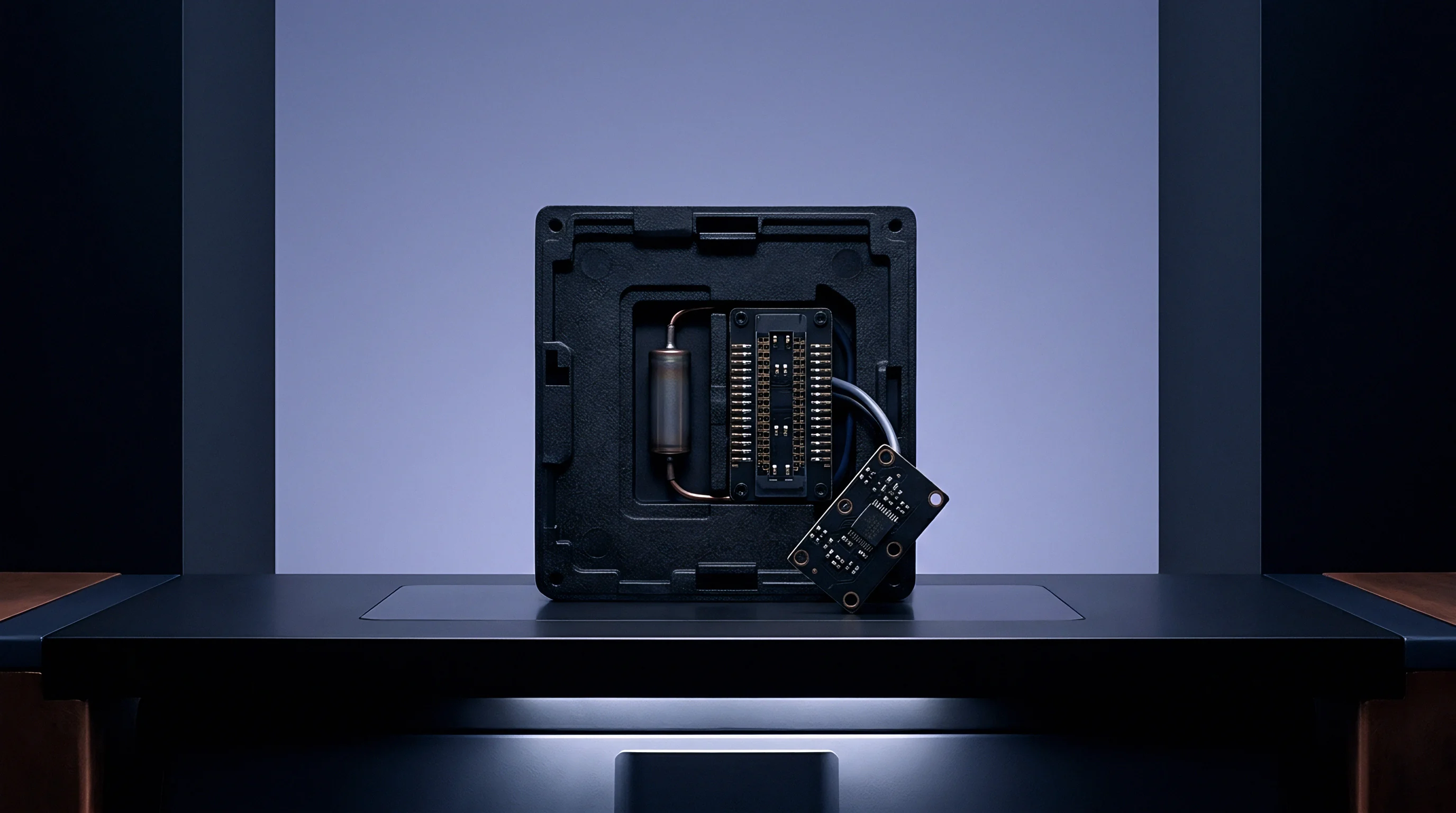
Tariff
Engineering and procurement teams need to align mechanical package architecture with tariff rules long before releasing volume purchase orders. Selecting a high density package requires the same scrutiny given to layout design or compliance testing. During supplier qualification, sourcing managers must press packaging vendors for internal construction details.
Whenever a semiconductor foundry or assembly house proposes a multi-component module, buyers should insist on unencapsulated die layouts, detailed bills of materials, and internal structural schematics.
Securing advance administrative certainty protects commercial volume. Importers can file for Binding Tariff Information in the European Union or obtain a Customs and Border Protection Binding Ruling under 19 CFR Part 177 in the United States. These rulings legally bind customs authorities to honor the specified heading at all ports of entry for a set duration ~ typically three years in the European Union, and indefinitely in the United States until revoked.
The ruling application requires physical samples, cross-sectional micrographs, substrate material disclosures, and full circuit schematics well ahead of commercial entry. Because rulings require sixty and one hundred twenty days to process, filing alongside radio certification testing is the only way to avoid delivery gaps.
Supply contracts must allocate the financial risks of reclassification between buyer and seller. Off-the-shelf commercial terms rarely protect an importer if customs questions internal package construction. Well-drafted agreements tie payment schedules directly to tariff stability and border clearance:
The seller warrants that all units delivered under this agreement conform precisely to the physical construction criteria of Multi-Component Integrated Circuits as defined by Harmonized System Note 9(b)(4) to Chapter 85, containing no discrete wound coils, no discrete antennas, and no external metallic housings, and the seller accepts full liability for documented duties, storage fees, and return shipping costs arising from any administrative reclassification to Chapter 8517 based on internal mechanical composition.
Classification certainty decides whether packaging moves directly onto surface-mount lines or sits in bonded quarantine under regulatory dispute. As packaging houses pack more discrete circuitry into micro-scale packages, import classification carries financial weight comparable to silicon yield or RF performance. Leaving customs strategy as an afterthought risks stranding millions of dollars in inventory behind an immovable border checkpoint.
National customs laboratories continue to split over whether conformal electromagnetic sputtering and stamped metal shields should receive equivalent legal treatment, leaving the issue contested before international trade tribunals.