Meaning
Tariff nomenclature provision establishes the legal criteria for defining electronic integrated circuits, including multicomponent integrated circuits, under the Harmonized System. Applying chapter 85 note 9b allows customs authorities to distinguish between simple printed circuit board assemblies and complex semiconductor packages that combine multiple dies into a single component. This provision governs the boundary between integrated circuits classified under heading 8542 and broader electronic modules classified under heading 8517.
Technical Classification
Semiconductor packages must consist of silicon chips and passive components mounted together on a common substrate to qualify under this provision. The definition specifically dictates that these packages are co-fired ceramic, silicon or organic substrates on which multiple components are inseparable. This prevents standard surface-mount technology boards from claiming the lower duty rates reserved for true integrated circuits.
Importers rely on this note to justify classifying advanced packages as components rather than completed assemblies.
System Integration
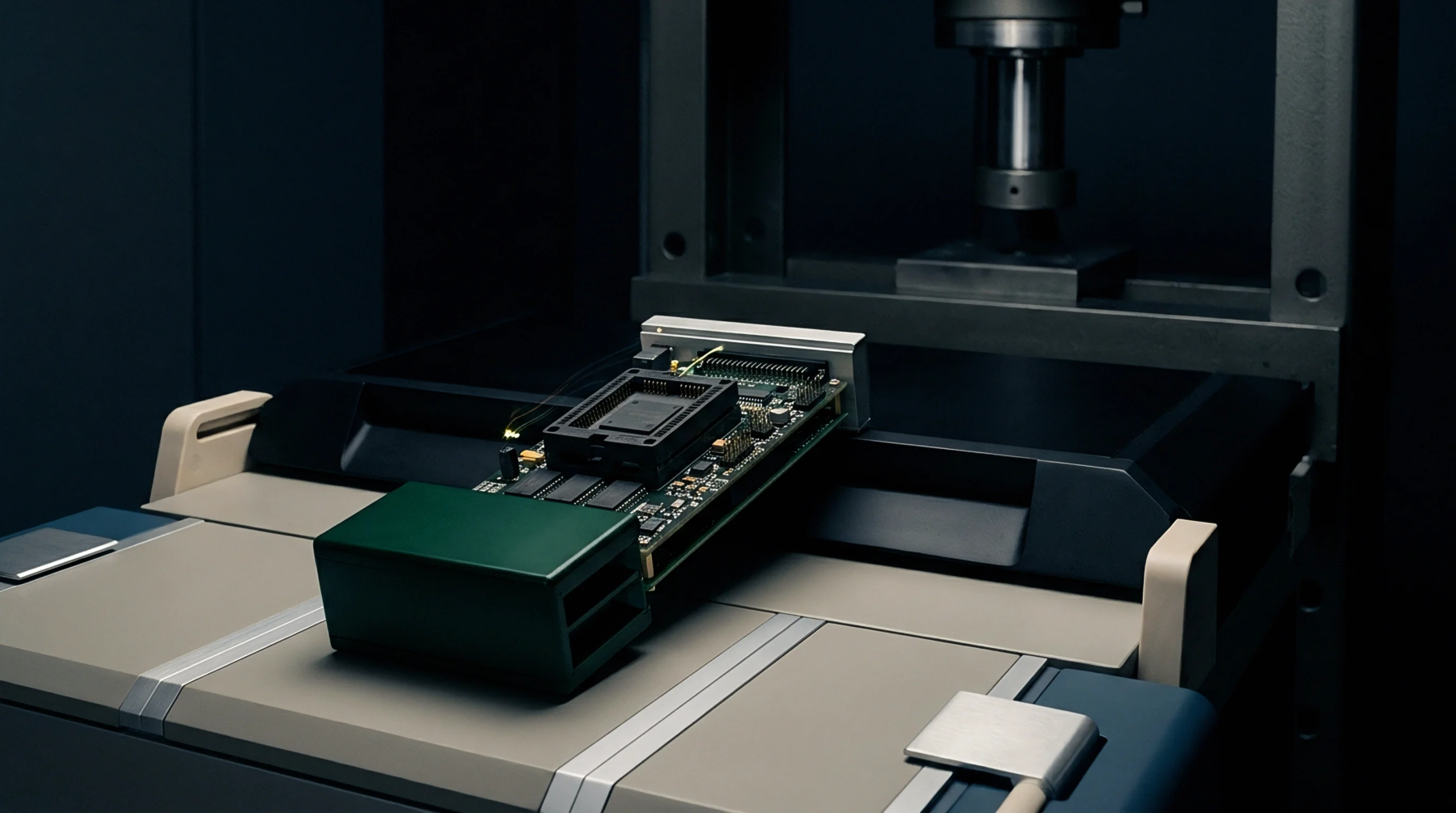
Custom system-on-chip packages frequently combine memory, processing units and passive filtering elements into a single miniature housing. When these components are permanently integrated, the resulting package behaves as a single discrete item in the manufacturing supply chain. This physical integration must be verified by examining the manufacturing process and cross-sectional schematics of the package.
If the design includes discrete components that are not co-fired or integrated at the wafer or substrate level, the device falls outside the scope of the note. This boundary requires designers and trade specialists to coordinate their documentation before launching a new product.
Import Efficiency
Qualifying for this tariff classification minimizes both processing delays and duty expenses at international border crossings. Most global trade regions offer lower or zero duty rates for integrated circuits under the Information Technology Agreement. This financial advantage disappears if the customs authority determines that the product is a finished electronic module.
Consequently, engineers must work closely with compliance teams to structure the physical component layout to meet the exact definitions of the note.