Managing Customs Tariff Classification Divergence across Global Embedded Radio Component Shipments
Align embedded radio hardware architecture with advance customs advance rulings to prevent costly port holds and duty adjustments under Harmonized System rules.


Discrepancy
Cross-border component shipments frequently run into regulatory trouble when customs authorities reclassify radio modules. Electronics buyers routinely source embedded subassemblies assuming Information Technology Agreement coverage and declare them under zero-duty tariff lines. However, port inspectors assess incoming cargo by its physical layout and operation rather than marketing terminology.
When dual-function Bluetooth and Wi-Fi modules arrive declared as basic integrated circuits, inspectors often reject the classification, taking the view that an IC with integrated filtering, impedance matching, and baseband processing forms a complete radio transceiver system under a different heading altogether. That mismatch holds containers at the dock, generating unexpected compliance holds and financial exposure.
Disputes usually center on how border agencies classify partially integrated RF subassemblies. Component manufacturers market these products as bare System-on-Chip devices, surface-mount modules, or smart radio boards, and procurement teams copy those labels straight onto commercial invoices. Customs brokers then file entries under codes meant for standard electronic components.
Statutory import rules, however, require authorities to classify goods by their principal function at arrival. If a module contains an onboard microcontroller capable of running transmission protocols independently, inspectors treat it as an apparatus for wireless networks or carrier-current line systems rather than a passive component or unpopulated board.

Harmonized Tariff Framework for Wireless Modules
Global trade uses six-digit commodity subheadings established by the World Customs Organization to determine tariff duties and monitor trade volume. Subheading 8517.62 covers machines for receiving, converting, and transmitting or regenerating voice, images, or data, including switching and routing apparatus. Subheading 8517.70 covers parts intended for apparatus that transmits or receives voice, images, or data.
Subheading 8542.31 covers electronic integrated circuits structured as processors and controllers, whether combined with memories, logic circuits, amplifiers, or timing circuits. When a radio component mounts passive RF elements on a shared substrate beside a baseband processor, customs officials routinely reject classification under 8542.31 and reassign the item to 8517.62 or 8517.70.
Duty rates vary significantly across these headings. Under the Information Technology Agreement, qualifying integrated circuits in heading 8542 enter most participating countries duty-free. Subheading 8517.62 also carries a zero percent rate in many jurisdictions under expanded ITA provisions, though national tariffs frequently attach administrative surcharges, trade defense measures, or special statutory duties to 8517.62 that never apply to monolithic ICs under 8542.
Subheading 8517.69 or regional fallback lines under 8517.70 can incur standard duties between 2.5 percent and 6.5 percent in markets such as the European Union or India. Customs duty gap between HS 8517.62 (0% ITA) and HS 8517.69 (up to 6.5% standard duty in EU TARIC) rests on 2024 EU Customs Tariff schedules, moved if the World Customs Organization issues an updated Harmonized System Explanatory Note regarding subassemblies with baseband processing.
Customs entry declarations shifting from subheading 8542.31 to subheading 8517.62 trigger statutory duty adjustments up to 6.5 percent alongside mandatory trade compliance audits at border terminals.

Conflict between Physical Hardware and Customs Nomenclature
Integrated radio boards present genuine physical ambiguity during customs reviews. A typical surface-mount module places an integrated circuit on a multi-layer board alongside discrete inductors, capacitors, a crystal oscillator, and a metal shield. Procurement teams view this construction as a hybrid component because it solders directly onto a host mainboard.
Inspectors, however, evaluate the exact same layout as an operational machine. Section XVI Note 2 of the Harmonized System requires that parts that are goods included in any heading of Chapter 84 or 85 be classified in their respective headings. Because complete radio transmitters and receivers fall under 8517, customs maintains that any standalone subassembly capable of transmitting radio signals constitutes a finished apparatus under 8517 rather than a component part.
These disagreements sharpen when radio hardware includes a host microcontroller on the same substrate. A Bluetooth Low Energy module containing only a transceiver die and matching network has a reasonable claim to component-level classification under subheading 8517.70. But if the manufacturer integrates flash memory holding a complete protocol stack and application space, the module operates as an independent processing system.
Customs interprets onboard protocol execution as evidence that the unit possesses the essential character of a finished communications device. Delays follow at the port whenever documentation lists simple integrated circuits while the container holds fully functional, shielded modules ready to transmit.
At this point, inspectors detain the shipment.

Classification Escalation Pathways in Import Logistics
When an entry declaration is flagged for tariff review, it enters a structured administrative sequence. Customs issues a notice of action or detention order, withholding release and placing the cargo in bonded storage. The importer is then asked for technical documentation ~ schematics, block diagrams, functional descriptions, and RF approval certificates.
Freight forwarders cannot clear these holds through routine clerical updates. Importers must submit a technical defense within set timeframes, usually ten to thirty days, or accept automatic reclassification, back duties, and financial penalties.
Customs administrative reviews follow a defined sequence of procedural steps when evaluating contested radio subassemblies:
- Physical Cargo Inspection occurs at the port of entry, where customs officers pull samples from pallets for visual and non-destructive examination.
- Documentation Cross Examination matches the commercial invoice description against the bill of lading and radio regulatory grants.
- Tariff Reclassification Notice specifies the formal legal ground for rejecting the declared code and proposes an alternative heading.
- Importer Technical Submission delivers schematics, bills of materials, and operational descriptions to substantiate the original classification.
- Laboratory Analysis Escalation transfers sampled components to a specialized customs testing lab for teardown examination.
- Final Administrative Determination issues a binding assessment confirming the tariff code, calculating duty adjustments, and setting demurrage fees.
This reclassification process stops customs clearance entirely.
Delays stemming from tariff disputes propagate through manufacturing supply chains quickly. Holding embedded radio shipments at the port for even ten days can disrupt assembly schedules, leading to factory downtime and delayed product launches. Demurrage charges in bonded storage build up rapidly, sometimes exceeding the contested duty amount itself.
If an importer leaves a tariff adjustment unchallenged, customs authorities frequently apply the higher regional rate to all shipments imported during the open audit period, creating substantial retroactive tax liabilities.
| Hardware Integration Level | Physical Characteristics | Declared HS Code | Customs Reclassification | Typical Duty Impact |
|---|---|---|---|---|
| Bare System-on-Chip (SoC) | Silicon die in QFN or BGA package without discrete passives | 8542.31.00 | 8542.31.00 (Accepted) | 0% (ITA Qualified) |
| Unshielded RF Subassembly | PCB substrate, SoC, passives, exposed antenna trace, no shield | 8542.31.00 | 8517.70.90 (Reclassified) | 2.0% to 4.5% |
| Shielded Surface-Mount Module | PCB substrate, SoC, passives, crystal, metal shield can | 8517.70.00 | 8517.62.90 (Reclassified) | 0% to 6.5% |
| Smart Radio System-in-Package | SiP encapsulation, integrated MCU, flash memory, firmware stack | 8542.39.00 | 8517.62.90 (Reclassified) | 3.0% to 6.5% |
The resulting reassessment can easily double baseline landed costs.


Wire
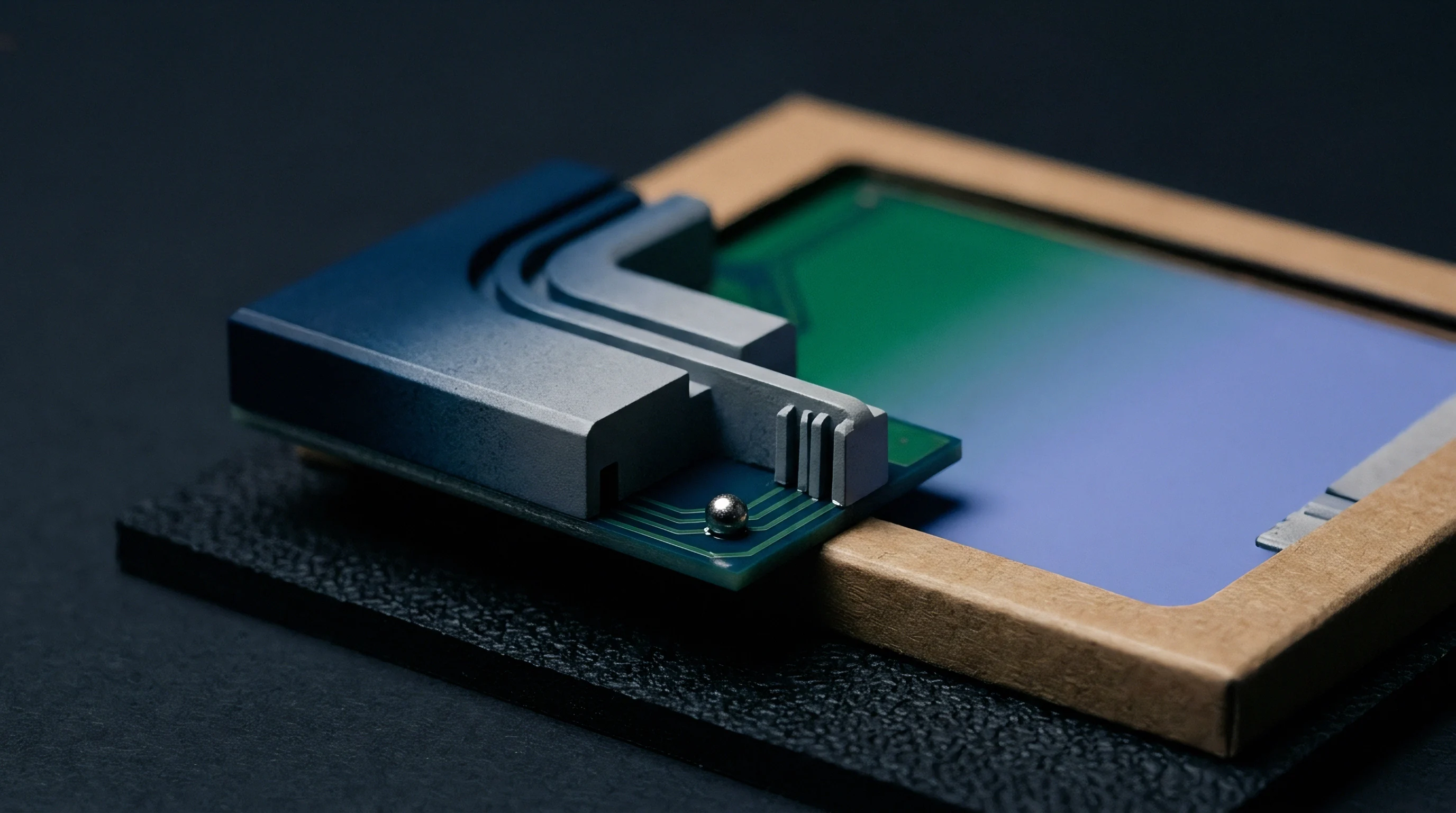
PCB trace layouts determine what high-frequency transmission hardware can achieve in practice. How conductors, ground planes, and passive components are positioned dictates whether an assembly is evaluated as a passive component or a complete wireless transmitter. Customs rules examine the physical construction of these trace paths directly when assigning commodity codes.
When a module features printed trace inductors, microstrip transmission lines, and dedicated matching networks, inspectors view the board as a functional RF front-end. Continuous copper traces extending from an IC pin to an antenna pad serve as direct physical evidence of radio functionality, working against arguments that the board is merely an inert IC carrier.
Sourcing engineers often assume that omitting an integrated antenna guarantees component-level classification. Laboratory examinations regularly challenge that assumption. A module equipped with a U.FL coaxial connector or a surface-mount pad for an external antenna retains full RF transmission capability.
Customs regulations assess items in their condition as imported: if an assembly incorporates the driving circuits, filtering networks, and matching traces needed to supply high-frequency energy to an external radiating element, omitting the physical antenna does not alter its essential character.
Essential Character Evaluation under Harmonized Rules
General Rule of Interpretation 3(b) determines how multi-component electronic items are classified. When goods consist of different components and cannot be classified under GRI 3(a), they are categorized by the material or component that gives them their essential character. Customs agencies apply GRI 3(b) strictly to embedded radio subassemblies.
When reviewing a module assembled from a PCB substrate, passive components, a crystal oscillator, a baseband IC, and a metal shield, inspectors evaluate which element defines the unit’s primary technical purpose.
Customs officials evaluate several physical criteria when determining essential character:
- Silicon Surface Area Allocation measuring the board area taken up by RF integrated circuits compared to general microcontroller logic.
- Component Cost Breakdown comparing the financial cost of the RF front-end chipset and matching networks against passive substrate elements.
- Shielding Structure Purpose establishing whether the metal enclosure exists primarily to contain electromagnetic interference from radio transmission.
- Trace Circuit Complexity looking at the density of high-frequency microstrip routing, impedance controls, and surface-acoustic-wave filters.
- Firmware Functional Isolation assessing whether pre-installed software allows independent radio transmission without commands from a host system.
An improper declaration leads straight to rejection.
If the RF section dominates the bill of materials in cost and complexity, customs determines that the item’s essential character is wireless communication under heading 8517. Secondary processing logic or auxiliary sensor interfaces do not override that primary RF identity. Customs inspectors systematically reject claims that multi-sensor IoT modules belong under sensor or data-processing codes when the underlying hardware layout reveals an integrated radio transceiver.
When a printed circuit board carries dedicated radio frequency matching components and electromagnetic shielding, customs authorities assign essential character to the wireless communication function regardless of secondary host processing code.

Influence of Trace Routing and Printed Shielding
Surface-mount shielding cans convert bare ICs into distinct radio transceivers. A bare System-on-Chip soldered directly onto a mainboard radiates unshielded RF energy until placed inside a finished housing. When a vendor adds a grounded metal shield directly to a module substrate, it creates a self-contained electromagnetic environment.
Customs labs view shielding cans as physical proof of completed radio engineering, because the shield isolates the RF circuit for factory calibration and modular approval before host installation.
Trace routing geometry provides further evidence during customs reviews. High-speed transmission lines designed as microstrips or coplanar waveguides with precise 50-ohm impedance show the board was engineered specifically for RF propagation. Teardown specialists inspect these trace patterns under microscopes.
When routing connects an RF output pin directly to an onboard chip antenna or printed inverted-F antenna, the copper paths establish the product’s identity as a completed transmitter under subheading 8517.62.

Microcontroller Offloading and Standalone Transmission Logic
Firmware stored in local flash memory enables modules to run network routines autonomously. Modern Wi-Fi and cellular modules utilize SoC designs that execute full TCP/IP stacks, security handshakes, and network management without host processor intervention. Customs officials examine this operational independence when choosing between component parts under 8517.70 and finished apparatus under 8517.62.
If a module can establish and maintain a network connection using only external DC power, customs classifies it as a complete transmission apparatus.
System-in-Package (SiP) designs blur these physical distinctions even further. Packaging now integrates memory, power management, baseband logic, and RF front-end dies into a single molded package. Importers frequently declare these SiP devices under 8542.39 as multi-component ICs.
Customs rejects that code if laboratory decapsulation reveals discrete passive components, wire bonds spanning separate substrates, or embedded planar antenna traces, leading to reclassification under heading 8517 along with back-duty assessments.
Clearance halts while the entry is audited.
Suppliers often defend low-duty filings by arguing that the board serves merely as a passive carrier provided for customer convenience. That argument rarely succeeds during customs audits, because authorities evaluate the physical assembly as presented rather than commercial intent. When trace connections, shield cans, and firmware combine to permit standalone wireless operation, tariff rules mandate classification under functional radio headings.


Audit
Customs agencies rely heavily on automated manifest tracking for post-clearance audits. Risk-profiling algorithms flag discrepancies between declared tariff codes and corresponding regulatory filings. If an importer declares electronic components under zero-duty heading 8542, the system cross-references secondary regulatory databases.
When cargo contains items associated with FCC IDs, CE mark filings, or Chinese SRRC approvals, the automated system highlights the contradiction and routes the shipment to inspection bays for verification.
Telecommunications filings serve as primary evidence in classification audits. To market a wireless module, a manufacturer must submit it to an accredited laboratory for radio authorization. The resulting test reports and modular grants describe the hardware explicitly as an intentional radiator, detailing operating frequencies, power output, modulation types, and antenna configurations.
Customs auditors regularly subpoena these records. If an official grant lists an item as a 2.4 GHz/5 GHz dual-band transceiver module, the importer cannot easily convince customs officials that the same hardware is merely an inert integrated circuit.

Cross Reference of Radio Grants against Freight Manifests
Telecom databases link equipment authorization IDs directly to customs entries. In the United States, Customs and Border Protection coordinates with the FCC through the Automated Commercial Environment. When entry filings reference FCC IDs, the system automatically checks the declared HTS code against the regulatory equipment category.
A mismatch between a modular radio authorization and an HTS entry under 8542 triggers an immediate administrative hold.
EU customs authorities conduct similar checks under the Radio Equipment Directive 2014/53/EU. Entries with Declarations of Conformity citing standards like EN 300 328 or EN 301 893 undergo automated risk scoring: if an item requires certification under the directive, authorities treat it as radio apparatus. Physical chamber audit frequency in Chinese customs labs targets roughly 12 percent of shipments declaring HS 8517.70 without matching SRRC modular grants, resting on Shenzhen and Shanghai port inspection reports, moved by customs authority tariff evasion taskforce priorities.
Customs authorities systematically utilize these regulatory filings to challenge incorrect component-level tariff declarations at global container terminals.

Which Declarations Trigger Customs Laboratory Decapsulation?
High-density micro-molded packages with generic invoice terms attract immediate sampling. When automated systems detect large shipments described with broad terms such as electronic subassemblies or micro-modules passing through high-risk transshipment hubs, officers pull samples directly from crates for physical and chemical teardown.
Customs laboratories follow an established inspection protocol to expose internal hardware architectures:
- Visual inspection under stereomicroscopes records external markings, pin counts, shielding geometries, and solder configurations.
- X-ray imaging penetrates encapsulation to generate density profiles of internal lead frames, substrates, and passives.
- Laser decapsulation and acid etching dissolve plastic mold compound to reveal internal silicon dies and interposers.
- Scanning electron microscopy checks wire bonding alloys and multi-layer ceramic geometries.
- Substrate trace micro-sectioning reveals internal copper layer counts and dielectric thickness profiles.
Shifts in semiconductor supply chains have moved assembly from Malaysia to Vietnam, altering substrate materials and trace alloys. These metallization changes alter X-ray density profiles during port security scans, inadvertently triggering secondary lab inspections for shipments declared under static tariff codes.
Cargo stays locked in storage until tests complete.
Decapsulation reveals the true hardware layout. If teardowns uncover discrete inductors, SAW filters, or separate memory dies wire-bonded to a shared interposer, the laboratory certifies the item as a multi-component module. That determination legally invalidates entries filed under monolithic IC headings, and the importer receives the lab report alongside a demand for back duties, interest, and misdescription penalties.
Customs decapsulation testing physically exposes multi-die interposer structures and discrete passives, legally invalidating declarations filed under monolithic integrated circuit tariff lines.
Physical Verification Procedures in Border Testing Facilities
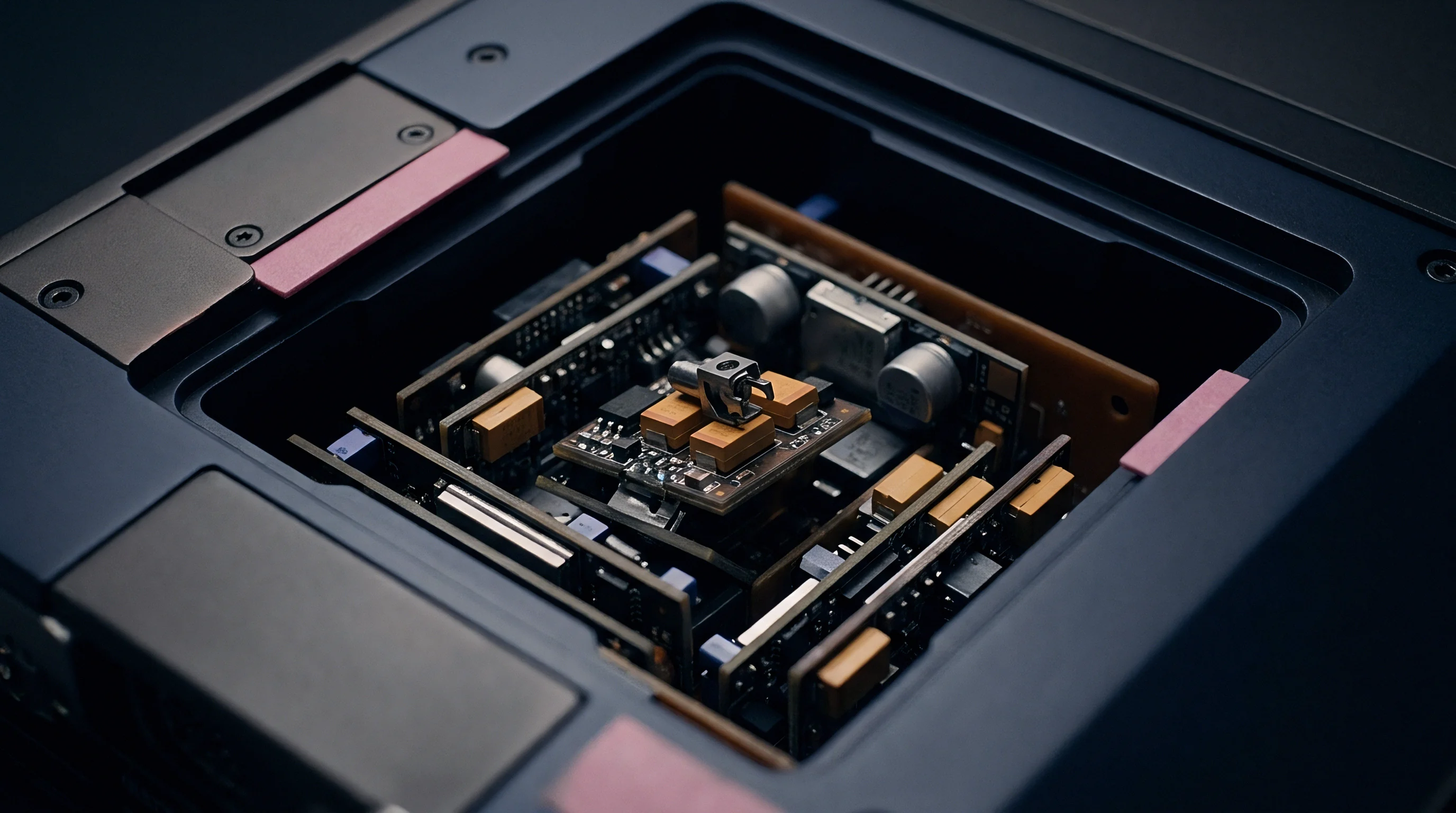
Inspectors isolate target board assemblies to examine substrate layouts under X-ray imaging. Modern customs labs carry diagnostic tools that measure high-frequency electrical behavior without destroying samples. Metrology engineers hook sampled modules up to vector network analyzers and spectrum analyzers using high-frequency micro-probes.
By feeding DC power to designated pins, technicians check whether the module starts local oscillator activity or emits radio frequency spuries.
If an unshielded board radiates measurable electromagnetic signals in ISM bands when powered, the lab logs it as an active RF device. That measurement forms solid evidence in tariff hearings. An importer cannot claim a module is an inert electronic component when port scans detect RF signal propagation directly from its board traces.
Clearance delay penalty costs for misclassified radio component lots held in bonded storage range from $180 to $650 per pallet per day depending on port authority demurrage tiering, though figures vary by terminal contract; buyers hedge this risk by pre-filing customs advance declarations 14 days before vessel berthing.
Documentation discrepancies can swiftly cancel local agent authorization.
Filings must match across regulatory agencies before goods ship. Submitting a telecom grant for a full radio module while handing customs an invoice for a simple integrated circuit creates a direct contradiction. Customs audit units use these discrepancies to assess back duties across all shipments imported within open audit windows.
Audit discrepancies permanently damage an importer’s risk score in customs databases. Reclassification resets compliance ratings, forcing future shipments of all component lines into high-risk queues that require physical examination and delay clearance.


Rulings
Formal classification rulings from customs headquarters offer legal certainty for recurring imports. Companies managing ongoing shipments use advance ruling mechanisms to establish official tariff classifications before shipping in volume. In the EU, authorities issue Binding Tariff Information decisions that hold across all member states for three years.
In the U.S., Customs and Border Protection issues formal ruling letters through its Regulations and Rulings office in Washington, D.C., setting nationwide precedent. Securing an advance ruling eliminates hold risks at the port by establishing defensible tariff codes up front.
Obtaining an administrative ruling demands detailed technical disclosure. Importers must submit schematics, bills of materials, component functional descriptions, firmware specs, and physical samples. Ruling offices evaluate this data against General Rules of Interpretation, WCO Explanatory Notes, and legal precedents before issuing a published rationale detailing why the product fits a specific ten-digit national subheading.

Regional Tariff Schedule Variations across Key Markets
National authorities add eight- and ten-digit subheadings to the base six-digit WCO system. While six-digit Harmonized System codes are uniform worldwide, individual countries set their own lower-level subheadings and duty schedules. As a result, a module classified globally under 8517.62 can face completely different duty rates, licensing rules, and import fees depending on the destination port.
The EU TARIC system splits 8517.62 into subheadings based on function. Subheading 8517.62.00.50 covers machines for receiving, converting, and transmitting voice, images, or data, entering duty-free under ITA rules. But if EU customs decides a module acts as a specialized telemetry unit under residual codes, standard duty applies.
In the U.S., HTS code 8517.62.00.50 covers data transmission gear, but Section 301 tariffs can add up to 25 percent in ad valorem duties on specific modules originating in China.
| Jurisdiction | National Tariff Code | Primary Nomenclature Description | Base Duty Rate | Auxiliary Tariffs / Special Controls |
|---|---|---|---|---|
| United States (US HTS) | 8517.62.00.50 | Other apparatus for transmission or reception of data | 0.0% | Section 301 Tariffs up to 25.0% for CN origin |
| European Union (EU TARIC) | 8517.62.00.90 | Other reception/transmission data apparatus | 0.0% | Dual-Use export/import licensing flags |
| China (Customs Tariff) | 8517.62.99.00 | Other data transmission equipment | 0.0% | SRRC Type Approval verification at entry |
| Japan (Customs Tariff) | 8517.62.090 | Other digital transmission apparatus | 0.0% | Giteki Radio Law compliance declaration |
| Brazil (NCM Schedule) | 8517.62.77 | Digital transceivers operating in spread spectrum | 12.0% | ANATEL certification duty surcharge applies |
The container stays stuck at the terminal.
Brazil is a notable example of regional divergence under the Nomenclatura Comum do MERCOSUL system. NCM code 8517.62.77 covers spread-spectrum digital transceivers with a 12 percent base duty. Industrial product taxes and additional import fees push total effective landed taxes on radio modules past 30 percent of CIF value.
Importers trying to declare these subassemblies as simple integrated circuits under NCM 8542.31 risk heavy fines and immediate cargo seizure by Receita Federal.

Binding Advance Decisions and Compliance Filing Options
Importers request binding tariff decisions before committing to volume purchases to confirm duty rates. Drafting an application requires framing hardware specs within customs law concepts ~ highlighting functional limits to support component classifications where legally applicable, while staying entirely accurate about radio capabilities.
Binding advance ruling applications require specific technical documentation packages:
- Component Substrate Layout Schematics showing stackup, component placement, shielding boundaries, and high-frequency trace routing.
- Bill of Materials Breakdown listing manufacturer part numbers, cost breakdowns, and functional categories for every active and passive component.
- Firmware Architectural Specifications detailing protocol execution, flash memory allocation, and host processor dependencies.
- Telecommunications Equipment Grants providing copies of FCC, CE RED, or equivalent radio approvals matching model numbers to hardware.
- Sample Hardware Consignments delivering functional pre-production module samples to customs labs for testing.
Non-compliance penalties take effect right away.
Formal Binding Tariff Information rulings legally secure long-term tariff code determinations across international customs jurisdictions, protecting supply chains from administrative port detentions.

Substantial Transformation and Rules of Origin Compliance
Determining origin depends on whether work in a secondary country changes the tariff subheading of the inputs. Radio manufacturing often spans several countries: silicon fabrication in Taiwan, packaging in Malaysia, surface-mount assembly in Vietnam, and firmware flashing in the destination market. Customs determines non-preferential country of origin by identifying where the hardware underwent substantial transformation.
Under standard origin rules, substantial transformation requires a tariff shift. If bare chips under 8542 are mounted on a PCB with passives in Vietnam to build a radio module under 8517.62, customs accepts the tariff shift and assigns origin to Vietnam. But if a finished, unprogrammed module under 8517.62 enters Mexico for firmware flashing and testing without hardware changes, customs rules no substantial transformation took place.
Origin stays tied to the initial board manufacturing site, disqualifying the shipment from preferential USMCA treatment.
Standard purchase agreement compliance clauses enforce legal accountability across vendor networks:
Seller warrants that all delivered goods fully comply with destination customs classifications and rules of origin, and Seller agrees to indemnify Buyer against all customs duties, fines, and legal expenses arising from inaccurate tariff declarations or invalid country of origin documentation.
A retroactive duty adjustment can sharply increase total import costs.


Remedy
Commercial contracts limit regulatory exposure by assigning financial liability to supply chain partners. Procurement contracts that leave customs classification obligations undefined expose importers to retroactive duty claims and penalties. When buying embedded radio components overseas, purchase orders should explicitly state the Harmonized System codes authorized for customs entries.
Terms ought to require suppliers to give advance written notice before changing hardware revisions, substrate materials, silicon steppings, or pre-installed firmware that could alter established classification precedents.
Indemnification clauses protect buyers from financial losses caused by misdeclared shipments. If a vendor sends modules marked with incorrect tariff lines or invalid origin labels, the contract should hold them financially responsible for any customs fines, legal fees, demurrage, and back duties. Sourcing teams often withhold final payment until cargo clears customs under the agreed codes.

Commercial Risk Allocation in Sourcing Purchase Orders
Procurement practices insert tariff classification warranties directly into international supply contracts to align engineering specs with trade compliance. Before issuing volume purchase orders for radio modules, buyers require vendors to provide complete regulatory dossiers ~ including both radio grants and advance customs ruling references.
Effective procurement practices incorporate strict regulatory compliance checks into purchase order terms:
- Mandatory Tariff Code Assignment requiring suppliers to use buyer-approved customs codes on all shipping documents.
- Hardware Modification Notification obligating vendors to give 30 days notice before altering board layouts or component sources.
- Customs Indemnity Undertakings binding vendors to reimburse financial losses from rejected entries or misdescription audits.
- Regulatory Dossier Delivery requiring complete schematics, test reports, and grants prior to initial shipping.
- Origin Certification Warranties mandating traceable origin documentation backed by factory manufacturing logs for every batch.
Re-testing adds roughly three weeks of schedule delay.

Dispute Management for Reclassified Component Shipments
Filing an administrative protest with national customs appeals boards pauses penalty collection during review. When local customs issues a reclassification order on a radio module shipment, the importer needs to file an immediate technical and legal appeal, demonstrating that the article lacks the structural or functional features required by the proposed heading.
Technical arguments in appeals center on functional analysis. If customs tries to reclassify an unshielded RF subassembly from component code 8517.70 to apparatus code 8517.62, the legal brief must show that the module cannot function as a standalone transmitter without host power, host processing commands, and external antennas. Proving the module is an incomplete assembly incapable of independent wireless communication grounds the case for component-level treatment.
Bond coverage limits can be exhausted during extended disputes.

Design Adjustments within Regulatory Modular Scopes
Engineering teams sometimes tweak board layouts to keep a favorable tariff classification without invalidating radio grants. When high duty rates or trade sanctions hit fully integrated modules, designers look at alternative hardware architectures. Moving matching networks or host processing logic off the module substrate and onto the mainboard keeps the imported subassembly within the bare integrated circuit profile of zero-duty heading 8542.
Redesigning hardware to optimize tariff lines requires balancing duty savings against re-certification costs. Removing shielding cans or onboard antennas alters electromagnetic performance and voids existing modular approvals. The manufacturer must then run full intentional radiator testing and apply for new radio equipment grants under FCC Part 15 or CE RED.
Trade strategists model these combined engineering, testing, and duty costs to pick the right integration level before committing to volume production.
Sourcing teams evaluate these tradeoffs across total expected production volumes. On a run of one million units, a 6 percent duty under heading 8517.62 easily exceeds the $45,000 cost of running a full host radio approval campaign for a bare-silicon layout under zero-duty heading 8542. Trade compliance becomes a direct driver of hardware design, linking tariff strategy to RF compliance planning.
Administrative holds pause the entire logistics chain.
Filing binding advance ruling requests before dispatching volume shipments locks in applicable tariff rates and ensures smooth customs entry along international trade routes.