Component Substitution Notices Arriving after the Production Run
Post-production component change notices require immediate lot quarantine, parametric bench verification, and commercial debit memos under JESD46D covenants.


Exposure
An engineering team unboxes a cardboard carton fresh off a contract assembly line, pulls a circuit card from its antistatic bag, and powers it up on a bench supply. The current meter spikes past the target threshold, or a high-speed peripheral controller starts dropping packets as ambient temperatures rise. A quick check against the released bill of materials shows every designator populated, yet a multimeter reveals that an internal LDO regulator is running near thermal shutdown.
Two days later, a formal Product Change Notification hits the procurement inbox. The document bears a date stamp from six weeks prior, explaining that the factory swapped the original low-dropout linear regulator for an alternate because the primary silicon faced supply lead times exceeding thirty weeks. Meanwhile, five thousand completed, potted, and packaged assemblies sit in a freight warehouse, built entirely with an unapproved integrated circuit.
Late change notifications point straight to a breakdown in configuration control between buyer and factory. Standard electronics manufacturing agreements tie component changes to industry frameworks like JESD46D, which mandates ninety days of advance notice before shipping anything built with altered silicon steppings, revised mold compounds, or alternate passive materials. But on turnkey and semi-custom lines, procurement teams face intense line-stop pressure whenever primary components run out or lead times stretch.
To keep lines moving, assembly plants frequently fall back on internal standard operating procedures that let their own buyers approve pin-compatible substitutes without sending an external Engineering Change Order to the client. The internal rationale is simple enough: if two parts share a pad layout and basic datasheet numbers, the swap should carry zero operational risk.
That assumption breaks down fast in high-density designs. Pin-compatible drop-in replacements often hide differences in internal silicon layout, parasitic capacitance, thermal resistance, transient response, and startup timing. A power management IC sold as an exact equivalent might draw substantially higher quiescent current or react slower to load transients.
Linear regulators with the same output voltage rating can require very different minimum equivalent series resistance from output decoupling capacitors to stay stable. When a plant swaps a part without telling the buyer, end-of-line functional testing rarely catches the resulting thermal or signal integrity problems. Factory test fixtures run basic go/no-go checks at room temperature for just a few seconds per board ~ tests that comfortably pass modified units destined to fail later in the field under full thermal load, heavy processing, or tight electromagnetic conditions.
The financial exposure grows rapidly once production wraps up. When a substitution notice lands after a run is finished, the buyer loses every containment option available during active manufacturing. There is no chance to pause the surface-mount line, hold reels at the feeder, or build a trial lot of twenty units for engineering review.
Instead, the buyer owns thousands of finished assemblies ~ many potted or sealed in custom enclosures ~ where board-level access and manual rework cost far more than the boards are worth.
Inspectors audited three production batches across two quarters to cross-check factory reel logs.
Factory management teams usually defend late notices by framing component swaps as minor variance rather than formal design changes. Their argument is that pin-compatible alternates sourced from major distributors do not alter product specifications. The fine print in contract quotes often conceals this loophole: turnkey suppliers like to insert broad terms allowing component replacements during market shortages as long as the replacement manufacturer claims functional equivalence on a datasheet.
| Component Category | Common Substitute Type | Unstated Parameter Variance | Circuit Level Consequence | Detection Method |
|---|---|---|---|---|
| Decoupling Capacitors | X7R to Y5V Dielectric Swap | DC Bias Voltage Coefficient | Effective capacitance drops up to 80% under rated DC voltage, causing power rail ripple and switching noise. | LCR meter with DC bias voltage fixture; acoustic noise analysis. |
| LDO Regulators | Second-Source Pin-Compatible IC | Phase Margin and Output ESR Range | Control loop oscillation, high frequency output ringing, elevated quiescent current, thermal shutdown. | Transient load step testing; phase margin measurements using a vector network analyzer. |
| NOR Flash Memory | Alternate Vendor SPI Flash | SFDP Table and Erase Sector Timing | Bootloader failure, write operation timeouts causing system watchdog resets, broken firmware update routines. | SPI bus protocol analyzer; firmware command execution logging across temperature extremes. |
| RF Frontend Switches | Alternative GaAs or CMOS Switch | Insertion Loss and P1dB Compression | Transmitter output power drops by 1.5 dB, receiver sensitivity degrades, harmonic emission increases. | Vector network analyzer measurement; Anechoic chamber RF power sweep across operating band. |
| MOSFET Drivers | Same-Family Die Stepping Revision | Propagation Delay and Dead-Time | Cross-conduction shoot-through currents in synchronous buck converters, MOSFET thermal runaway. | High-bandwidth differential oscilloscope probes measuring gate-source and drain-source switching edges. |
At root, post-production substitution notices stem from conflicting incentives between contract assemblers and engineering teams. A contract manufacturer tracks line utilization, component yield, and delivery schedules; a line stop for a missing passive array or minor power IC directly hits factory margins. Engineering teams, by contrast, focus on signal-to-noise ratios, thermal budgets, long-term mean time between failures, and regulatory margins.
When a part drops out of supply, factory procurement naturally moves to keep the pick-and-place machines running. They source an alternate from a local distributor, confirm the footprint matches the board layout, and keep running high-speed placement. The formal notification to the customer only gets generated weeks later during final bill-of-materials reconciliation for invoicing.
Solder masks obscure swapped passive components from visual inspection.
Unannounced substitutions undermine both reliability testing and regulatory filings. Modern electronics undergo strict compliance evaluations ~ including FCC Part 15 Class B EMI screening, CE mark conformity, and safety standards like UL 62368-1 ~ all tied to a specific, documented bill of materials. Swapping a passive filter, substituting an inductor with higher core losses, or dropping in a switching regulator with stronger high-frequency noise invalidates those test reports.
If an unapproved swap pushes emissions over statutory limits, the manufacturer faces recall orders, customs holds, and heavy fines from communications authorities. The original compliance dossier turns into legal proof that the shipped hardware doesn’t match what was certified.
Component substitutions on analog feedback loops always demand loop stability measurements across the entire operating temperature spectrum.
Handling a post-production change notice requires an immediate operational freeze. The moment a late notification arrives, procurement and quality teams need to halt incoming shipments from the plant. The entire lot belongs in a secure quarantine dock to stop units from being built into higher-level assemblies or shipped to customers.
Quality managers then need full traceability records from the factory ~ feeder setup logs, reel lot numbers, date codes, and the exact range of serial numbers affected. Without that serial mapping, every board in the run is suspect, leaving engineering with no choice but to audit every unit individually or write off the lot as non-conforming inventory.
The contract manufacturer explained that the original component faced an abrupt forty-week lead time extension, forcing an emergency factory line substitution to meet the agreed shipment deadline.
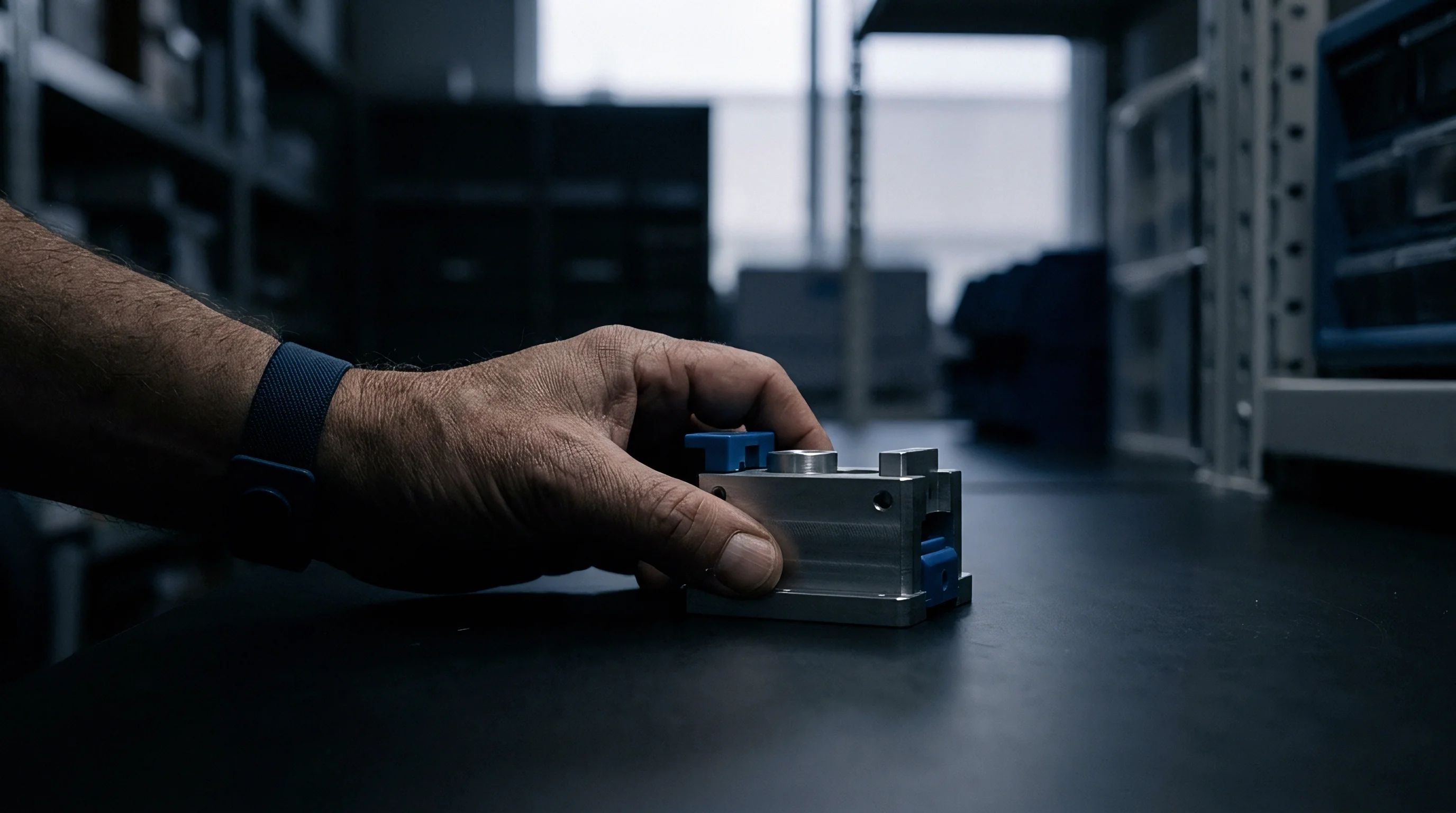
Crate
When a late change notice lands, physical verification starts on the receiving dock as incoming freight crates are opened. Inspectors cannot rely on outer carton labels or packing slips to confirm bill-of-materials integrity. Verification means breaking down pallets, checking tamper-evident tape, and pulling representative board samples across the entire lot using standardized sampling plans.
Applying ANSI/ASQ Z1.4 Normal Inspection Level II guidelines sets the sample size required to reach a ninety-five percent statistical confidence level when screening for unapproved component changes.
High-magnification stereomicroscopes are the first line of defense against unannounced swaps. Inspectors evaluate package markings, laser etchings, lot codes, and logos against the approved vendor list. Counterfeit components, refurbished silicon, and unapproved second-source parts usually leave physical clues: micro-abrasions from surface sanding, variable laser etch depth, uneven epoxy mold lines, or misplaced pin-one markers.
High-speed placement machinery also leaves distinct tool marks on leads and IC bodies, helping quality engineers tell factory-fresh components from desoldered grey-market stock.
X-ray inspection provides non-destructive structural checks of ICs already mounted on boards. High-resolution 2D and 3D X-ray systems show internal lead-frame geometry, wire bonding, die size, and silicon orientation inside QFN and BGA packages. Comparing images from suspect boards against known authentic reference samples quickly reveals die shrinks or internal silicon swaps.
An alternate IC might look identical to the naked eye, but its internal lead frame and bond wires show clear structural differences under X-ray.
Inspectors discovered a passive dielectric swap on forty thousand board assemblies.
Physical inspection also covers solder joint analysis under IPC-A-610 Class 2 and Class 3 criteria. Alternate components with different lead plating ~ such as pure tin instead of matte tin-lead ~ behave differently during reflow, altering wetting angles and fillet profiles. Changes in package thermal mass shift local heat absorption on the PCB, causing cold solder joints, thermal pad voiding, or tombstoning on passives.
Automated Optical Inspection systems need recalibration with updated component libraries whenever package dimensions shift even slightly, otherwise the line will register false passes.
Current consumption doubled immediately during operational testing.
Electrical verification has to happen on hardware pulled straight from the crates. Bench testing starts with curve-tracer analysis on I/O and power pins. Sweeping a current-limited AC voltage across rails, signals, and ground draws a current-voltage signature for internal ESD protection diodes and substrate parasitics.
Comparing those signatures against golden reference boards flags modified IC internal structures before applying full power, preventing cascade failures if an incorrectly pinned part was loaded.
Full characterization means running assemblies inside environmental chambers to test worst-case thermal stress. Boards undergo temperature sweeps from minus forty degrees Celsius to plus eighty-five degrees Celsius while running full operational workloads. Thermal cameras positioned overhead point out hot spots driven by increased power dissipation or control-loop oscillation in swapped power management silicon.
A substitute linear regulator with reduced phase margin will show sharp thermal spikes as pass transistors oscillate at high frequencies, uncovering stability issues that room-temperature bench tests completely miss.
| Inspection Method | Targeted Substitution Anomaly | Equipment Required | Destructive Status | Sample Throughput |
|---|---|---|---|---|
| Optical Laser-Etch Inspection | Re-marked or substituted IC packages | 30x-100x Digital Microscope | Non-Destructive | High (100 units/hour) |
| High-Resolution 2D/3D X-Ray | Silicon die-shrink and wire-bond altering | Industrial X-Ray Inspection System | Non-Destructive | Medium (20 units/hour) |
| Chemical Decapsulation | Internal die logo and silicon revision mask | Fuming Nitric Acid Etcher & SEM | Destructive | Low (2 units/day) |
| Curve Tracer Pin Profiling | Altered ESD protection or substrate diodes | Analog Signature Analyzer | Non-Destructive | Medium (30 units/hour) |
| Thermal Imager Load Testing | Higher RDS(on) or LDO loop instability | Calibrated Long-Wave IR Camera | Non-Destructive | Low (5 units/hour) |
When non-destructive checks are inconclusive, destructive physical analysis becomes necessary. Chemical decapsulation uses fuming nitric and sulfuric acids to strip away package epoxy without destroying internal silicon or bond wires. Scanning electron microscopes then inspect die markings, revision numbers, and foundry logos etched into the top metal layers.
Decapsulation settles whether the assembler built the board with the exact silicon part number specified on the approved bill of materials or swapped in a cheaper stepping from an unapproved foundry.
Decapsulation and physical sectioning also catch hidden passive swaps that compromise long-term reliability. Swapping high-grade X7R ceramic capacitors for cheap Y5V or Z5U dielectrics is a common unauthorized substitution in turnkey builds. Y5V dielectrics suffer heavy capacitance roll-off, losing up to eighty percent of nominal capacitance under working DC bias or higher temperatures.
Confirming dielectric formulation requires cross-sectioning, potting samples in epoxy resin, polishing the cut face, and running Energy-Dispersive X-ray Spectroscopy to identify the elemental composition of the ceramic.
A ceramic capacitor dielectric change from X7R to Y5V reduces effective capacitance by seventy-two percent when operated at eighty percent of rated DC voltage.
Managing quarantined crates requires physical security alongside clear digital chain-of-custody controls. Every crate holding suspect assemblies must be tagged with high-visibility warnings and locked in hold areas with access logging. In the inventory database, affected part numbers need to be locked to prevent warehouse software from releasing those lot numbers to shipping or secondary assembly.
Strict physical and digital isolation keeps compromised hardware from slipping into the field while engineering finishes risk assessment and commercial talks.
Components sourced from unauthorized distribution channels without full manufacturer origin documentation present elevated risks of field failure.

Triage
Evaluating the exposure from a late change notice requires systematic, multi-system triage. Engineering teams map the exact circuit topology around the swapped component to see how parameter shifts alter performance, stability, and safety margins. Triage separates low-risk or cosmetic variations from deep architectural failures that threaten core operation or introduce safety risks.
Power delivery networks are particularly sensitive to unapproved part swaps. Swapping out a linear regulator, switching converter, or decoupling capacitor network alters loop stability, ripple suppression, and transient response. An alternate LDO with a narrow ESR stability band can oscillate when driving modern low-ESR ceramic capacitors, superimposing high-frequency AC ripple onto DC supply rails and feeding noise into analog frontends, PLLs, and high-speed transceivers.
Clock networks, high-speed serial buses, and memory interfaces also suffer when components change. Swapping termination resistors, EMI ferrite beads, or buffer ICs alters line impedance, introducing reflections, intersymbol interference, and jitter. On USB 2.0, Ethernet, or CAN bus links, shifted impedance can collapse signal eye diagrams, raising bit error rates, causing packet drops, or failing the bus altogether at high temperatures.
Checking these channels requires high-bandwidth real-time oscilloscopes and time-domain reflectometers.
The entire lot failed initial operational screening.
Swapping microcontrollers, processors, or SPI Flash ICs introduces serious firmware compatibility risks. Chipmakers regularly issue pin-compatible MCU variants on smaller process nodes. These die shrinks often arrive with undocumented errata, changed flash programming algorithms, subtle peripheral timing shifts, or higher sensitivity to rail noise.
SPI Flash substitutions are a common cause of bricked devices: alternate vendors use different Serial Flash Discoverable Parameter tables, instruction sets, sector erase durations, and status register bit layouts, which can lock up bootloaders during field firmware updates or fast read/write cycles.
Unannounced RF substitutions directly alter wireless range, antenna matching, and regulatory headroom. Replacing an RF switch, low-noise amplifier, or ceramic filter in a Wi-Fi, Bluetooth, or cellular layout detunes the matching network. Increased insertion loss lowers radiated power and degrades receiver sensitivity, shortening operating range.
An unapproved RF power amplifier substitute can also generate non-linear intermodulation and harmonic emissions that breach FCC or ETSI limits, exposing the manufacturer to enforcement action.
Thermal risks grow whenever switching transistors, diodes, or power ICs are swapped for parts with higher thermal resistance. A pin-compatible MOSFET with higher drain-source on-resistance dissipates extra power at peak load. That heat raises local PCB temperatures, accelerating aging in nearby electrolytic capacitors and shortening solder joint fatigue life.
Evaluating thermal risk requires extended burn-in inside environmental chambers, tracking junction temperatures with calibrated thermocouples and thermal cameras under worst-case ambient conditions.
| Original Component | Substituted Component | Primary Parameter Variance | Measured Circuit Impact | System Level Failure Mode |
|---|---|---|---|---|
| TI TPS7A LDO Regulator | Generic SGMICRO Alternate | Dropout Voltage increases from 200mV to 480mV at 1A load | Input voltage headroom collapses during battery discharge cycles | Premature system brownout reset under heavy load; reduced operating run time. |
| Winbond SPI NOR Flash | GigaDevice SPI Flash | Block Erase duration increases from 120ms to 450ms | Firmware update write cycle exceeds software watchdog timer limit | System bricking during over-the-air firmware update operations; boot loop failure. |
| Murata 10uF 0603 X7R Cap | Local Vendor 10uF 0603 Y5V | Capacitance drops to 1.8uF at 3.3V DC bias and 60°C | Power rail decoupling capacitance drops by 82% | High switching noise on rail; ADC conversion accuracy degrades by 4 bits. |
| Skyworks RF Switch IC | Generic GaAs RF Switch | Insertion loss increases from 0.4dB to 1.2dB at 2.4GHz | RF output power drops from +20dBm to +18.4dBm | Wireless link range drops by 30%; packet retransmission rate increases threefold. |
| Infineon N-Channel MOSFET | Second-Source N-Channel FET | Gate Charge Qg increases from 12nC to 28nC | Gate driver switching losses double; rise time slows down | DC-DC converter efficiency drops by 6%; MOSFET temperature rises by 35°C. |
Confirming firmware stability requires dynamic testing on boards fitted with the substitute silicon. Code execution paths should be monitored using hardware-in-the-loop test rigs and JTAG trace analyzers to catch race conditions, timing violations, or unhandled hardware exceptions from alternate peripherals. Particular attention belongs on non-volatile memory writes, sleep-state transitions, ADC calibrations, and interrupt handlers where minor silicon timing variations can trigger software crashes.
The buyer held payment on the affected batch.
A structured triage sequence ensures that functional, environmental, and regulatory failure vectors are evaluated before deciding whether to accept or reject a lot.
- System Schematic Isolation identifies all net connections, power planes, and peripheral interfaces linked to the substituted component.
- Datasheet Delta Analysis compares published parameters, timing diagrams, pin footprints, and thermal specifications between original and substitute parts.
- Parametric Bench Verification measures isolated parameters on sample units, including quiescent current, reference voltages, signal rise times, and frequency response.
- Environmental Stress Screening subjects operational boards to thermal cycling, vibration, and elevated humidity while monitoring performance and rail stability.
- Firmware Boundary Testing runs targeted software routines to stress peripheral interfaces, memory operations, and power transitions at maximum clock rates.
- Regulatory Compliance Re-Verification performs spot-check EMC sweeps in anechoic chambers to confirm emissions remain within statutory limits.
Thermal imaging revealed the unauthorized component swap.
An unauthorized microcontroller die shrink crashed system bootloaders across three client production lots, generating sixty-four thousand dollars in unexpected re-testing and engineering bench fees.
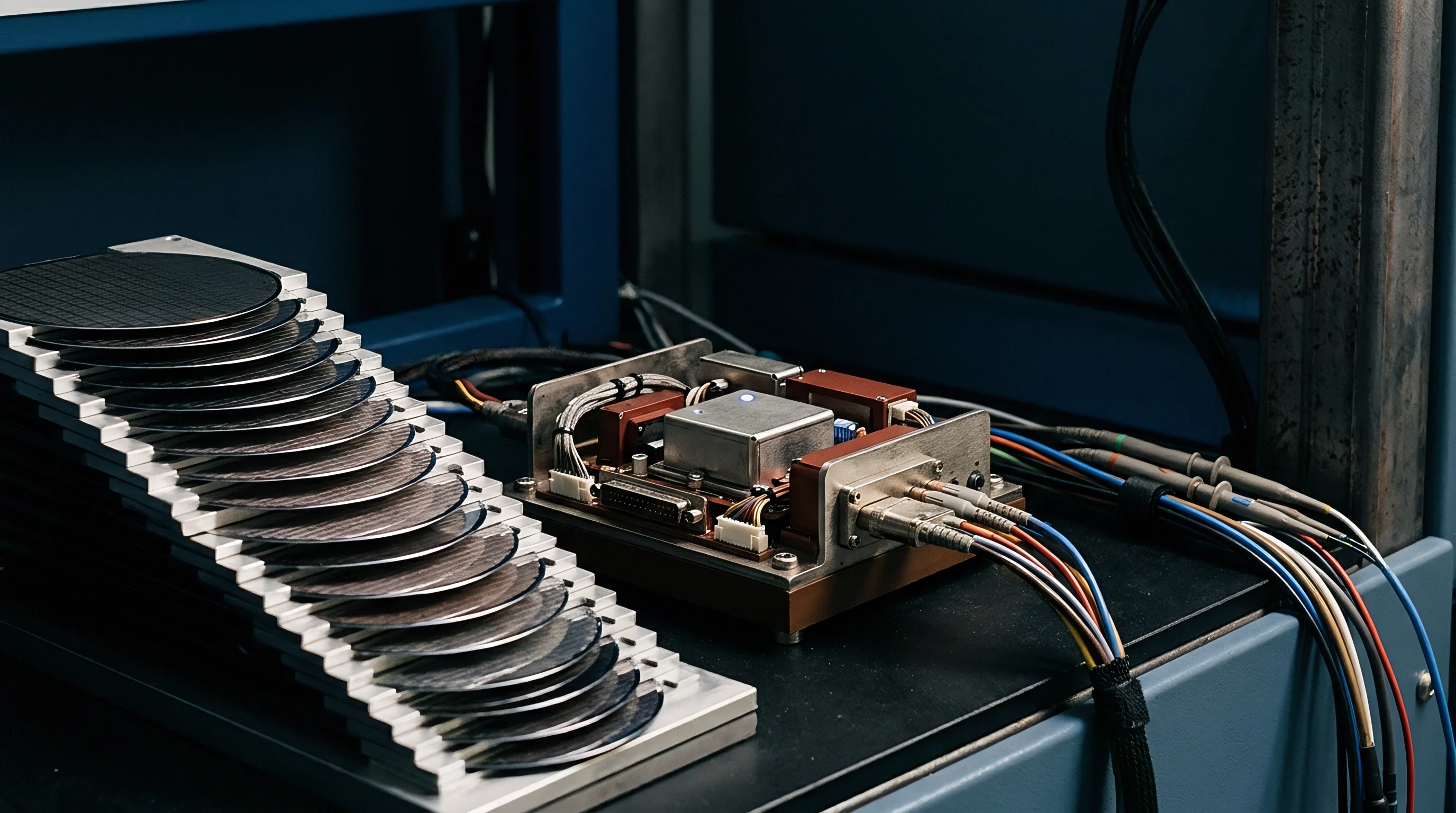
Remediation
Once triage defines the exact functional impact of a late change, engineering and operations lead the effort to contain and remediate. Recovery options depend on whether affected units are still in quarantine or have already shipped into customer supply chains. Cost, schedule, and technical feasibility dictate whether a lot can be salvaged with firmware updates, board-level rework, or complete scraping.
Firmware remediation offers the quickest and cheapest recovery path when part swaps introduce timing or peripheral shifts that don’t harm hardware. If an alternate SPI Flash requires longer erase times or different status register polling, software engineers can implement adaptive drivers. The updated bootloader reads the JEDEC ID during startup, identifies the vendor device, and dynamically adjusts peripheral timing, read commands, and watchdog timeout limits.
Rolling out firmware patches over the air or via factory reprogramming tools brings assemblies back into compliance without touching a soldering iron.
Manual or machine rework on high-density SMT boards carries real technical and yield risks. Desoldering ICs, QFNs, or small passives exposes boards to repeated localized reflow heat. Using hot-air stations or automated BGA replacement equipment subjects surrounding components, solder joints, and PCB laminates to significant thermal stress.
That extra heat cycling can cause inner-layer micro-cracking, via barrel cracks, pad delamination, or board warpage. As a result, reworked boards show lower overall reliability and shorter mean time between failures than untouched factory assemblies.
Compliance with JESD46D mandates ninety days of advance notice before shipping silicon with revised mask sets or altered metal layers.
Physical rework requires strict adherence to IPC-7711/7721 standards for electronic assembly repair. Operators must be certified, and every reworked board needs post-rework cleaning, baking to drive out moisture, high-magnification visual checks, and a full automated functional test. Rework scrap rates typically run from three to eight percent due to thermal and mechanical damage ~ a loss factor that must be factored into financial models comparing rework against scrapping the lot.
Screening and sorting are viable when parameter variations are distributed across a batch. If a substituted linear regulator fails only in units where input voltage rests at the bottom tolerance limit, automated test fixtures can perform hundred-percent screening. Sorting separates boards meeting full specs from non-conforming units, freeing a portion of the lot for shipment while set-aside units await rework or scrap recovery.
| Remediation Option | Direct Cost per Unit | Implementation Time | Expected Process Yield | Long-Term Reliability Impact |
|---|---|---|---|---|
| Firmware Driver Patching | $0.50 – $1.50 | 3 – 7 Days | 99.5% – 100% | Negligible impact; no physical board stress. |
| Automated SMT Board Rework | $8.00 – $22.00 | 14 – 30 Days | 92.0% – 96.0% | Moderate risk; thermal stress reduces fatigue life of adjacent solder joints. |
| Manual Hand Solder Rework | $12.00 – $35.00 | 21 – 45 Days | 85.0% – 91.0% | High risk; flux residue contamination and pad delamination risks. |
| 100% Parametric Screening | $2.00 – $5.00 | 5 – 10 Days | 60.0% – 85.0% | Zero physical impact on passing units; failing units discarded. |
| Complete Production Scrap | 100% of BOM + Assembly | 30 – 60 Days | 0% (New Lot) | Zero risk; fresh production run built to exact original specification. |
Field containment must trigger instantly if suspect assemblies slip past warehouse quarantine and reach customers or system integrators. Product management needs to issue technical service bulletins asking clients to pause installations or hold over-the-air firmware updates. Reverse logistics channels must open immediately to retrieve shipped units, issue serial-tracked return material authorizations, and supply replacements built to verified specifications.
Hesitation on field containment sharply increases commercial exposure, brand damage, and regulatory risk.
Managing non-conforming material requires formal engineering change orders and recorded scrap dispositions. Scrapped boards should be rendered physically unusable by mechanical drilling or industrial shredding to keep rejected inventory off the grey market. Quality assurance must maintain end-to-end logs for ISO 9001 and IATF 16949 audits, accounting for every serial number in the non-conforming batch.
Choosing a remediation strategy requires a clear decision framework balancing technical risk against schedule delays and financial liabilities.
- Firmware Adaptability Assessment determines whether software updates can mitigate parameter drifts without compromising performance or stability.
- Thermal Impact Evaluation evaluates whether desoldering and resoldering components causes thermal damage to nearby BGA or QFN devices.
- Yield Loss Modeling projects financial losses from scrap rates, labor hours, tooling amortization, and test overhead.
- Schedule Impact Analysis maps recovery timelines against customer delivery commitments, line-stop penalties, and release windows.
- Regulatory Compliance Re-Verification checks whether the chosen remediation requires updating filings with regulatory or safety bodies.
The contract specified that any component substitution executed without advance written ECN approval gives the buyer an unconditional right to reject the shipment and debit the supplier for all containment costs.

Recourse
Commercial recovery begins with a detailed review of the Master Manufacturing Services Agreement, Purchase Orders, and Engineering Change Protocols governing the relationship. These documents form the legal basis for passing re-testing fees, rework costs, and financial losses back to the contract manufacturer. Without unambiguous change-control language in the contract, recovering costs from unannounced substitutions becomes an uphill battle.
High-reliability manufacturing relies on strict Engineering Change Notice covenants. A clear agreement specifies that the contract manufacturer cannot alter the bill of materials, approved vendor list, manufacturing process, silicon stepping, packaging materials, or assembly plant without a signed Engineering Change Order from the buyer at least ninety days before production. The contract must make clear that pin-compatible drop-in alternates, passive material swaps, and second-source ICs require formal ECN approval, regardless of whether the supplier considers them minor.
Warranty claims followed three months later.
Financial recovery works through debit memos and invoice set-offs. When unauthorized substitutions create direct expenses, finance issues a debit memo itemizing the losses: engineering fees for triage testing, third-party lab bills, sorting labor, board rework costs, scrapped materials, and freight. Set-off clauses in the contract give the buyer the explicit right to deduct that debit memo total from open accounts payable invoices owed for previous or current production runs.
The manufacturing contract carried no financial penalty for unannounced changes.
Indemnification clauses in manufacturing agreements must cover secondary damages caused by non-conforming parts. Suppliers usually try to cap liability at the purchase price of the component or board assembly. Buyers need to negotiate contracts that carve out unapproved component substitutions from standard liability caps.
Shipping hardware with unauthorized part swaps constitutes a material breach, leaving the supplier fully liable for line-stop penalties, recall expenses, regulatory fines, and third-party property damage.
The vendor denied all financial liability for the assembly failure.
Buyers should demand a root cause analysis and corrective action report using standard 8D methodology. The manufacturer must submit an 8D report within a set timeframe ~ typically five business days from notification. The document needs to state the root cause of the unauthorized swap, detail immediate containment steps, define permanent corrective actions, and outline systemic fixes to prevent repeat occurrences.
Valid corrective actions include locking bill-of-materials fields in factory ERP systems, requiring optical scans of component reel part numbers before SMT feeder loading, and taking disciplinary action against buyers who bypassed client ECN controls.
Every pin on the alternate integrated circuit was physically identical.
Protecting against late notifications requires explicit terms in the purchasing agreement that allocate technical and financial risk upfront.
If an unauthorized substitution notice arrives after production, the buyer retains the right to reject the entire batch, freeze payment on open purchase order invoices, and require a replacement build using approved components entirely at the supplier’s expense. The supplier must also reimburse internal engineering hours, third-party lab fees, legal expenses, and freight costs spent evaluating, quarantining, and remediating the affected lots.
The buyer wrote strict 90-day notification covenants into the purchasing agreement.
Long-term supplier relationships usually weather substitution disputes through negotiated commercial settlements rather than litigation. A supplier might absorb all rework costs, offer unit price discounts on upcoming runs, extend warranties from twelve to thirty-six months, or fund dedicated safety stock for long-lead components. These remedies preserve business continuity while setting clear operational boundaries so notification requirements aren’t bypassed again.
What remains unresolved is whether automated artificial intelligence tools integrated into global distributor inventories will accelerate unannounced component substitutions by automatically recommending footprint-compatible alternates directly to factory surface-mount equipment without human engineering review.