Navigating eUICC Profile Management Protocols and Localized Tariff Restrictions in Restricted Geographic Regions
eUICC profile localization eliminates permanent roaming penalties in restricted regions, offsetting hardware premiums within six months of operation.

Vault
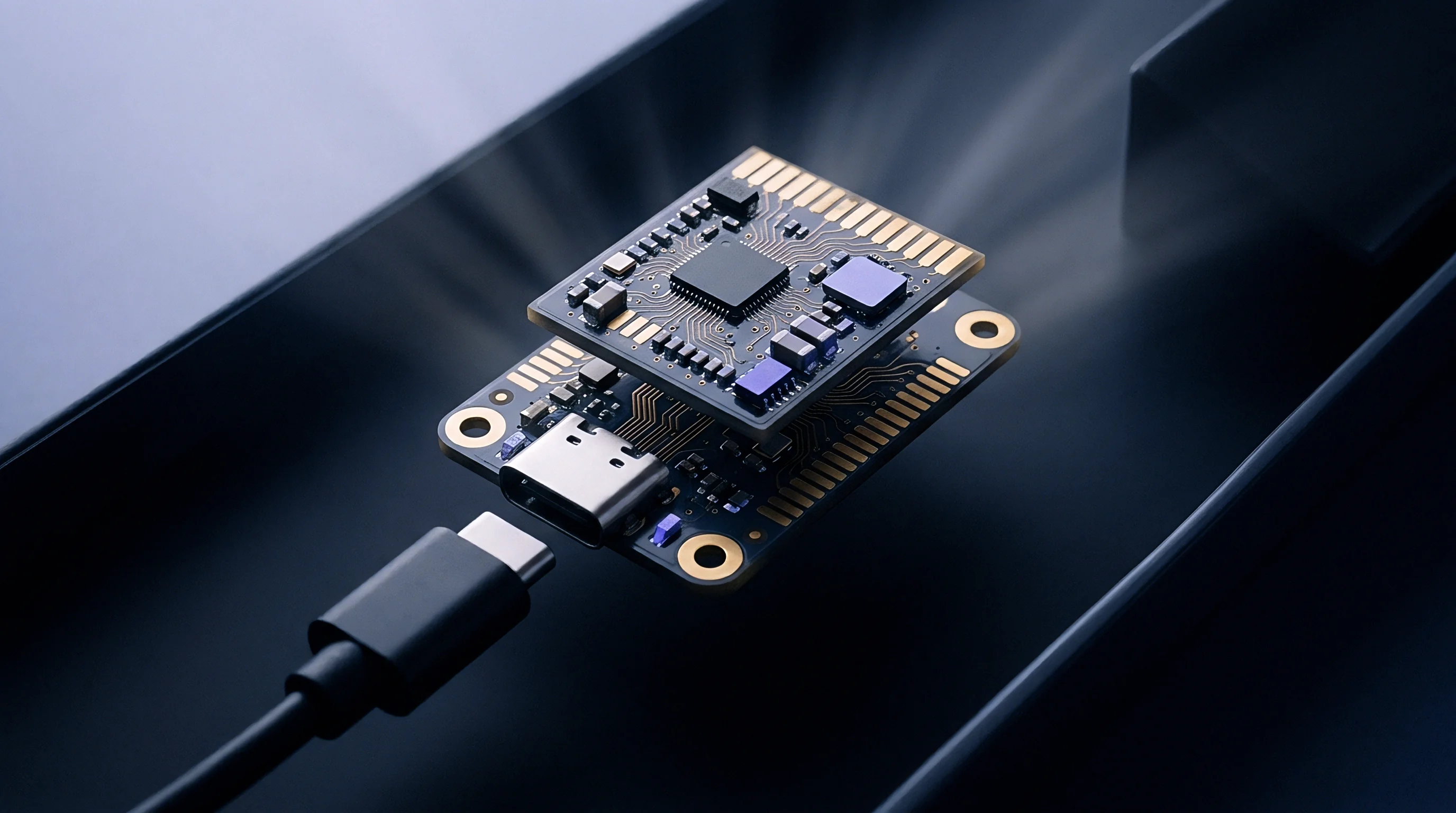
An embedded UICC architecture isolates identity storage within hardware cryptographic domains on the silicon die itself. Standard UICC modules store fixed credentials tied to a single network operator during fabrication, leaving profile capacity bounded by physical memory limits. The eUICC specification replaces that static layout with a dynamic file system hosting multiple Issuer Security Domains on a secure element certified to Common Criteria EAL5+ physical security standards, driven by a Java Card operating system built for cryptographic key lifecycle management.
Under GSMA specifications, the internal root of trust divides across three dedicated security domains. The Issuer Security Domain Root governs eUICC administration and verifies digital signatures on incoming commands. Operator keys sit inside the Embedded UICC Controlling Authority Security Domain, which validates profile structures before installation, while individual Issuer Security Domains house operational credentials ~ such as international mobile subscriber identities, authentication keys, and network-specific applets.
Enterprise hardware generally provides 512 kilobytes to 2 megabytes of flash memory, where each profile takes up between 40 kilobytes and 120 kilobytes depending on its applet payloads and internal file tables.

Secure Element Partitioning and Domain Architecture
Hardware-enforced memory protection units keep installed profiles strictly isolated from one another. Only the active profile communicates directly with the modem baseband interface; inactive profiles remain encrypted in dormant sectors. Switching profiles simply reassigns logical channels in the UICC file structure rather than rebuilding the master directory.
The GSMA SGP.22 specification assigns profile activation rights exclusively to the Issuer Security Domain Root after cryptographic handshake verification.
Installation failures climb sharply when secure domain allocation exhausts available runs of continuous flash blocks, making initial hardware selection decisive for long-term profile management across dense fleets.
- Cryptographic Key Mismatch occurs when the incoming profile’s embedded public key fails signature validation against the certificate authority root held in the Controlling Authority Security Domain.
- Memory Fragmentation Fault arises when flash memory cannot provide the contiguous sectors needed to expand the profile file system during decryption.
- Logical Channel Conflict develops when a newly installed profile targets a baseband channel index already locked by an active telemetry applet.
- Applet Execution Timeout happens when localized initialization scripts run past the execution window enforced by the secure element operating system.

Profile Storage Overhead and Memory Allocation
The internal file layout follows the ETSI TS 102 221 framework, arranging credentials into elementary files under dedicated administrative directories. Designing profiles involves trading applet features against storage constraints: a baseline connectivity profile with standard authentication algorithms takes roughly 45 kilobytes, but adding steering applets, multi-IMSI lookup tables, and SIM toolkit programs pushes the footprint past 95 kilobytes, with certificates expiring after ten years.
Hardware provisioning contracts impose strict rules on eUICC domain management. In particular, Section 4.2 of the GSMA SGP.25 Security Evaluation Criteria mandates complete cryptographic erasure of inactive profile keys as soon as a deletion command clears the primary controller interface.

Transport
Remote provisioning pushes profile packages across cellular networks using established transport protocols. Older M2M installations rely on the GSMA SGP.02 specification ~ a push model in which a Subscription Manager Data Preparation server hands binary packages to a Subscription Manager Secure Routing server over SMS or Bearer Independent Protocol channels. Newer IoT rollouts lean toward GSMA SGP.32, which bypasses SMS routing entirely in favor of direct CoAP or HTTP connections managed by an IoT Profile Assistant on the modem or application processor.
OTA delivery drains finite battery capacity. Sending a complete operational profile across LTE-M or NB-IoT links means moving 35 kilobytes to 60 kilobytes of Abstract Syntax Notation One DER-encoded payload, preceded by TLS handshakes that consume an extra 8 kilobytes to 14 kilobytes in certificate exchanges before binary transfer even begins.

Bearer Independent Protocol and Modem Execution
The Bearer Independent Protocol provides the interface an eUICC secure element needs to open direct TCP or UDP sockets through the cellular modem. Local Profile Assistants running on modem firmware handle protocol translation and manage the TLS session directly with remote subscription managers while routing envelopes over BIP.
| Provisioning Standard | Transport Protocol | Payload Size Range | Typical Session Time | Airtime Energy Cost |
|---|---|---|---|---|
| GSMA SGP.02 M2M | SMS and HTTPS over BIP | 65 KB to 110 KB | 45 s to 120 s | 1.80 J to 3.50 J |
| GSMA SGP.22 Consumer | HTTPS over TCP | 50 KB to 85 KB | 20 s to 45 s | 0.95 J to 1.70 J |
| GSMA SGP.32 IoT | CoAP over DTLS or HTTP | 35 KB to 60 KB | 12 s to 30 s | 0.42 J to 0.90 J |
Modem firmware dictates how quickly remote provisioning commands execute through a defined update sequence.
- The host application issues an AT command to wake the modem and open a logical socket to the target endpoint.
- The modem negotiates a Datagram Transport Layer Security channel with the remote Subscription Manager Data Preparation server using pre-shared elliptic curve certificates.
- The eUICC ingests incoming DER-encoded profile blocks delivered through Bearer Independent Protocol open channel parameters.
- The Controlling Authority Security Domain decrypts the blocks and writes profile structures into designated flash sectors.
- The host platform executes a terminal response reset, prompting the modem baseband to drop from the serving cell and reconnect with the newly installed credentials.

Protocol Payload Overhead across Cellular Bearers
Narrowband IoT forces heavy packet fragmentation because of small maximum transmission unit limits and constrained data rates. Pushing a 50-kilobyte profile package across an NB-IoT bearer at 20 kilobits per second keeps the radio active for more than 25 seconds under optimal conditions; marginal RF links with frequent packet retransmissions drive power consumption significantly higher.
A 45-kilobyte profile download over an NB-IoT bearer with a reference coupling loss of 144 dB consumes 2.45 Joules of energy during a 38-second session.
Remote profile management is specified to operate across cellular networks without interrupting application traffic, yet packet loss during radio bearer handovers frequently triggers TLS handshake timeouts, forcing full session restarts that exhaust battery reserves.


Border
National borders present sharp regulatory hurdles for fleets deployed on global roaming profiles. Telecommunications authorities enforce strict limits on permanent roaming to protect domestic carriers and maintain lawful data interception oversight. Hardware transmitting on foreign IMSI ranges past mandated grace periods faces network de-registration, halting telemetry altogether.
Regulators in Brazil, Turkey, India, and Saudi Arabia mandate local network credentials for long-term deployments, prohibiting foreign SIMs from lingering continuously on domestic cell towers beyond defined windows. Switching profiles locally via eUICC satisfies these rules without requiring physical card replacements across field units.

When Does Permanent Roaming Trigger Local Profile Deactivation?
National regulatory bodies specify explicit duration thresholds before forcing foreign SIM disconnection.
| Country | Regulatory Body | Roaming Grace Period | Localization Mechanism | Enforcement Action |
|---|---|---|---|---|
| Brazil | Anatel | 90 Consecutive Days | Local Profile Download or Multi-IMSI | Data Session Blocking |
| Turkey | BTK | 120 Cumulative Days | Local Profile with Local Entity Tax Registration | IMEI Blacklisting |
| India | TRAI | 30 Consecutive Days | Local Profile or Mandatory Local APN Gateway | Network De-authorization |
| Saudi Arabia | CST | 180 Cumulative Days | Local Profile via In-Country SM-DP+ Server | Carrier Traffic Throttling |
Maintaining compliance requires continuous monitoring of device uptime within restricted territories.
Regulatory compliance in restricted geographic zones depends on automated localized profile download mechanisms prior to local roaming grace period expiration.
Shipping hardware into restricted markets without an automated profile fallback exposes deployments to operational cutoffs.
- Grace Period Tracking measures total connection duration on non-domestic Public Land Mobile Networks against national regulatory caps.
- Local Entity Verification binds registered profile credentials directly to a corporate entity incorporated within the destination jurisdiction.
- Gateway In-Country Routing routes application data traffic through local packet gateways to meet data sovereignty requirements.
- Automated Fallback Triggering enables a dormant local profile stored in secondary eUICC memory if primary roaming disconnects for more than 48 continuous hours.
Territorial Tariff Cliffs and Localized Profile Swaps
International roaming tariffs penalize higher-bandwidth applications heavily. Roaming rates frequently hit $2.00 to $10.00 per megabyte in restricted markets, whereas local commercial pricing sits below $0.15 per megabyte. A device logging 50 megabytes of monthly telemetry runs up $100.00 each month on a foreign profile, but drops below $7.50 once switched to a local operator profile.
Local profiles depend on localized carrier agreements. Operating across borders without profile switching logic exposes fleets to steep billing escalations or abrupt disconnection when carrier roaming pacts lapse.


Lock
Compliance in tightly regulated territories goes beyond radio network authentication to encompass hardware registration. Regulatory agencies often require explicit pairing between cellular module identities and local subscriber credentials, using IMEI-IMSI binding to curb grey-market hardware imports and enforce identity databases.
Regulatory authorities in strict jurisdictions enforce deep packet inspection on perimeter firewalls, severing cryptographic connections directed at external Subscription Manager servers. Operating in-country provisioning infrastructure keeps certificate validation compliant with local telecommunications security rules.

Cryptographic Identity Verification and IMEI-IMSI Binding
Carrier infrastructure verifies module identity during the EPS attach or 5GS registration sequence. When a device attempts network access on a freshly downloaded local profile, the Mobility Management Entity confirms that the hardware IMEI matches whitelist records in the national Central Equipment Identity Register; unregistered modules are rejected immediately.
Certifying localized profile packages requires submitting documentation dossiers directly to regional regulatory bodies.
- Module Type Approval Certificate confirming radio frequency compliance with national spectrum allocations.
- GSMA Security Accreditation Scheme documentation establishing SAS-UP certification for the secure element manufacturing site.
- Local Entity Business License linking the enterprise profile account to a legal entity registered within the domestic territory.
- Data Sovereignty Architecture Dossier demonstrating that application payload data remains within national borders during processing.

Data Sovereignty and In-Country Gateway Routing
Data governance rules in jurisdictions such as Saudi Arabia and China prohibit exporting sensitive telemetry across national borders. Remote SIM provisioning systems targeting these countries must deploy local Subscription Manager instances within domestic data centers, as profile downloads from international SM-DP+ servers are systematically blocked at national Internet Exchange Points.
National data sovereignty laws force remote provisioning infrastructure to reside within domestic physical data centers.
Setting up localized profile switching requires navigating conflicting regulatory regimes across each target market.
Prospects for regional authorities standardizing eUICC provisioning into a unified global framework remain weak as domestic data sovereignty policies diverge further.


Receipt
Evaluating eUICC deployments requires balancing initial hardware premiums and transaction fees against long-term roaming costs. Standard UICC modules run roughly $0.40 to $0.60 in volume, whereas industrial eUICC secure elements carrying GSMA SAS-UP certification cost between $0.95 and $1.85. Justifying that premium depends on the tariff savings yielded by local profile switching over multi-year operational lifecycles.
Provisioning platforms levy commercial transaction charges whenever a profile is generated and pushed. Subscription Manager Data Preparation fees generally span $0.20 to $0.80 per switch, depending on contractual tier, while over-the-air payload consumption adds airtime expense to each download.

Financial Modeling of Profile Lifecycle Costs
Projecting total cost of ownership across a five-year deployment entails comparing roaming bills against the overhead of localized profile management. A model of 10,000 devices deployed in a restricted region over five years, each using 20 megabytes of data per month, illustrates the difference.
| Cost Component | Standard Roaming UICC | eUICC with Local Switching | Multi-IMSI Applet SIM |
|---|---|---|---|
| Initial Hardware Unit Cost | $0.50 | $1.40 | $0.95 |
| SM-DP+ Provisioning Transaction Fee | $0.00 | $0.40 | $0.00 |
| Profile Transmission Airtime Cost | $0.00 | $0.25 | $0.05 |
| Five-Year Cumulative Data Tariff Fees | $180.00 ($3.00/mo) | $36.00 ($0.60/mo) | $54.00 ($0.90/mo) |
| Total Five-Year Cost Per Unit | $180.50 | $38.05 | $55.00 |
Operating on local data tariffs amortizes the initial hardware markup and transaction costs of eUICC hardware within the first six months.

Airtime Amortization and Multi-IMSI Operational Trade-Offs
Multi-IMSI applets store several pre-loaded operator identities directly on standard UICC flash memory, rotating between them based on network availability flags. They sidestep SM-DP+ transaction fees and OTA download airtime costs altogether. But multi-IMSI solutions lack the architectural flexibility of eUICC; if the underlying roaming agreement between the applet aggregator and the local carrier falls apart after deployment, entire device fleets risk sudden stranding.
An eUICC platform reduces five-year connectivity costs by 78 percent compared to permanent foreign roaming in restricted geographic markets.
Silicon pricing scales according to procurement volume.
Long-term budgets favor eUICC architectures capable of swapping in local tariff profiles whenever regional rules tighten or commercial rates change.