Meaning
Radio frequency microelectromechanical systems switches belong to the class of electrostatic or electromagnetic actuators that route high frequency signals through mechanical contact rather than solid state semiconductor junctions. A radio frequency microelectromechanical systems switch achieves low insertion loss and high isolation across millimeter wave bands by relying on microscopic metal cantilevers suspended above transmission lines. Actuation voltages draw the movable beam downward to close the circuit or release it to open the path, establishing physical metal to metal contact or capacitive coupling depending on the design.
This mechanical separation eliminates the nonlinear distortion and leakage currents inherent in field effect transistor alternatives, making the architecture suitable for multi band cellular front ends. Operational boundaries appear at high power levels where hot switching causes contact welding, restricting the component to cold switching routines where radio frequency power is absent during state transitions.
Thermal Budget
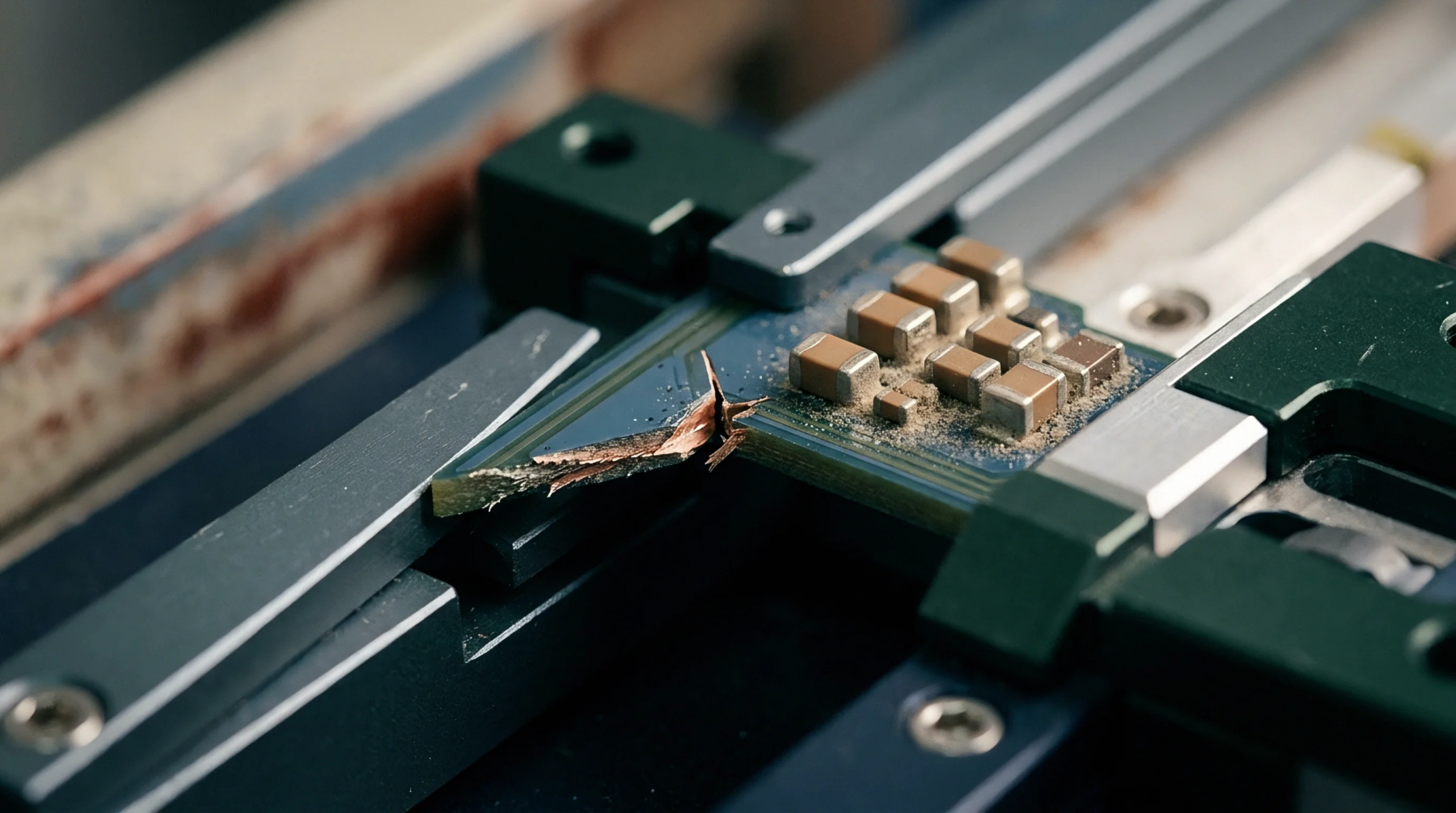
Thermal mechanical stress management determines whether a packaged radio frequency microelectromechanical systems switch survives surface mount reflow soldering and high temperature operating life testing. The coefficient of thermal expansion mismatch between the silicon substrate, glass carrier, and metallic packaging lid induces permanent beam deflection if residual cavity pressure and sealing temperatures are mismatched during wafer level packaging. Designers counter this drift by incorporating strain relief springs into the anchor design and filling the hermetic cavity with a precise mixture of helium and nitrogen gases to damp the mechanical resonance of the moving beam.
During continuous transmission, self heating from radio frequency power dissipation raises the internal package temperature, which alters the pull in voltage required to actuate the switch element. Qualification procedures demand thermal shock cycling from minus fifty five degrees Celsius to plus one hundred twenty five degrees Celsius before the component meets the mechanical integrity standards required for aerospace and defense hardware integration.
Insertion Loss
Signal attenuation through a radio frequency microelectromechanical systems switch depends directly on the contact resistance at the microscopic interface and the parasitic capacitance of the open state. Minimizing insertion loss requires noble metal contact layers such as gold or platinum ruthenium alloys to prevent insulating oxide accumulation during millions of switching cycles. Parasitic capacitance couples high frequency energy past the open gap, degrading isolation performance at frequencies exceeding thirty gigahertz.
Engineers balance contact force against actuation voltage during the simulation phase to achieve low on state resistance without demanding excessive charge pump circuitry from the surrounding printed circuit board. Measurement verification occurs on radio frequency probe stations using vector network analyzers calibrated to the device reference planes, where return loss and insertion loss parameters are logged across the operational temperature range.
Reliability Qualification
Accelerated life testing protocols define the operational lifetime of a radio frequency microelectromechanical systems switch by quantifying dielectric charging, mechanical fatigue, and contact degradation under continuous cycling. Dielectric charging occurs when charge carriers become trapped in the actuation oxide under a direct current bias, shifting the pull in voltage until the device fails to release. Pulsed actuation waveforms and bipolar voltage drive schemes mitigate charge accumulation by periodically neutralizing the electric field across the dielectric layer.
Destructive physical analysis follows mechanical endurance testing to inspect the microscopic contact asperities for pitting, material transfer, and particulate contamination generated during high speed impact. Component qualification concludes when the device completes the required billions of cycles without exceeding the specified insertion loss degradation threshold or losing hermetic seal integrity.