Meaning
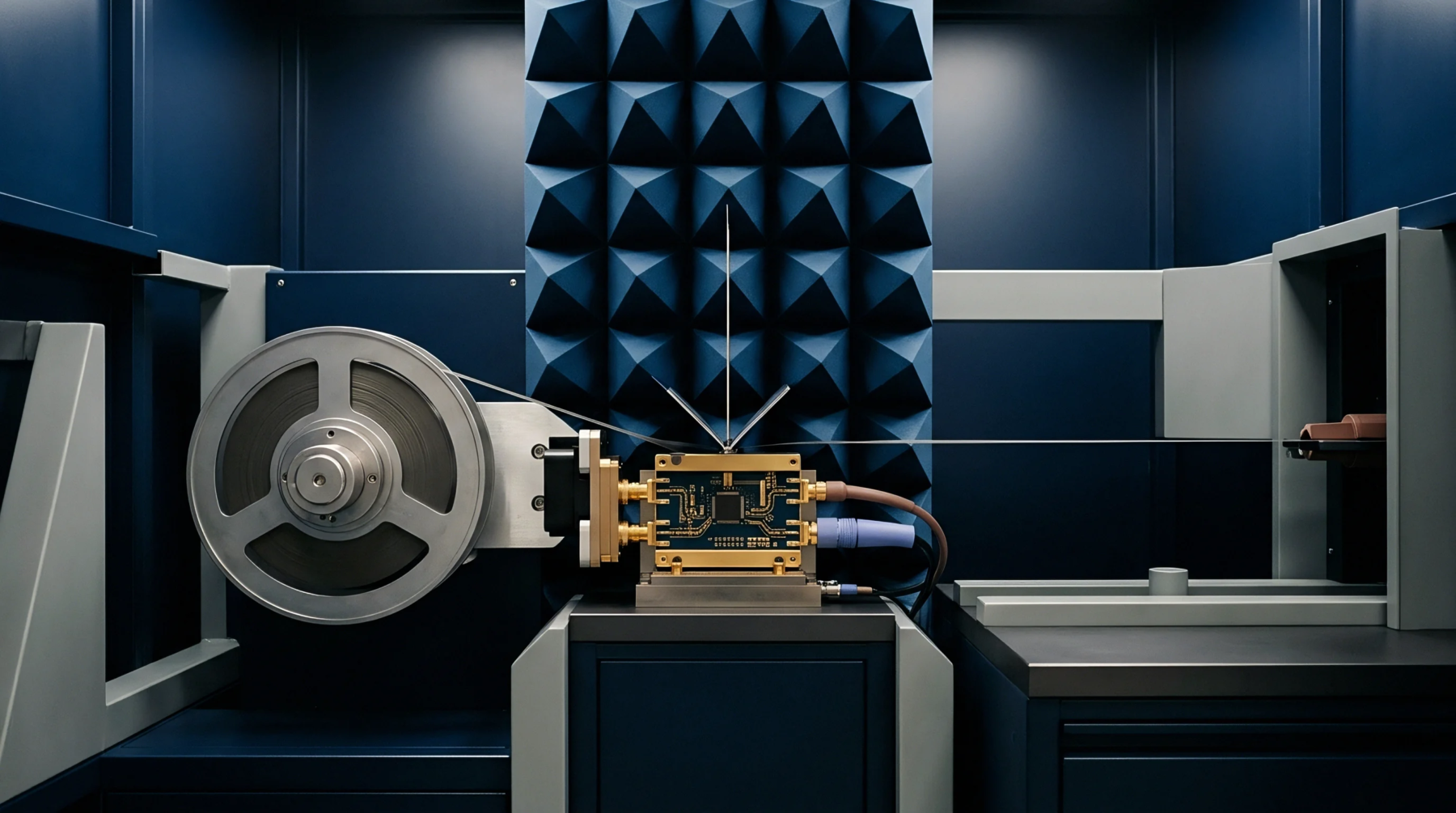
A shielded enclosure designed to contain electromagnetic fields allows manufacturers to test wireless connectivity modules without ambient interference from external cellular or broadcast transmissions. Such a microwave chamber absorbs internal reflections through carbon loaded foam pyramids while isolating the device under test from outside noise. The structural boundaries of the enclosure must maintain high radio frequency attenuation across multiple gigahertz bands to ensure repeatable measurements during antenna performance verification.
Thermal Budget
Enclosed test fixtures trap heat generated by high power baseband processors during prolonged operational cycles. Active cooling loops or passive waveguide air vents prevent internal temperatures from exceeding semiconductor thermal limits inside the microwave chamber. Thermal expansion mismatch between aluminum baseplates and composite shielding panels can degrade radio frequency seals if the mechanical fasteners lack adequate torque tolerance.
System Integration
Handover documents require proof that the device under test fits inside the physical rack without impinging on the absorptive wall lining. Mechanical designers calculate clearance margins between antenna radiation apexes and interior pyramidal absorbers to avoid near field coupling anomalies. The mounting interface must align coaxial feedthrough cables without placing shear stress on internal bulkhead connectors during automated test handler cycles.
Compliance Qualification
Regulatory approval depends on laboratories proving that the measurement environment prevents stray emissions from escaping into the broader test facility. Test technicians record baseline noise floors before placing the production board on the positioning pedestal to satisfy EMC accreditation audits. The final certification report relies on documented calibration logs showing that the shielding effectiveness meets the baseline attenuation threshold specified by the governing radio standard.