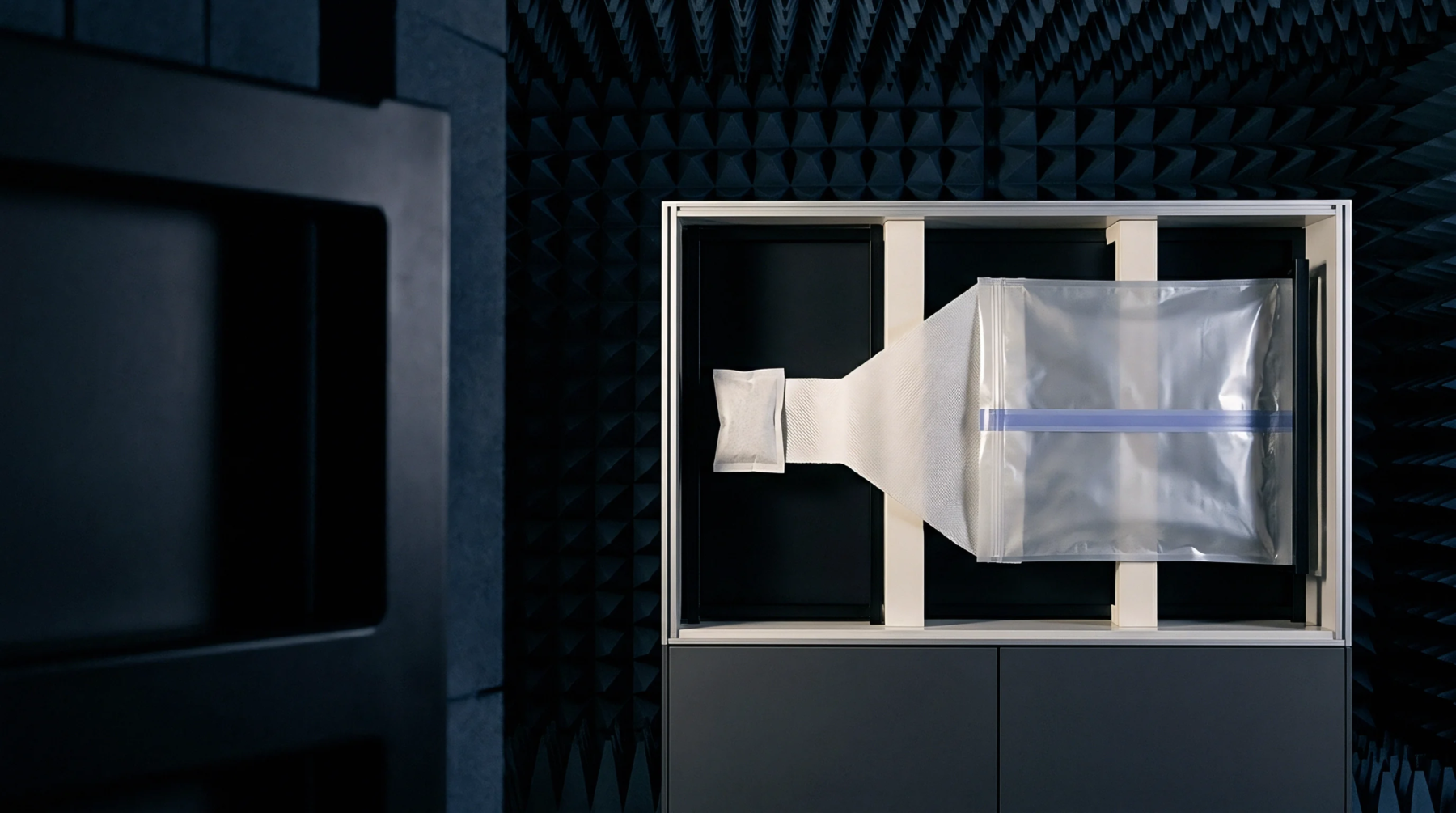
Meaning
A periodic variation in the signal strength across a defined volume of space results from the interference of multiple wave paths. In anechoic chambers, spatial amplitude ripple represents a major source of measurement uncertainty during over-the-air test sequences. Minimizing this ripple ensures that the device under test experiences a uniform signal field regardless of its exact positioning.
Interference Mechanism
Reflections from chamber walls and feed stands combine with the direct path to create standing wave patterns. The resulting spatial amplitude ripple appears as alternating peaks and valleys of signal strength across the quiet zone. Higher frequencies are especially prone to this issue because even tiny reflections create measurable interference patterns.
Test Uncertainty
A device placed within a region of non-uniform signal strength will yield inconsistent radiated power measurements. When spatial amplitude ripple is high, small positioning errors of the device lead to massive variations in recorded receiver sensitivity. Consequently, the measurement uncertainty budget must be expanded, which reduces the confidence level of the test results.
Chamber Optimization
High-quality microwave absorbers mounted on the chamber walls suppress stray reflections. Correct layout reduces the spatial amplitude ripple across the test volume. This optimization ensures a uniform quiet zone.