Meaning
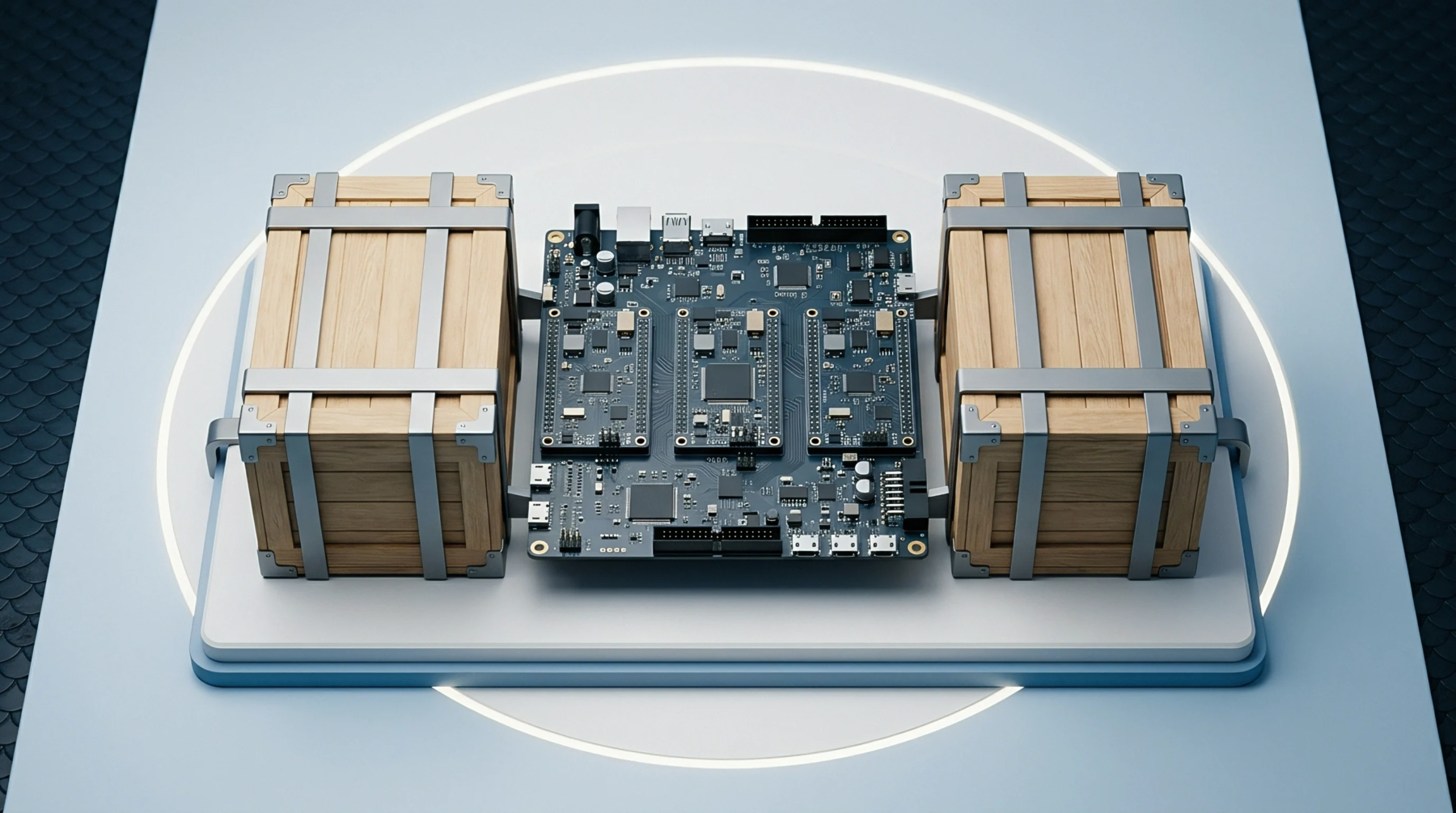
Dedicated non-volatile memory partitions hold unverified firmware payloads received over communication interfaces prior to installation. Connected internet of things devices allocate a staging memory bank to buffer over-the-air binary packages safely away from the active execution partition while transmissions complete. The boundary of this memory partition ends at the verification gate, leaving final sector programming and bank remapping to low-level bootloader routines.
Storage Partitioning
Physical flash organization isolates candidate update files from active operational code to avoid disrupting runtime execution. Within system memory architecture, a staging memory bank occupies either an internal flash bank or an auxiliary external serial flash memory chip connected via a serial peripheral interface bus. Sizing calculations require the staging area to match or exceed the maximum size of the application execution partition plus associated cryptographic signature blocks and manifest headers.
In dual-bank configurations, background over-the-air downloads write incoming image packets into the staging sectors while the core microcontroller continues servicing operational tasks from the primary bank. Partition boundaries align with erase sector blocks to avoid corrupting adjacent persistent log files during erase preparation.
Transfer Verification
Cryptographic validation protocols inspect received image packages inside the buffer before initiating flash installation. Once payload delivery to the staging memory bank completes, the bootloader verifies hash digests and signature certificates against internal secure credentials. Corrupted packets and unauthorized signature values result in the staging buffer being discarded without impacting the active running image.
The system clears the partition or marks metadata headers invalid when transfer verification fails.
Execution Isolation
Hardware design configurations prevent the central processing unit from executing unverified instructions directly from download buffers. Isolating the staging memory bank behind memory protection unit rules or external bus controllers prevents execution exploits if malicious code lands in the receiving space. Only after cryptographic authentication passes does the system copy the verified binary to the primary execution slot or trigger an internal bank swap.
Firmware security policies maintain strict non-executable permissions across staging addresses permanently.