Cryptographic Key Custody across Factory Provisioning and Staging Deployment
Cryptographic key custody requires FIPS 140-3 HSM injection, credit-metered factory proxies, and strict scrap certificate revocation.


Origin
Injecting identity into silicon creates the core security boundary for connected hardware. Establishing an immutable Root of Trust inside a microcontroller or secure element can happen at several points in semiconductor manufacturing, each with different commercial trade-offs and exposure windows. Silicon vendors supply pre-provisioned microcontrollers with factory-burnt asymmetric keys, static symmetric injection, or Physically Unclonable Function anchors that derive key material dynamically from microscopic variations in gate oxide thickness.
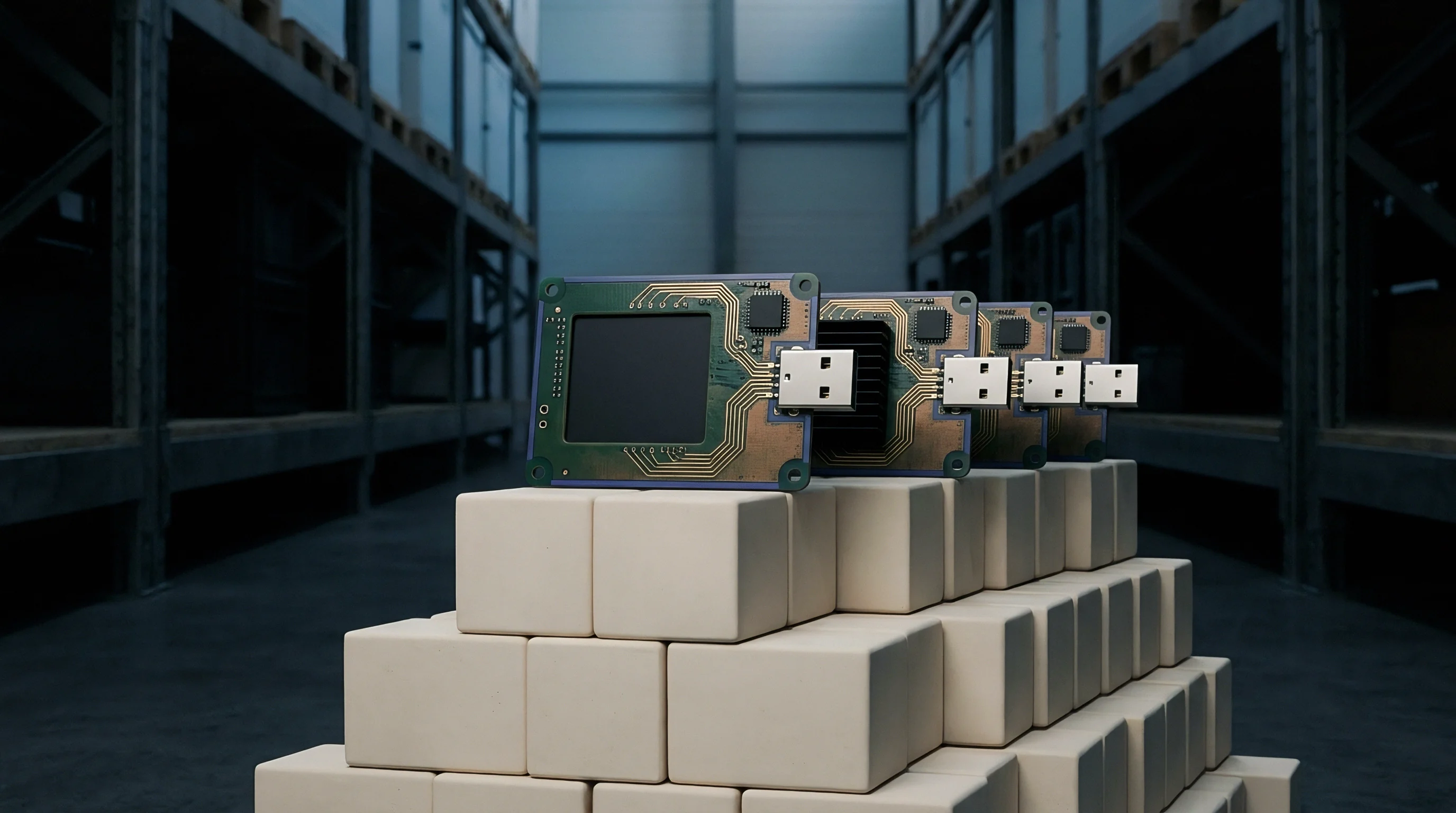
Hardware Security Roots
Chip vendors provide several ways to establish credentials during fabrication. During wafer-level testing with Automated Test Equipment, manufacturers can write unique cryptographic keys directly into One-Time Programmable eFuse arrays before packaging. This keeps raw key material inside the foundry cleanroom and excludes contract manufacturers from the trust chain entirely.
The Device Unique Keys written at wafer probe then act as parent keys for later secure boot verification and encrypted firmware delivery on the assembly line.
Silicon PUF technology avoids the risk of storing static master keys in non-volatile memory by generating unique cryptographic responses from minute manufacturing variations in the die. Automated wafer testing extracts a public key and helper data during initial enrollment, but the corresponding private key is never stored on a database, disk, or bus. Instead, the die reconstructs its private key on demand inside an isolated hardware enclave whenever powered up.

Pre-Provisioned Secure Enclaves versus SMT Flashing
Buying microcontrollers with pre-burnt symmetric keys eliminates the need for specialized cryptographic hardware on the assembly line. These pre-provisioned secure elements arrive at the plant carrying factory-loaded X.509 certificates signed by the vendor’s Intermediate Certificate Authority. As a result, contract manufacturers can place packaged chips directly onto surface-mount lines without needing key generation utilities or secure network access.
Injecting keys directly on the SMT line requires flashing raw microcontrollers over debug interfaces like Serial Wire Debug or Joint Test Action Group. Doing this on the assembly line exposes the bootloader and initial provisioning keys to the contract manufacturer’s test equipment. It also requires an active secure link to the brand owner’s key management server or local access to a Hardware Security Module.
The security boundary of a pre-provisioned chip ends at the silicon vendor’s Automated Test Equipment, whereas SMT flashing extends that boundary across the contract manufacturer floor.
| Provisioning Architecture | Injection Boundary | CM Line Equipment Impact | Unit Price Premium | Overbuilding Risk Exposure |
|---|---|---|---|---|
| Silicon Vendor ATE Pre-provisioning | Foundry / OSAT Facility | Standard Flash Programmer | $0.12 – $0.35 per chip | Zero |
| Dedicated Secure Element | Component Vendor Packaging | None (SMT Placement Only) | $0.45 – $1.20 per chip | Zero |
| Local HSM SMT Injection | CM Assembly Line | Local HSM + Proxy Server | $0.02 – $0.05 per chip | Contractual / Audit Dependent |
| Cloud KMS Real-time Flashing | CM Assembly Line | Secure Gateway + Low-Latency WAN | $0.01 – $0.03 per chip | Network Session Dependent |
Choosing an identity injection model sets the initial non-recurring engineering costs for factory bring-up. Semiconductor suppliers frequently cite long lead times and high minimum order quantities when declining requests for custom factory key pre-programming on low-volume production runs.


Vault
Hardware security modules installed directly on surface-mount lines hold the private master keys used to sign device firmware. Operating inside contract manufacturing plants requires strict isolation to prevent unauthorized personnel from extracting keys through physical or logical side channels. Installing an HSM at a third-party facility creates a clear operational boundary between the brand owner and the contract manufacturer.

Contract Manufacturer Cryptographic Enclosures
Physical containment systems at the assembly facility protect provisioning software against side-channel monitoring and unauthorized flash access. Factory hardware security modules rated for FIPS 140-3 Level 3 physically zero out internal keys if they detect a chassis breach, voltage anomaly, or temperature swing outside safe thresholds. Key generation, signature derivation, and key wrapping take place entirely within these hardened boundaries.
Factory floor operator interfaces connect to local proxy servers through PKCS#11 APIs. The local proxy orchestrates the sequence between the Automated Test Equipment jig and the hardware security module. Direct physical access to the module’s administrative console is restricted to the brand owner’s administrators using smartcards and dual-custody physical keys.

Factory Key Transport Mechanisms
Encrypted key packages travel over mutually authenticated TLS sessions from the primary cloud vault to local injection proxies. Master keys originating in cloud key management services are wrapped using AES Key Wrap per RFC 3394 guidelines before transfer. The local HSM decrypts the package inside its secure boundary, keeping plaintext key material out of contract manufacturer server memory and local storage.
- Hardware Tamper Tripping Uncalibrated line power or physical shock to the factory rack triggers the internal zeroization circuit, permanently erasing stored manufacturer keys.
- PKCS#11 Driver Mismatch Incompatible driver versions between local factory proxy software and hardware security module firmware halt real-time signature generation mid-shift.
- Ephemeral Key Exhaustion High-speed automated programming lines consume local key pre-fetch pools faster than the cloud synchronization relay can replenish them over latency-constrained links.
- Clock Drift Desynchronization Internal clock skew within offline hardware security modules invalidates timed key derivation tokens, rejecting valid key injection requests from automated test equipment.
A FIPS 140-3 Level 3 hardware security module operating on a contract manufacturing line erases stored master keys within two milliseconds of detecting an active physical enclosure breach.
Contractual terms dictate physical security requirements for hosting brand-owned security hardware at third-party assembly plants. Standard manufacturing services agreements require contract manufacturers to provide dedicated lockable server racks, uninterrupted power supplies, and restricted physical access logs for all spaces containing key injection appliances.


Conduit
Manufacturing networks rarely meet the security standards required for unencrypted payload delivery across line boundaries. Communication conduits linking cloud-based key authority servers to factory floor automated test equipment must maintain operational continuity even during wide-area network disruptions. Balancing continuous real-time cryptographic verification with line throughput requires deliberate choices regarding batching, session architecture, and counter management.

Cryptographic Metering and Overbuilding Protection
Credit-based key authorization engines prevent assembly sites from producing unauthorized units beyond the contracted purchase order quantity. The cloud key management system issues cryptographic tokens authorizing a finite count of key injection cycles. The local factory hardware security module consumes one credit token per successfully provisioned microcontroller.
Once the credit balance reaches zero, the module rejects further key injection calls until the brand owner transmits an additional signed authorization batch.
Offline batch provisioning enables continuous assembly operations when factory internet connections fail. The local hardware security module maintains a cryptographically signed cache of pre-wrapped keys. Every injected key transaction updates an internal append-only transaction ledger signed by the factory module’s private audit key.

Integration Software NRE and Per-Unit Economics
Turnkey module sourcing shifts the engineering expense of provisioning infrastructure from internal software teams to the component supplier. Evaluating the financial boundary between pre-provisioned secure elements and factory-injected microcontrollers requires comparing non-recurring engineering charges against per-unit component markup.
Consider a production run of 250,000 IoT units over a two-year product lifecycle. Option A uses a standard microcontroller paired with a pre-provisioned secure element costing an additional $0.18 per unit, with zero custom factory integration costs. Option B uses the standard microcontroller alone, requiring a $45,000 non-recurring engineering investment for custom factory proxy software, local hardware security module integration, and automated test jig flashing scripts, plus a $0.03 per-unit factory provisioning licensing fee.
The total expenditure for Option A equals $45,000 in component premiums. Option B requires $45,000 in initial engineering fees plus $7,500 in per-unit fees, yielding a total cost of $52,500. Option A achieves lower absolute cost while completely avoiding factory floor key management liabilities.
| Integration Level | Deliverables Provided | Source File Ownership | Acceptance Test Method | Non-Recurring Engineering Range |
|---|---|---|---|---|
| Turnkey Module | Pre-provisioned Hardware, Root CA Certs, Provisioning Logs | Supplier Proprietary | Public Key Extraction & Cloud Challenge-Response | Included in Unit Price |
| Semi-Custom Assembly | Flashing Scripts, HSM Configuration Files, Local Proxy Binary | Shared Licensing | Automated Test Equipment Log Audit & Challenge | $25,000 – $60,000 |
| Reference Design Transfer | Schematics, HSM API Specs, Flashing Source Code | Buyer Owned | End-to-End Cryptographic Provisioning Audit | $50,000 – $120,000 |
Inadequate cryptographic conduit isolation allows untrusted factory line software to capture raw device identities during initial programming cycles. Intercepted device identity credentials enable unauthorized entities to clone valid network nodes prior to market release.


Reconciliation
Scrap units on surface-mount assembly lines create gaps between generated identity certificates and physical bill-of-materials counts. Microcontrollers that fail in-circuit testing, automated optical inspection, or functional verification after receiving cryptographic keys represent orphaned identities. Auditing, accounting for, and revoking these credentials prevents security vulnerabilities in production fleet registries.
Yield Loss and Certificate Revocation Workflows
Printed circuit board assemblies failing in-circuit testing after identity injection require formal cryptographic decommissioning procedures. The contract manufacturer’s automated test equipment sends a signed failure notification to the local proxy server upon detecting an unrecoverable hardware fault. The proxy records the rejected serial number and flags the associated public key certificate for revocation.
The local factory proxy periodically generates a Certificate Revocation List containing all public keys assigned to scrap boards. This revocation file uploads to the brand owner’s public key infrastructure, ensuring the cloud device registry automatically rejects connection attempts from decommissioned credentials.

Post-Production Log Auditing
Cryptographic ledger dumps generated by local hardware security appliances provide tamper-evident proof of injected serial numbers. Audit logs use hash chains where each log entry contains the cryptographic hash of the preceding entry. Modifying a historical record invalidates the entire subsequent hash chain, exposing log manipulation during post-production audits.
- The factory proxy extracts signed audit transaction logs from the hardware security module at the close of every manufacturing shift.
- The proxy transmits the log package containing device serial numbers, public key hashes, timestamp metrics, and failure codes to the brand owner’s verification server.
- The verification server cross-checks the total injected identity count against the physical board count recorded by the inline optical inspection system.
- The verification server automatically invalidates any device certificates tied to hardware serial numbers marked as physical scrap in the assembly yield report.
- The brand owner releases the final commercial payment line item for the batch upon validating the mathematical integrity of the append-only audit log chain.
ISO 27001 audit compliance for manufacturing facilities mandates matching every active cryptographic identity against a physically verified, passed functional assembly board.
Scrap reconciliation efficiency directly affects net manufacturing yield economics. A high scrap rate without immediate certificate revocation allows rejected PCBs discarded in factory bins to be harvested for valid identity keys.


Staging
Intermediate assembly facilities assign operational certificates to hardware immediately prior to field installation. Hardware leaving the primary contract manufacturing plant often carries only a minimal bootstrap identity, such as an Initial Device Identifier defined under IEEE 802.1AR standards. Staging depots convert these temporary bootstrap identities into permanent operational credentials customized for specific enterprise networks.

Where Does Field Identity Rebinding Occur during Staging?
Depot personnel transition initial IEEE 802.1AR factory certificates into production cloud identities using automated enrollment protocols. Field identity rebinding takes place inside controlled staging facilities prior to physical mounting, or automatically during the initial zero-touch onboarding boot sequence on site. The device uses its Initial Device Identifier private key, stored securely inside internal flash or secure element, to authenticate mutual TLS connections to a staging enrollment server running Enrollment over Secure Transport or Lightweight Directory Access Protocol services.
The enrollment server verifies the device’s factory certificate against the brand owner’s Root Certificate Authority. Upon successful authentication, the server issues a Local Device Identifier containing field-specific attributes, network permissions, and enterprise domain mappings. The device writes the Local Device Identifier to a separate protected memory partition, maintaining the Initial Device Identifier as an immutable fallback credential.

Zero-Touch Provisioning Protocols in Logistics Operations
Standardized onboarding engines allow devices to authenticate against cloud endpoints without exposing administrative credentials to warehouse technicians. FIDO Device Onboard specifications define a cryptographically secure protocol that enables unconfigured hardware to automatically discover and register with owner management systems. The device boots, connects to a local network, contacts a Rendezvous Server using its factory identity, and completes ownership transfer without manual key entry.
- Enrollment over Secure Transport (RFC 7030) Provides automated certificate renewal and key rollover using simple HTTPS interfaces suitable for memory-constrained embedded platforms.
- FIDO Device Onboard Executes secure ownership transfer in untrusted field environments through cryptographic ownership vouchers verified by the device’s hardware root of trust.
- Device Provisioning Protocol Simplifies secure network onboarding for Wi-Fi enabled devices via optical QR code scanning or Near Field Communication configuration exchanges.
Field staging rebinding decouples factory key custody from customer network credentials, isolating manufacturing supply chains from operational domain secrets.
Unresolved questions persist regarding long-term ownership transfer protocols when hardware moves between multiple enterprise domains during lifecycle redeployment.


Margin
Commercial terms for key management integration directly dictate whether contract manufacturers or module buyers absorb key exposure liabilities. Defining cryptographic custody boundaries inside statement-of-work documentation establishes explicit accountability for private key generation, storage, usage, and destruction across global supply networks. Ambiguous language regarding key governance introduces severe financial exposure during second-sourcing transfers or product breach events.

Dual-Sourcing Key Management Transfer Friction
Moving module production between assembly vendors requires transferring physical hardware security module policies and provisioning firmware dependencies. Contract manufacturers operating proprietary key injection software create technical switching barriers that slow second-sourcing qualification. Brand owners must ensure that all factory proxy software binaries, hardware security module configuration scripts, and test jig firmware reside in brand-owned repositories under standard software version control.
Qualifying a secondary manufacturing facility requires re-establishing the complete cryptographic trust chain. The primary brand owner provides the secondary factory with separate local hardware security module credentials, unique intermediate certificate authorities, and isolated credit token pools. Isolating key infrastructure per manufacturing site limits security breach blast radiuses to single production lines.

Contractual Cryptographic Liability Boundaries
Supply agreements that omit specific key exposure penalties leave hardware brand owners fully exposed to software update forgery costs. Master manufacturing agreements must include explicit lines defining financial remedies for private key compromises resulting from contract manufacturer negligence or unauthorized network access.
| Integration Scope Level | Key Custody Owner | Primary Risk Vector | Contractual Liability Cap | Second-Source Transfer Time |
|---|---|---|---|---|
| Turnkey Supplier Module | Module Vendor | Vendor CA Compromise | Limited to Module Replacement Cost | 2 to 4 Weeks |
| Semi-Custom Assembly | Shared (Vendor / CM) | Factory Proxy Software Vulnerability | Capped at Direct NRE Value | 8 to 12 Weeks |
| White-Label Reference Design | Brand Owner | CM Line Operator Extraction | Full Direct Loss Coverage | 12 to 20 Weeks |
Establishing comprehensive key custody across factory provisioning and staging sites requires continuous alignment between technical hardware security mechanisms and commercial contract terms. Engineering teams specifying cryptographic roots of trust must collaborate with procurement leads to ensure that key generation protocols match the liability boundaries defined in final manufacturing supply contracts. The alignment of hardware security capabilities with contractual accountability forms the ultimate defense against key compromise in distributed global manufacturing operations.