Meaning
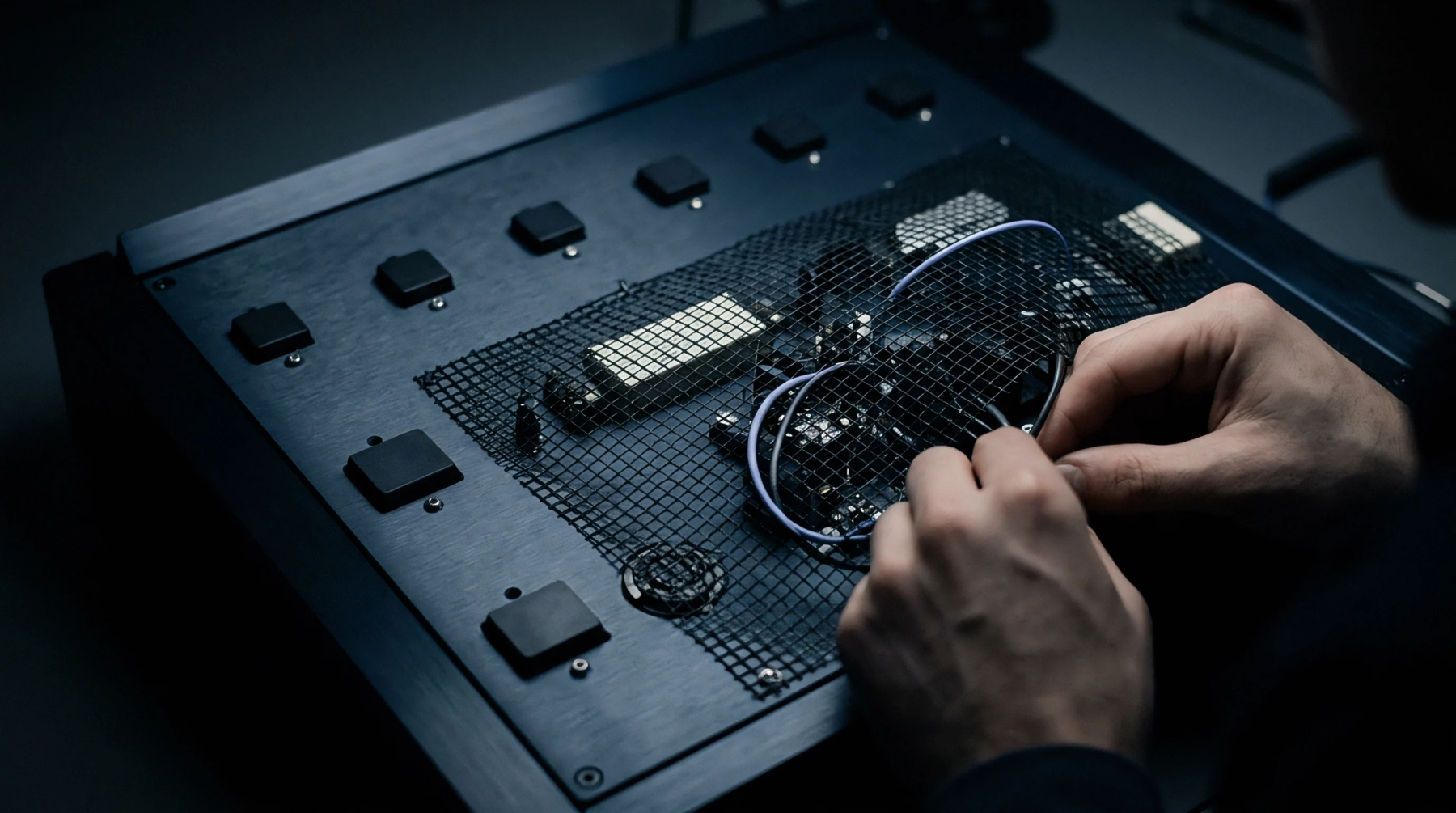
Non-recurring engineering expenditures incurred during manufacturing launch cover the custom design, physical machining and software integration of automated testing hardware. A test fixture nre charge accounts for dedicated bed-of-nails adapters, radio frequency shielding enclosures, pneumatic actuation mechanics and custom interface circuit boards fabricated to validate printed circuit boards on the assembly line. The expenditure covers device-specific testing machinery deployed during in-circuit testing, board-level functional testing, firmware flashing and end-of-line verification inside mass production factories.
Recurrent per-unit manufacturing costs, standard off-the-shelf instrument depreciation and general factory maintenance fall outside this one-time developmental tooling charge.
Mechanical Fabrication
Translating a printed circuit board layout into a functional test bed demands precision mechanical and electrical fabrication. Tooling houses construct bed-of-nails enclosures using machined synthetic resin plates, spring-loaded pogo pins and mechanical clamping levers that align with board test points down to tight sub-millimeter tolerances. When integrating wireless devices, test fixture nre encompasses custom-machined radio frequency shielded boxes lined with anechoic absorber foam to prevent external cellular and wireless interference from distorting receiver sensitivity checks.
System Commissioning
Integrating a test fixture requires developing custom software drivers, configuring measurement equipment and validating repeatable signal capture. Engineers write automated test scripts that command digital multimeters, spectrum analyzers, oscilloscopes and programmable direct-current power supplies to run fast automated pass-fail sequences. Allocating test fixture nre funds ensures that firmware flashing sequences, calibration routines and serial number provisioning software integrate seamlessly into the overall factory manufacturing execution system.
Tooling engineers run gauge repeatability and reproducibility studies, verifying that fixture contact resistance and measurement variances remain within strict five-percent statistical bands. If pogo pin misalignment or improper spring tensions cause probe witness marks to damage fragile board traces, mechanical adjustments resolve contact geometry prior to production ramp sign-off. Updating device test point locations or modifying physical board dimensions due to schematic revisions renders existing custom fixtures obsolete, requiring supplementary non-recurring investments to modify or re-machine the tooling plate assemblies.
Tooling Handover
Commercial settlement requires executing a comprehensive acceptance test protocol on the factory floor before release to active production. Factory leadership, contract manufacturing quality representatives and original equipment manufacturer engineers co-sign handover sign-off certificates verifying that the commissioned equipment achieves targeted cycle times and accurate defect detection thresholds. The finalized test fixture nre transaction transfers operational custody of the completed physical apparatus to the assembly plant while preserving proprietary design rights with the commissioning client.
An authorized test fixture nre investment secures dedicated, repeatable quality control gates on the factory floor.