Contractual Mechanisms for Intellectual Property Escrow and Automated Test Jig Transfer Parameters
Escrow contracts must pair uncompiled raw CAD databases and dockerized toolchains with calibrated golden units to enable rapid secondary test jig bring-up.


Vault
Hardware module sourcing agreements frequently break down at the boundary where intellectual property leaves the primary manufacturer’s engineering environment. When an original design manufacturer builds an assembly under a turnkey contract, the buyer holds commercial rights to the final product but rarely possesses the underlying source data needed to manufacture it elsewhere. Intellectual property escrow agreements try to bridge this gap by placing design files with a neutral third party.
Yet without explicit contractual terms defining file formats, build tools, and test executive dependencies, escrow deposits end up as incomplete code archives that stall factory transfers when invoked.
Deposit Architecture for Design Packages
A complete design handover requires uncompiled source material, not just manufacturing outputs. Primary suppliers routinely try to meet escrow obligations with static files ~ flat Gerbers, binary images, and locked PDF schematics. But setting up a secondary facility demands native design files.
The contract must specify raw CAD databases built in Allegro, Altium Designer, or Xpedition, complete with custom symbol libraries, padstack definitions, and board constraint rules. Gerber X2 files embed stackups.
Fabrication documentation relies on standardized schema packages to prevent layer reordering when spinning up a new board line. The IPC-2581 format consolidates layer stackups, drill tables, netlists, and bill-of-materials attributes into a single XML structure. Submitting fragmented documentation forces the buyer to reverse-engineer PCB stackups and impedance profiles in the middle of an emergency transfer.
An uncompiled source tree without its matching toolchain container adds twelve weeks to third-party build verification.

Raw CAD Repositories and Fabrication Outputs
Native schematic files and board layouts must be delivered in their original EDA formats alongside version-controlled component libraries. Differential trace impedance targets, dielectric constants, and copper weight tolerances require explicit documentation in the board fabrication notes. Omitting layer stackup specifications invalidates the escrow deposit, as secondary fab houses cannot reconstruct controlled-impedance signal paths without guessing dielectric variations.

Firmware Environments and Reproducible Build Containers
Source code archives without exact toolchain dependencies cannot be compiled at secondary sites. Deposit parameters must mandate dockerized container images holding the exact compiler binaries, system headers, linker scripts, and hardware abstraction layers used during initial qualification. The repository deposit must include raw target firmware in C or C++, uncompiled bootloader source, pin multiplexing configurations, and register map header files.
Pre-compiled static libraries are prohibited unless accompanied by underlying source code or explicit third-party license transfers.
| Deliverable Subsystem | Mandatory File Formats | Toolchain and Dependency Controls | Deposit Audit Criteria |
|---|---|---|---|
| Schematics and Layout | Native CAD database, IPC-2581 C, ODB++ v8.1 | Exact EDA software version and plugin manifest | Netlist extraction comparison against Gerber output |
| Embedded Firmware | Uncompiled C/C++ trees, linker scripts, CMake build scripts | Dockerized container with GNU Arm Embedded Toolchain | Bit-for-bit executable binary compilation matching target release |
| Programmable Logic | Verilog, VHDL, constraint files (.sdc) | Vendor synthesis engine project archive | Successful placement, routing, and bitstream generation |
| BOM and Sourcing | IPC-1752A XML, hierarchical multi-level CSV | Manufacturer Part Numbers and approved second sources | Active lifecycle status check across distributor databases |
Section 4.1 of the standard IP deposit agreement obligates the escrow agent to release software repositories within five business days of an adjudicated breach notice.

Clamp
Automated test fixtures connect raw intellectual property to volume production realities. Owning firmware source trees and PCB Gerber files lets a company fabricate bare circuit boards, but volume manufacturing stops cold without functional test hardware. Test jigs handle high-speed parametric checks, write unique cryptographic credentials, and calibrate RF transceivers.
Sourcing contracts must treat test fixtures as custom production equipment subject to the same escrow and replication terms as circuit designs.
Automated Functional Test Fixture Parameters
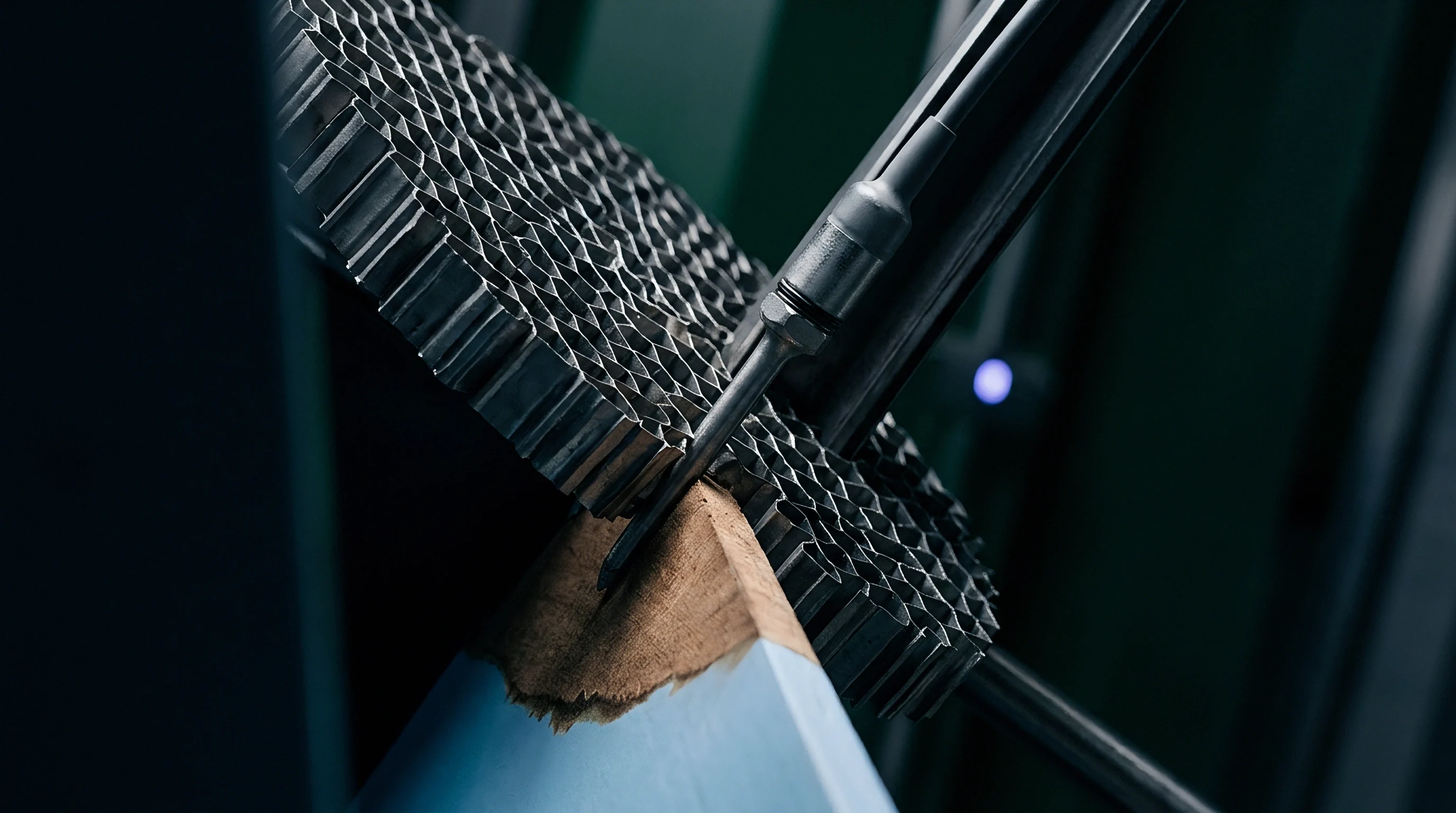
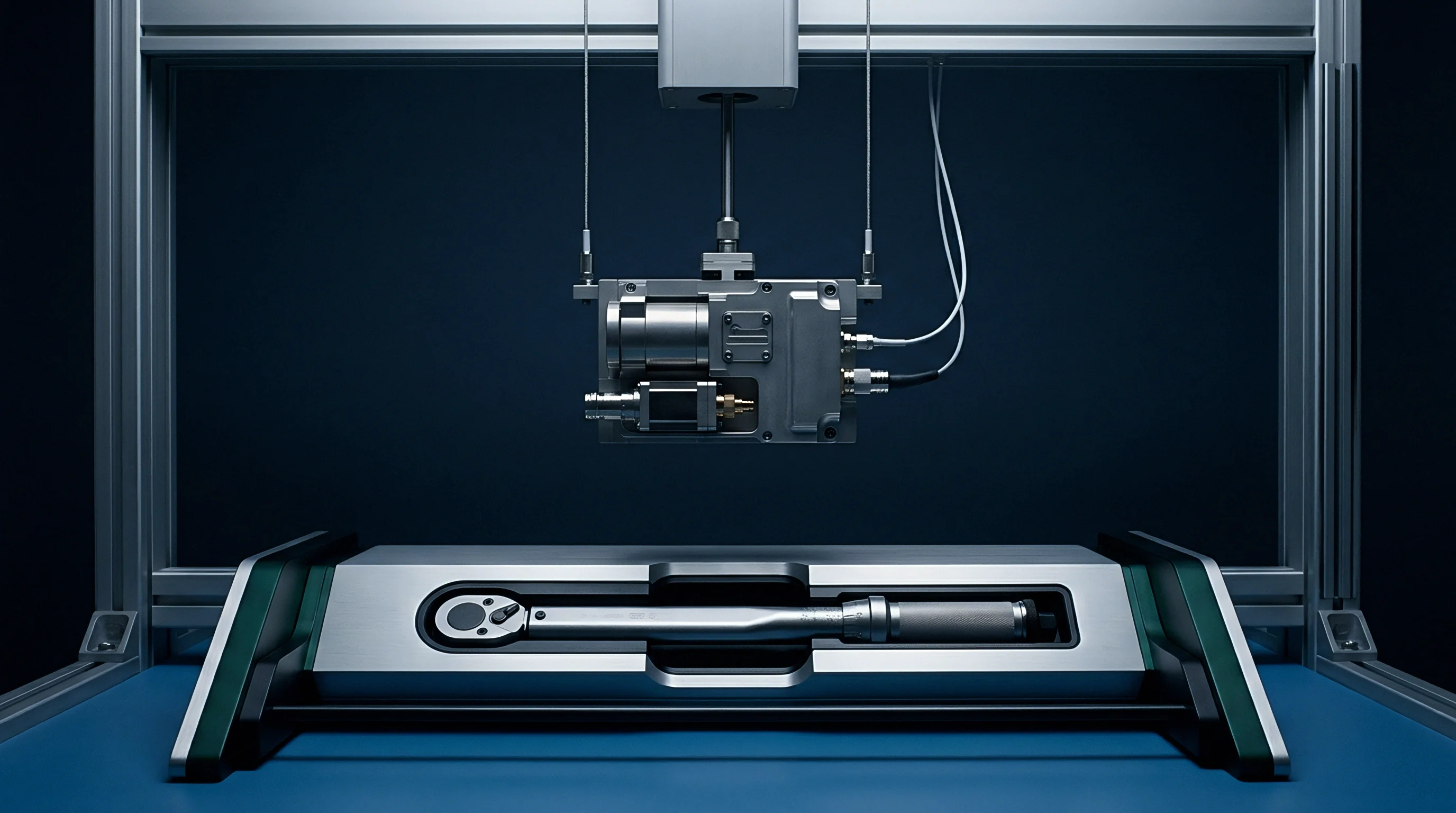
Bed-of-nails hardware translates parametric limits into physical probe contact points across the PCB surface. A functional test jig combines a mechanical press frame, wired interface block, pogo pin probe plates, and signal conditioning instruments. The contract must explicitly state whether the buyer purchases physical duplicate jigs or acquires design rights to manufacture identical fixtures independently.
Bed-of-Nails Mechanical and Electrical Specs
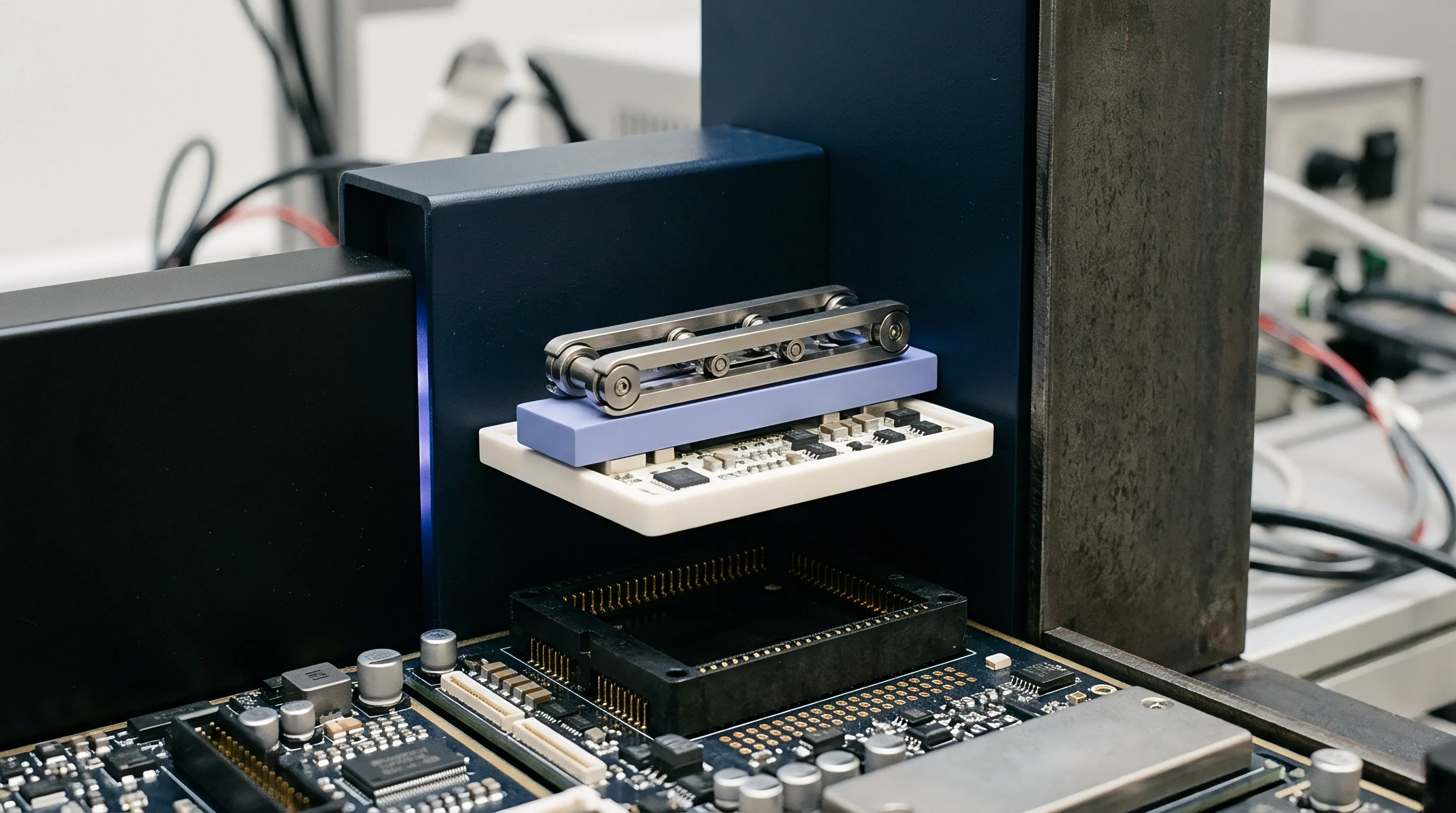
Pogo pin density dictates spring force requirements on pneumatically actuated test heads. Target pads of 0.8 millimeters require high-precision alignment guide pins to prevent probe deflection and trace shorting. Because pogo pins wear over time, electrical specifications must define maximum contact resistance thresholds, current-carrying limits on power supply rails, and ground bounce isolation parameters.
High-speed digital buses require controlled-impedance wiring straight from the probe interface to oscilloscope data acquisition cards.
RF Enclosure Isolation and Signal Routing
Shielding effectiveness in automated test enclosures directly governs wireless calibration accuracy. An isolation threshold of 80 dB stops external Wi-Fi and Bluetooth interference from corrupting receiver sensitivity measurements. RF coaxial cables inside the jig must be low-loss, phase-stable assemblies.
Fixtures also require integrated power sensors and directional couplers to perform closed-loop power amplifier tuning during programming.
Hardware test jig transfer packages list specific failure points that degrade measurement accuracy during high-volume assembly runs.
- Pogo pin force relaxation causes intermittent open circuits across test points, resulting in false yield loss during high-speed functional testing runs.
- RF coaxial interface fatigue introduces attenuation uncertainty that shifts radio transmitter frequency calibration outside regulatory compliance bounds.
- Relay matrix contact oxidation adds parasitic resistance to current measurement loops, corrupting sleep mode power drain verification checks.
- Pneumatic cylinder pressure droop slows fixture closing speeds, triggering software timeout exceptions inside the automated execution engine.
| Fixture Element | Physical / Electrical Parameter | Acceptance Threshold | Transfer Deliverable Standard |
|---|---|---|---|
| Probe Interface | Pogo pin contact resistance | Less than 30 milliohms over 100,000 cycles | Pin coordinate map CSV, wiring schematics |
| Pneumatic Actuator | Clamping pressure and closing time | 0.5 MPa operating pressure, under 1.2s travel | Mechanical CAD models, valve manifold BOM |
| RF Isolation Box | Radiated signal attenuation | Greater than 80 dB from 700 MHz to 6 GHz | Enclosure drawings, RF absorber placement map |
| Data Acquisition Board | Analog input sampling bandwidth | Minimum 10 MS/s per channel, 16-bit resolution | Instrument driver layer, DAQ routing pinouts |
Ignoring pogo pin contact resistance drift leads to systematic false yield failures that directly erode module gross margins.

Trigger
Escrow release conditions dictate when a custodian hands operational assets over to the buyer. This mechanism acts as a legal switch that has to execute quickly during vendor insolvency or supply chain abandonment. Passive escrow fails when custodians accept encrypted zip files without validating contents or build integrity.
Effective escrow clauses pair unambiguous release definitions with mandatory, active technical verification audits on a regular schedule.

Escrow Release Conditions and Verification Gates
Contractual defaults include insolvency, uncured quality failures, and supply chain abandonment. Setting quantitative failure thresholds avoids drawn-out legal disputes when a buyer requests code release. For instance, an uncured drop in rolling manufacturing yield below 90 percent over three consecutive production lots serves as an objective trigger.
Supply chain abandonment occurs when a supplier ignores purchase orders for thirty calendar days while demand stays unfulfilled.
Section 8.2 of the IEEE escrow framework forfeits source release rights if the licensee fails to audit the deposit within ninety days.

Contractual Events of Default and Insolvency
Insolvency definitions need to extend beyond formal bankruptcy filings. Filing for reorganization, entering receivership, or halting payroll must trigger immediate release options. The contract should specify that default notices sent by certified mail initiate a ten-day cure period.
If the supplier fails to show active production recovery within those ten days, the escrow agent must release decryption keys and repository credentials without further vendor consent.

Active Build Verification and Escrow Auditing
Static code storage offers zero protection against incomplete deposits. Active verification mandates that an independent technical auditor inspect checksums and compile deposited source files in a clean-room environment every twelve months. The auditor must reproduce the exact target binary, flash it onto reference hardware, and run the automated test suite.
Passing this end-to-end test forms a binding release gate signed by both parties.
Escrow release protocols require comprehensive legal and technical pre-conditions to survive supplier bankruptcy proceedings.
- Insolvency declaration filing initiates immediate release of source binaries, EDA layout files, and executable build scripts to designated escrow beneficiaries.
- Uncured product warranty breach triggers escrow access when software defects remain unpatched for sixty days after formal engineering notice.
- Discontinued product notice opens automatic repository rights if the primary supplier refuses to maintain production tooling for agreed lifecycle windows.
- Change of corporate control grants buyers design extraction rights if an acquiring competitor assumes majority ownership of the primary supplier.
An escrow deposit lacking build instructions functions as an empty vault.

Calibration
Measurement accuracy dictates whether a secondary assembly plant can match primary factory yield. Software test executive code relies on numerical limit files, sensor offset adjustments, and reference voltage constants. When moving automated test jigs across international borders, shifts in ambient conditions, transport vibration, and instrumentation channel variance alter measurement results.
Re-establishing parameter alignment requires transferring golden reference units alongside statistical process limits.
Golden Units and Parameter Limit Files
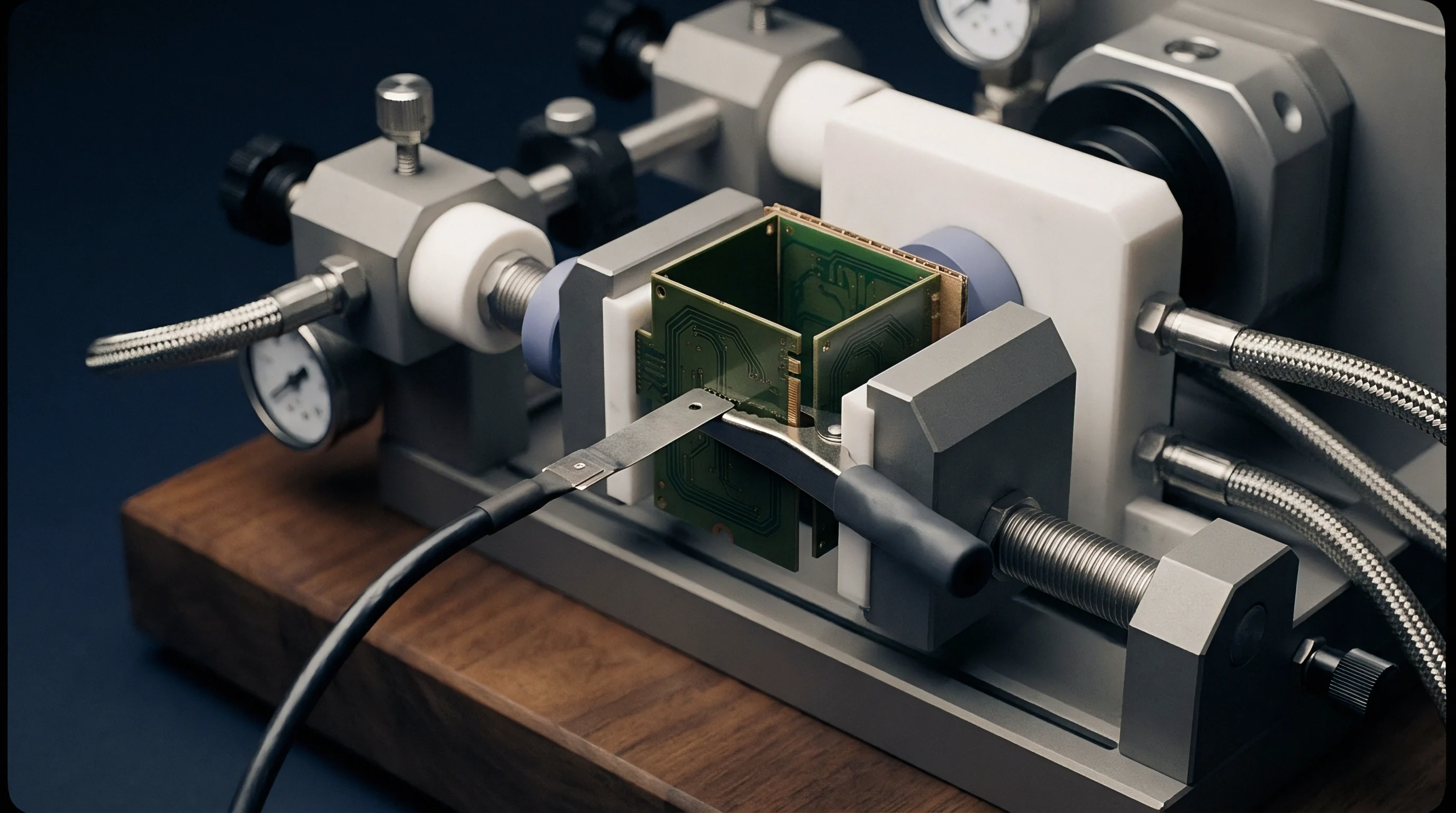
Standard reference hardware establishes baseline measurements across test channels. Golden units consist of production modules whose functional parameters sit precisely at the center of statistical design distributions. The primary vendor builds six golden units during initial NRE qualification: two represent nominal baseline performance, two represent upper tolerance limits, and two represent lower tolerance limits.

Process Capability Metrics and Test Limit Drift
Statistical process control enforces quality standards across automated test sequences. Test parameters must demonstrate a process capability index, or Cpk, equal to or exceeding 1.67 across five hundred consecutive production cycles. When secondary factories report lower Cpk values, test limits tend to drift relative to jig measurement noise.
Modifying limits without formal engineering change orders compromises field reliability.
Transferring automated test software between manufacturing lines requires a strict physical and statistical setup sequence.
- Unpack golden units from temperature-controlled shipping containers and inspect probe pads for mechanical micro-deformation under 20x optical magnification.
- Run baseline self-test diagnostics on the secondary functional test jig using calibrated precision multimeter instrumentation.
- Execute twenty consecutive test cycles using nominal golden units to establish local measurement variance and noise floors.
- Compare measured statistical mean values against primary factory baseline data archived inside the escrow transfer package.
- Adjust test limit files in software only when local fixture offset shifts are verified against precision calibration standards.
A test jig transferred without golden units measures fixture noise rather than module performance.
Physical fixture tolerances rarely survive international freight without factory engineering re-calibration.


Remedy
Financial instruments and contractual indemnities protect buyers when a manufacturing transfer stalls. Shifting production from a defaulting vendor to a secondary facility consumes engineering hours, duplicate tooling capital, and scrap. Contract terms must establish clear financial remedies, NRE reimbursement schedules, and direct ownership protections over physical test assets.
These commercial clauses decide whether a design transfer succeeds or dies in legal lock-up.
Secondary Factory Bring-Up Mechanics
Setting up a secondary facility requires capital allocation for fixture duplication and line validation. The sourcing agreement assigns bring-up costs based on fault. If the primary supplier defaults, accumulated non-recurring engineering fees paid during product development convert into liquidated damages owed to the buyer.

Financial Exposure and Tooling Possession Rights
Direct ownership clauses for test hardware ensure immediate recovery during vendor disputes. Contracts must stipulate that automated test jigs, pogo pin fixtures, and custom RF enclosures remain the sole physical property of the buyer once NRE milestone invoices are settled. The supplier holds these assets as a bailee only.
Yet tooling still gets stuck in customs if bailment registration documentation is omitted from local trade filings.
| Integration Level Transfer Scope | NRE Re-invest Cost Range | Secondary Factory Lead Time | Primary Risk Factor |
|---|---|---|---|
| Turnkey Escrow Execution | $15,000 to $35,000 | 4 to 6 weeks | Missing toolchain dependency in firmware container |
| Semi-Custom Layout Porting | $50,000 to $110,000 | 10 to 14 weeks | PCB stackup impedance drift at secondary fab house |
| Reference Design Re-tooling | $120,000 to $250,000 | 18 to 26 weeks | Custom silicon errata unmapped in source code |
| White-Label Hardware Reverse | $200,000 to $450,000 | 30 to 52 weeks | Unobtainable register maps and encrypted bootloaders |
Secondary site bring-up stalls if firmware source trees omit cryptographic signing keys needed by bootloaders.
Contractual possession of physical test jigs remains unenforceable if local customs authorities treat fixture hardware as unmanifested capital assets.
The industry continues to deliberate whether automated test executable licenses should convert to royalty-free permanent distributions upon supplier bankruptcy.