Meaning
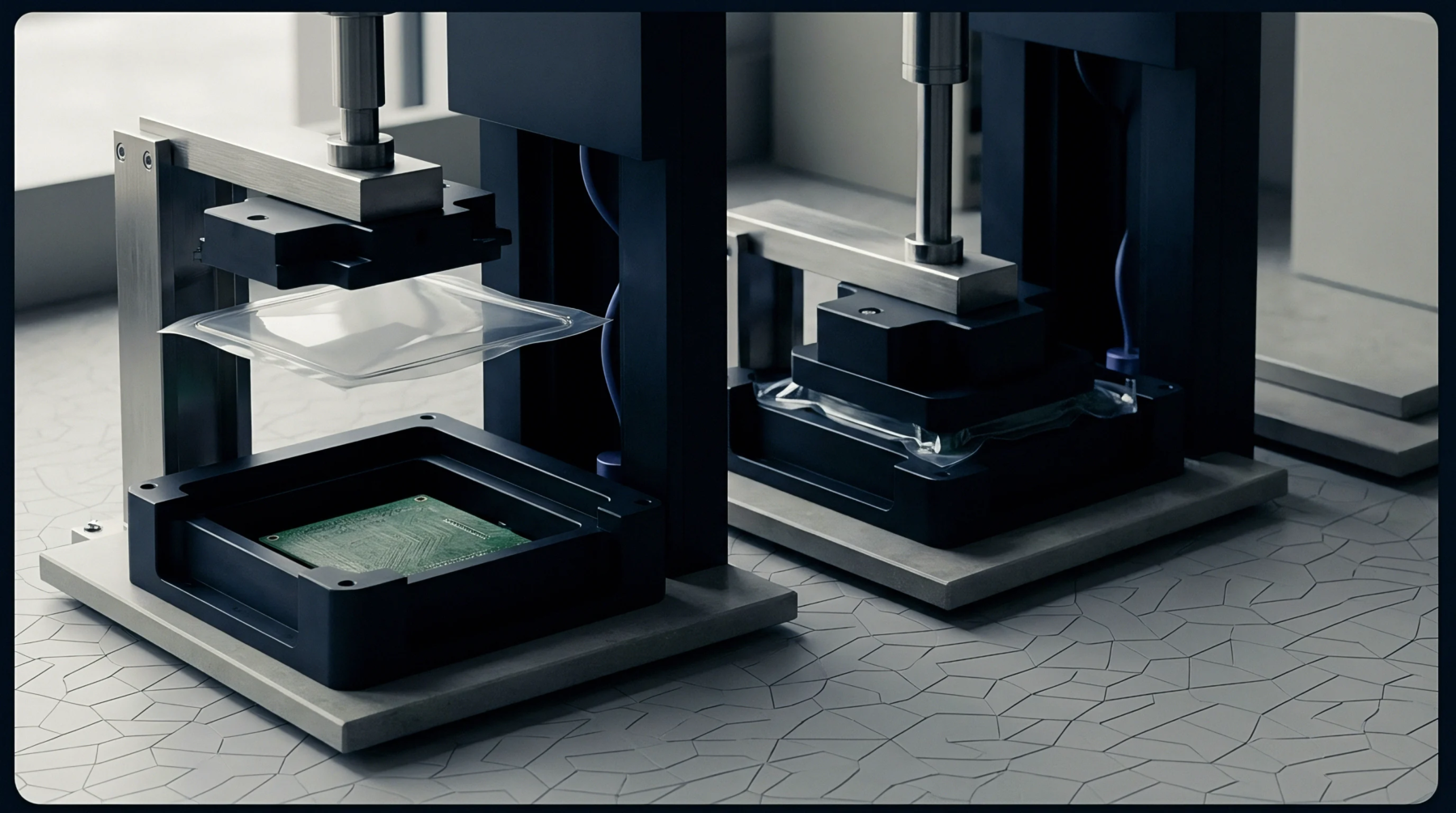
Solid-state welding technique joins two surfaces by applying heat and force without reaching the melting point of the materials. Process parameters for thermocompression bonding are optimized to create an atomic bond between the metal pads. This method is common in gold-to-gold or copper-to-copper connections for high frequency modules.
Clean surfaces are required to ensure that no oxides interfere with the interface.
Atomic Diffusion
Movement of atoms across the boundary creates a permanent connection at the molecular level. Because thermocompression bonding occurs below the liquidus temperature, there is no risk of solder splashing or bridging. The duration of the contact allows the grain structures of the two metals to merge.
Strength of the final joint depends on the purity of the materials. Higher temperatures can speed up the diffusion process but may affect the performance of nearby sensitive components. Engineering teams determine the optimal window where the bond is secure without compromising the rest of the package.
Pressure Application
Controlled force ensures that the surfaces make intimate contact over the entire area of the pad. While thermocompression bonding provides a very stable connection, excessive pressure can damage the underlying silicon. Alignment must be maintained throughout the heating and cooling cycle.
Tools use feedback loops to adjust the load in real time.
Joint Reliability
Resistance to mechanical stress and environmental corrosion makes this a preferred choice for aerospace and medical applications. Since thermocompression bonding avoids the use of flux, the risk of chemical contamination is eliminated. Assemblies passing the initial shear test demonstrate high long-term stability.