Transferring Engineering Deliverables and Intellectual Property Rights to Manufacturing Partners
Engineering transfer demands native CAD files, containerized firmware source trees, buyer-owned tooling, and explicit IP assignment clauses before NRE sign-off.

Dossier
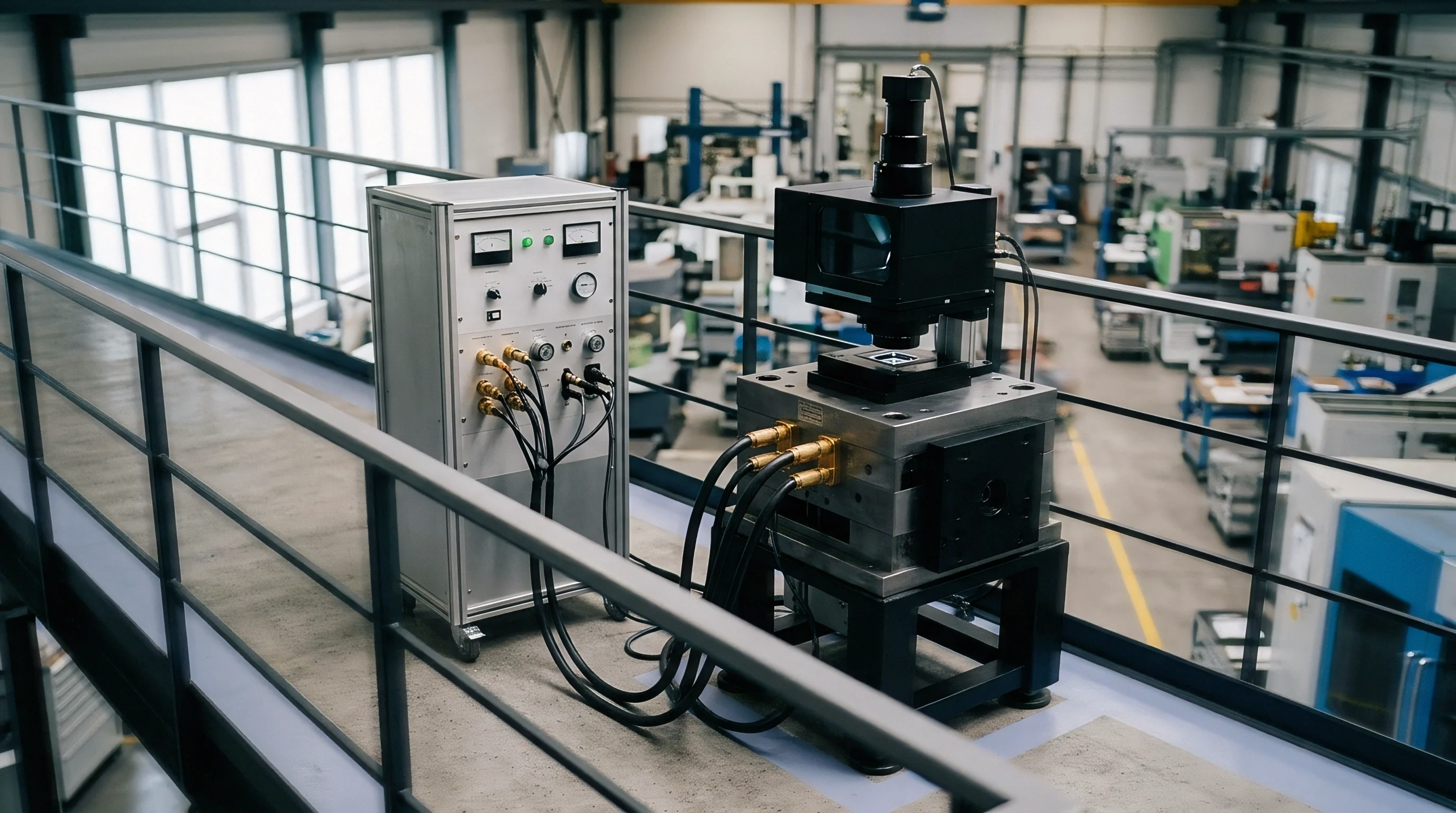
A hardware repository that contains only Gerber artwork and flat prints leaves a manufacturing partner stuck when components hit end-of-life. Modifying, inspecting, and testing board assemblies without constantly running back to the original design team requires a full transfer package. Taking an electronic design from the bench to commercial production demands native CAD files, parametric component data, source code with build environments, test vectors, and mechanical enclosure boundaries.
Native EDA files form the backbone of an engineering transfer. Intermediate outputs such as RS-274X Gerber files or vector PDF schematics omit net topology, design rules, and copper pour constraints. If a passive component becomes obsolete, a plant with only Gerber artwork must edit vector shapes by hand ~ a process that risks short circuits or ruined signal integrity on high-speed differential pairs.
Handing over native Altium Designer project files, Cadence Allegro databases, or KiCad repositories allows factory engineers to swap components within the design rules set during original development.
| Deliverable Category | Minimum File Format | Preferred Native Format | Factory Risk Level Under Minimum Format |
|---|---|---|---|
| Circuit Layout | Gerber RS-274X, NC Drill | IPC-2581B, Native CAD Project | High: Prevents automated engineering changes and netlist validation |
| Schematic Logic | Vector PDF | Native Schematic, EDIF 2 0 0 | Medium: Eliminates cross-probing during line failure bring-up |
| Bill of Materials | Static XLS Sheet | Parametric Database, IPC-1752A | High: Causes component misinterpretation and lifecycle blindness |
| Firmware Engine | Hexadecimal Binary | Git Source Tree, Docker Environment | Critical: Blocks field patches and hardware revision adaptations |
| Manufacturing Test | Textual Test Steps | Python Executive Scripts, BSDL | High: Reduces defect detection coverage at board end-of-line |
The package also needs clear layer stack-up details. Fabrication artwork should use modern formats like IPC-2581B or Gerber X2, which embed layer order, dielectric constants, controlled impedance targets, and drill coordinates into a single file header. Older RS-274X files split artwork across separate text files, forcing assembly engineers to match file names to physical layers by hand ~ an extra step where a simple mistake can invert power planes or misassign inner signal tracks.

Technical Specifications for Hardware Deliverable Packages
Electrical netlists provide the logical ground truth for assembly. Fabricators compare physical copper features generated from artwork against an IPC-D-356 netlist extracted directly from the schematic, catching vector rounding errors before chemical etching begins. An independent IPC-D-356 netlist lets the factory’s CAM system flag unrouted traces, shorts, or clearance violations automatically.
Without one, fabricators build bare boards to match corrupt artwork, leaving defects hidden until populated assemblies fail functional testing.
Software toolchain snapshots prevent unrecoverable build failures during long-term maintenance cycles.
A bill of materials needs more than generic part numbers and loose descriptions. Production BOMs require exact manufacturer part numbers, qualified alternate sources, distributor codes, and moisture sensitivity levels under IPC/JEDEC J-STD-020 standards. Native design files require careful inspection before approving phase-gate payments.
Parametric data must specify package sizes, voltage ratings, dielectric types such as X7R or C0G, and resistor tolerances. Without designated dielectrics, factories frequently substitute general-purpose Y5V capacitors, causing severe capacitance drops under operational DC bias in power management circuits.
Mechanical deliverables define how the assembly fits inside its enclosure. CAD handoffs require 3D STEP files showing the board with components modeled at their maximum material condition limits. Connectors, light pipes, switches, heat sinks, and mounting hardware all require precise positioning relative to board datums.
Handing over flat 2D drawings forces mechanical engineers to estimate component clearances, leading to fitment failures during final assembly.
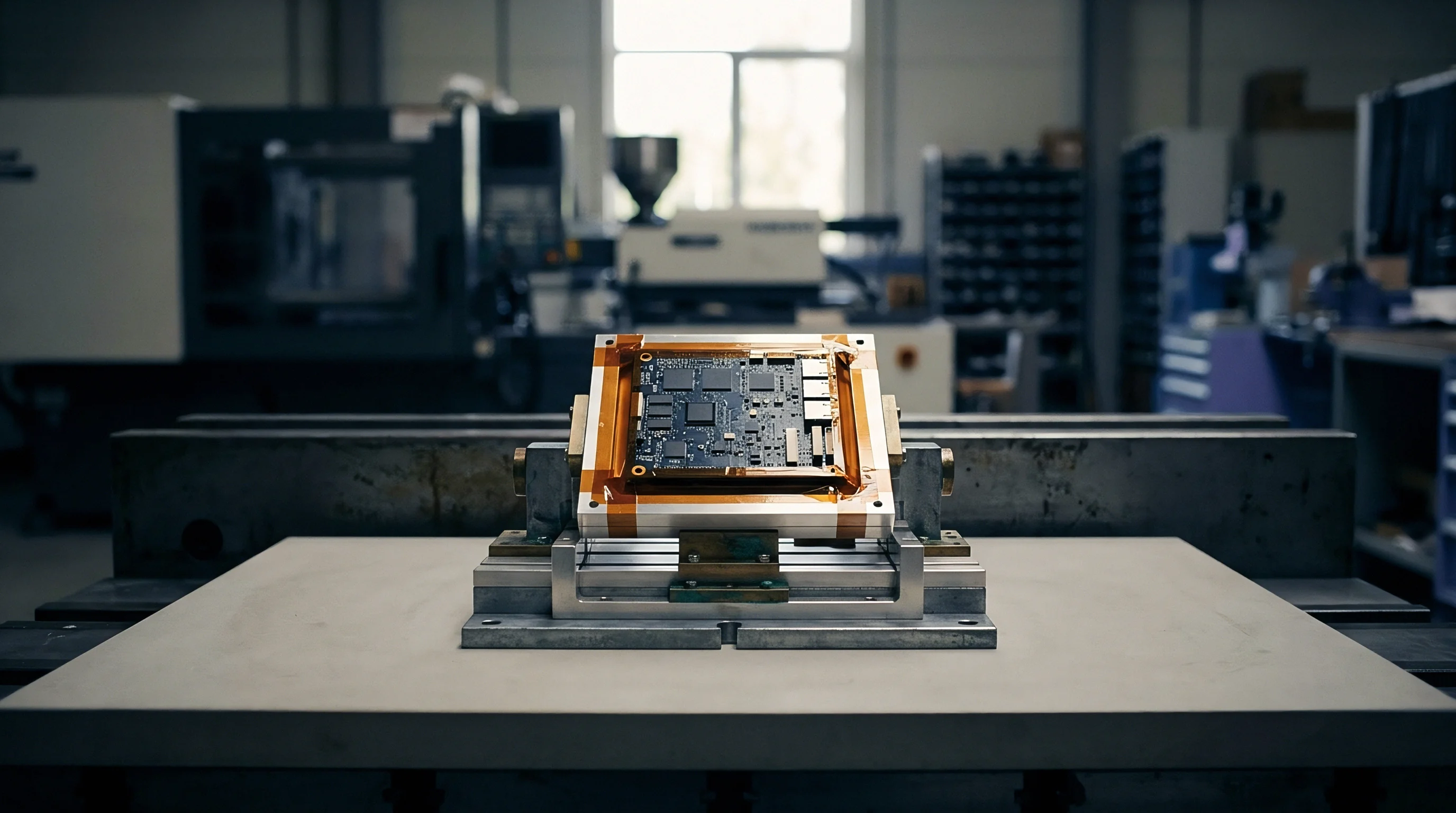
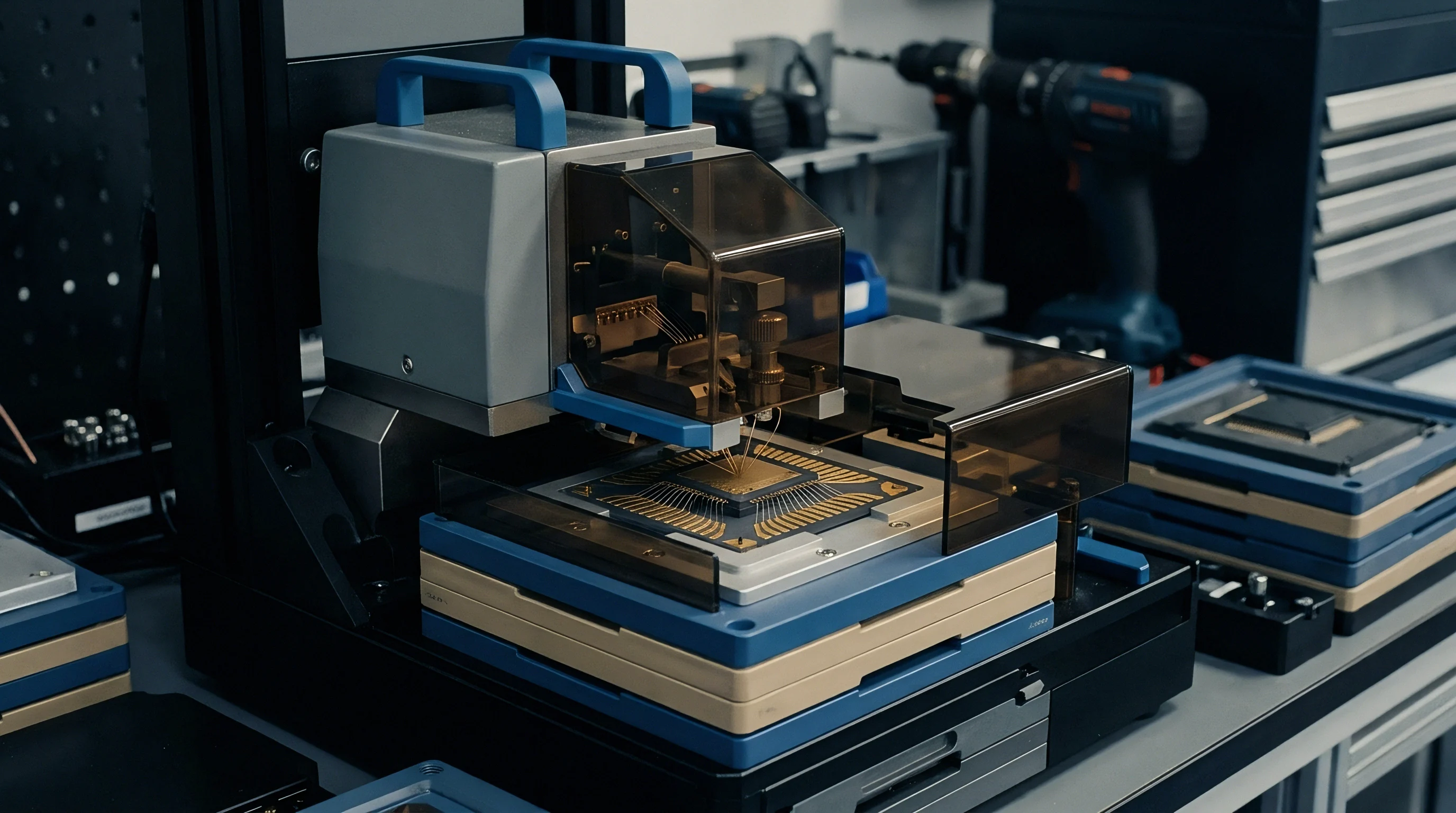
Test fixture documentation protects buyers from unverified production runs. The package should include bed-of-nails wiring diagrams, spring probe coordinate tables, and IEEE 1149.1 Boundary Scan Description Language files for complex processors. Functional test routines need quantitative acceptance criteria ~ defined ranges for supply voltages, clock tolerances, RF output power, and receiver sensitivity across operating temperatures.
Without explicit numerical thresholds, line operators end up making subjective pass/fail calls.
Firmware Environment Containment and Compilation Repositories
Handing over compiled binary images alone is not an engineering transfer. A monolithic binary leaves the factory unable to modify configuration vectors, tweak calibration parameters, or update bootloader security keys. A complete firmware transfer includes the uncompiled source tree in a version control system like Git, accompanied by documented toolchain setup procedures or containerized build environments.
Embedded firmware relies heavily on specific compiler versions, libraries, and header configurations. Even a minor compiler update can alter code optimization enough to break timing-critical drivers or interrupt routines. Using Docker containers pre-loaded with the exact build tools, C cross-compilers, and linker scripts ensures build environments remain reproducible, allowing an operator to run a single command years later and get matching binaries directly from source.
Board Support Packages require clear boundaries between hardware abstraction layers and application logic. The handoff package needs documented APIs for board peripherals, including serial buses, ADCs, flash memory, and wireless transceivers. Register maps, interrupt vectors, and DMA channel definitions allow factory engineers to run targeted diagnostic routines during production without running the full application stack.
Secure boot and cryptographic provisioning also demand explicit procedures. Microcontrollers equipped with secure enclaves or hardware root-of-trust engines require specific workflows during initial programming. The package needs to cover key infrastructure setups, configuration structures, pre-signed bootloaders, and scripts for programming hardware key fuses.
Omitting this information leaves factory staff unable to set hardware security locks, exposing fielded devices to unauthorized updates.
- Unlinked Native Schematics create floating nets when component symbols update inside factory CAM systems.
- Unspecified Resistor Tolerances cause circuit bias shifts when plants replace high-precision one-percent parts with standard five-percent stock on signal paths.
- Omitted Drill Specifications force fabricators to guess between plated and non-plated holes, risking mechanical chassis grounds.
- Missing Build Scripts cause build failures when host machines automatically update unpinned software dependencies.
- Undefined Test Vectors allow marginal boards sitting on the edge of voltage tolerances to pass assembly checks.
Calibration setups are easily overlooked during firmware handoffs. Sensors, RF power amplifiers, and precision analog circuits vary from board to board because of component tolerances. The software package must define the calibration routines executed during factory bring-up and specify where and how values write to non-volatile memory or EEPROM.
This keeps future firmware updates from overwriting stored factory tuning parameters.
Documentation needs a complete bring-up guide for test engineers, detailing diagnostic steps, expected current draw in sleep states, test point voltages, and LED status codes. Adding fault-isolation decision trees lets line operators troubleshoot failing boards on-site rather than shipping defective units back to the original design team.
In three manufacturing proposals evaluated for one project, vendor non-recurring engineering fees ranged from twelve thousand to forty-five thousand dollars. The lowest quote omitted native layout files, transferring only Gerber artwork and compiled binaries. That seemed economical during negotiations, but triggered a total line shutdown nine months later when a core power supply chip was discontinued.
Without native files, the factory could not re-route the four-layer board without paying the original design team for a complete redesign. The true cost of an incomplete package shows up when production breaks.
Contract assemblers sometimes class native board files as proprietary assets built under discounted rates, releasing only flattened outputs unless additional fees are paid.

Boundary
Clear scope boundaries prevent financial and technical disputes between buyers and contract manufacturers. A thorough boundary document specifies ownership across schematic capture, part selection, PCB layout, driver maintenance, regulatory verification, and test fixture construction. Ambiguity on these points leads directly to unexpected engineering fees, unmanaged component lead times, and disputes when field failures occur.
Hardware transfer packages generally follow four integration models. Turnkey transfers full responsibility to the manufacturer to design, source, assemble, and test under a single specification. Semi-custom models combine buyer-owned core logic with factory-adapted power or interface circuits.
Reference design transfers adapt a semiconductor vendor’s evaluation board into a commercial housing. White-label integration simply places buyer branding onto an existing off-the-shelf product. Each model establishes distinct boundaries for file ownership, maintenance, and component change control.
| Integration Level | Schematic Ownership | Firmware Maintenance | Change Authority | Re-Sourcing Cost Profile |
|---|---|---|---|---|
| Turnkey Custom | Manufacturing Partner | Supplier Scope | Supplier Approval | Extremely High: Requires complete redesign |
| Semi-Custom | Joint Ownership Split | Shared Responsibility | Joint Approval Matrix | Moderate: Dependent on IP separation |
| Reference Design Transfer | Product Buyer | Buyer Scope | Buyer Unilateral | Low: High portability across factories |
| White-Label Scope | Manufacturing Partner | Supplier Scope | Supplier Unilateral | Very Low: Off-the-shelf product substitution |
Reference designs from silicon vendors carry subtle risks. Evaluation boards showcase chip performance under laboratory conditions, often built on six-layer boards with high-grade RF substrates and tight-tolerance passives. Converting that design into a cost-effective mass-market product requires substantial engineering.
The buyer must verify impedance changes, board thickness adjustments, component swaps, and power supply filtering, while retaining full responsibility for electromagnetic compatibility compliance.
Integration Models and Scope Demarcation Mechanics
Component selection demands strict contractual boundaries. Under a turnkey arrangement where the factory selects parts, decisions turn primarily on unit price and immediate availability. That inclines factories toward regional suppliers lacking global distribution or long-term lifecycle support.
When the buyer controls the schematic, they dictate exact manufacturer part numbers, approve secondary sources, and set mandatory end-of-life visibility windows to catch dwindling part availability early.
A ninety-day part change notification period fails to protect production when silicon requalification demands six months of environmental stress testing.
Part Change Notifications follow procedures defined in J-STD-046 standards. The boundary agreement specifies required advance notice for component modifications, silicon die shrinks, factory relocations, or material changes. A solid contract mandates at least ninety days’ notice before any change takes effect, alongside a one-hundred-eighty-day last-time-buy window.
Without these controls, assemblers can swap active silicon revisions, introducing unexpected bugs or driver incompatibilities on live production lines.
Firmware maintenance boundaries need clear rules tiered by bug severity. Critical defects ~ those causing crashes, data corruption, or safety issues ~ require immediate resolution from whichever party holds software scope. Minor cosmetic issues or feature tweaks wait for scheduled maintenance releases.
When a factory handles firmware development, the contract must define resolution timeframes, continuous integration requirements, and regression testing across legacy hardware revisions.
Engineering Change Orders govern hardware, software, or mechanical modifications during production. Either side can initiate an ECO, but implementation requires formal approval from designated technical leads. The boundary agreement defines who absorbs engineering labor, scrap, and tooling expenses.
Buyer-requested changes place scrap costs on the buyer, while factory-driven substitutions for cost reduction require the factory to cover all re-validation expenses.
- Assembly plant engineers complete initial manufacturing feasibility reviews within ten working days of receiving the design package.
- Quality control leads run design-for-manufacturability audits to catch tight component clearances, solder mask slivers, and acute trace entry angles.
- Testing teams map initial bed-of-nails pin coordinates and confirm access across all automated test point pads.
- Supply chain teams evaluate the bill of materials for lead-time risks, single-source dependencies, and component end-of-life status.
- Engineering managers sign off on boundary approvals, locking schematic logic and board geometry before releasing tooling.
Design-for-Manufacturability rules protect production yields. Board designs require sensible component spacing, balanced copper on SMT pads, proper mask clearances, and standardized test points. If a layout violates factory guidelines, the assembler files formal technical queries.
Resolving these early prevents tombstoned components, solder bridging, and cold joints during high-speed SMT assembly.

Managing Engineering Errata and Component Obsolescence
Silicon errata sheets require close attention during initial integration. Chip vendors publish errata detailing silicon bugs, unexpected register behavior, and timing anomalies discovered post-manufacturing. Working around these issues usually requires specific firmware patches or hardware support circuits.
The boundary contract must define who tracks errata releases and writes software fixes over the product’s lifecycle.
Board panelization falls directly within the factory’s purview. Assembly plants lay out panels to optimize pick-and-place speeds, minimize material waste, and maintain stability through reflow and wave soldering. Panel designs define tab locations, fiducials, tooling holes, and edge clearance zones.
While the factory handles panel layout, the buyer should verify that breakout methods like V-scoring or tab routing do not expose raw copper or stress ceramic capacitors near board edges.
Multiple production lines stall during secondary vendor bring-up when asset boundaries are poorly defined. In one instance, the primary manufacturing plant owned the panelization files and automated optical inspection datasets, while the buyer held only raw schematic PDFs and intermediate Gerber files. Transitioning production to a second-source assembly plant required six weeks of line bring-up labor, custom fixture fabrication, and inspection reprogramming.
The buyer absorbed heavy financial losses while technical teams recreated manufacturing assets that should have been secured in the original scope contract.
Electromagnetic compatibility testing marks a critical boundary milestone. Passing FCC Part 15 or CE certification depends on exact board layout, shielding, filtering, and cable routing. If an assembly partner swaps a component, moves a trace, or alters enclosure shielding, RF emissions can shift instantly.
The boundary agreement should explicitly state that any factory-initiated change affecting EMC obligates the supplier to cover re-testing and lab recertification costs.
A scope boundary signed without clear technical ownership matrices guarantees that whoever holds the least financial leverage pays for unassigned re-engineering work when production breaks down.


Draft
Legal transfer of engineering assets requires unambiguous IP assignment clauses and explicit contracts. Handing over physical design files, source code repositories, and tooling without formal IP conveyance gives the recipient nothing more than a limited, implied license to operate. Full ownership of hardware and software deliverables demands formal assignment of patents, copyrights, trade secrets, and proprietary workflows from developer to buyer.
Background IP covers pre-existing patents, trade secrets, software modules, and circuit designs owned before work starts. Foreground IP includes all schematics, binaries, source modifications, mechanical models, and test scripts created under the active statement of work. A sound agreement leaves Background IP with its original owner while granting an absolute, irrevocable, royalty-free assignment of all Foreground IP to the buyer upon payment of engineering fees.

Foreground Intellectual Property and Work Product Assignments
Work-for-hire provisions under copyright law do not automatically cover circuit schematics, board layouts, or embedded software in many jurisdictions. Copyright statutes generally treat computer programs and technical drawings as literary or graphic works, requiring express written assignments signed by corporate officers. The contract must state that custom work product constitutes work-for-hire and include fallback language transferring all present and future copyright and patent rights directly to the buyer upon creation.
Patent assignment terms require tracking key technical innovations developed during a project. When an external design firm creates a novel circuit topology, antenna geometry, or signal processing algorithm, patent rights originate with the individual inventors. The master agreement must require the design firm and its employees to sign formal patent assignments naming the buyer as sole assignee, allowing global patent filings without needing ongoing consent from creators.

Which Deliverables Establish Complete Engineering Autonomy?
Software license audits are critical during firmware handoffs. Embedded systems frequently rely on open-source drivers, RTOS environments like FreeRTOS or embedded Linux, and third-party libraries. Incorporating code under strong copyleft licenses like GPLv2 or GPLv3 forces the product owner to publish complete source code for derivative works upon commercial release.
Handoff reviews must audit software dependencies to verify that open-source modules use permissive licenses ~ like MIT, BSD, or Apache 2.0 ~ or stay isolated from proprietary code.
Source code escrow provides essential protection when software relies on long-term supplier contracts. If a buyer depends on a supplier’s proprietary core engine, an escrow agreement requires depositing updated source code, build scripts, toolchain settings, and documentation into a third-party vault. Predefined release triggers ~ such as supplier bankruptcy, breach of maintenance duties, or sudden termination of business ~ release the source code directly to the buyer.
Tooling ownership clauses control physical assets used in manufacturing and assembly. Injection molds, test fixtures, stamping dies, and SMT trays represent significant capital investments funded by the buyer through NRE fees. The agreement must specify that title to all custom tooling remains exclusively with the buyer, with tools stored at the supplier held under a bailment structure.
Suppliers must label tools with buyer asset tags, maintain service logs, and surrender them upon written demand.
Confidentiality terms protect proprietary design files during overseas operations. Transfer documents contain core trade secrets ~ schematic logic, routing strategies, component choices, and build parameters. Contracts should enforce strict non-disclosure across factory personnel, mandate encrypted file transfers, block unauthorized local copying, and require partners to purge proprietary data from local servers when the contract terminates.
Indemnification clauses shield the buyer from third-party IP claims. If a design firm or assembler incorporates patented circuit topologies or unlicensed software into a product, the buyer faces direct liability from rights holders. The master agreement must require the supplier to defend, indemnify, and hold harmless the buyer against all damages, royalties, and legal fees stemming from third-party IP claims tied to their work product.
Software escrow keys belong in independent repositories, eliminating reliance on individual developers or factory-controlled hosting. Establishing verified build procedures inside independent accounts ensures source code remains accessible regardless of commercial disputes or corporate restructurings.
An assignment clause reading: “Contractor hereby irrevocably assigns to Client all right, title, and interest in and to all Foreground Intellectual Property, including schematics, design files, layout geometries, source code, and test assets created under this Agreement upon full payment of designated project invoices” guarantees full ownership rights transfer directly to the buyer.


Settlement
Financial accounting for engineering transfers requires transparency across upfront NRE fees, capital tooling, minimum order commitments, and unit costs. Suppliers frequently obscure true engineering rates by subsidizing design labor through higher assembly margins, or offering low board pricing while retaining fabrication files and test tools. Uncoupling labor rates from unit production costs lets product teams calculate true landed costs and evaluate second-sourcing options accurately.
NRE fees cover explicit deliverables and technical services. A thorough NRE breakdown details costs for circuit design, schematic capture, PCB layout, prototype fabrication, assembly, firmware, testing, regulatory certification, and test fixture construction. Every line item should map directly to a tangible engineering document or physical prototype lot handed over at stage-gate completion.
| Cost Component | Turnkey Supplier Model | Transferred Semi-Custom Model | Buyer-Owned Transfer Model |
|---|---|---|---|
| Upfront NRE Charges | $15,000 (Subsidized) | $45,000 (Partial) | $85,000 (Full Transfer) |
| Tooling and Fixtures | $8,000 (Supplier-Owned) | $18,000 (Shared Access) | $24,000 (Buyer-Owned) |
| Unit Assembly Price | $22.50 / Unit | $18.40 / Unit | $15.20 / Unit |
| Re-Sourcing Exit Cost | $95,000 (Re-design needed) | $35,000 (Partial re-tooling) | $6,000 (File transfer only) |
| Total Amortized Cost | $1,155,000 Total | $1,018,000 Total | $869,000 Total |
Amortizing NRE expenses into unit pricing introduces hidden financial risks. Suppliers often offer to absorb upfront NRE and tooling costs by adding a per-unit fee across an initial run of twenty-thousand or fifty-thousand units. If sales miss projections, the supplier bills the buyer for unamortized balances.
If sales exceed targets, the buyer keeps paying the inflated unit price unless the contract mandates price reductions at specific volume milestones.

Financial Mechanics of Non-Recurring Engineering and Tooling Amortization
Tooling depreciation requires clear accounting across the product lifecycle. Injection molds, stamping dies, and test fixtures wear down over extended runs. The manufacturing agreement should define tool lifespans based on shot counts or insertion cycles, and clarify whether the supplier maintains and repairs buyer-owned tools at their own expense or bills maintenance fees back based on unit counters.
Exit cost modeling calculates the actual expense of moving production from an incumbent assembler to a second source. Expenditures include bring-up labor, duplicate test fixtures, regulatory filing fees, factory audits, inventory buyback, and qualification runs. A design package missing native source files inflates exit costs dramatically, forcing the buyer to fund a full board re-layout and rewrite software drivers before bring-up can start.
Qualifying a second source costs money, but it protects supply chain resilience. Bringing up a secondary factory requires prototype validation runs, flying-probe or bed-of-nails testing, thermal and vibration stress testing, and firmware flashing validation. While secondary sourcing demands upfront NRE capital, having two qualified assembly sources prevents operational shutdown if geopolitical issues, factory fires, or commercial disputes disrupt the primary line.
Minimum Order Quantities tie up significant working capital. Factories set MOQs based on raw material minimums, component reel sizes, SMT line setup times, and chemical processing economics. MOQ negotiations should allow volume pooling across product lines or give the buyer the option to purchase raw inventory directly without committing to immediate board assembly runs.

Post-Mortem Analysis of a Transfer Pricing Dispute
A real-world hardware program highlights the risk of ambiguous pricing structures. A medical device company hired a supplier to develop a custom diagnostic module. The supplier quoted a low $15,000 NRE fee and a $22.50 unit cost based on a 50,000-unit forecast, but the contract omitted native CAD file delivery and contained no tooling ownership clauses.
When production hit 10,000 units, the supplier raised unit prices by 28 percent, citing labor and component costs.
When the buyer tried to move manufacturing to an independent assembly plant to avoid the hike, requesting native Altium layout files, mechanical STEP models, and test executive source code, the supplier refused, citing trade secrecy over layout files and asserting ownership over test fixtures. The buyer had to choose between paying the inflated unit price or spending ninety-five thousand dollars to re-engineer the module from scratch while delaying market delivery by nine months for re-certification. Heavy losses followed because the initial contract failed to secure ownership of design deliverables.
The table above compares total program costs across three integration strategies for a 50,000-unit run. Although the buyer-owned model requires eighty-five thousand dollars in initial NRE fees, its lower unit cost of fifteen dollars and twenty cents brings total expenditure to eight hundred sixty-nine thousand dollars. That yields a net savings of two hundred eighty-six thousand dollars over the turnkey model, while cutting exit costs to a simple six-thousand-dollar file transfer.
Estimating software maintenance labor is a major variable in financial modeling. Budgeting one hundred twenty engineering hours per year per product line provides a baseline, though real workloads swing depending on silicon errata releases and open-source vulnerability patches. Buyers manage this by establishing a dedicated contingency fund ~ typically fifteen percent of the annual software budget ~ to cover urgent firmware updates without pulling resources from new development.
Landed cost calculations must account for all assembly and transfer expenses. A complete landed cost model combines raw component prices, assembler conversion margins, scrap factors, freight forwarding, customs duties, tariffs, inspection fees, and amortized transfer expenses into a single unit metric. Tracking this across every engineering change order ensures product teams protect gross profit margins as volume scales.
Final commercial settlement closes out the design transfer phase and transitions the product into routine manufacturing. Buyers should withhold final stage-gate payments until receiving verified native CAD project files, firmware source trees, build containers, calibrated test fixtures, and signed IP assignment agreements. Securing full custody of physical, digital, and legal assets protects supply chain autonomy, shields balance sheets from predatory price hikes, and leaves the product free to move between factory partners as needed.