Standardizing Machine Readable Microcode Manifests in Embedded Firmware
Standardized machine-readable microcode descriptors enforce deterministic boot validation, eliminate parse overhead, and assign cryptographic patch custody.

Frame
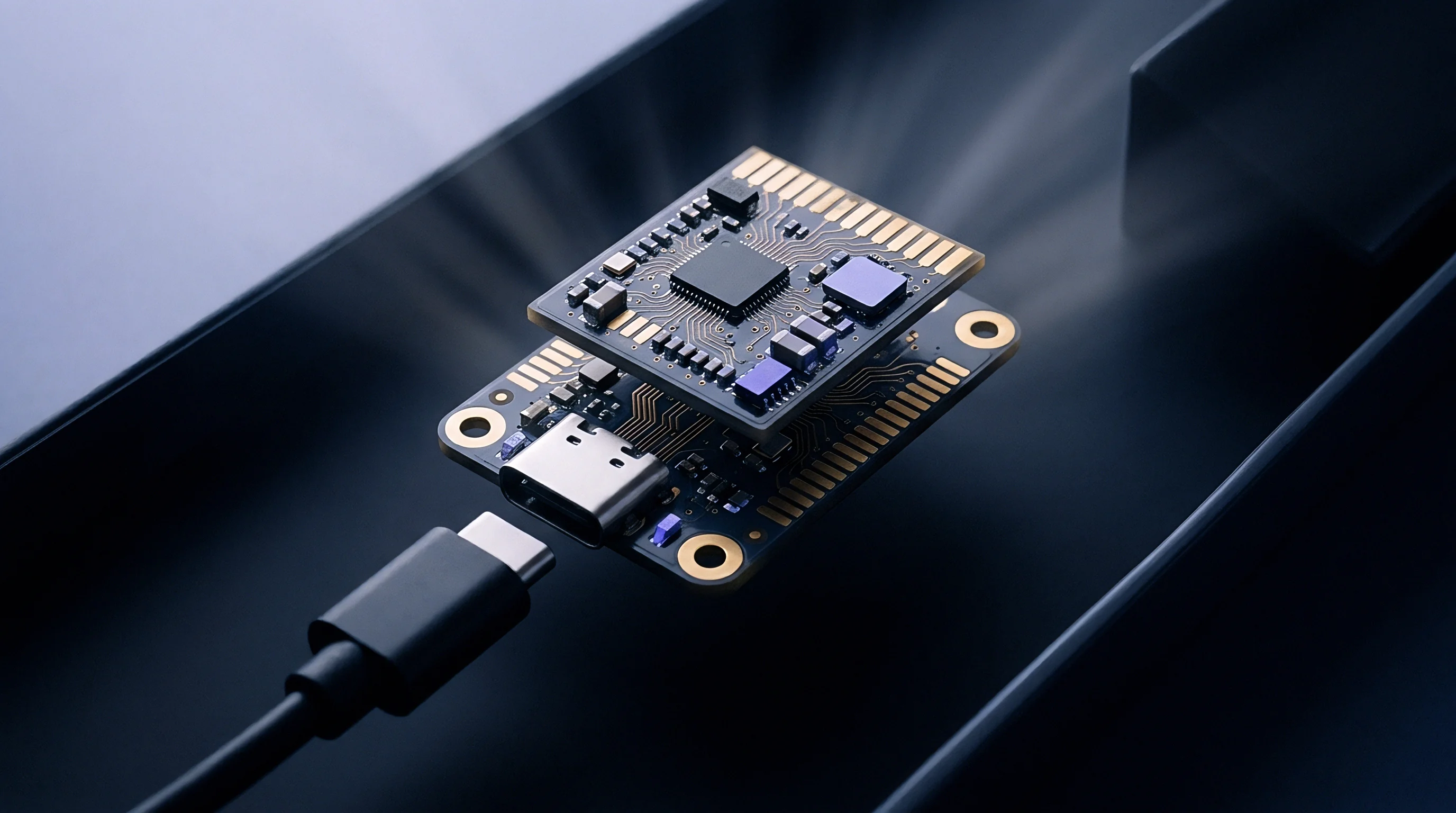
Low-level microcode distribution relies on deterministic binary layouts embedded directly into boot flash images. Historically, engineering teams relied on vendor-specific binary structures appended to processor updates. But as microcontrollers and system-on-chip architectures add multi-core blocks, crypto engines, and isolated management processors, updating firmware via unformatted binary blobs creates severe lifecycle risks.
Machine-readable descriptors solve this by bundling structured metadata ~ silicon target revisions, entry point offsets, security patch levels, and cryptographic integrity parameters ~ right beside the microcode binary payload.

Architectural Bounds of Binary Patch Headers
Silicon vendors used to deliver CPU microcode updates as unstructured binary blobs with opaque target IDs. Integrating them meant writing custom build scripts to slice binary arrays into flash regions defined by rigid linker scripts. Modern architectures replace these conventions with structural descriptors that govern hardware routing.
An embedded patch header defines the exact boundary parameters early boot code needs to locate, evaluate, and load patch instructions before primary application firmware takes over.
The layout of a machine-readable patch header balances parsing simplicity against information density. Because low-level boot ROM environments operate under strict stack limits without dynamic memory allocation, binary descriptors must rely on predictable fixed-offset alignment or standardized binary serialization. Alignment directly drives parsing speed during early startup.
On 32-bit or 64-bit bus architectures, unaligned memory reads introduce clock cycle overhead or trigger hardware exception faults during secure boot.
A memory-mapped microcontroller parsing an unaligned binary header suffers a forty-cycle execution penalty per word access.
Structured binary headers pack key physical attributes directly into the file, including total patch size, microcode execution vector targets, minimum hardware stepping requirements, and cryptographic signature boundaries. With these fields located at standardized offsets, flash management tools can check microcode properties without loading full executable payloads into constrained internal SRAM ~ a vital efficiency for low-power edge devices on tight boot budgets.

Memory Mapping and Flash Offset Partitioning
Direct execution from non-volatile memory demands rigid alignment across sector boundaries. Embedded flash storage is divided into physical blocks, sectors, and pages, each with its own erase and programming granularity. Descriptors must account for these parameters to support in-place execution and hitless update swapping.
Incorporating strict bounds checks and aligning metadata envelopes with physical erase boundaries prevents partial sector overwrites during firmware updates.
| Format Type | Flash Footprint Overhead | Boot ROM Parse Cycles | Schema Extensibility | Hardware Logic Compatibility |
|---|---|---|---|---|
| Flat Tag-Length-Value | 64 to 128 Bytes | 120 to 350 Cycles | Linear Extension Only | Direct ASIC Hardwiring |
| IETF CoRIM CBOR | 256 to 1024 Bytes | 1,400 to 4,200 Cycles | Hierarchical Attributes | Software Microcode Engine |
| Flat JSON-LD Schema | 2,048 to 8,192 Bytes | 18,000 to 65,000 Cycles | Unlimited Semantic Graph | High-End Application Processor |
| Fixed Binary Table | 32 to 64 Bytes | 45 to 90 Cycles | Rigid Versioning Flags | State Machine State Engines |
Memory offset partitioning dictates how target hardware locates metadata envelopes during a cold boot. Fixed-offset schemes place descriptors at hardcoded memory addresses in boot flash, while dynamic offset schemes use lookup tables or partition directory descriptors at the base address of the flash block. Dynamic lookups offer flexibility across different sector configurations, but they add extra parsing steps to the critical boot path where hardware roots validate payload integrity.
Integrators have to weigh that flexibility against the strict timing requirements of system bring-up.
Aligning patch headers on native bus widths prevents silent CPU memory faults during early execution phases.


Schema
Data interchange formats for embedded firmware descriptors must balance parser memory footprint against field extensibility. Standardizing these structures across heterogeneous supply chains lets unified flashing tools parse patches coming from multiple silicon vendors. Initiatives like IETF Concise Reference Integrity Manifests define binary models that pack firmware identity, platform hardware attributes, cryptographic measurements, and hardware dependency rules into a compact format.

Concise Binary Object Representation Structures
Compact serialization reduces static flash consumption while keeping tagged data semantics intact. Concise Binary Object Representation offers a binary data framework that mimics structured data models without text-parsing overhead. Standardized metadata models leverage this encoding to express complex relationships between system components.
Because security depends on key isolation, a single binary envelope can specify that a given patch requires a designated core stepping, a minimum bootloader revision, and an active hardware security module configuration.
Field definitions inside an embedded metadata envelope use integer keys instead of string keys to speed up parsing. String lookups waste clock cycles and expand memory through string comparison routines. Integer keys, by contrast, map directly to register jump tables in boot ROM parsers, allowing small microcontrollers to parse multi-attribute security records within tight timing budgets.
Section 4.2 of the system integration specification assigns full financial liability for unparsed fields to the primary software build authority.
Standardized field maps govern how binary descriptors extend over time. When a silicon vendor adds a platform-specific feature, such as a patch for a custom hardware cryptographic accelerator, the metadata format handles custom fields through designated private extension ranges. This structural separation keeps vendor additions from breaking standard parsers on third-party verification tools.

Silicon Target Identifiers and Revision Registers
Hardware matching logic checks CPU step IDs, microarchitectural variant masks, and board revision flags against internal registers. Loading an incorrect microcode payload can permanently brick hardware or introduce security vulnerabilities, so descriptor schemas enforce strict hardware targeting by placing explicit bitmasks and register value parameters inside their metadata blocks.
- Device Part ID matching logic validates the base silicon part number against non-volatile device identity registers before writing to flash.
- Silicon Stepping Mask bits ensure microcode instruction fixes apply only to affected hardware revisions, preventing unintended patch deployment on updated silicon die revisions.
- Security Version Number parameters enforce anti-rollback protection by comparing manifest patch levels against hardware-fused security counters inside the processor core.
- Feature Bitmask Vector flags define mandatory hardware sub-components that must be physically present on the target system-on-chip for the patch to activate.
When silicon vendors alter manifest field definitions between product generations without maintaining backward compatibility, schema drift breaks legacy parsers and causes firmware build systems to fail silently. Automated build pipelines rely on descriptor validation tools to verify schema compliance before combining vendor microcode packages into target system flash images.
Compliance with RFC 9393 Clause 5.1 mandates explicit field tagging, preventing ambiguous microcode ingestion on dual-architecture hardware platforms.


Vault
Cryptographic validation turns an unverified microcode payload into an authenticated hardware state transition. In modern embedded design, microcode operates at the highest privilege level inside the processor, sitting beneath the hypervisor and operating system kernel. Descriptors provide the authoritative cryptographic claim for the payload’s origin, authenticity, and operational integrity.
Standardizing signature structures within these descriptors lets platform secure boot controllers validate vendor microcode without needing proprietary verification modules in boot ROM.

Asymmetric Signature Envelopes and Key Distribution
Elliptic curve cryptography provides compact public key sizes suitable for microcontrollers with tight boot ROM limits. Standardized envelopes wrap raw binary patches alongside signature structures, public key identifiers, and x509 or DICE certificate chains. Signing structures use standard curves like ECDSA P-256 or Ed25519 for hardware-accelerated validation during initialization, though signatures fail when certificates expire.
Key distribution determines how public verification keys anchor into target hardware. Embedded systems use one-time-programmable eFuse arrays or secure elements to store root public key hashes. During microcode loading, the secure boot controller computes the digest of the public key provided in the metadata descriptor, compares it against the hardware fuse hash, and aborts execution if a mismatch occurs or if unaligned buffer accesses trigger hardware traps.
Evaluating signature parsing cycle costs requires mapping cryptographic execution algorithms against microarchitectural limits. Consider a secure boot ROM verifying a 4-kilobyte microcode patch bound to an ECDSA P-256 signature. The validation path hashes the patch payload and executes elliptic curve point multiplication.
Assuming a core running at 100 MHz without a dedicated hardware cryptographic coprocessor, software SHA-256 processing takes about 18 clock cycles per byte ~ totaling 73,728 clock cycles for the 4-kilobyte patch.
Software ECDSA P-256 verification demands roughly 2,100,000 clock cycles. Combined cryptographic execution reaches 2,173,728 cycles, causing a 21.73-millisecond boot delay strictly for microcode validation. Adding a hardware cryptographic block drops signature verification to around 45,000 cycles and verification latency to 1.18 milliseconds.
Hardware designers must balance the unit cost of dedicated silicon against these boot time limits when defining descriptor validation specs.

Measurement Chains and Measured Boot Registers
Hardware roots of trust extend hash digests into platform configuration registers before passing execution control. Measured boot architectures require every microcode payload to be hashed before loading into execution SRAM. Machine-readable descriptors supply pre-calculated payload digests within their signed metadata structures; the hardware security module then computes the actual runtime digest, checks it against the signed claim, and extends the measurement into designated Platform Configuration Registers.
- Root Key Authority Validation ensures the public key in the metadata record traces back to an authorized silicon vendor signing authority.
- Digest Matching Verification runs a direct cryptographic comparison between the runtime payload hash and the signed measurement payload in the descriptor envelope.
- Anti-Rollback Counter Audit checks the manifest security version against non-volatile monotonic hardware counters to block exploitation of historical vulnerabilities.
- Execution Offset Verification confirms that microcode entry vectors fall within designated secure memory boundaries to prevent privilege escalation.
Cryptographic identity validates before flash execution vectors unlock access.
Static buffers eliminate dynamic flash allocation. Storing pre-calculated cryptographic measurements in standardized descriptors simplifies attestation reporting for post-boot telemetry agents. When a remote server requests attestation proof from an edge system, the platform returns the signed descriptor chain alongside current PCR values to establish cryptographic proof of hardware patch compliance.
Proprietary cryptographic wrappers are often presented as providing equivalent protection to open standardized envelopes, even while underlying validation code is withheld.


Trace
Software bill of materials tools analyze firmware binary records during automated integration pipelines. Standardized descriptors let scanners extract composition details without reverse-engineering raw binary images. Integrating metadata parsing into continuous integration ensures security patch levels and microcode versions are verified before firmware images reach factory flashing equipment.

Why Do Legacy Update Engines Reject Machine Readable Manifests?
Monolithic bootloaders expect fixed-offset binary headers with hardcoded sizes, parsing patch files by casting raw pointers against predefined C structure definitions. When a machine-readable descriptor introduces variable-length tag arrays or dynamic elements, rigid C-struct parser code misinterprets valid data fields as corruption, triggering error flags.
Upgrading legacy update engines to support standardized envelopes requires memory management changes in early boot environments. Variable-length binary structures demand bounds-checked tag parsing. Developers have to replace static pointer offsets with iterative tag verification logic, adding software overhead to legacy codebases.
Because third-party vendors can obscure patch dependencies and recertification costs are high, integrators often hesitate to modify proven bootloader code, slowing adoption of standardized descriptor formats.
Because integrators bear the cost of parser flaws, upgrading bootloader engines requires thorough regression testing across all active hardware platforms to ensure updated metadata parsers do not introduce memory corruption vulnerabilities during field updates.

Static Footprint Auditing and Firmware Ingestion Pipeline
Determining static memory usage requires precise analysis of parser binary code and stack frame depth. Microcontrollers with limited SRAM must accommodate parser code alongside core secure boot logic. Ingesting standardized descriptors requires assessing flash consumption, stack depth during parsing execution, and static variable allocation profiles.
- Continuous integration runners pull new microcode update binaries from upstream silicon vendor distribution feeds.
- Automated static analysis tools parse the metadata descriptor to extract security version numbers, target hardware IDs, and payload hash values.
- Validation scripts check payload cryptographic signatures against the buyer public key registry.
- Integration build systems run automated structural checks to confirm field alignment meets boot ROM read limits.
- The build engine generates an integrated system flash image containing verified microcode payloads and standardized configuration tables.
- Automated hardware test benches flash the compiled image onto target boards and monitor cold boot execution timing using logic analyzers.
Descriptor updates that lack backward compatibility force complete firmware re-qualification across all supported hardware SKUs.
| Parser Tooling Target | Binary Code Size | Peak RAM Consumption | Static Stack Allocation | Validation Cycle Latency |
|---|---|---|---|---|
| Bare-Metal ROM Parser | 412 Bytes | 64 Bytes SRAM | 32 Bytes Stack | 0.08 Milliseconds |
| Isolated Secure Enclave Engine | 1,840 Bytes | 256 Bytes SRAM | 128 Bytes Stack | 0.35 Milliseconds |
| Hypervisor Boot Verification Engine | 8,420 Bytes | 2,048 Bytes SRAM | 512 Bytes Stack | 1.20 Milliseconds |
| Embedded Linux Systemd Plugin | 64,500 Bytes | 180 Kilobytes RAM | Dynamic Allocation | 12.40 Milliseconds |
Parser logic bugs represent critical attack vectors during early boot. If an incoming descriptor contains malformed field length definitions, an unvalidated parser can suffer a stack overflow, enabling code execution before platform security policies are established.
Failing to audit metadata parser boundaries exposes runtime memory to malicious buffer overflows during field firmware deployment.

Outlay
Commercial agreements for customized embedded descriptors establish clear boundaries between vendor toolchains and buyer firmware responsibilities. When contracting module vendors or design houses, system integrators need detailed non-recurring engineering deliverables covering metadata maintenance, schema version support, and integration test suites. Omitting structural descriptor specifications from initial scope definitions creates hidden engineering costs if silicon suppliers update patch delivery models mid-program.

Non-Recurring Engineering Scope and Deliverable Allocation
Vendor quotes frequently bundle microcode customization under generic software enablement fees. Sourcing managers must unbundle these line items to guarantee deliverables for descriptor ingestion. Standardized metadata generation tools, automated parsing test scripts, and long-term schema maintenance rights should be explicitly detailed in master service contracts.
Design transfers from engineering service suppliers to buyer production facilities require complete handover packages. When a semi-custom module vendor delivers a hardware build, the software transfer package must include deterministic build scripts that generate machine-readable descriptors from raw silicon patches. Sourcing terms must clarify ownership of private signing infrastructure and manifest generation keys, while licensing terms govern microcode redistribution.
Clear division of scope prevents friction during manufacturing transfers. Establishing precise contract terms for microcode envelope support eliminates disputes over who pays for firmware parser updates when new silicon steppings hit production lines.

Tooling Amortization and Second-Source Integration
Dual-sourcing silicon modules requires identical metadata parsing engines across competing hardware suppliers. When bringing in a secondary supplier to mitigate supply chain disruption, differences in descriptor layouts can double the maintenance burden on software teams. Standardizing schemas across primary and secondary suppliers ensures a unified build pipeline serves both hardware streams.
| Scope Area | Turnkey Module Model | Semi-Custom Module Model | Reference Design Transfer |
|---|---|---|---|
| Descriptor Schema Definition | Vendor Proprietary Format | Buyer Standard Specification | Open Reference Specification |
| Signing Infrastructure | Vendor Held Root Key | Joint Key Management Scheme | Buyer Owned Key Authority |
| Parser Maintenance SLA | Included in Unit Margin | Contracted NRE Maintenance Fee | Internal Engineering Maintenance |
| Toolchain Source Code | Compiled Binaries Only | Licensed Generation Scripts | Full Source Code Ownership |
| Second-Source Portability | Locked to Vendor Module | Portable Schema Specification | Fully Open Build Architecture |
Amortizing NRE fees across production volumes requires evaluating unit price impact against initial engineering outlay. Implementing custom metadata tools and boot ROM parser integration typically costs between $35,000 and $85,000 in upfront engineering. Spreading this expense over hundreds of thousands of units for high-volume consumer products reduces per-unit cost to cents, whereas low-volume industrial programs must weigh schema benefits against initial budget limits.
Whether future silicon vendors will standardize on a single open metadata format or maintain proprietary envelope extensions remains an unresolved operational risk for multi-source system integrators.