Evaluating Ephemeral Heap Exhaustion Risks in Thread Provisioning Gateways
Dynamic heap exhaustion in Thread gateways occurs when concurrent EC-JPAKE handshakes and packet retries overwhelm unmanaged RAM; static pools fix the risk.


Tether
Commissioning an IEEE 802.15.4 Thread node demands substantial dynamic memory from a provisioning gateway during the secure handshake. Gateways bridging 2.4 GHz mesh topologies to Ethernet or dual-band Wi-Fi face concurrent cryptographic session demands whenever multiple Joiners initiate credential acquisition simultaneously. In typical commercial border routers built on silicon with 256 kB to 512 kB of integrated static RAM, dynamic memory allocations during Elliptic Curve J-PAKE (EC-JPAKE) key establishment consume transient memory blocks faster than the garbage collector or memory allocator can release them.
Commissioning Transients in Thread Border Routers
Thread provisioning relies on secure CoAP (CoAPs) transport over Datagram Transport Layer Security (DTLS). During the credential exchange, the Thread Commissioner or Joiner Router maintains state buffers, fragment reassembly queues, and ephemeral cryptographic contexts. The cryptographic operations require large scratchpad buffers for modular arithmetic and elliptic curve point multiplication.
When ten battery-powered endpoints wake up and execute simultaneous commissioning requests, the gateway allocates multiple parallel DTLS session contexts within its ephemeral heap space.
Heap exhaustion occurs when these concurrent requests exceed available allocator boundaries before cryptographic handshakes conclude. Standard 802.15.4 maximum transmission units (MTUs) stand at 127 bytes, necessitating 6LoWPAN adaptation layer fragmentation for DTLS handshake flights exceeding 800 bytes. Retransmissions triggered by packet collisions at minus 85 dBm link margins multiply the active ephemeral buffers on the gateway, compounding memory depletion.
Field failure data shows that packet loss above twelve percent quadruples ephemeral memory retention time during secure credential transfers.
Memory allocators in embedded real-time operating systems often suffer from external fragmentation when allocating variable-sized blocks for DTLS record parsing, CoAP token storage, and ASN.1 certificate validation. Even if total free memory nominally exceeds the required payload size, the allocator fails to locate a contiguous memory chunk for the next incoming cryptographic packet. This condition causes the commissioning gateway to drop incoming Joiner Entrust messages, strand field nodes in an uncommissioned state, and trigger watchdog-induced supervisor reboots that terminate all active network routing tables.
| Subsystem Operation | Typical Dynamic Allocation | Retention Duration | Concurrency Factor |
|---|---|---|---|
| EC-JPAKE Scratchpad Context | 2,450 Bytes | 350 to 1,200 ms | 1 Context per Active Joiner |
| 6LoWPAN Reassembly Buffer | 1,280 Bytes | 200 to 800 ms | Up to 4 Packets per Link |
| CoAP Token and Header State | 128 Bytes | 50 to 200 ms | 1 Context per Pending Message |
| DTLS Record Layer Frame Queue | 1,024 Bytes | 400 to 1,500 ms | 2 Flights per Handshake |
A supervisor reboot during bulk field deployment wipes volatile neighbor caches across the entire local area. Unprovisioned devices then flood the 2.4 GHz channel with repeated discovery requests, forcing the recovering gateway back into memory starvation.
Valve
Controlling ephemeral allocation flow demands strict ingress throttling at the border router radio driver level. Microcontrollers operating at 64 MHz to 120 MHz allocate memory buffers directly from memory pools or a global C runtime heap. Without admission control, an unmanaged queue of incoming DTLS Client Hello records exhausts available RAM pools in less than 300 milliseconds under high-density deployment bursts.

Cryptographic Memory Footprints and Arithmetic Limits
Elliptic Curve Cryptography using curve secp256r1 forms the backbone of Thread authentication. The EC-JPAKE protocol executes two zero-knowledge proofs per party, generating high intermediate data volumes. Big-number arithmetic units require dedicated memory blocks for scalar multiplications, point additions, and modular inversions.
Software-based cryptographic engines allocate between 2.2 kB and 3.8 kB of transient workspace per calculation, depending on window size optimizations for scalar multiplication.
Hardware cryptographic accelerators reduce execution time, shrinking the temporal window during which dynamic buffers occupy system RAM. A hardware engine completes curve operations in 12 milliseconds, whereas a software implementation on an ARM Cortex-M4 core running at 64 MHz consumes 240 milliseconds. Shorter execution times allow memory deallocation routines to recycle memory back into the global pool before concurrent incoming packets demand fresh allocations.
- DTLS Session Throttling limits active concurrent handshakes to a fixed capacity, rejecting excess Client Hello packets with immediate CoAP error codes.
- Dedicated Cryptographic Arenas isolate big-number scratchpads from general-purpose networking heaps, preventing memory fragmentation from impacting routing tables.
- Static Slab Allocation replaces dynamic malloc calls with fixed-size memory blocks configured for 6LoWPAN frame sizes.
- Aggressive Retransmission Backoff scales joiner retry timers exponentially, preventing radio queue saturation during gateway CPU contention.
Transient buffers expand further when gateways execute network credential distribution alongside DNS-SD service discovery updates. Each incoming commissioning petition forces the Thread Leader to validate tokens and sign dynamic key requests, placing secondary allocation demands on the gateway thread stack. Gateway silicon lacking memory management units (MMUs) remains vulnerable to uncontained heap growth crossing into RTOS stack boundaries, corrupting operational register saves.
The Thread 1.3 specification restricts simultaneous commissioner sessions to prevent resource starvation on memory-limited routing silicon.
Why do multi-protocol gateways combining Thread and Bluetooth Low Energy experience exacerbated allocation collapse during simultaneous commissioning events?


Ration
Partitioning silicon resources across dual-radio architectures requires deterministic memory boundaries. System designers often couple an IEEE 802.15.4 transceiver with a dedicated application processor running Linux, or deploy single-chip dual-core wireless microcontrollers where one core executes radio MAC layers and the second manages network routing. In both cases, ephemeral buffer allocation limits must account for simultaneous RF traffic streams across different frequency channels.

Allocating Static Heaps against Dynamic Workloads
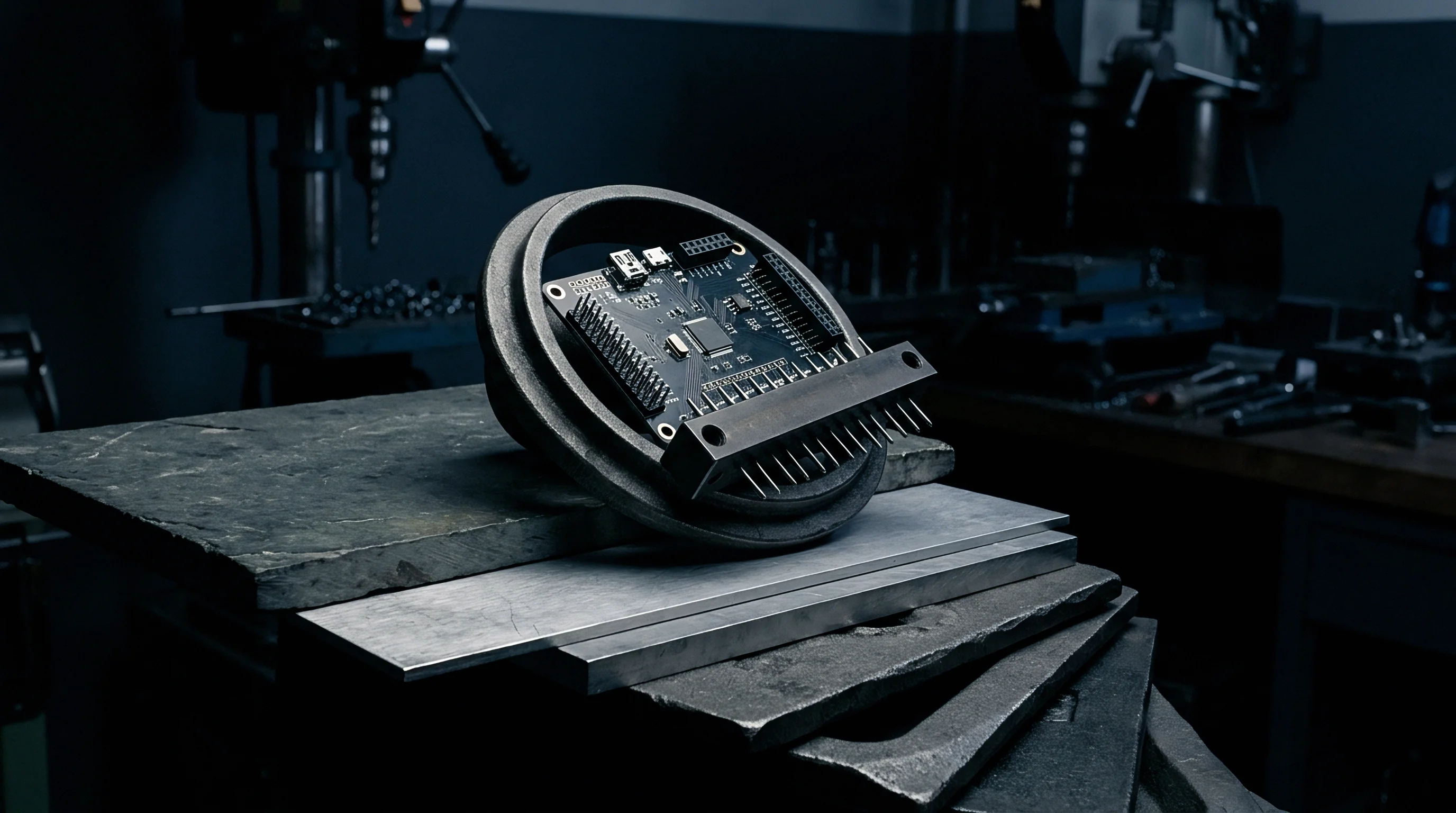
Static memory budgeting eliminates random heap fragmentation by pre-allocating dedicated packet buffers during boot initialization. The OpenThread stack provides configurable compile-time parameters to define maximum simultaneous joiner sessions, message buffer counts, and CoAP server transaction slots. Restricting OPENTHREAD_CONFIG_NUM_MESSAGE_BUFFERS to 128 blocks of 128 bytes guarantees a fixed 16.384 kB RAM allocation for packet transport, isolating network routing from application-level memory spikes.
Link quality variations directly dictate dynamic memory retention times in radio queues. At a receiver sensitivity of minus 100 dBm, an IEEE 802.15.4 link with a plus 10 dBm transmit power operates with a 110 dB link budget. In clean line-of-sight environments, packet delivery ratios exceed 99 percent, allowing DTLS transactions to clear in under 600 milliseconds.
In high-interference industrial settings with multipath fading and heavy 2.4 GHz Wi-Fi congestion, packet error rates rise above 35 percent. Failed acknowledgments trigger IEEE 802.15.4 MAC-layer retries, extending session context retention beyond 4,000 milliseconds.
| Environment Profile | Mean Path Loss | Packet Error Rate | Mean DTLS Handshake Time | Peak Ephemeral Memory Demand |
|---|---|---|---|---|
| Free Space Line-of-Sight (15 m) | 63.5 dB | 1.2 % | 420 ms | 3.8 kB |
| Commercial Office (2 Walls, 25 m) | 82.1 dB | 8.5 % | 780 ms | 7.6 kB |
| Industrial Metal Hall (Multipath, 40 m) | 94.7 dB | 28.4 % | 2,450 ms | 18.4 kB |
| High Interference Zone (Co-channel Wi-Fi) | 88.0 dB | 44.0 % | 4,800 ms | 34.2 kB |
Memory holding times scale linearly with network retry latency. Radio firmware buffers outgoing frames while waiting for clear channel assessments (CCA) during CSMA-CA channel access. Heavy spectrum utilization delays packet transmission, stalling the release of high-level CoAP and DTLS ephemeral memory allocations.
Static slab allocators guarantee deterministic memory reclamation at the cost of bounding maximum concurrent Joiner capacity.
The IEEE 802.15.4-2020 standard defines maximum backoff exponent limits that govern how radio queues retain undelivered frames before signaling channel access failure to upper layers.
Drift
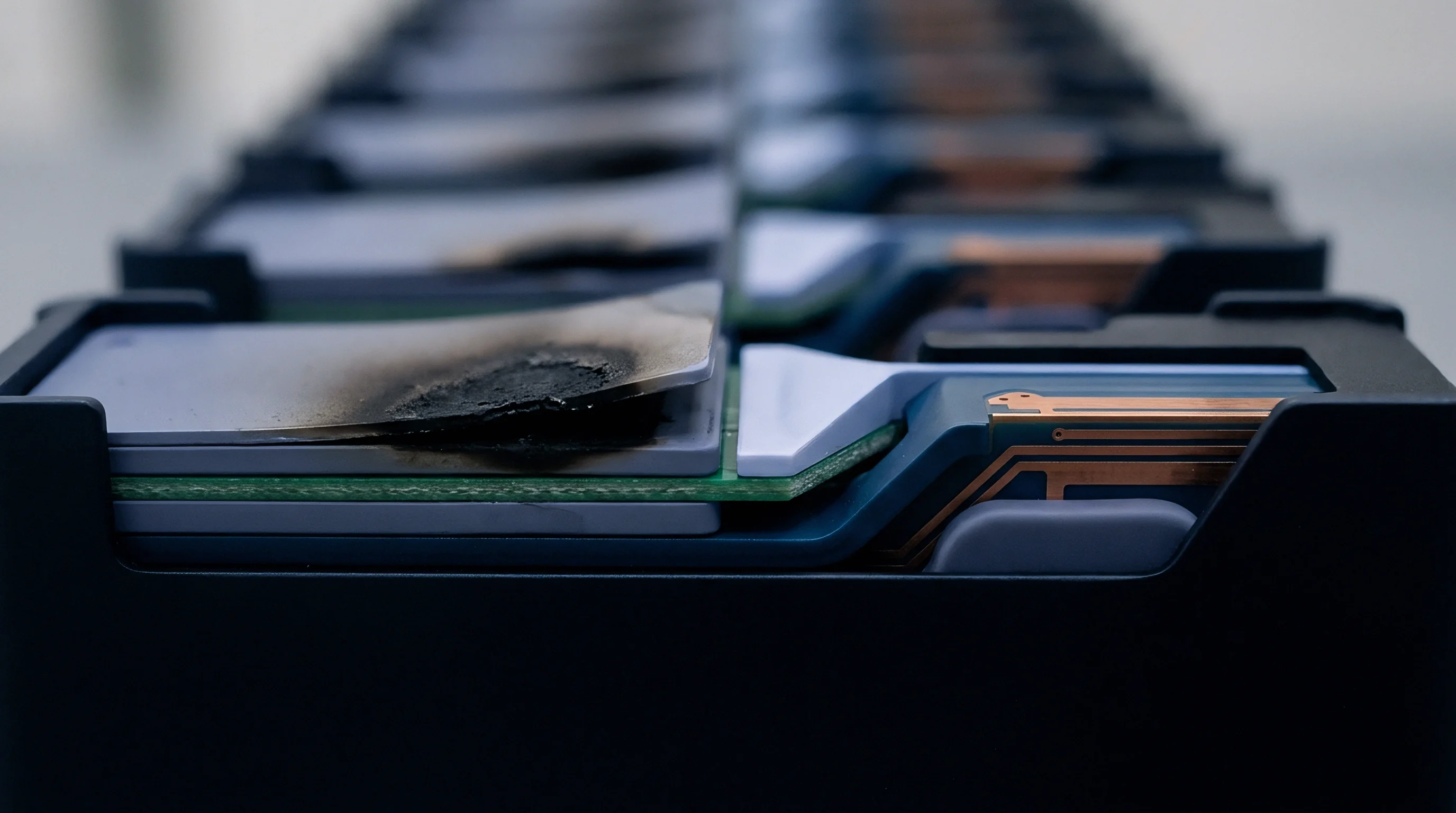
Long-term deployment stability hinges on quantifying memory margin decay under prolonged operation. Border router gateways run continuously for years without scheduled restarts, meaning slow memory leaks or uncollected heap fragments gradually compress the transient allocation headroom. Sourcing engineers evaluating wireless modules for provisioning gateways must verify not just base RF parameters, but also available RAM margins under worst-case network formation scenarios.
Module Sourcing and Firmware Headroom Verification
Procurement dossiers for Thread border router silicon must specify minimum RAM headroom alongside flash capacity. Silicon options ranging from 512 kB flash with 64 kB RAM to 2 MB flash with 512 kB RAM exhibit vastly different resilience profiles during bulk commissioning. When a gateway hosts Matter-over-Thread administrative fabric synchronization alongside Thread Border Router duties, baseline memory utilization exceeds 180 kB RAM before handling a single dynamic provisioning handshake.
- Total System RAM Sizing determines whether the operating system supports dynamic heap allocations without risking thread stack collision.
- Integrated Hardware Cryptography unloads modular exponentiation from CPU scratchpads, accelerating context turnover.
- Dual-Band Coexistence Interfaces manage packet priority between 2.4 GHz Thread and high-throughput Wi-Fi radios sharing shared antenna structures.
- Firmware Over-The-Air Buffer Reservation prevents dual-bank background updates from cannibalizing commissioning memory pools during firmware rollout cycles.
Evaluating bill-of-materials cost against silicon memory headroom reveals direct commercial trade-offs. Selecting a 128 kB RAM system-on-chip lowers initial module costs by approximately 0.65 US dollars per unit compared to a 512 kB RAM alternative. In dense enterprise installations where dozens of smart luminaires, thermostats, and sensors power on simultaneously after a power outage, the low-memory gateway experiences repeated heap panics.
The resulting field maintenance dispatches exceed the initial hardware component savings by orders of magnitude.
Memory headroom verification belongs in factory acceptance test specifications. Hardware qualification profiles should run continuous multi-joiner commissioning scripts under variable link attenuations for 72 hours while tracking allocator fragmentation indices via debug instrumentation.
Gateway memory architectures allocating fixed memory pools per joining node maintain stable network operations regardless of incoming RF burst density.