Binding Tariff Ruling Enforcement on Adaptive Cognitive Radio Assemblies Executing Autonomous Firmware Control
Customs classify cognitive radios by unconfigured hardware state while autonomous firmware adaptations trigger post-import tariff audits.


Grid

Harmonized System Framework for Adaptive Hardware
Customs authorities classify imported goods based on their physical, structural, and functional condition at the moment of entry. Under the World Customs Organization Harmonized Commodity Description and Coding System, classification rests on the General Rules for the Interpretation of the Harmonized System. For high-performance radio frequency components, inspectors examine the physical hardware alongside its embedded software capabilities.
Assemblies that run software-defined algorithms sit at a difficult boundary in Chapter 85. Telecommunications transmission and reception gear generally falls under heading 8517, specifically subheading 8517.62 for machines for the reception, conversion and transmission or regeneration of voice, images or other data. Unconfigured integrated circuits, unpopulated circuit boards, or generic processing elements lacking operating code usually default to heading 8542 as electronic integrated circuits.
Disputes between importers and customs officers often center on General Rule of Interpretation 2(a). This rule applies a heading to incomplete or unfinished goods if, as presented, the uncompleted assembly retains the essential character of the finished product. When an adaptive cognitive radio arrives at the border with blank flash memory or minimal bootstrap code, officers look to the physical silicon and radio-frequency front end for preliminary classification.
Wideband field-programmable gate arrays, high-speed digital-to-analog converters, and reconfigurable power amplifiers indicate that the hardware can operate across restricted frequency bands. If the board layout permits multi-gigahertz transmission once target code runs, inspectors will challenge declarations claiming generic data-processing status under lower-duty tariff lines.
Customs authorities assign tariff classifications based strictly on physical and functional capabilities present at the moment of clearance rather than post-importation operational intentions.
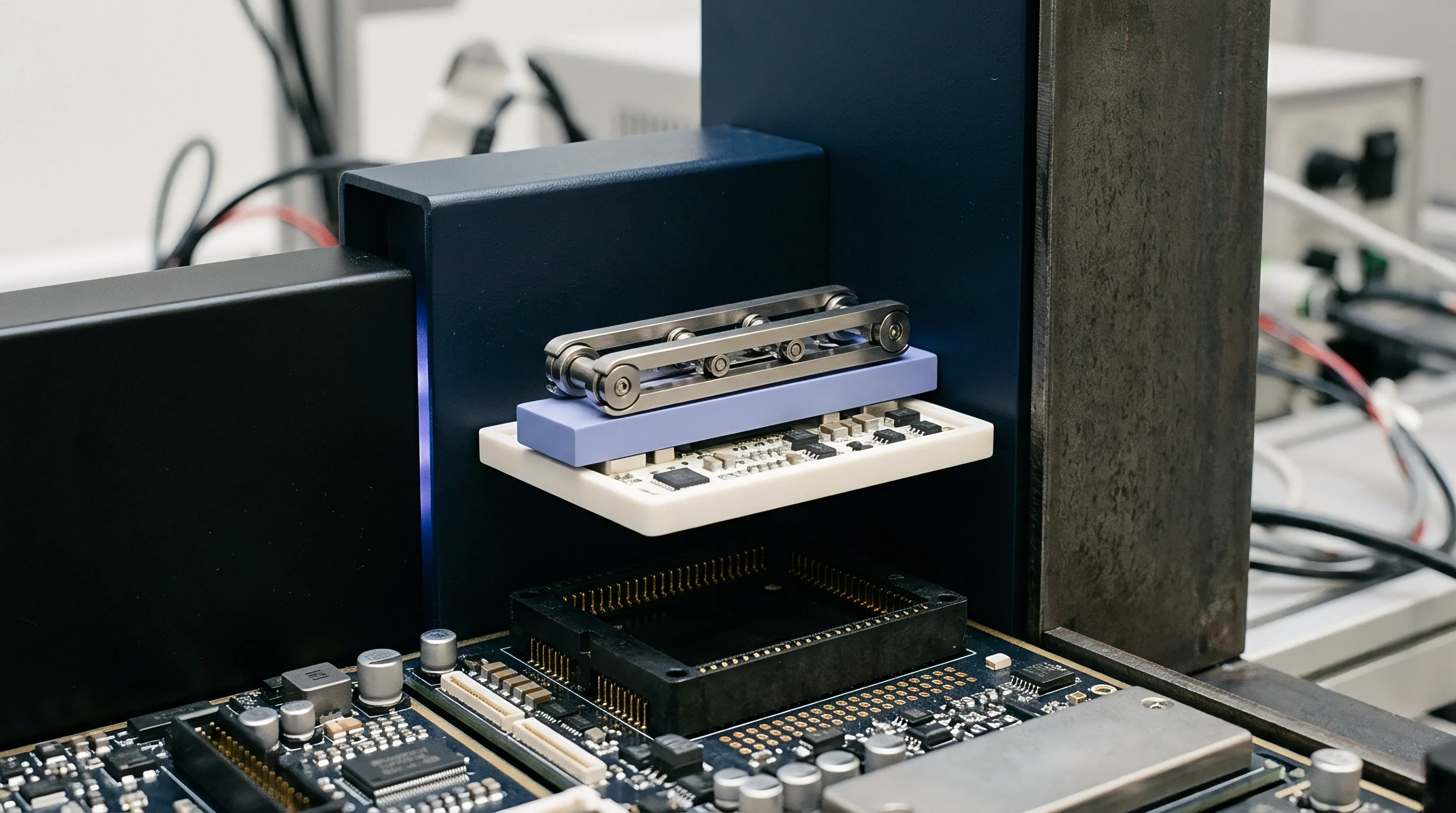
General Rules of Interpretation and Essential Character Tests
General Rule of Interpretation 3(b) applies when radio assemblies contain composite components incorporating processing units, radio transceivers, and power management circuits. The essential character test determines which component gives the assembly its primary commercial purpose. For cognitive radio platforms, enforcement agencies check whether the high-frequency front end or the digital signal processor governs principal use.
When custom application-specific integrated circuits or radio frequency integrated circuits dominate the bill of materials cost, authorities routinely reject attempts to classify the shipment as generic computing peripherals.
Discrepancies between binding tariff rulings and actual shipments trigger immediate regulatory scrutiny. Importers seeking Binding Tariff Information decisions in the European Union or Binding Tariff Rulings from United States Customs and Border Protection submit detailed functional schematics during application. These rulings remain legally valid only while the physical and operational attributes of the imported hardware match the sample submitted.
Any change to the underlying system architecture creates immediate exposure to misdeclaration penalties, retroactive duties, and administrative seizure of cleared cargo.


Kernel

Firmware Separation and Hardware Classification Mechanics
System architects frequently separate physical radio hardware from operating logic to streamline manufacturing and export logistics. Delivering unprogrammed hardware platforms to domestic distribution hubs permits regional loading of approved control code. Customs frameworks view this separation skeptically under transaction value and product identity standards.
Inspectors examine whether bare hardware platforms contain hardwired constraints limiting operational frequency ranges or output power levels. If physical hardware pathways support forbidden frequencies, shipping without active firmware does not shield the unit from high-duty or restricted telecommunications tariffs.
Determining essential character comes down to the physical hardware capability built into the circuit board layout. Field-programmable gate arrays and radio frequency integrated circuits mounted on a multi-layer substrate establish what the assembly can do. If firmware uploaded after importation enables full-duplex operation, spatial multiplexing, or high-order quadrature amplitude modulation, customs laboratories retroactively declare that the bare board possessed those capabilities at clearance.
This position undermines attempts to split hardware chassis values from software loading mechanisms.
Customs misclassification risks multiply when importers attempt to under-declare base hardware unit values while shifting total software valuation to post-importation licensing agreements. Classification disputes regularly center on specific hardware-firmware integration thresholds.
| Hardware Configuration State | Embedded Firmware Condition | Target HS Subheading | Primary Customs Classification Logic |
|---|---|---|---|
| Unpopulated PCB with RF Trace Layout | None | 8534.00 | Bare printed circuit board lacking active electronic components. |
| Populated SoC Board with Blank Flash | Minimal Bootloader Only | 8542.31 | Electronic integrated circuit assembly processed as general logic processing unit. |
| Wideband SDR Module with Baseband Logic | Static Operational Code Loaded | 8517.62 | Apparatus for reception, conversion, and transmission of data. |
| Adaptive Cognitive Radio Platform | Autonomous Execution Engine Embedded | 8517.69 | Other telecommunications apparatus with dynamic spectrum reconfigurability. |

Operational Failure Modes in Classification Declarations
Importers face significant legal exposure when software functionality evolves independently of physical customs documentation. Discrepancies between regulatory filings and customs entry documents lead directly to border enforcement actions.
- Unregistered Spectrum Transmissions where post-clearance autonomous code execution activates frequency bands outside the scope of the original type-approval filing attached to the customs docket.
- Valuation Unbundling Violations arising from attempts to subtract software license fees from the dutiable transaction value of hardware assemblies containing pre-installed control microcode.
- Dual-Use Export Evasion triggered when dynamic frequency-hopping firmware converts commercial industrial-band radio modules into restricted military-grade communication apparatus after customs release.
- Invalidated Binding Rulings resulting from functional shifts where autonomous firmware updates alter the primary performance envelope submitted during the original ruling application.
Submitting incorrect classification declarations exposes trading entities to severe administrative sanctions.


Shift

Dynamic Reconfiguration and Spectrum Compliance Intersections
Adaptive cognitive radios continuously monitor local radio frequency environments, adjusting transmission frequency, power output, spectral modulation, and duty cycles. Autonomous control engines use machine learning or cognitive state machines to optimize spectrum access without human intervention. This operational flexibility conflicts directly with customs classification systems, which require fixed functional descriptions.
Regulatory bodies ~ such as the Federal Communications Commission in the United States and Market Surveillance Authorities under the Radio Equipment Directive in Europe ~ demand strict control over radio parameters to prevent harmful interference.
When an adaptive radio shifts its operating band from unlicensed 2.4 GHz spectrum to a restricted sub-6 GHz commercial band, its regulatory status changes immediately. Under FCC Part 15 and Part 90 regulations, software-defined radios require clear security controls to ensure non-compliant software updates cannot be loaded. If autonomous control firmware adjusts transmission characteristics beyond certified parameters, the underlying hardware grant becomes void.
Customs authorities collaborate with radio regulators to halt shipments of hardware platforms running uncertified reconfigurable firmware.
Contractual compliance provisions must bind hardware suppliers to lock dynamic firmware adjustments within the exact parameters established by the original regulatory market authorization.

When Does Autonomous Firmware Alter Tariff Subheading Eligibility?
Subheading eligibility shifts the moment an autonomous firmware payload alters the fundamental utility or operational class of the imported radio assembly. If initial customs entry documentation designates an assembly as a passive spectrum-monitoring receiver under a low-duty tariff line, and an autonomous software update subsequently activates wideband transmission circuits, the entry declaration becomes legally false. The violation dates back to the day of clearance if customs forensic teams prove the hardware possessed the physical capacity and embedded software hooks to execute that transformation upon network connection.
Managing trade risk requires clear decision metrics for hardware sourcing teams before initiating international transit. Sourcing teams evaluate product designs against specific operational markers to verify whether proposed firmware changes alter product tariff status.
- Determine Base Hardware Parameters to identify maximum physical band limits, RF output wattage capability, and mounted processing chipsets.
- Audit Firmware Update Mechanisms to confirm whether software adjustments occur via localized signed binaries or autonomous cloud-driven network updates.
- Map Regulatory Certification Scope against intended operating modes to verify that every dynamic execution path stays within certified radio equipment bounds.
- Verify Duty Valuation Integrity by ensuring software royalty structures, update subscriptions, and hardware purchase prices are declared under appropriate transaction value standards.
To mitigate compliance exposure, supply agreements incorporate standard risk-allocation terms. The standard procurement clause specifies: “The vendor guarantees that hardware delivered under this schedule maintains permanent architectural restrictions preventing autonomous code execution outside the radio frequency specifications declared in the binding customs ruling, and accepts full financial liability for tariff adjustments resulting from unauthorized software updates.”


Bench

Customs Forensic Laboratory Verification Procedures
Customs enforcement agencies maintain specialized laboratory facilities to examine imported electronic assemblies suspected of misclassification or regulatory evasion. Facilities such as the United States Customs and Border Protection Laboratories and Scientific Services operate advanced radio frequency test chambers, logic analyzers, and digital forensic tools. When an adaptive cognitive radio shipment is flagged for verification, forensic engineers extract onboard non-volatile memory contents to analyze raw firmware code, bootloader signatures, and control logic structures.
Physical inspection verifies whether hardware components match declared bill-of-materials schematics.
Testing involves mounting the radio assembly inside an anechoic chamber on an automated turntable. Automated testing controls spectrum analyzers, vector signal generators, and power meters to evaluate real-time emissions across declared and undeclared operating bands. Forensic examiners run stress scripts designed to force embedded autonomous algorithms into worst-case transmission scenarios, measuring occupied bandwidth, spurious emissions, and peak power output.
| Test Domain | Measurement Instrument | Target Verification Parameter | Enforcement Standard Compliance Threshold |
|---|---|---|---|
| Spectral Occupancy | Real-Time Spectrum Analyzer | Occupied Channel Bandwidth | Must remain within certified channel limits under maximum software modulation. |
| Out-of-Band Emission | Vector Signal Analyzer | Spurious Emission Power Density | Attenuated below specific dBc levels per FCC Part 15 / ETSI EN 300 328. |
| Firmware Integrity | JTAG Logic Analyzer | Cryptographic Hash Verification | Extracted binary hash must match hash documented in regulatory filing. |
| Autonomous Adaptation | Software Emulator Suite | Dynamic Frequency Hopping Boundaries | Forbidden bands must be permanently blocked at hardware register level. |

Sequential Forensic Inspection Procedure
Customs laboratories follow a standardized sequence of physical and software diagnostic steps to analyze intercepted radio hardware.
- Secure intercepted sample and log physical package integrity in customs chain-of-custody tracking systems.
- Connect board JTAG and serial debug interfaces to isolate non-volatile flash memory components without modifying stored data.
- Extract complete binary memory dumps and run automated string analysis to identify hidden command scripts and uncertified protocol stacks.
- Mount hardware on anechoic chamber turntable and establish automated instrument control loops.
- Power assembly under controlled voltage conditions while monitoring initial bootup radio frequency emissions.
- Inject synthesized network stimulus signals to trigger autonomous cognitive spectrum-hopping state transitions.
- Record spectral occupancy mask, maximum peak output power, and spurious emissions across all dynamic state transitions.
- Compare physical performance data against declared Harmonized System technical specifications and regulatory grant filings.
Questions remain over how customs forensic laboratories will consistently enforce tariff classifications on neural-network-driven cognitive radios when parameter weightings update continuously over encrypted channels post-importation.


Friction

Binding Ruling Invalidation and Administrative Penalties
Binding Tariff Rulings provide administrative certainty for importers by establishing official tariff classifications prior to shipment. That legal protection relies on absolute transparency. If an importer secures a binding ruling for a basic receive-only communications card, and later imports identical physical hardware loaded with autonomous transmit-capable firmware, the ruling becomes legally void for the new shipments.
Customs authorities treat this divergence as misrepresentation, revoking ruling protections retroactively across open entry summary liquidation windows.
Revocation triggers comprehensive audits under statutes such as 19 U.S.C. 1509 in the United States or Article 103 of the Union Customs Code in the European Union. Regulatory audit teams inspect historical entry summaries spanning up to five years, demanding unpaid tariff differences along with compound interest. In cases involving gross negligence or intentional fraud, administrative monetary penalties reach up to four times the total domestic value of the merchandise.
Regulatory compliance audits examine historical firmware update logs to verify that cleared hardware never operated outside its declared import classification parameters.

Required Compliance Dossier Documentation
Protecting commercial procurement programs against administrative enforcement actions requires maintaining exhaustive, audit-ready compliance records at every clearance point.
- Hardware Architecture Master Specifications clearly detailing physical component limits, maximum power handling, and board schematics.
- Firmware Version Control Registers linking specific cryptographic binary hashes directly to cleared batch import dockets.
- Regulatory Type-Approval Certificates confirming market access clearance under FCC, CE, SRRC, or Giteki regulatory frameworks.
- Software License and Valuation Documentation identifying explicit cost allocation between physical silicon and executable code structures.
- Binding Tariff Ruling Certificates containing complete functional product descriptions matching delivered hardware configurations.
As a rule of thumb, hardware whose underlying capability relies on software loading must be classified based on its maximum physical capability rather than its software-restricted operating mode.

Ledger

Landed Cost Arithmetic and Tariff Valuation Models
Determining true landed cost for reconfigurable cognitive radio platforms requires accounting for duty structures, regulatory compliance filing fees, and legal reserve provisions. Tariff schedules apply distinct duty rates based on fine classification differences within heading 8517. While standard data processing modules under subheading 8517.62 frequently enter duty-free under the Information Technology Agreement, specialized radio transceivers or composite telecommunications equipment categorized under 8517.69 carry substantial standard duty rates, alongside trade defense measures such as Section 301 tariffs or anti-dumping duties.
Landed-cost models must weigh base hardware prices against potential reclassification duty spikes. Failing to set aside duty risk reserves leads directly to margin collapse when customs audits enforce retroactive rate adjustments.
| Import Jurisdiction | Declared Base Subheading | Audited Enforcement Subheading | Base Tariff Rate | Maximum Reclassified Duty Exposure |
|---|---|---|---|---|
| United States | 8517.62.00 (Duty Free) | 8517.69.00 (Commercial Transceiver) | 0.0% | 25.0% (Includes Section 301 Surcharge) |
| European Union | 8542.31.90 (Integrated Circuit) | 8517.62.00 (Radio Apparatus) | 0.0% | 3.3% Standard Third-Country Duty Rate |
| China | 8517.62.99 (Data Apparatus) | 8517.69.90 (Other Transmission) | 0.0% | 8.0% MFN Import Duty Rate |
| Japan | 8517.62.00 (Communications Unit) | 8517.69.00 (Other Wireless Unit) | 0.0% | 3.1% Standard Trade Duty Rate |
Worked Financial Exposure Calculation
Evaluating trade risk requires modeling potential duty clawbacks on commercial procurement programs. Consider a shipment of 10,000 adaptive cognitive radio modules billed at a unit hardware price of 250 USD, yielding a total customs transaction value of 2,500,000 USD. The importer declares the goods under subheading 8517.62.00, anticipating duty-free entry under the Information Technology Agreement.
During a post-clearance audit, auditors discover that pre-installed autonomous firmware enables high-power wideband transmission, reclassifying the units under subheading 8517.69.00 with an applicable Section 301 duty rate of 25 percent. The primary unpaid duty obligation totals 625,000 USD. Under standard statutory interest provisions calculated over a two-year post-entry review window at an annual interest rate of 6 percent, interest additions compound to approximately 76,875 USD.
Applying a standard non-fraudulent negligence penalty under 19 U.S.C. 1592 equal to two times the unpaid duty adds 1,250,000 USD in administrative fines. The total financial liability resulting from the reclassification reaches 1,951,875 USD, turning a duty-free import strategy into an effective 78 percent cost penalty on the landed shipment.
Structuring international radio sourcing operations demands complete alignment between engineering teams, trade compliance counsel, and customs broker operations. Hardware platforms carrying unconstrained RF front-ends require robust board-level controls, strict version-controlled firmware documentation, and comprehensive binding tariff filings before launching cross-border transit schedules.