Managing Domestic Representative Requirements for South Korean Radio Conformity
Foreign manufacturers must appoint a South Korean domestic representative to hold KC radio conformity grants and retain technical archives.
Anchor
South Korean radio frequency law conditions market access on having a legally accountable local presence. Under Article 58-2 of the Radio Waves Act, administered by the Ministry of Science and ICT alongside the National Radio Research Agency, any transmitter, receiver, or telecommunications host intended for domestic sale must undergo a conformity assessment before commercial distribution. Overseas original equipment manufacturers cannot directly hold a South Korean Radio Conformity certificate without establishing an in-country legal entity or formally appointing an authorised domestic representative.
Legal liability for electromagnetic compatibility, spurious emissions, and post-market compliance sits directly with the domestic entity named in the Radio Research Agency database.
Foreign entities entering the South Korean market generally choose between two applicant structures. The foreign manufacturer can register as the grant holder while naming a resident South Korean citizen or registered corporation as its designated domestic representative. Alternatively, the manufacturer allows a local importer or distributor to serve as the direct applicant and certificate holder.
Letting a distributor hold the grant directly creates an operational lock: that distributor retains exclusive administrative rights over the registration, which prevents other import channels from using the same conformity assessment unless secondary co-registrations are filed.
Appointing a dedicated domestic representative separates commercial distribution from regulatory ownership. The representative acts as the sole contact for the Central Radio Management Service, handling administrative notices, audit requests, and product safety calls. If a foreign manufacturer changes local distributors, this structure maintains market continuity without requiring repeat lab testing or new certification filings for identical hardware revisions.
The contract governing domestic representation defines regulatory liabilities that survive routine vendor changes. A standard representation clause in supply agreements specifies:
The designated domestic representative shall maintain active corporate registration with South Korean authorities, retain all technical construction files for a minimum of five years following product obsolescence, and execute mandatory field recalls ordered by the Ministry of Science and ICT without altering the certified product configuration.

Custody
Documentation Architecture for RRA Compliance
Holding a Radio Research Agency conformity certificate requires maintaining technical documentation inside South Korea. The domestic representative keeps a complete technical construction file in Korean (or translated into Korean), including schematic diagrams, block operational diagrams, printed circuit board layouts, bills of materials, antenna radiation pattern specifications, and user manuals with prescribed warnings. The representative must present these files to field inspectors within seven business days of an official request.
The specific conformity pathway determines how much documentation the local representative must store. Equipment falls into three statutory tiers, each with its own filing demands and testing parameters.
The domestic representative holds technical construction files for five years after product manufacturing or importation ceases.
| Conformity Tier | Target Equipment Scope | Test Facility Requirement | Local File Retention Mandate |
|---|---|---|---|
| Conformity Certification | Cellular base stations, maritime radar, high-power radio equipment | RRA-designated local laboratory | Schematics, antenna gain profiles, full test reports, Korean manual |
| Conformity Registration | Wi-Fi routers, Bluetooth peripherals, commercial IT hosts | Designated local lab or recognized mutual recognition facility | Block diagrams, circuit descriptions, operational declarations, test reports |
| Self-Conformity Registration | Low-risk industrial computing, wired IT peripherals | Internal or third-party laboratory test report | Self-declaration document, test data summary, user instructions |
Labeling rules ensure immediate visual traceability to the representative’s filing. Every hardware unit arriving at South Korean customs must bear the physical KC Mark alongside a unique radio conformity identifier on its external housing. The identifier layout follows rules established by the Radio Research Agency, encoding certification type, testing authority, applicant corporate code, and product code.

Identifier Formatting and Hardware Identification
Physical labels must be clearly visible, permanently adhered, and formatted with exact typography. The identifier string begins with the prefix R-R, marking radio equipment regulated by the Radio Research Agency. The third character denotes the registration class, followed by the three-character corporate code assigned when the applicant first registered.
The final section is the manufacturer’s specific product code, capped at eleven alphanumeric characters. If a device is too small for direct printing on the housing, the representative can register an e-label approval or print the full string on the primary commercial packaging and user documentation.
Incomplete user documentation can stall clearance at the port of entry. User manuals must include mandatory warnings about potential electromagnetic interference in residential areas. The domestic representative must also verify that device software strictly restricts operation to South Korean frequency allocations, disabling unauthorized bands like the 5.8 GHz channels restricted under local spectrum management plans.
Conformity archives remain tied to the legal representative regardless of sales volume. Routine compliance mandates systematic archiving of all firmware modifications affecting radio output. Any change that alters nominal RF power, operating frequency, or internal component layouts invalidates existing technical files and requires immediate review by the representative before customs dispatch.
Surveillance

Central Radio Management Service Field Audits
Post-market surveillance in South Korea relies on active retail sampling and random customs inspections by the Central Radio Management Service. Authorities buy off-the-shelf units through retail channels and submit them to state labs for unannounced verification. Tests check radiated emissions, spurious harmonics, frequency stability, and labeling accuracy against the technical construction file supplied by the domestic representative.
Surveillance often turns up discrepancies between laboratory golden units and mass-produced hardware. When differences appear, administrative enforcement falls directly on the domestic entity named on the conformity certificate.
Failure of a field audit sample triggers administrative sales suspensions within fourteen days of test report publication.
- Unregistered Firmware Overclocking Power outputs exceeding granted regulatory limits by more than one decibel result in immediate certificate suspension.
- Omitted Packaging Identifiers Missing the mandatory KC mark or local representative corporate name on outer packaging generates immediate customs detentions.
- Alternate Component Substitution Swapping primary RF transceivers without filing a formal permissive change invalidates the underlying conformity filing.
- Missing Korean Manual Warnings Distributing English-only documentation incurs monetary administrative fines against the domestic representative.
Administrative Sanctions and Penalties
The Radio Waves Act enforces strict liability for non-compliant hardware. First infractions bring administrative corrective orders requiring immediate withdrawal of inventory from South Korean retail channels. Repeated infractions or severe spectrum interference lead to full revocation.
Once a certificate is revoked, a statutory ban prevents both the foreign manufacturer and the domestic representative from applying for new conformity assessments on that product line for up to twelve months.
Discrepancies between tested units and field hardware often stem from unmanaged supply chain changes. Even swapping a passive component in an antenna matching circuit can shift harmonic emissions at higher ambient temperatures. If an audit sample fails anechoic chamber scans at the Central Radio Management Service facility, the domestic representative receives formal notice to supply three identical production samples within thirty calendar days for secondary re-testing.
Failing secondary verification leads to public listing of the non-compliance on the Radio Research Agency administrative portal. The domestic representative absorbs all costs for customer notifications, retail buybacks, and hardware destruction, underscoring the financial liability tied to local representation contracts.

Transfer
Can a Foreign Manufacturer Transfer KC Certificates Directly?
Transferring a South Korean Radio Conformity certificate between domestic representatives requires formal legal execution. The Radio Research Agency recognizes only the registered domestic applicant as the legal owner of the grant. If a foreign manufacturer ends its relationship with a distributor holding a KC registration, it cannot unilaterally transfer that registration to a new agent without written consent from the current holder.
Avoiding distributor lock-in requires deliberate planning during initial contract negotiations. Foreign vendors frequently face demands for cash buyouts or inventory takebacks from departing distributors who refuse to sign Radio Research Agency surrender forms. Working with an independent, non-distributing representative removes this leverage by keeping grant ownership with a neutral party.
Neutral domestic representatives eliminate distributor lock-in risks during long-term market access execution.
Executing a representative transfer follows a set procedural sequence managed by the Radio Research Agency. The current certificate holder and incoming representative execute an official agreement shifting regulatory liability.
- Surrender agreement execution by current certificate holder.
- Corporate registration status verification for incoming domestic representative.
- Technical construction file migration to incoming representative’s physical archive.
- Filing form application submission to the Radio Research Agency online portal.
- Payment of administrative transfer fees and certificate reissue processing.
Transferring an existing certificate avoids costly re-testing when changing commercial sales channels. Technical construction files, test reports, and factory quality declarations move directly to the new representative’s archive, and the incoming representative assumes full legal liability for past and future shipments entering South Korea under that certification number.
Importers changing local agents without executing formal RRA transfers encounter immediate port customs rejections.
Expense
Cost Structures and Landed Cost Arithmetic
Budgeting for South Korean radio conformity includes lab testing fees, administrative filing tariffs, and ongoing representative retainers. Testing costs depend on radio complexity, frequency bands, and host device features ~ a simple Bluetooth low energy device costs significantly less to test than a multi-band Wi-Fi 6E device with dynamic frequency selection.
Foreign companies generally choose among three operational models to fulfill domestic representation requirements, balancing fixed expenses, ongoing compliance costs, and time-to-market trade-offs.
Retaining an independent professional representative costs approximately three thousand dollars annually per registered product family.
| Representation Structure | Initial Legal Setup Cost | Annual Maintenance Retainer | Certificate Transfer Complexity | Average Time-to-Market |
|---|---|---|---|---|
| Local Commercial Distributor | Zero directly billed fees | Embedded in distribution margin | High potential for commercial lock-in | Six to eight weeks |
| Independent Local Representative | Two thousand USD per filing | Three thousand USD annually | Low smooth contract migration | Six to eight weeks |
| Direct South Korean Subsidiary | Fifteen thousand USD base incorporation | High corporate overhead | Complete internal corporate control | Twelve to sixteen weeks setup |
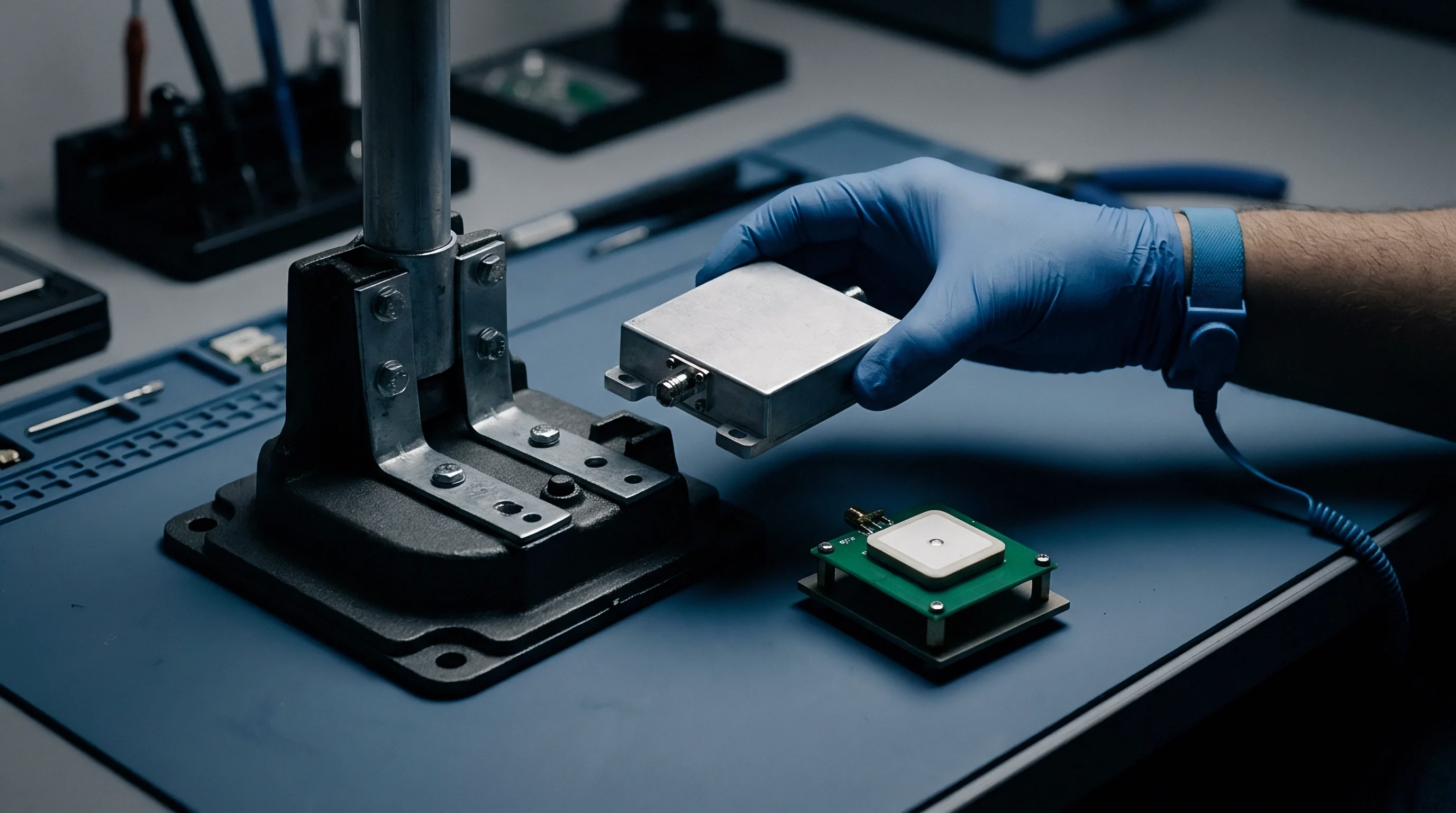
Landed cost calculations must factor in potential re-testing expenses if compliance failures occur during pre-scans. Testing at RRA-designated facilities in South Korea requires physical sample delivery, customs clearance, and local engineering support. Standard sample shipments include two fully functional production units plus one unit modified with continuous wave test software and direct SMA coaxial antenna ports for conducted RF testing.
Using existing test data under International Electrotechnical Commission schemes can shorten laboratory time. Reports generated under Mutual Recognition Agreements between South Korea and partner countries reduce redundant testing for certain IT equipment classes. Even so, radiated immunity, power line emissions, and radio parameters still require mandatory verification scans at local laboratories if foreign test data falls short of exact RRA specifications.
Sequencing global approvals strategically helps control overall regulatory spending. Completing European testing or Federal Communications Commission filings before applying in South Korea helps catch issues like harmonic suppression failures before shipping test units to local labs. Once testing concludes, the domestic representative receives the final reports, validates packaging proofs, and obtains the official Radio Research Agency grant certificate within ten business days.