Managing Partial Retesting Protocols during Harmonized Radio Standard Version Revisions
Updating harmonized radio approvals relies on clause level gap analysis, selective receiver retesting, and technical file updates before presumption of conformity expires.


Clock
European regulatory compliance operates on fixed calendar deadlines driven by published citations. When the European Commission publishes a revised harmonized radio standard in the Official Journal of the European Union, a countdown begins for every hardware manufacturer distributing equipment in member states. The date of withdrawal, formally designated as the DOCOPOW, defines the exact moment when the legacy standard version forfeits its presumption of conformity under the Radio Equipment Directive 2014/53/EU.

Presumption of Conformity Expiry Timelines
Manufacturers often assume that products already placed on the market enjoy perpetual compliance based on their initial test reports. Market placement refers to the individual unit transfer of ownership or initial physical distribution within the single market. Units entering European distribution channels after the published withdrawal date fall under the new standard requirements.
The transition date arrives. Products manufactured after this threshold require updated technical documentation confirming compliance with the newly cited version.
The standard transition period typically ranges between 12 and 24 months from publication in the Official Journal. The transition date arrives. During this overlap window, both standard versions grant presumption of conformity.
Presumption of conformity expires. Once the withdrawal date passes, an un-updated declaration of conformity becomes legally void for fresh shipments.
A standard transition period of 18 months in the Official Journal of the European Union provides the exact calendar window before legacy radio test reports lose presumption of conformity.
The typical laboratory quote of €3,500 for a partial retest suite rests on a two-day chamber booking for conducted receiver blocking and out-of-band emissions under ETSI EN 300 328. This figure moves upward to €7,000 if radiated measurements become necessary due to integrated PCB antennas without dedicated RF test connectors. Early scheduling secures laboratory availability before peak compliance deadlines create booking bottlenecks.

Official Journal Citation Mechanics
Listing in the Official Journal creates a legal presumption that a radio device meets essential requirements established under RED Article 3.2. If a revised version removes specific clauses or introduces more stringent limit lines, the manufacturer must evaluate the delta between releases. Partial retesting protocols bridges this technical gap without repeating an entire compliance campaign.
Filing fees accumulate quickly. Hardware distributors must monitor the publication tables published by the European Commission quarterly. When a standard moves from the draft stage to full harmonization, technical teams must perform a clause-by-clause cross-reference against the existing test suite.
Article 10.8 of the Radio Equipment Directive obligates the manufacturer to maintain an updated declaration identifying the exact harmonized version in effect on the day of market placement.

Probe
Standard revisions frequently target receiver robustness and spectrum efficiency parameters. Historical transitions across broadband data transmission standards show a clear progression toward stricter receiver selectivity, tighter out-of-band spectrum masks, and modified transmitter spurious limits. Chamber availability remains tight.

Receiver Blocking and Selectivity Requirement Revisions
Receiver performance parameters underwent significant changes during recent ETSI standard updates. For instance, the transition from ETSI EN 300 328 Version 2.1.1 to Version 2.2.2 modified receiver blocking test procedures by altering interfering signal power levels and frequency offsets. Receiver requirements changed significantly.
Radio spectrum management across international borders frequently collides with legacy allocations, as seen when 5 GHz wireless networks disrupt meteorological radar installations operating in adjacent sub-bands. RF engineers account for these real-world interference mechanisms when standards committees tighten receiver rejection criteria. Lab reports establish compliance.
Evaluating standard deltas requires isolating specific technical changes across test conditions:
- Receiver Blocking Sensitivity Thresholds alter the power level of injected unwanted signals to assess adjacent channel rejection.
- Transmitter Out-of-Band Mask Limits introduce narrower transition bands adjacent to the allocated operating frequency.
- Adaptivity and Medium Access Protocols mandate updated channel occupancy timing measurements for polite spectrum sharing.
- Spurious Emission Frequency Bands extend upper boundary sweeps into higher harmonic spectrum ranges.
ETSI EN 300 328 Version 2.2.2 introduced strict receiver blocking thresholds that invalidated standalone compliance declarations based entirely on Version 2.1.1 testing.
Legacy receiver reports often lack data points at the exact frequency offsets specified in updated harmonized versions. When standard committees alter interfering signal power levels from -53 dBm to -42 dBm, historical pass results cannot mathematically prove compliance under the new condition. Physical re-measurement on the test bench becomes unavoidable.

Spurious Emission Limit and Bandwidth Modifications
Transmitter parameters shift between standard releases to accommodate denser frequency reuse patterns. Modifications to occupied bandwidth limits or domain boundaries require laboratory re-evaluation. Conducted measurements save time.
Data drives the retesting scope.
| Standard Reference | Version Change | Modified Parameter Clause | Required Chamber Retest Action |
|---|---|---|---|
| ETSI EN 300 328 | v2.1.1 to v2.2.2 | Clause 4.3.2.11 (Receiver Blocking) | Conducted receiver blocking retest under revised signal levels |
| ETSI EN 301 893 | v2.1.1 to v2.2.1 | Clause 4.2.8 (Receiver Dynamic Frequency Selection) | Selective radar detection pattern and pulse width evaluation |
| ETSI EN 301 489-17 | v3.1.1 to v3.2.4 | Clause 7.1 (EMC Immunity and Emission) | Transient immunity update review and harmonic current assessment |
| ETSI EN 303 413 | v1.1.1 to v1.2.1 | Clause 4.2.2 (GNSS Receiver Spurious Rejection) | Adjacent band selectivity testing for satellite positioning receivers |
Ignoring receiver selectivity delta criteria during standard revisions exposes the product line to mandatory withdrawal notices across member states.

Scope
Determining the precise extent of delta testing balances regulatory compliance against laboratory expense. Complete retesting of an already qualified radio module consumes unnecessary financial and operational resources. Selective testing targets only those parameters where technical specifications have diverged.

How Is Delta Retesting Scope Formally Validated?
Technical evaluation begins by mapping every test clause from the legacy standard to the current published release. If the test method, limit line, measurement uncertainty criteria, and equipment configuration remain identical, the existing test data retains validity. Legacy grants lose legal force.
Documentation holds the market entry.
Industry estimates place the administrative cost of updating a European Technical Construction File between €800 and €2,500, but variations in notified body audit depth make an exact baseline unprovable. Buyers handle this uncertainty by requiring module suppliers to absorb dossier revision fees as a fixed condition of supply.
Engineers follow a structured decision sequence to establish the partial retest boundary:
- Initial Standard Gap Mapping pinpoints every modified test clause between standard releases.
- Hardware Deviation Review confirms whether host enclosure changes impact radio coupling.
- Targeted Retesting Execution isolates affected parameters for accredited laboratory verification.
- Technical Documentation Sign-Off incorporates new test reports into the official construction dossier.
Selective testing reduces total outlay. Module certificates require verification. Standard gap analysis documentation provides the rationale presented to market surveillance authorities during compliance audits.
This justification explains why specific legacy test blocks were retained while others were subjected to laboratory re-measurement.

Technical Construction File and Declaration Updates
Updating the Technical Construction File involves appending the new partial retest report alongside original full test documentation. The manufacturer issues an updated EU Declaration of Conformity stating compliance with the revised harmonized version. Customs inspectors reject outdated declarations.
When an integrated radio module holds full type approval, host-level integration rules dictate whether module-level retest data transfers directly to the final host device. Enclosure shielding, co-located transmitters, and power supply changes can alter spurious radiation characteristics, necessitating host-level spot checks.
Module vendors often claim that legacy test reports remain fully valid indefinitely because the fundamental RF silicon remained unaltered across hardware revisions.


Rig
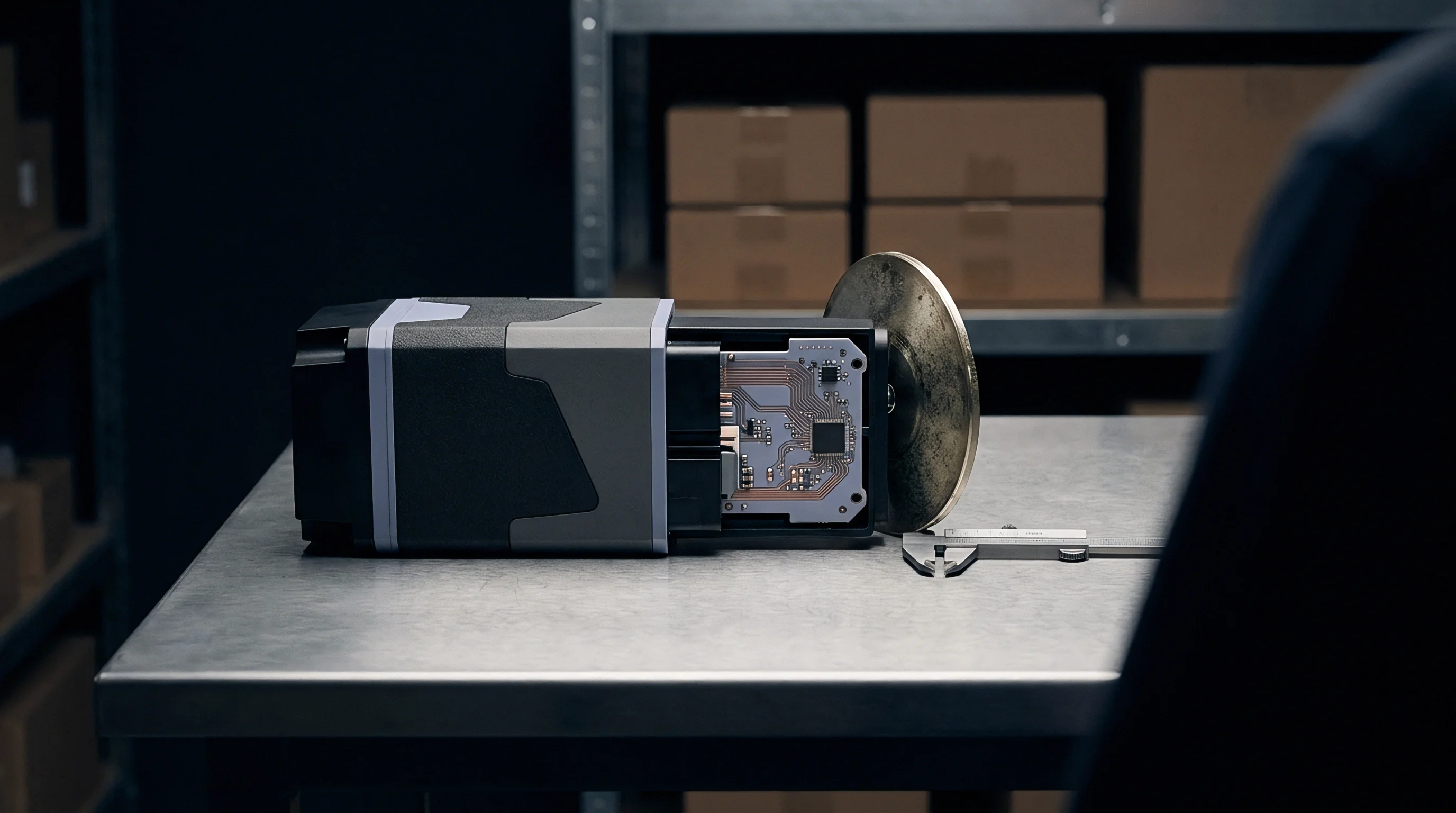
Executing a partial retest campaign requires disciplined laboratory setup and calibrated test jigs. Conducted measurement benches allow rapid parameter verification without the scheduling overhead and high hourly rates of full semi-anechoic chambers.
Chamber Campaign Execution for Delta Testing
Bench testing begins by verifying test software builds and firmware control scripts. Test setup calibration takes time. Radio modules must enter test mode using manufacturer-supplied control utilities to fix operating channels, output power levels, and modulation formats.
The estimated chamber setup calibration time of four hours assumes an automated coaxial switching matrix and pre-calibrated cable loss profiles at 2.4 GHz. Using custom waveguide setups or uncalibrated directional couplers adds three hours of bench verification, raising initial lab costs before measurement starts.
Execution follows an established bench verification procedure:
- Configure the radio module with test firmware enabling fixed frequency transmission and continuous wave receiver modes.
- Connect the conducted antenna port directly to the signal generator and spectrum analyzer using calibrated coaxial attenuation.
- Inject the unwanted blocking signal at specified frequency offsets while monitoring packet error rate or audio SINAD performance.
- Record the minimum interfering signal level where performance degradation exceeds standard thresholds across all operational bands.
Conducted RF port measurements resolve receiver blocking compliance in less time and at lower cost than full three-meter radiated chamber scans.
Margin determines product compliance. If conducted test results demonstrate robust margin against tightened limit lines, radiated verification can often be limited to spot checks at critical harmonic frequencies.

Landed Retest Financial and Schedule Modeling
Budgeting a standard revision compliance effort involves balancing direct laboratory fees, sample preparation labor, and external consultancy costs. Direct test execution forms only a fraction of total landed costs.
| Campaign Phase | Execution Scope | Estimated Chamber Hours | Cost Allocation (€) |
|---|---|---|---|
| Gap Analysis & Test Plan | Engineering review of standard updates | 0 | 1,200 |
| Sample Prep & Firmware | Harnessing and test mode confirmation | 0 | 800 |
| Conducted Retesting | Receiver blocking & out-of-band sweep | 8 | 2,400 |
| Radiated Verification | Spurious emission spot checks | 4 | 1,800 |
| Report & Dossier Update | TCF generation and DoC update | 0 | 1,000 |
When transmitter spurious limits remain unchanged but receiver blocking rules tighten, conducted port retesting yields faster confirmation than full radiated chamber scans.


Matrix
Navigating partial retesting during harmonized version revisions demands clear decision logic across engineering, legal, and procurement functions. Standard changes affect product lifecycles differently depending on market entry timing, inventory levels, and hardware architecture.

Decision Trees for Modular versus Host Retesting
Product teams must evaluate whether radio approvals rest on pre-certified modular grants or full host-level system filings. Pre-approved modules simplify compliance, but the host manufacturer retains ultimate legal responsibility for market placement compliance under RED Article 19.
When a module supplier updates their test documentation to a new harmonized standard, the host manufacturer obtains the updated test summary and updates the host device Technical Construction File. If the module supplier fails to update their certification before the Official Journal withdrawal date, the host manufacturer must fund partial retesting independently or withdraw the finished product from distribution.
Customs authorities inspect declarations of conformity against current Official Journal listings rather than the standards active when the product was manufactured.

Market Enforcement and Customs Compliance Protocols
National market surveillance authorities conduct random sample audits at import hubs and retail networks. Enforcement officers verify that the standard versions listed on the Declaration of Conformity match the active listings in the Official Journal on the exact date of customs clearance.
Discrepancies between physical product markings, declarations of conformity, and laboratory test report versions trigger customs holds and market administrative inquiries. Systematic delta retesting protocols safeguard continuous market access while controlling compliance expenditures.
The open operational question remains whether national market surveillance authorities will harmonize their inspection thresholds when evaluating legacy stock placed on the market during transitional overlap windows.