Auditing Harmonized Standard Version Transitions in Technical Files
Auditing technical files against Official Journal standard updates requires precise gap evaluations, targeted delta retesting, and continuous Declaration of Conformity maintenance.


Cessation
Publishing standard reference numbers in the Official Journal of the European Union sets the regulatory timeline under Directive 2014/53/EU. When the European Commission cites a revised harmonized standard, it assigns a Date of Cessation of Presumption of Conformity for the edition being replaced. From that day on, manufacturers can no longer rely on the older version to demonstrate compliance with Article 3 Essential Requirements.
Technical files backed only by expired test reports lose their presumption of conformity immediately.

Official Journal Publication Mechanics
Standardization bodies update technical specifications as spectrum density grows and test instrumentation improves. The official transition window begins once the citation appears in the Official Journal, during which both the outgoing and incoming standards confer presumption of conformity. If a product batch hits the market even a day after the cessation date, its technical file loses protection unless accompanied by a proper gap evaluation.
Transition windows published in the Official Journal typically allow 18 to 36 months before the older standard version loses its presumption of conformity.
Keeping up with updates means tracking three separate areas under the Radio Equipment Directive: Article 3.1(a) for safety and EMF exposure, Article 3.1(b) for EMC, and Article 3.2 for spectrum efficiency. Revisions in one domain do not automatically trigger changes in another. For instance, updating ETSI EN 300 328 modifies the spectrum requirements under Article 3.2, but leaves the EMC baseline in ETSI EN 301 489-17 alone until that standard is revised on its own schedule.
The harmonized standard schedule does not pause for unsold stock. As long as a device is actively produced or sold, its technical dossier must stay current. During an audit, inspectors check the exact date a given unit entered the European Union supply chain against whichever standards were active on that date.


Notch
When technical committees modify test procedures, transmitter emission limits and receiver performance thresholds shift with them. These updates are seldom just administrative formatting; they regularly adjust frequency masks, redefine occupied bandwidth equations, or tighten selectivity requirements. Auditing a technical file means checking legacy laboratory setups against the active standard to pinpoint where measurements diverge.

Receiver Blocking Limits across ETSI Revisions
Adjacent channel selectivity criteria expanded significantly in recent radio and EMC standard revisions. Moving from ETSI EN 300 328 version 2.1.1 to version 2.2.2 reworked receiver blocking procedures for 2.4 GHz ISM band wideband gear. Version 2.1.1 relied on simpler checks with fixed unwanted power levels.
Version 2.2.2 added explicit receiver categories, altered signal power equations, and mandated specific channel offsets.
These blocking changes had immediate practical consequences. Hardware that easily passed under version 2.1.1 often fails under version 2.2.2 if its front-end filtering cannot handle the revised offset frequencies. Whenever a standard revision alters core receiver parameters, physical scans on the turntable must be repeated.
| Parameter Clause | Version 2.1.1 Requirement | Version 2.2.2 Requirement | Technical File Impact |
|---|---|---|---|
| Receiver Blocking (Clause 4.3.2.11) | Defined blocking signal power at fixed offset frequencies without strict receiver categorization. | Categorizes receivers into Category 1, 2, and 3; specifies higher blocking signal power levels and tighter channel offsets. | Requires physical laboratory re-testing for equipment previously tested under vague category definitions. |
| Transmitter Unwanted Emissions (Clause 4.3.2.9) | Spurious domain limits defined across 30 MHz to 1 GHz and 1 GHz to 12.75 GHz ranges. | Maintains baseline limits but enforces stricter detector bandwidth settings and dwell times during frequency sweeps. | Requires evaluation of test laboratory spectrum analyzer sweep parameters in existing test reports. |
| Adaptivity (Clause 4.3.2.7) | Applies to equipment with Equivalent Isotropically Radiated Power exceeding 10 dBm. | Refines clear channel assessment threshold calculations and medium utilization factor formulas. | Forces firmware verification to confirm clear channel assessment timing aligns with updated thresholds. |
Evaluating standard revisions requires isolating every technical change that alters radiated or conducted test methods. Reports from unaccredited labs offer no protection during an audit. Once a revised standard changes resolution bandwidths or antenna positioning, legacy test data can no longer prove compliance against current rules.
- Unwanted emissions mask violations happen when updated standards narrow the boundary between out-of-band and spurious emissions, pushing legacy transmitter profiles past tighter spectral density limits.
- Receiver blocking rejection failure occurs when revised standards raise interfering signal levels or narrow frequency separation during conducted selectivity tests.
- Adaptivity timing frame misalignment shows up when updated clear channel assessment algorithms require shorter channel occupancy than legacy firmware provides.
- Conducted power density measurement drift occurs when revised standards mandate RMS detector settings where peak detection was once allowed.
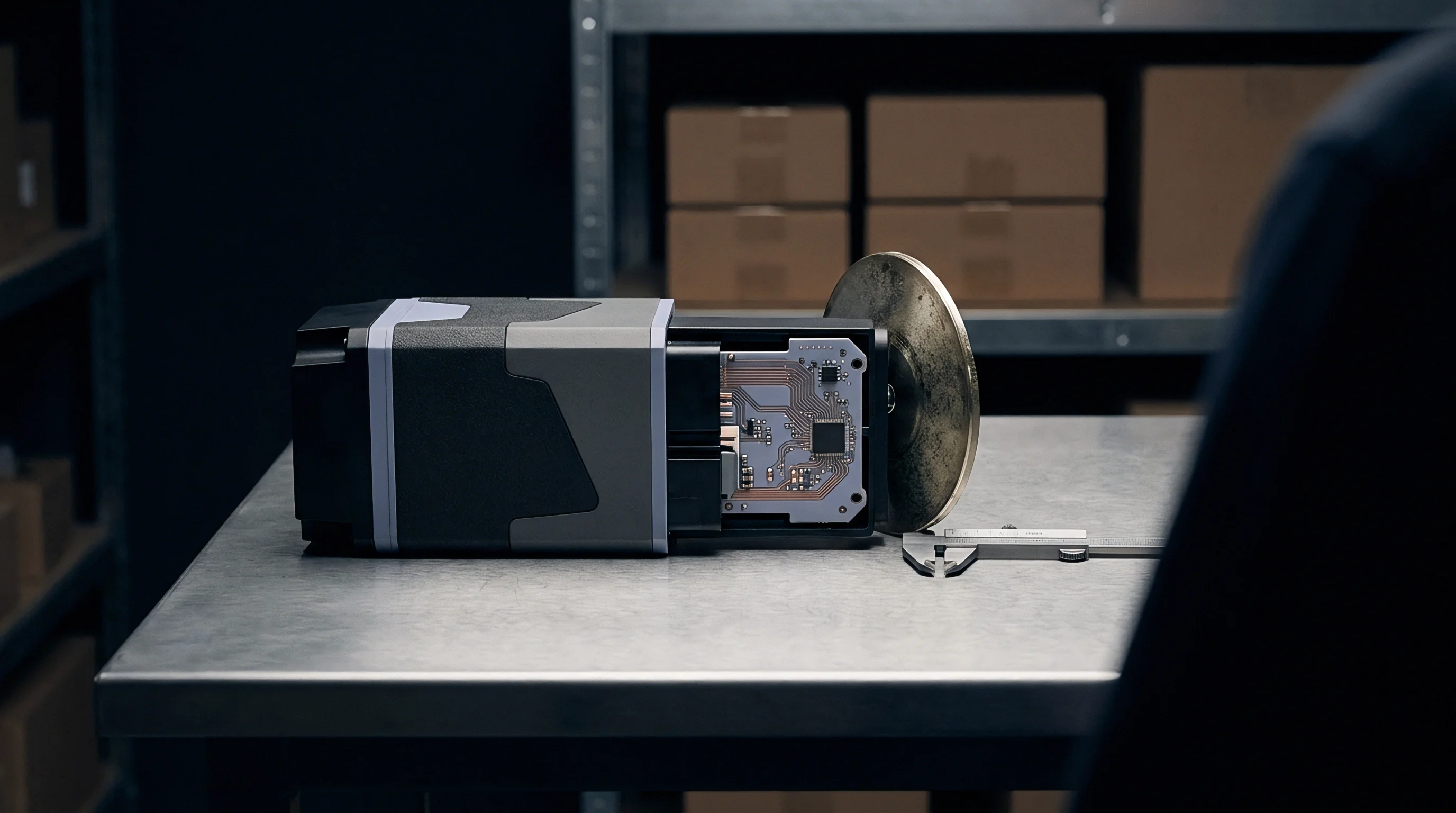
Module test reports covering older standard revisions lose regulatory validity the moment host geometry alters the radiated RF field pattern.
Assuming module-level compliance transfers automatically to the host product creates major regulatory risk. The moment a module’s standard passes its date of cessation, the host device’s technical dossier becomes non-compliant along with it.

Discrepancy
Reviewing compliance records requires comparing today’s market requirements against older test findings. Auditing a technical file takes a thorough review of test reports, schematics, bills of materials, manuals, and risk files against the latest standards listed in the Official Journal.

Technical Documentation Review Vectors
Auditors check technical dossiers to verify that listed standards match current harmonized citations. Annex III (Module A) of Directive 2014/53/EU requires manufacturers using internal production control to compile documentation proving compliance, including a risk assessment covering every operating mode. When a standard changes, the manufacturer must update this risk assessment to document whether the revisions affect the product’s design.
Annex III Module A of Directive 2014/53/EU requires manufacturers to update technical documentation whenever changes in harmonized standards alter the conformity assessment conclusions.
Mismatched reference numbers frequently trigger rejections at customs borders. Auditors confirm that test reports come from facilities accredited under ISO/IEC 17025 for the exact, active standard version cited. Once the cessation date passes, a report for an expired version loses all weight in establishing presumption of conformity, regardless of accreditation.
- Extract all harmonized standards referenced in the current Declaration of Conformity and compare each version against the active Official Journal summary list.
- Identify standards that reached their Date of Cessation of Presumption of Conformity prior to the manufacturing date of the active product batch.
- Obtain detailed test reports associated with superseded standards and isolate all clauses where technical limits or measurement procedures were modified.
- Execute a technical gap evaluation comparing existing laboratory raw data against the updated standard requirements.
- Determine whether existing test margins accommodate revised limit thresholds or whether physical laboratory re-testing is necessary.
- Draft a technical rationale document or schedule physical chamber time to generate updated test reports matching the active standard citation.
- Revise the product risk assessment to reference updated standards and reissue the formal Declaration of Conformity bearing current version numbers.

When Does Standard Superseded Status Force Physical Chamber Retesting?
Deciding if lab re-evaluation is necessary comes down to whether the amended standard alters test setups or tightens radiated limits. If a revision simply renumbers clauses or updates references without modifying test methods, bandwidths, or limits, a written engineering rationale bridges the gap. But if it introduces new frequency bands, stricter field strength limits, or revised duty cycles, paper analysis will not satisfy regulatory scrutiny.
Because chamber time is expensive, targeted delta testing usually offers the fastest, most cost-effective way to maintain market access.
Legacy module certificates are often submitted with cover letters asserting full equivalence between standard versions. Market surveillance authorities assign zero weight to vendor declarations of equivalence unless supported by raw test data that aligns with the current standard’s clause structure.


Matrix
Mapping updated standards against legacy test reports shows whether new rules change actual measurement conditions. Equipment integrators face a constant tracking challenge when third-party module vendors lag behind host production schedules, as host devices directly inherit any compliance vulnerabilities from their embedded radio components.

Host Integration Standard Alignment
Integrators face difficult decisions when an embedded transmitter’s certificate cites an expired standard just as the host device ships. Under European law, the host manufacturer bears total legal responsibility for the compliance of the complete product assembly. A host device containing a Bluetooth or Wi-Fi module cannot rely on a module Declaration of Conformity referencing ETSI EN 300 328 version 2.1.1 if version 2.2.2 is the active harmonized standard on the date the host hits the market.
| Strategy Pathway | Documentation Requirement | Average Lead Time | Regulatory Acceptance Level |
|---|---|---|---|
| Paper Gap Rationale | Formal engineering report mapping old test raw data against new standard clause limits and measurement bandwidths. | 1 to 2 weeks | Acceptable only when standard changes do not alter physical test setups, limits, or frequency allocations. |
| Targeted Delta Retesting | Laboratory test report covering only modified clauses, appended to the original complete test dossier. | 3 to 5 weeks | Fully acceptable across all market surveillance authorities and Notified Bodies. |
| Full Recertification Scan | Completely new test suite execution resulting in a fresh full-scope accredited test report. | 6 to 10 weeks | Maximum regulatory standing; necessary when radio hardware or host enclosures undergo structural modifications. |
Risk increases when physical host enclosures alter RF characteristics. A radio module evaluated on an open test board during component certification behaves quite differently once encased inside a metallic housing alongside switching power supplies and memory buses. Auditing the host dossier requires verifying that host-level radiated spurious emissions (under ETSI EN 301 489-1 and ETSI EN 300 328) were measured in the final physical configuration against active standards.
- Module report age verification ensures underlying radio test evidence remains within active validity windows before final assembly.
- Antenna gain margin checking verifies host antenna implementation stays within the maximum equivalent isotropically radiated power values recorded during module testing.
- Host housing shielding assessment checks whether enclosure changes alter thermal dissipation or harmonic emissions.
- Firmware version lock validation confirms operational software driving the RF synthesizer matches the configuration evaluated during compliance testing.
Take a typical integration scenario: an industrial handheld terminal uses a pre-certified Wi-Fi 5 module. Three years ago, the module vendor certified it under ETSI EN 300 328 version 2.1.1 and ETSI EN 301 893 version 2.1.1. As the handheld manufacturer prepares to launch a new variant, a dossier audit reveals that ETSI EN 300 328 version 2.2.2 has become mandatory for presumption of conformity.
If the module supplier will not fund re-testing on legacy hardware, the host manufacturer has two choices. They can send the complete handheld to an accredited lab for a targeted delta re-test covering receiver blocking and adaptivity under ETSI EN 300 328 version 2.2.2. At chamber rates of 2,200 EUR per day, a 2-day test program costs 4,400 EUR plus setup engineering.
Alternatively, swapping in a newer version-2.2.2-compliant module means a full PCB redesign, costing 15,000 EUR in engineering, 4 weeks of layout work, and 8 weeks of recertification lead time. Targeted delta testing preserves the existing hardware layout while securing legal compliance in less time and at far lower expense.
Module certificates are often presented for host integration without verifying whether underlying test methods remain acceptable to notified bodies.
Documenting compliance requires recording every technical decision inside the file. A clear gap matrix connects legacy raw data directly to current limits, proving to market inspectors that standard revisions were systematically evaluated rather than overlooked.


Logbook
Technical documentation must prove continuous alignment with published reference standards for as long as a device remains on the market. A technical dossier is not a static binder created at launch; it is an active compliance record that has to reflect standard updates, component revisions, and regulatory changes throughout the product lifecycle.

Declaration of Conformity Maintenance
Maintaining the formal Declaration of Conformity means updating standard reference numbers, test report citations, and risk documentation as rules change. The EU Declaration of Conformity is the primary document requested by customs and national enforcement agencies. Listing an expired standard on a Declaration issued for a current production batch provides immediate grounds for a non-compliance finding.
- Signed Declaration of Conformity update confirms that cited harmonized standard numbers match active citations on the lot manufacturing date.
- Gap analysis justification statement supplies engineering rationale for minor standard updates that do not affect physical device performance.
- Updated risk evaluation document proves systematic review of Article 3 essential requirements against active standards.
- Notified body opinion copy supplies third-party documentation when non-harmonized assessment paths or standard gaps require an EU-type examination certificate.
Old citations lapse without formal warning from regulatory agencies. The manufacturer bears full responsibility for tracking publication schedules and updating files before cessation dates arrive. Unsold inventory placed on the market during a standard’s validity window can create complex legal liability if it remains in distribution channels long after the cessation date passes.


Settlement
Financial exposure escalates quickly when national market surveillance authorities audit inventory. Agencies across EU member states, like Bundesnetzagentur in Germany or ANFR in France, perform routine sampling and file reviews. If an audit reveals reliance on expired harmonized standards, enforcement ranges from immediate sales suspensions to full commercial product recalls.

Commercial Impact of Delayed File Updates
Customs detentions and e-commerce removals disrupt distribution channels as soon as documentation fails an initial review. Major online platforms now use automated compliance checks, requiring sellers to supply valid Declarations of Conformity citing active standards. These systems automatically flag and delist products referencing superseded versions, stalling sales and backing up warehouse inventory.
Emergency compliance fixes cost far more than routine file maintenance. Booking chamber time on short notice incurs heavy rush premiums, often doubling standard hourly rates. While files are updated and resubmitted to border officials, detained stock continues to accrue storage fees in bonded warehouses.
Market access depends entirely on file accuracy. Building standard transition audits into annual quality management reviews ensures technical dossiers stay compliant, protecting sales channels and safeguarding corporate brand value across international markets.