Meaning
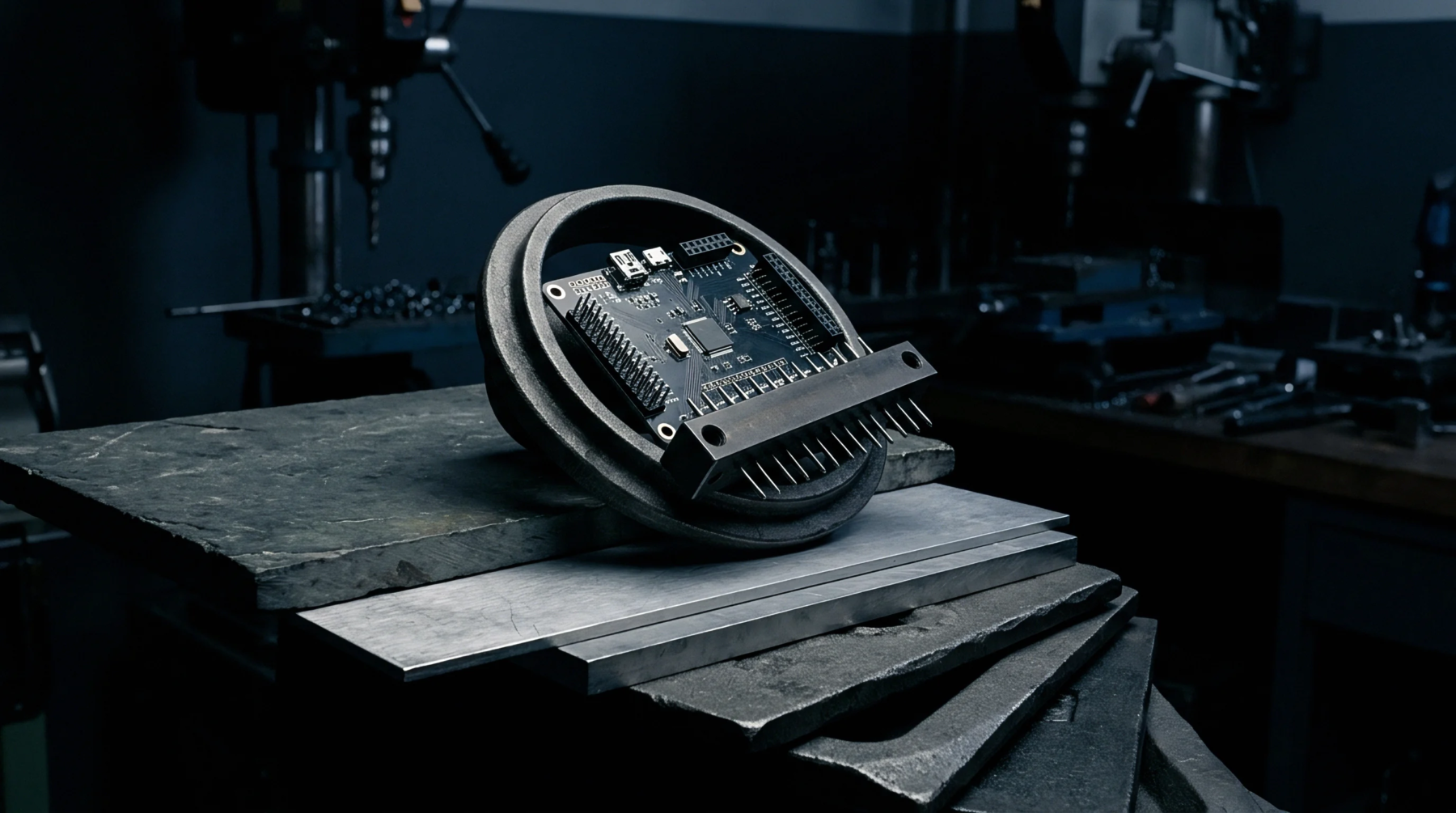
Structural degradation occurs through repeated load application that eventually exceeds the fatigue threshold of a material or component. Cyclic mechanical stress describes this repetitive oscillation between tension and compression, or variation in load magnitude, which governs the operational life of hardware in vibration-prone environments. Each cycle introduces micro-cracks that propagate over time, reducing the total load-carrying capacity of the assembly until catastrophic failure results from the loss of structural integrity.
Fatigue Quantification
Reliability analysis often relies on the S-N curve, which maps the number of stress reversals against the maximum intensity a material sustains before fracture. Engineers monitor this metric during the qualification of printed circuit boards and mounting brackets to ensure that the predicted thermal expansion cycles do not induce permanent deformation. High-frequency vibration testing protocols determine the maximum amplitude allowed before the material reaches its limit, providing the data necessary to assign a specific service life to the hardware.
Operational Integration
System designers adjust the assembly geometry to redistribute localized forces away from points of high concentration. These modifications often include the addition of stiffeners or the adjustment of standoff heights to mitigate the effect of cyclic mechanical stress during field deployment. Proper component selection prevents the coupling of system resonances with the surrounding physical environment, ensuring that external oscillations remain within the safety margins defined during the prototyping phase.
Failure Prediction
Deterministic models use linear accumulation rules to calculate the remaining lifespan based on the total number of cycles experienced by a device. Cumulative damage estimates allow the operator to replace parts before the onset of visible cracks, a practice that maintains the continuous availability of critical infrastructure. Rigorous adherence to these duty cycle requirements remains the primary method for preventing premature hardware retirement in demanding industrial sectors.