Meaning
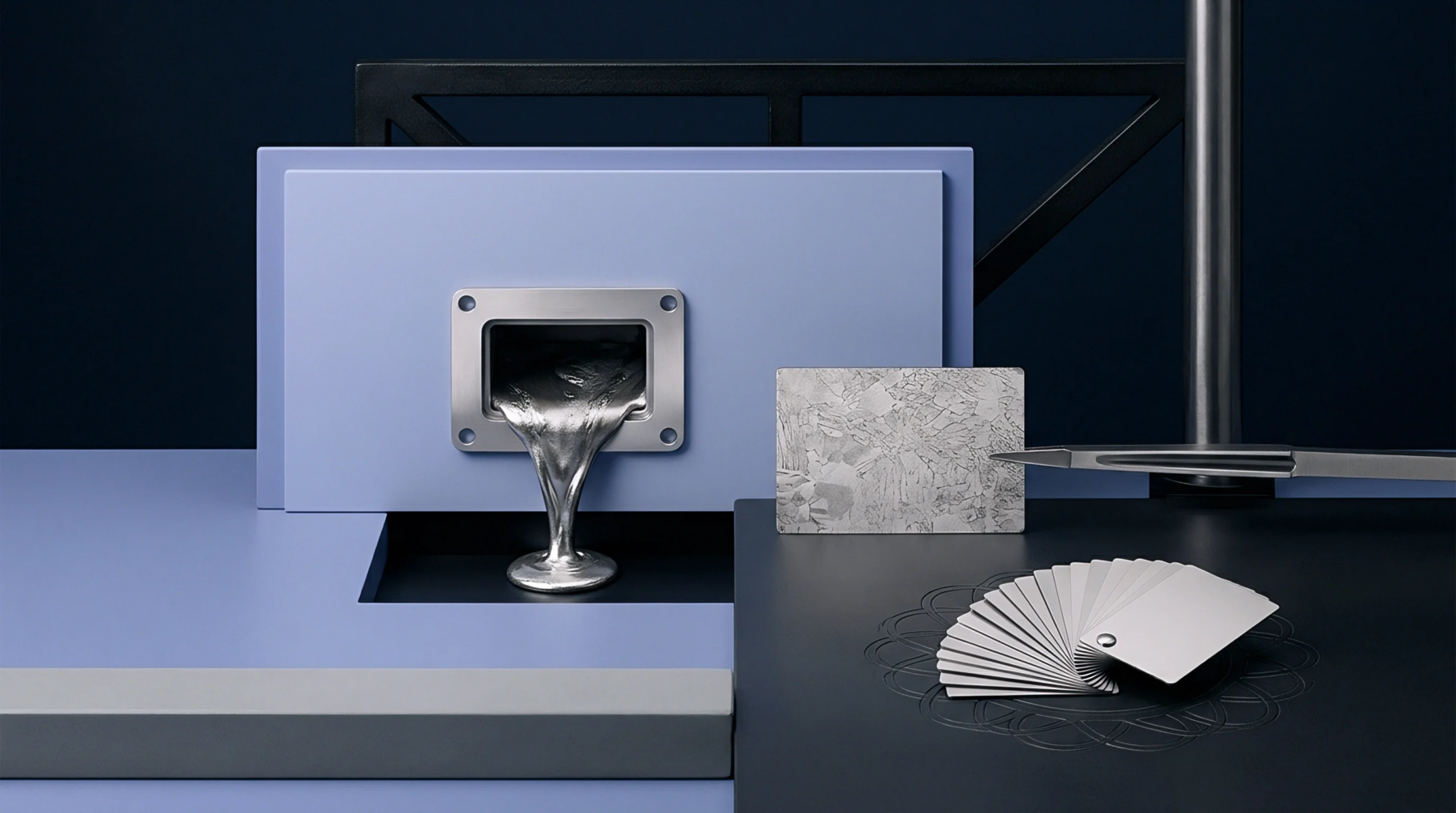
Polycrystalline microstructures exhibiting roughly equal crystallographic dimensions along all orthogonal axes establish uniform physical properties throughout cast and forged metal components. Within structural housings and heatsinks, equiaxed grains counteract the directional cracking and anisotropic heat conduction typical of elongated columnar dendrites. The metallurgical classification applies specifically to grain geometry morphology within solidified metals, ending where directional solidification or single-crystal growth deliberately creates anisotropic structures.
Solidification Dynamic
Heterogeneous nucleation sites dispersed through the liquid melt prompt uniform volumetric freezing before columnar fronts advance from cold mold surfaces. Chemical grain refiners introducing titanium and boron particles generate high nucleation densities across the liquid pool. Low thermal gradients combined with moderate cooling rates encourage thermal undercooling, permitting nucleated crystals to grow at uniform rates in every spatial direction.
This crystallographic growth suppresses hot tearing tendencies during the casting of intricate radio chassis walls.
Mechanical Isotropy
Multidirectional mechanical loading reveals that uniform grain morphology eliminates weak cleavage planes. Yield strength and fracture toughness remain identical whether tensile stress aligns with casting flow lines or acts across them.
Metallographic Verification
Polished section micrographs prepared during supplier qualification reveal the grain aspect ratios across critical wall sections. Quantitative image analysis software calculates grain size numbers in accordance with ASTM E112 standards to confirm acceptable equiaxed distribution. Microstructural inspection reports form mandatory documentation for approving die-cast tooling before serial chassis casting commences.