Isotropic Thermal Expansion Principles in Cast Tooling Plate Selection
Cast tooling plate secures isotropic thermal expansion and zero out-of-plane warp by trading off structural yield strength and vacuum integrity.
Distortion
Warping Dynamics under Thermal Gradients
Machining precision vacuum fixtures or optical test beds from rolled plate stock often leads to unrecoverable planar drift. Rolling induces heavy directional plastic strain, flattening grains through the short transverse thickness while drawing them out along the rolling axis. Once an asymmetric fixture cut from this stock sees thermal cycling or process heat, those internal residual stress fields relax unevenly, causing anisotropic expansion and out-of-plane oil-canning.
Cast tooling plate ~ predominantly supplied in modified 5000-series aluminum-magnesium alloys like EN AW-5083 or Alca 5 ~ avoids directional working by relying on continuous horizontal casting or large-format slab chill-casting. The metal freezes into an equiaxed, nondirectional dendritic matrix, with grain diameters consistently between 50 and 120 micrometers across every coordinate axis. Because thermal expansion acts uniformly in three dimensions, the material avoids the preferential directional creep typical of rolled wrought products.
Asymmetric pocket milling in rolled wrought plate releases stored longitudinal stress, whereas cast tooling plate maintains planar stability across repeated thermal excursions.
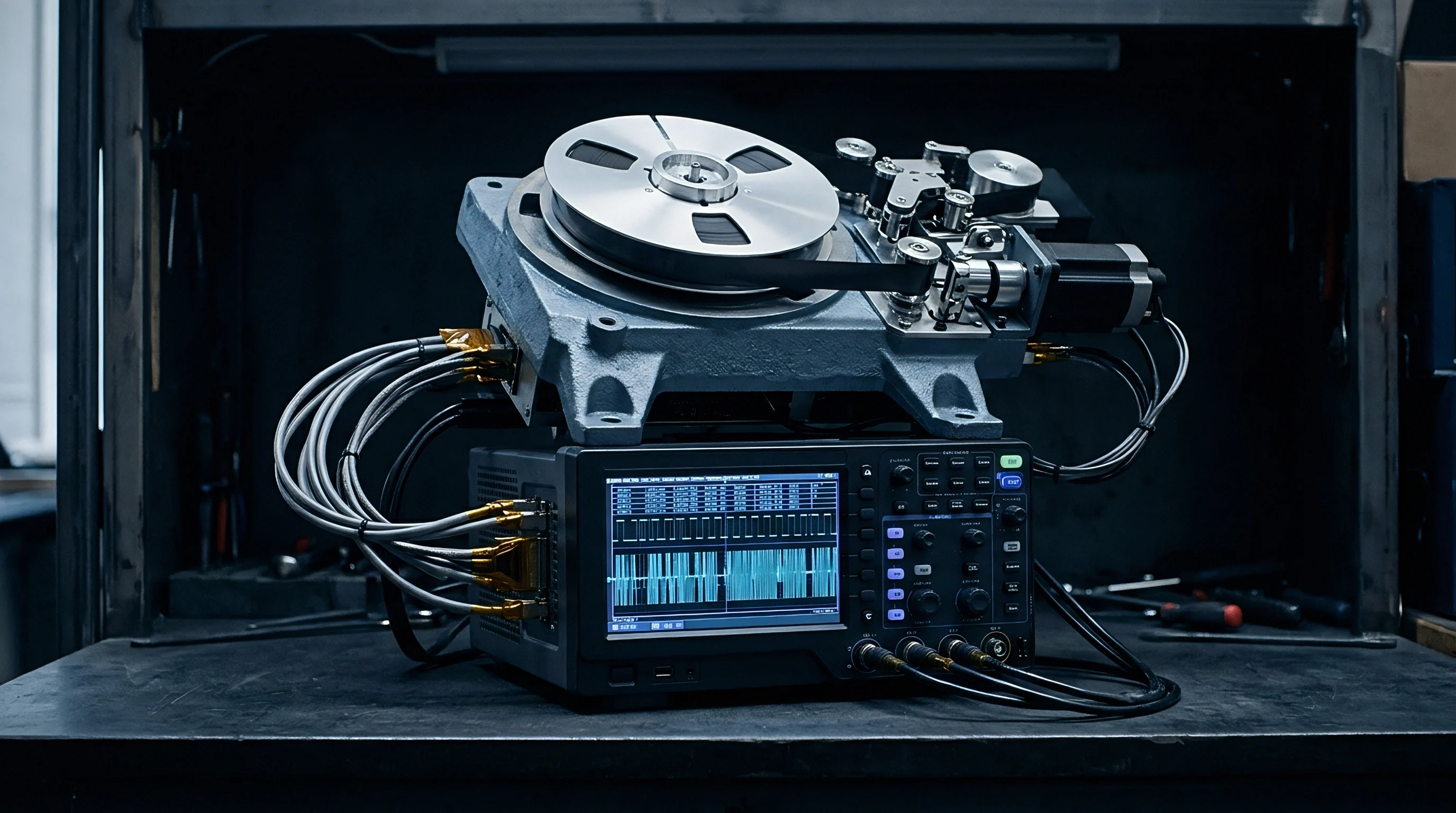
Procuring structural slabs for automated radio frequency characterization suites brings these physical constraints into sharp focus. During environmental stress screening, when thermal chambers cycle from -40 degrees Celsius to 85 degrees Celsius, fixture geometry directly governs measurement integrity. High-frequency co-planar waveguides and high-density coaxial probe arrays lose contact if the base plate deflects more than 12 micrometers across a 300-millimeter baseline.
Differential expansion between the equipment base and the carriage then puts destructive side-loads on costly surface-mount subminiature connectors.
Switching to cast aluminum tooling plate solves this directional divergence, but at the cost of lower tensile capacity. Yield strength for cast EN AW-5083 plate sits between 110 and 140 megapascals, roughly half the 276 megapascals seen in cold-rolled 6061-T6. Designers accept that lower limit specifically to stop directional deflection, gaining a plate that behaves identically in length, width, and thickness.
Crystallography
Grain Morphology and Dilatometric Response
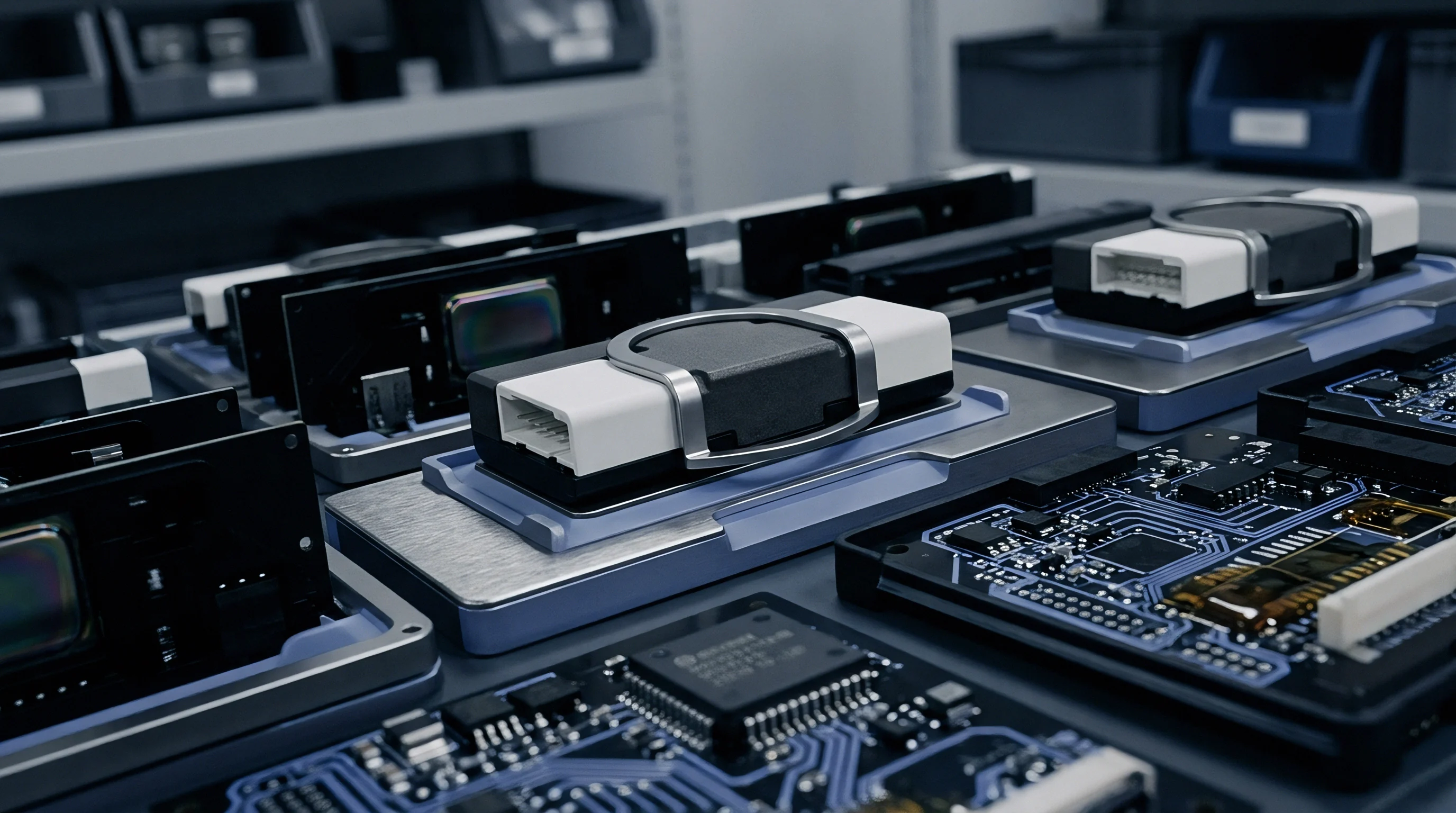
Grain orientation dictates the coefficient of thermal expansion throughout wrought structures. In standard rolled 6061-T651 plate, thermal expansion rates differ across the longitudinal, long-transverse, and short-transverse axes by 0.6 to 1.2 parts per million per Kelvin. Over a 1000-millimeter span cycling through an 80-kelvin delta, that spread creates 48 to 96 micrometers of shear displacement across mechanical joints.
Cast aluminum plate achieves an isotropic expansion rate because its grains remain equiaxed. Across all vectors between 20 degrees Celsius and 100 degrees Celsius, linear expansion holds steady at 23.6 to 23.8 micrometers per meter-kelvin. Without mechanical rolling to stretch the grains, thermal expansion vectors remain balanced, preventing microstructural shear.
| Material Designation | Processing Route | Longitudinal CTE (ppm/K) | Short-Transverse CTE (ppm/K) | Typical Residual Stress (MPa) |
|---|---|---|---|---|
| EN AW-5083 Cast Tooling Plate | Vertical Chill Cast, Stress Relieved | 23.7 | 23.7 | < 5 |
| EN AW-6061-T651 Wrought | Hot Rolled, Cold Stretched | 23.4 | 24.3 | 15 to 35 |
| EN AW-7075-T651 Wrought | Hot Rolled, Solution Heat Treated | 23.1 | 24.1 | 25 to 50 |
| AlSi7Mg Cast Prototype Plate | Sand Cast, T6 Modified | 21.8 | 21.9 | 10 to 20 |
Precipitation of intermetallic phases during solidification determines both mechanical damping and long-term dimensional retention. As magnesium and manganese segregate along grain boundaries, they form secondary phases ~ predominantly Al8Mg5 and Al6Mn ~ that pin the boundaries against sliding at continuous operating temperatures below 120 degrees Celsius.
Above 150 degrees Celsius, sensitization risks driving magnesium toward the boundaries, which accelerates stress corrosion cracking under humid marine exposure. When evaluating tooling billets for long-cycle thermal fixtures, engineering teams weigh that thermal threshold against the operating environment. Kept below 110 degrees Celsius, the equiaxed lattice preserves its dimensions through thousands of thermal cycles.
ASTM E228 push-rod dilatometry tests confirm whether incoming billets actually meet these isotropic specifications.
Hearth
Foundry Solidification and Stress Relieving Routes
Molten alloy handling largely dictates the ultimate stability of the plate. Dissolved hydrogen and non-metallic inclusions create local density variations that disrupt thermal conduction and trigger micro-yielding under temperature shifts. To prevent this, foundries pass high-grade melt through in-line degassing units equipped with rotor injectors, using argon-chlorine blends to force hydrogen porosity below 0.12 cubic centimeters per 100 grams of aluminum melt.
Slab casting creates steep thermal gradients during solidification. In horizontal continuous casting, cooling water hits the mold perimeter, causing columnar grains to grow inward before the equiaxed structure can form in the thermal core. Foundries counteract that macro-segregation by scalping 6 to 12 millimeters of shell material from the top and bottom surfaces, removing the segregated skin to leave only the uniform core.
Thermal stress relief follows immediately, clearing out stresses left behind by rapid water quenching. Billets enter convection furnaces for a multi-stage cycle:
- Ramp Soak Thermalization raises billet temperature to 380 degrees Celsius at no more than 45 degrees Celsius per hour, avoiding internal thermal shock.
- Extended Annealing Dwell holds the core at 390 degrees Celsius for 8 to 14 hours, giving lattice dislocations enough time for micro-plastic relaxation.
- Controlled Quench Retardation steps the oven down to 100 degrees Celsius at under 20 degrees Celsius per hour, preventing new residual tension zones from taking hold.
Cutting that annealing cycle short leaves core residual stresses exceeding 20 megapascals. When a machine shop mills complex vacuum channels into an under-annealed plate, those trapped stresses release, twisting the part across its diagonal axis and scrapping the workpiece.
Flaw
Subsurface Porosity and Vacuum Degradation
Eliminating directional bias in cast plate comes with a tradeoff in internal porosity. As dendritic structures freeze during the final stages of eutectic solidification, molten metal often fails to feed the roots of the dendrites completely, leaving micro-shrinkage cavities between 5 and 45 micrometers wide. Superficial dye-penetrant inspections will not reveal them.
A surface finish of 0.4 micrometers Ra on cast tooling plate masks subsurface micro-porosity that leaks under high-vacuum operation.
When these plates are used for vacuum chucks or baseplates below 10 to the power of negative six millibar, those voids turn into virtual leaks. Entrapped air, cutting fluids, and wash solvents seep into the exposed pore network, stretching outgassing cycles and stalling production while high-vacuum pumps fight constant desorption.
| Substrate Class | Outgassing Rate (mbar L / s cm²) | Helium Leak Integrity (mbar L / s) | Virtual Leak Susceptibility |
|---|---|---|---|
| Cast Tooling Plate (As-Cast Scalped) | 4.2 x 10⁻⁸ | 1.5 x 10⁻⁷ | Elevated |
| Cast Tooling Plate (Vacuum Impregnated) | 6.8 x 10⁻⁹ | < 1.0 x 10⁻⁹ | Low |
| Wrought 6061-T6 (Precision Milled) | 1.1 x 10⁻⁹ | < 1.0 x 10⁻¹⁰ | Negligible |
| Wrought 5083-H111 (Cold Rolled) | 1.4 x 10⁻⁹ | < 1.0 x 10⁻¹⁰ | Negligible |
Secondary treatments mitigate this issue. Vacuum impregnation with acrylic resin per MIL-I-17563C seals interconnected pores without shifting finished dimensions. Although the resin expands differently than aluminum, its volumetric fraction remains below 0.05 percent, leaving the plate’s overall isotropic behavior undisturbed.
Abrasive blasting should be avoided ahead of vacuum testing. Blasting smears ductile aluminum over surface pores, concealing pockets that pass helium leak checks only to outgas later during thermal cycling.

Yield
Machining Strategies and Structural Allowables
Lower mechanical yield limits dictate how cast plate must be cut and fastened. While wrought aluminum accommodates heavy bolt preloads and aggressive feed rates, cast plate shears with very little chip elongation. Elongation at break for cast EN AW-5083 falls between 9 percent and 12 percent, compared to 17 percent to 21 percent in wrought alloys, requiring adjusted thread depths and clamping practices.
Standard tapped threads will strip well below torque limits accepted for 6061-T6 fixtures. Fastener practices require several adjustments:
- Helical Wire Inserts spread shear load across roughly twice the engagement depth, protecting threads against pullout under thermal cycling and vibration.
- Carbide Face Mills ground with positive rake angles between 12 and 18 degrees slice through the matrix cleanly, limiting localized plastic deformation.
- High-Pressure Coolant Delivery flushes discontinuous chips clear of the cut, preventing surface marring during high-speed milling.
- Thread Depth Extension requires metric fasteners under dynamic load to engage at least 2.2 times the major bolt diameter.
Thermal conductivity also shifts tooling calculations. Cast 5000-series tooling plate delivers around 110 to 130 watts per meter-kelvin, well short of the 167 watts per meter-kelvin typical of wrought 6061-T6. When high-power microwave modules dump heat directly into the base during burn-in runs, localized hot spots build up under high-dissipation components.
Because the alloy expands isotropically, however, that localized heat pocket expands evenly in all directions. The mounting plane rises uniformly without triggering the asymmetric saddle warping that occurs across rolled wrought plates.
While precision plates arrive stress-relieved from the factory crate, pocketing that removes more than 40 percent of the total thickness still calls for an intermediate balance dwell.
Settlement
Procurement Standards and Commercial Trade-Offs
Procuring cast tooling plate calls for tight specifications to prevent receipt of commercial cast slabs that lack isotropic stability. Standard sand-cast or continuous-cast billets skip the multi-stage annealing and surface scalping that define genuine tooling products like Mic6, Alca 5, or ACP 5080. Procurement packages need to cite EN 573-3 for alloy chemistry alongside DIN EN 485-3 for dimensional tolerances.
A raw material certificate missing documented furnace dwell times and cooling rates indicates incomplete stress relief.
Precision tooling plate carries a 25 to 45 percent cost premium per kilogram over commercial hot-rolled 6061-T651. Machining facilities balance that upfront expense against reduced cycle times and improved yields:
- Rough Milling Elimination bypasses face-milling both sides of raw stock to establish flat reference planes.
- Stress-Relief Annealing Omission avoids the cost and four-day turnaround of sending parts out for furnace relief.
- Scrap Rate Compression reduces scrap on thin-web vacuum fixtures from roughly 14 percent to under 1.5 percent.
- Pre-Machined Surface Baselines holds bilateral thickness tolerances of plus or minus 0.1 millimeters right out of the crate.
Substituting cast tooling plate into structural brackets subject to cyclical mechanical shock introduces serious fatigue liabilities.
The material is engineered for dimensional stability across thermal swings, not fatigue strength. The same equiaxed, low-dislocation grain structure that provides isotropic expansion curtails endurance under alternating tension-compression loads. Fatigue limits for cast tooling stock hover near 65 megapascals at 10 to the power of seven cycles, while wrought 6061-T6 structural plate easily achieves 95 to 110 megapascals under the same conditions.
Purchase orders should specify protective polyethylene wrapping and non-corrosive interleaving paper. Moisture ingress during ocean transit oxidizes bare scalped surfaces, producing pitting that can destroy precision sealing faces before the plate ever reaches the mill.