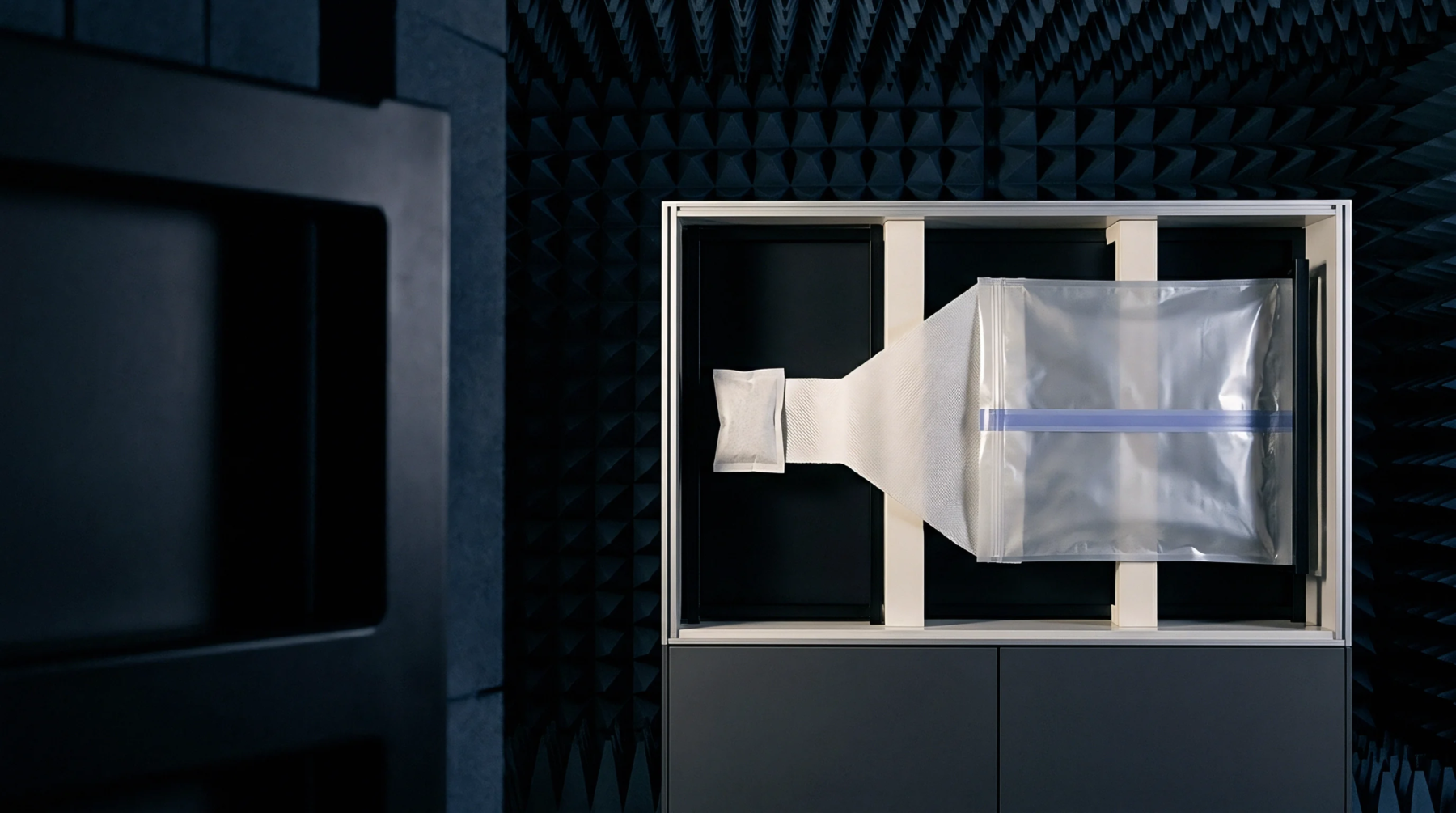
Determining Radiated Emission Changes from Radio Module Firmware Updates
Firmware register and power table modifications alter radiated emissions, requiring pre-scan verification and permissive change filings before release.
Administrative filing protocols established by the Federal Communications Commission classify modifications to previously certified intentional radiators that change electrical characteristics without requiring a complete re-authorization under a new identifier. An FCC Class II permissive change applies when an original equipment manufacturer modifies internal component layouts, alters antenna configurations, or incorporates an approved radio module into specific host platforms with altered radio frequency exposure conditions. The filing requires submission of measured test data demonstrating that emissions and operational parameters continue to comply with statutory rules.
Minor non-radiating component substitutions that do not degrade electromagnetic compatibility fall outside this scope, passing under simpler Class I internal records.
Replacing an authorized antenna with a different design of equal or lower gain within the same radiator family does not trigger the filing procedure. Incorporating an antenna of higher peak gain, altered radiation pattern, or entirely different physical construction requires an FCC Class II permissive change. Testing must confirm that intentional emissions, occupied bandwidth, and spurious harmonics stay within authorized operational bounds despite the altered antenna performance.
Peak gain differences redirect radio frequency energy distributions, potentially exceeding field strength ceilings measured during original module grant evaluations. Radiated spurious emissions testing evaluates whether antenna coupling introduces unwanted harmonics along host enclosure ground paths.
Installing an approved modular transceiver inside a portable host enclosure within twenty centimeters of a user or alongside another transmitting radio changes regulatory assumptions. Modular approvals typically presuppose standalone, unconstrained mobile separations. Co-location evaluates intermodulation distortion generated by simultaneous multi-radio transmissions, such as cellular, Wi-Fi, and short-range transceivers operating concurrently within a single enclosure.
Specific absorption rate measurements determine whether combined radio frequency energy deposition in tissue exceeds regulatory thresholds. Filing an FCC Class II permissive change supplies the measured thermal deposition data and intermodulation scans proving safe concurrent operation.
Completion of physical evaluation results in an updated equipment authorization certificate issued by a recognized Telecommunication Certification Body. The resulting document enumerates verified antenna models, portable host hostnames, and specific co-location combinations tied directly to the original FCC identifier. Accompanying test laboratory reports provide detailed spectral graphs, antenna pattern plots, and specific absorption rate distribution maps verifying continued rule conformance.
This filing bridges component-level modular approval and final integrated consumer hardware distribution. Updating the grant through an FCC Class II permissive change preserves existing product labeling while certifying transformed system configurations.
Firmware register and power table modifications alter radiated emissions, requiring pre-scan verification and permissive change filings before release.
Expertise is a utility, not a secret. sentiention™ publishes its working knowledge as open reference: intelligence layer covering the materials it sources, the markets it enters, and the reference that serves both.