Managing Class Two Permissive Changes for Updated Radio Module Firmware
Firmware updates modifying transmitter power, duty cycle, or spurious emissions demand a Class II Permissive Change filing before deployment.
Threshold
Changing the radio frequency firmware in a certified wireless module alters its operating behavior and can shift its regulatory status. Under Title 47 of the United States Code of Federal Regulations, specifically Section 2.1043, equipment authorization rules establish two classes of permissive changes alongside full re-authorization. A Class I permissive change covers firmware updates that leave transmitter parameters, radiated emission profiles, output power, and radio frequency exposure boundaries unchanged.
A Class II change applies whenever a firmware revision alters fundamental operational parameters while the device still complies with the original grant rules.
Adjusting internal lookup tables, transmit gain indexes, modulation algorithms, or operating frequency limits quickly erodes compliance margins. If a software build raises conducted output power past original test tolerances or pushes spurious emission peaks closer to statutory limits, a Class II filing is mandatory. Because the original modular grant fixes strict operational boundaries, enabling higher data rate modulation schemes shifts peak-to-average power ratios and can generate unmeasured intermodulation products.
Engineering teams have to classify every code revision before pushing updates over the air.
| Firmware Revision Scope | RF Impact Profile | Regulatory Classification | Filing Requirement |
|---|---|---|---|
| Bug fixes in non-RF driver layers | Zero shift in power, frequency, or spurious spectrum | Class I Permissive Change | Internal documentation, no TCB submission |
| Baseband filter shaping adjustments | Band-edge margin changes exceeding 0.5 dB without power increase | Class II Permissive Change | TCB filing with radiated band-edge test report |
| Transmit power lookup table increases | Conducted output power rise within original grant maximum limit | Class II Permissive Change | TCB filing, RF exposure re-evaluation, spurious scan |
| Unlocking factory-disabled frequency bands | New channel allocation not covered in initial Grant of Authorization | New Equipment Authorization or Class III Change | Full certification testing, fresh FCC ID or Class III filing |
Classifying firmware modifications requires looking at physical radio parameters rather than marketing feature sets. Several common firmware updates trigger formal re-evaluation:
- Transmit Power Table Adjustment increases maximum output drive levels across any operational band or individual modulation mode.
- Duty Cycle Parameter Extension alters frame transmission ratios, increasing average thermal exposure and invalidating previous Specific Absorption Rate evaluation reports.
- Channel Allocation Enabling activates dormant frequencies or opens higher bandwidth operational modes previously locked out in production image builds.
- Digital Modulation Change modifies signal constellation geometry, changing occupied bandwidth limits and power spectral density profiles.
A peak power increase exceeding 0.5 dB over original grant values invalidates Class I eligibility under FCC KDB 178919 guidance.
ISED Canada RSP-100 Section 11 sets out parallel re-assessment categories for hardware deployed in Canada, where Class II rules apply if software alters output parameters while staying within the original standard limits. In Europe, Directive 2014/53/EU requires a fresh conformity assessment whenever radio performance changes, and the technical documentation must include an updated risk evaluation covering how software changes affect compliance with harmonized standards. Distributing unapproved RF code risks customs seizures, distributor recalls, and the immediate voiding of the modular certificate.

Chip
Modern RF transceivers rely on software registers to set operating points across internal gain stages, mixer bias lines, and synthesizer loops. Baseband controllers write directly across SPI or PCIe interfaces to configure digital attenuation and pulse-shaping filter coefficients. Even minor firmware adjustments change transistor gate bias levels inside the RF integrated circuit, altering its linear power limits.
When firmware updates alter the power amplifier driver table, gain steps shift across operational sub-bands. Adjusting gain index 24 to cure dropped connections at a band edge, for example, can unintentionally raise driver amplifier output by 1.8 dB. That jump pushes the output stage into saturation, generating spectral regrowth across adjacent channels and lifting second- and third-order harmonics toward statutory limit lines during modulated testing.
The register configuration sequence governs actual RF behavior during transmission. In a dual-band 2.4 GHz and 5 GHz assembly running baseband processing through software drivers, transmitting at 2412 MHz in 802.11n 20 MHz mode depends on specific digital pre-distortion settings to suppress sidelobes. Updating driver code to support 802.11ax resource units alters the peak-to-average power ratio and forces different internal scaling.
Without a single hardware change, the revised register sequence reshapes the field strength produced at the antenna matching circuit.
Section 2.1043 of Title 47 requires that Class II permissive change filings carry complete test reports demonstrating continued compliance before commercial distribution begins.
In-country testing reveals that baseband register adjustments frequently breach emission limits even when nominal conducted power remains fixed. Driver optimization routines are often assumed to maintain original compliance parameters because board layout traces remain physically untouched, yet underlying emission profiles still diverge.
Dossier
A Class II Permissive Change dossier for software changes demands strict alignment between the written technical description and lab test data. The Telecommunications Certification Body checks whether the revised radio parameters still fit within the original grant boundaries, requiring traceable documentation that links specific software commit hashes directly to chamber measurements.
Preparing a submission package involves a standard assembly sequence:
- Assemble the formal cover letter detailing every software change, citing original FCC ID numbers, grant dates, and applicable KDB policy references.
- Draft an updated operational description defining modified firmware power control logic, duty cycle capping mechanisms, and software security features.
- Generate a comprehensive test report containing conducted power, occupied bandwidth, band-edge compliance, and radiated spurious emission data collected under the revised firmware build.
- Update RF exposure evaluations, calculating power density limits or submitting fresh Specific Absorption Rate test reports if duty cycle parameters changed.
- Revise host integration instructions and user manuals to reflect updated operating conditions or antenna clearance restrictions.
- Upload signed authorization letters, agent letters, and confidentiality requests through the Telecommunications Certification Body portal.
Filings under FCC KDB 594280 require a dedicated software security description explaining how firmware binaries are authenticated, locked, and protected from third-party alteration. TCB review engineers verify that end users cannot flash custom code to bypass calibrated power tables. Leaving out these security details stalls the review queue and can delay grant issuance by weeks.
Managing approvals internationally requires coordinating submissions across regional databases. Filings for ISED Canada must be uploaded to the Radio Equipment List database through an accredited Canadian representative. For CE marking in Europe, manufacturers update the EU Declaration of Conformity and add technical test reports to the internal compliance folder.
In Japan, Article 38-24 of the Radio Law requires filing technical modification records with a Registered Certification Body. Falling behind on any single regional dossier risks compliance gaps that can hold up international shipments.
Spur
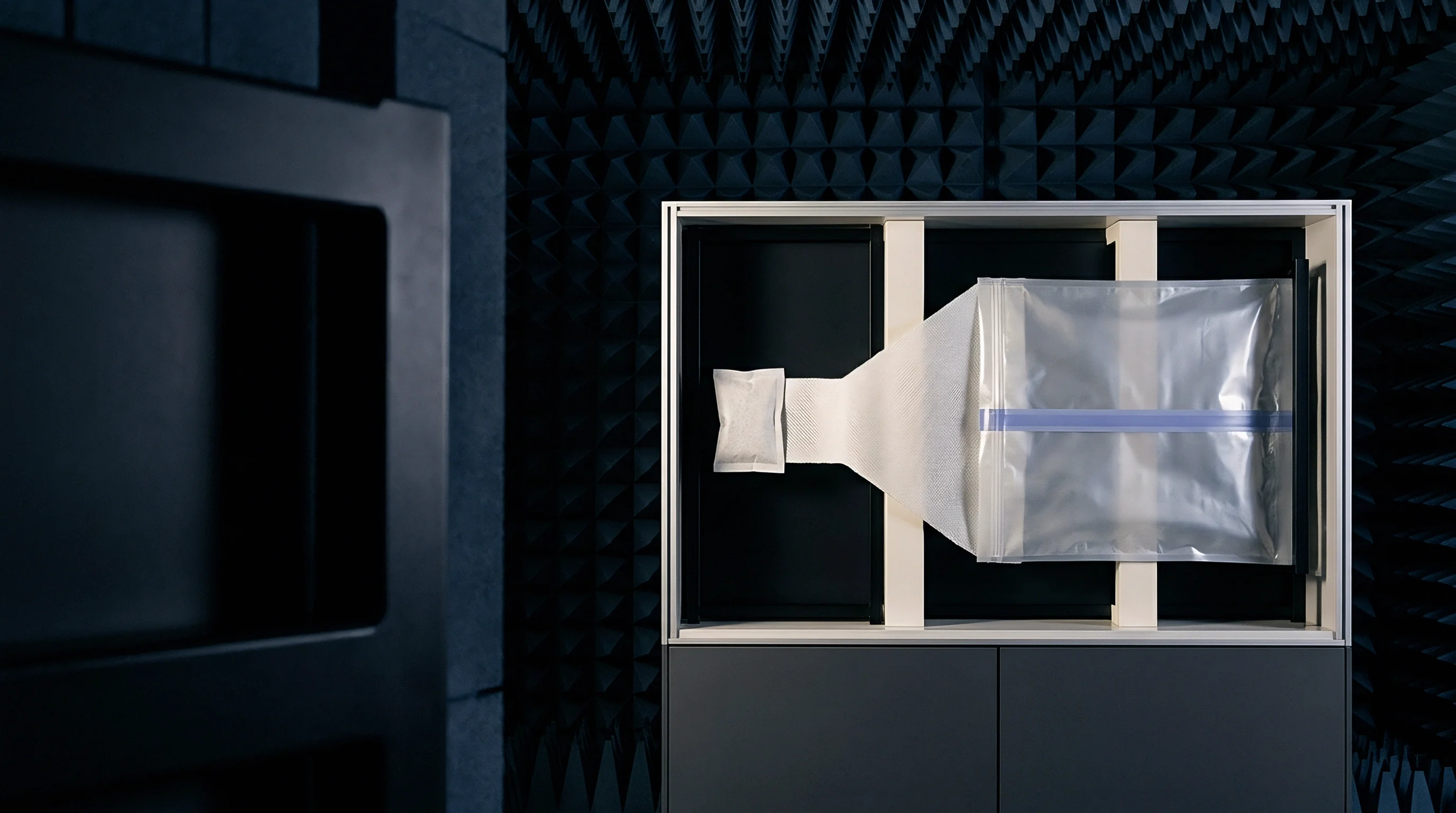
Anechoic chamber testing provides the definitive check on firmware compliance. As the turntable rotates three hundred sixty degrees, receive antennas scan between one and four meters in height to catch peak field strength vectors. Updating baseband firmware alters signal processing behavior, which can reshape phase noise profiles, mixer spurious products, and harmonic emissions.
A transmitter operating at 5745 MHz running updated high-throughput firmware can easily show higher second harmonic emissions at 11490 MHz. If the firmware quickens gate switching to improve efficiency, the steeper pulse rise times increase high-frequency harmonic energy. In a test using a spectrum analyzer with a 1 MHz resolution bandwidth, harmonic spikes can cross the 54 dBuV/m average limit at three meters.
The board layout has not changed, yet the revised software turns a compliant unit into an uncertified emitter.
Evaluating RF exposure means recalculating power density and SAR whenever software alters transmission timing. Consider a wireless module originally certified at a 20 percent time-averaged duty cycle, delivering 100 milliwatts of average output power. If a firmware update strips out legacy frame pauses and raises the duty cycle to 60 percent, peak conducted power stays flat at 500 milliwatts, but average power jumps from 100 milliwatts to 300 milliwatts.
Under FCC KDB 447498 formulas, the effect is immediate. At a 20 millimeters separation distance, the original 100 milliwatt average power produced an exposure exclusion threshold index below 3.0, qualifying the device for SAR test exclusion. The updated 300 milliwatt level pushes that index to 9.0, well beyond the exemption threshold.
That change forces full phantom chamber SAR testing, adding lab fees and schedule overhead to the release.
Radiated harmonic scans must cover the fundamental transmission spectrum up to the tenth harmonic order when firmware increases transmitter output drive.
Whether international harmonized standards will eventually accept algorithmic exposure monitoring in lieu of static chamber SAR re-evaluation remains open across major regulatory jurisdictions.

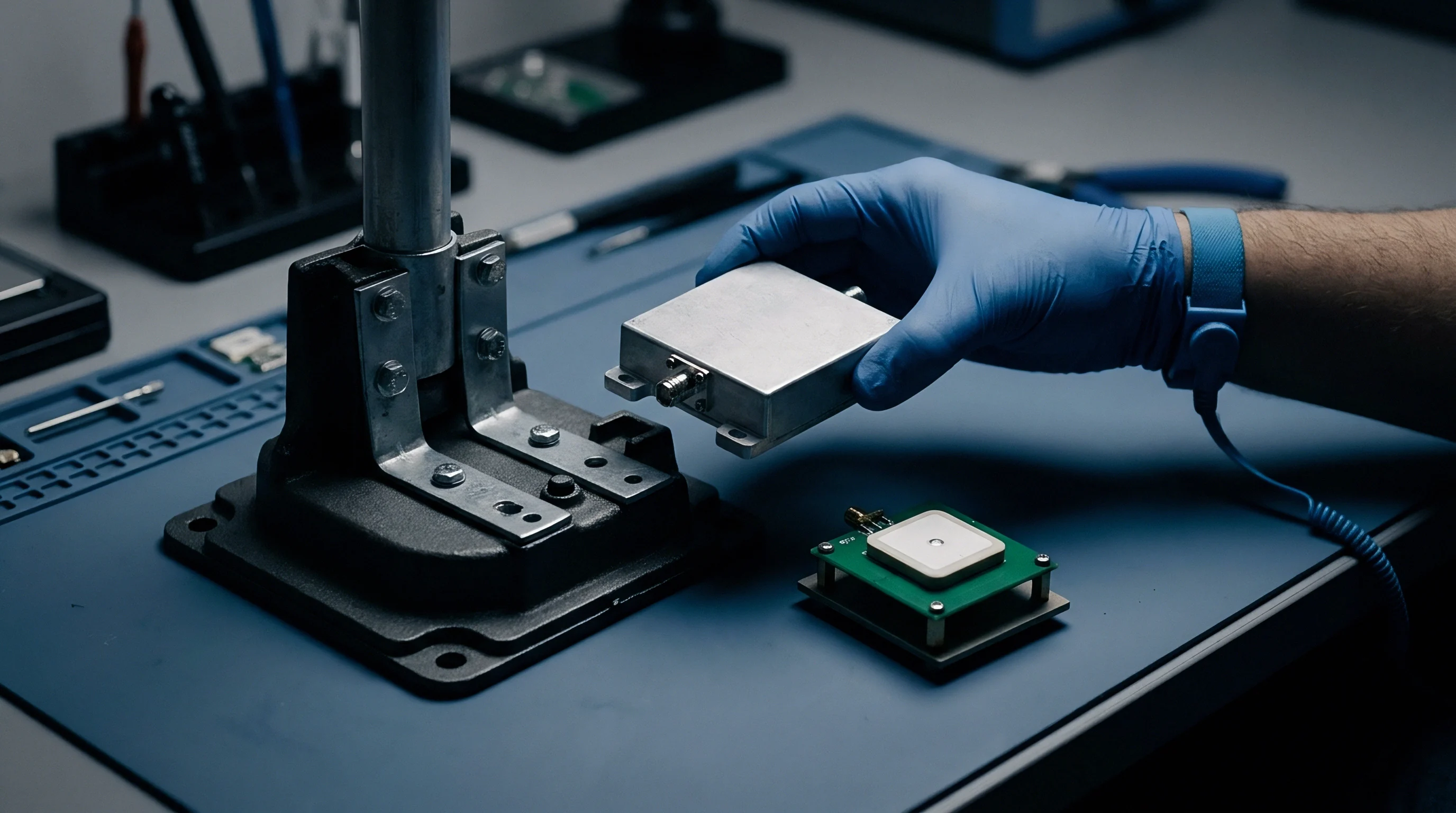
Shield
Regulators require manufacturers to prove that firmware updates cannot be manipulated to override certified operating parameters. Under FCC KDB 594280, devices classified as non-software-defined radios must implement cryptographic controls preventing third parties from loading code that raises transmit power, enables unauthorized frequencies, or disables Dynamic Frequency Selection radar detection.
Does Software Security Control Require New Approval?
Altering the underlying security architecture or changing how cryptographic signing works triggers a formal compliance review. When an update introduces a new bootloader or modifies key distribution, regulators re-evaluate the device’s access control boundaries. The manufacturer has to demonstrate that the revised validation chain still prevents unauthorized code from modifying RF registers.
Verifying a firmware security framework against KDB 594280 requires assessing several access points:
- Binary Signature Verification confirms that baseband microcode images carry valid RSA or ECC cryptographic signatures before execution by bootloaders.
- Interface Locking Logic restricts access to low-level hardware production test commands over USB, UART, or diagnostic port interfaces.
- Regional Setting Integrity locks country code selection routines, preventing user software from modifying operating band allocations.
- Third-Party API Isolation prevents application software layer code from making direct register writes to transceiver gain control logic.
Modular approvals grant the right to operate radio hardware under strictly validated software constraints.
Firmware signing keys isolated from production assembly lines prevent unauthorized radio configuration builds from reaching active inventory.
Clock
Managing permissive change filings requires tight coordination among test labs, TCB reviewers, and factory schedules. Booking chamber time often takes weeks of advance planning, especially for 10-meter facilities. If an unexpected emission failure surfaces during pre-scans, the development team has to cycle back into firmware revisions, draining engineering budgets and threatening ship dates.
| Regulatory Jurisdiction | Filing Route Type | Typical Chamber Testing Time | Agency Review Queue | Estimated Agency Filing Fee |
|---|---|---|---|---|
| United States (FCC) | Class II Permissive Change via TCB | 3 to 5 laboratory days | 10 to 15 business days | 1200 to 2200 USD |
| Canada (ISED) | Class II Re-assessment via FCB | 2 to 4 laboratory days | 8 to 12 business days | 800 to 1500 USD |
| European Union (RED) | Internal Conformity / Notified Body | 2 to 5 laboratory days | 5 to 10 business days | 1500 to 3500 EUR |
| Japan (MIC) | Type Approval Modification via RCB | 3 to 6 laboratory days | 15 to 20 business days | 2000 to 4000 USD |
The total expense of a software-driven permissive change runs well beyond statutory filing fees. Chamber testing averages 2500 USD per day for full evaluations, and engineering support charges add up during debugging and reconfiguration. Local representation in overseas jurisdictions brings recurring annual retainer fees to keep compliance files active.
In practice, budgeting 8000 to 15000 USD per target market covers the lab time, certification body fees, and associated administrative work.
Running submissions concurrently across jurisdictions cuts product launch delays. Filing FCC and ISED packages at the same time lets review queues run in parallel, which can save nearly a month compared to sequential submissions. Test units must be flashed with dedicated test firmware that locks transmission onto the specific channels, duty cycles, and power levels needed for lab evaluation.
Deploying firmware updates without accounting for permissive change rules carries serious commercial exposure. Pushing an unapproved RF update over the air invalidates the underlying equipment authorization, leaving device makers vulnerable to regulatory enforcement, stop-sale orders, and inventory write-downs.