Managing Network Assigned Timer Overrides in Battery Powered Terminal Firmware Architecture
Firmware interlocks reconcile core-assigned NAS timers against local battery safety floors to prevent catastrophic energy depletion in cellular terminals.


Cadence
Terminal modems on LTE-M or NB-IoT networks configure sleep schedules using non-access stratum (NAS) signaling. During initial registration or periodic location updates, the modem requests specific timers for tracking area update intervals and active durations within the NAS payload. However, serving core nodes can reject these requested parameters and supply their own values in the registration response, forcing host firmware to choose between protocol compliance and battery life.
Standard cellular operations rely on two main NAS timers to manage sleep behavior. The periodic tracking area update timer (T3412 in 3GPP specifications) controls how often a sleeping terminal wakes to re-register with the core, with an extended format allowing intervals up to 413 days. The active timer (T3324) determines how long the radio receiver stays active after moving from connected to idle mode before entering deep Power Saving Mode (PSM).
If the core returns a shortened T3412 or an expanded T3324, battery drain escalates quickly.

NAS Protocol Timer Handshake
When transmitting an Attach Request or Tracking Area Update payload, the terminal sends preferred timing values stored in memory to the core node. The modem encodes these timer requests into GPRS Timer 3 Information Element bit fields per 3GPP TS 24.008, using a three-bit multiplier and a five-bit binary value. For example, a modem might request an extended T3412 value of 70 hours and a T3324 active time of 2 seconds, which the core then evaluates against subscriber profiles, cell capacity, and operator traffic policies.
The core responds with an Attach Accept or Tracking Area Update Accept payload containing the assigned Information Elements. It can grant the requested values directly or overwrite them with network-enforced settings. If the operator forces a 2-hour periodic update interval instead of the requested 70 hours, the baseband processor reconfigures its internal wakeup timers to match.
The modem accepts these assigned parameters automatically unless host firmware intervenes through the command interface.

Operator Enforced Parameters
Network core nodes test requested intervals against local policies, cell load, and roaming agreements. Public land mobile networks often cap extended timers to clear inactive devices from subscriber databases, while roaming hubs frequently strip extended timer Information Elements altogether. This forces modems back to legacy timer values measured in minutes rather than hours.
A terminal subjected to an unrequested 12-minute T3412 override suffers a 350-fold increase in registration wakeups compared to its baseline power budget.
Internal modem state machines naturally follow core-assigned timers to maintain network connectivity. Standard AT command interfaces inform the host microcontroller of assigned values via unsolicited result codes, such as CEREG notifications carrying timer bit fields. Firmware must parse these result codes during every registration sequence; ignoring response payloads leaves host microcontrollers blind to overrides that alter the battery’s expected lifespan.
Baseband stack implementations consistently prioritize network attachment over power saving. When a carrier node returns shortened timers, the modem’s AT command engine outputs the assigned parameters and updates its internal low-power counters. As a result, chipset vendors often attribute early field battery failure to unannounced carrier profile changes rather than stack negotiation flaws.


Drain
Current traces during Power Saving Mode show a baseline steady-state current drawn from the primary cell. An LTE-M (Category M1) or NB-IoT (NB1) module in deep sleep typically draws 2.5 to 4.5 microamperes at room temperature with sleep voltage domains active. Waking the radio requires powering phase-locked loops, loading flash configuration tables, and completing NAS signaling exchanges.
Each active wake cycle hits peak currents up to 220 milliamperes at maximum transmit power before falling back to sleep.
The energy consumed in a registration update depends on signal quality, transmit power, and network latency. In ideal conditions ~ coverage enhancement level 0 and transmit power at +10 dBm ~ a tracking area update takes about 0.015 milliwatt-hours over 2.8 seconds. If poor coverage forces maximum power (+23 dBm) with repeated subframes, that same update can require 12 seconds of active airtime and consume up to 0.140 milliwatt-hours.
A terminal operating at +23 dBm transmit power on LTE Category NB1 draws 220 milliamperes for 1.2 seconds per transmission, consuming 0.082 milliwatt-hours per wake cycle.

Lithium Chemistry Passivation Dynamics
Primary lithium thionyl chloride (LiSOCl2) batteries form an internal passivation layer during prolonged microampere sleep periods. This thin lithium chloride film over the metallic anode limits self-discharge to under 1 percent annually. High current pulses from radio transmissions break down this passivation layer, creating temporary voltage dips until conductivity recovers.
When core overrides force frequent wakeups, this delicate chemical balance is disrupted.
Forcing wake cycles every 15 minutes instead of every 24 hours subjects the primary cell to constant transient loads. Continual breakdown and rebuilding of the lithium chloride film consumes additional active material, accelerating internal degradation. Capacity is wasted on chemical rebuilds as well as actual radio activity, severely warping discharge curves under low ambient temperatures.

Awake Receiver Active Current Demands
Keeping a receiver active draws between 15 and 40 milliamperes, depending on bandwidth and low-noise amplifier gain settings. Firmware typically requests a T3324 active timer between 0 and 4 seconds, letting the modem shut off RF synthesizers shortly after transmitting. If the core overrides T3324 to 60 seconds, the receiver stays powered up to monitor for downlink paging messages.
Prolonged active receiver windows force the battery to sustain continuous milliampere loads, causing chemical and thermal stress. Running the receiver for 60 seconds post-transmission at a 27 milliampere draw consumes 0.45 milliampere-hours per cycle. Over several years, these extended idle listening windows burn far more energy than the actual radio transmissions.
Uncontrolled timer shortening can reduce a planned ten-year battery life to nine months of field operation, requiring full unit replacements.


Interlock
Robust embedded firmware isolates modem operations into dedicated state machines and treats core timer assignments as untrusted inputs. The host microcontroller keeps an independent non-volatile lookup table specifying hard minimum and maximum bounds for T3412 and T3324 values. When unsolicited result codes signal a core override that breaches these safety thresholds, internal interlocks engage mitigation routines.
Mitigation logic keeps the modem from blindly executing core settings that would destroy battery life. A counter tracks consecutive registration cycles run under overridden parameters. If the core continues forcing shortened timers, the host application weighs payload urgency against remaining battery reserves before deciding how to intervene.

Is Local Timer Overriding Permissible after Core Rejection?
Under 3GPP TS 24.301, the serving core holds protocol authority for NAS timer configurations. A terminal cannot simply instruct its baseband modem to ignore network-assigned timers while staying connected. Overriding modem sleep timers locally without renegotiating causes dropped connections, implicit deregistration, and lost downlink data.
Host firmware must maintain protocol compliance at the radio interface while relying on physical power rails for enforcement.
Host firmware resolves this tension at the board level rather than attempting invalid NAS protocol overrides. When the serving core rejects extended sleep timers, the firmware lets the active registration cycle finish, parses the assigned parameters, and immediately cuts power to the module via AT commands or hardware power gating. The microcontroller then drops into deep sleep, managed by its own low-power real-time clock.
Local hardware protection boundaries override serving infrastructure parameters whenever timer commands threaten primary cell chemistry stability.

Firmware Override Mitigation Logic
Override counters increment whenever NAS response values fall outside configured safety margins. Firmware developers use structured handling routines to address core overrides without triggering endless registration loops.
- Parse unsolicited result codes following registration accept messages to extract assigned GPRS Timer 3 bit fields for T3412 and T3324.
- Decode GPRS Timer 3 bit fields into explicit integer second values within host RAM.
- Compare decoded values against non-volatile memory threshold bounds specifying the absolute minimum acceptable T3412 duration.
- Increment an internal override counter if assigned values sit below local safety thresholds.
- Issue an explicit detach request and pull modem power enable lines low when override counters exceed maximum backoff retry limits.
Host microcontrollers use pseudo-random exponential backoff to handle retries. If the network continues overriding sleep intervals across multiple attachments, firmware extends the physical sleep window between modem wakeups. The microcontroller remains asleep for the application’s reporting interval, skipping redundant tracking area updates by holding the radio fully powered down.
Firmware that relies on network settings over local battery constraints inevitably exhausts its primary cell in uncooperative roaming environments.


Verification
Test benches evaluate power profiles by using signaling simulators to manipulate NAS Information Elements. Verification suites test how firmware handles aggressive, malformed, or unexpected timer overrides. Building an automated test setup requires pairing the target device with a wideband radio communication tester and a high-speed current sense subsystem.
The signaling simulator creates a configurable LTE-M or NB-IoT cell environment to handle registration requests from the device under test. Test scripts force the simulated core to return specific Information Element overrides during Attach Accept and TAU Accept sequences, while current measurement tools capture power rail activity at microsecond sample rates to track sleep transitions.

Carrier Protocol Simulator Injection
Test equipment injects arbitrary timer parameters over the air interface to evaluate firmware boundary handling. Cases cover T3412 extended values from zero up to maximum bit field limits, along with T3324 active timers ranging from zero seconds to several minutes. The test suite checks that host firmware flags invalid timer combinations and triggers the correct isolation sequences.
Signaling simulators assess host response behavior during non-standard roaming handshakes. Automation tools record serial lines between host and modem, mapping AT command timing against power rail state changes. Testing verifies that firmware detects core overrides within 50 milliseconds of receiving the response and updates internal state-of-charge calculations accordingly.

Microsecond Trace Analysis Protocols
Inline power analyzers record microsecond current transients through modem state transitions. Test engineers correlate current traces with serial log timestamps to map modem operating modes directly to power draw across five distinct timer negotiation test regimes.
Compliance with 3GPP TS 24.301 clause 9.9.3.16 obligates terminal firmware to process operator timer Information Elements while validating values against non-volatile safety floors.
| Negotiation Parameter | Standard Requested Value | Core Override Range | Idle Current Impact | Terminal Survival Bounds |
|---|---|---|---|---|
| T3412 Extended Periodic TAU | 24 hours to 100 hours | 12 minutes to 2 hours | 350x increase in wakeup events | Force hard power off if T3412 under 1 hour |
| T3324 PSM Active Duration | 0 seconds to 2 seconds | 16 seconds to 11180 seconds | 15x to 40x higher active awake drain | Gate radio power after 4 seconds active time |
| eDRX Paging Time Window | 1.28 seconds to 2.56 seconds | 5.12 seconds to 20.48 seconds | 4x increase in receiver wake airtime | Disable eDRX if PTW exceeds 5.12 seconds |
| eDRX Cycle Length | 40.96 seconds to 163.84 seconds | 5.12 seconds to 20.48 seconds | 8x increase in paging channel listens | Fallback to standard PSM sleep mode |
Analyzing trace data verifies whether firmware falls back safely when core overrides threaten operational lifespan. Automated test scripts sweep core response parameters across extreme ranges to ensure stability prior to deployment. Under 3GPP TS 51.010 clause 27.21, conformance testing places compliance responsibility on the firmware developer if NAS timer bounds are overridden silently.


Ledger
Mobile virtual network operators often apply blanket default settings across all connected devices, regardless of application needs. Core infrastructure managed by data brokers routinely reconfigures NAS timers to reduce database overhead. Projects relying on low-cost global SIM profiles frequently find that unexpected core overrides undermine overall project economics once devices are deployed.
Commercial operating models base expenses on data traffic and anticipated battery replacement intervals. A ten-year deployment plan assumes batteries will outlast the asset itself. Unplanned core timer overrides can compress battery life to under twelve months, triggering field maintenance calls that far exceed the hardware’s initial bill of materials.

Overseas Roaming Exchange Distortions
Global SIMs frequently encounter roaming partners that strip extended periodic timer requests. Clearinghouses often prioritize home location register synchronization over device battery longevity. When a device attaches to a foreign visited network, the local core frequently discards home-operator timer agreements and applies aggressive default parameters instead.
Multi-operator SIM deployments show drastically different battery wear depending on region and local roaming rules. A unit operating within budget at home can suffer rapid battery drain when deployed abroad under restrictive network timer policies. Sourcing teams need to account for these regional variations when negotiating connectivity contracts.

Terminal Lifecycle Expense Modeling
Estimating deployment lifespan requires modeling worst-case timer overrides alongside normal reporting cycles. Sourcing teams must account for the financial exposure carrier overrides introduce across large device fleets.
| Fleet Deployment Scenario | Effective T3412 Interval | Expected Battery Life | Field Maintenance Cost | Total Lifecycle Expense |
|---|---|---|---|---|
| Baseline Request Honored | 72 Hours (Requested) | 10.2 Years | $0 (No early swaps) | $180,000 (SIM subscriptions) |
| Moderate Core Override | 4 Hours (Operator Cap) | 2.1 Years | $1,400,000 (4 truck rolls) | $1,580,000 (Swaps plus data) |
| Aggressive Core Override | 12 Minutes (Roaming Default) | 0.4 Years | $6,600,000 (19 truck rolls) | $6,780,000 (Swaps plus data) |
| Firmware Interlock Protection | Autonomous Power Off | 8.5 Years | $0 (Graceful degradation) | $180,000 (SIM subscriptions) |
Sourcing teams must evaluate operational risks when negotiating connectivity agreements, securing explicit SLA guarantees for NAS timer retention from MVNOs before committing to bulk SIM orders.
Unchecked core overrides create unexpected field costs that eclipse initial hardware savings. Firmware interlocks protect capital by sacrificing connection frequency to save the battery, especially since roaming contracts rarely hold brokers financially liable for battery drain caused by stripped timer fields.


Contingency
Persistent negotiation failures trigger safety fallbacks that isolate the modem from the power rail. When firmware detects repeated core overrides breaching safety limits, the terminal halts radio activity entirely. The microcontroller takes full control of system timing, relying on internal RTC alarms to handle application wakeups independent of cellular network state.
Firmware isolation protocols preserve remaining battery reserves by shifting the device from a connected cellular peripheral to an offline sensor logger. The system wakes, takes measurements, and writes to local flash without powering the radio. Cellular connections are attempted only when accumulated sensor data or local alarm conditions justify the energy cost of reconnecting under aggressive network timers.

Hard Power Isolation Architecture
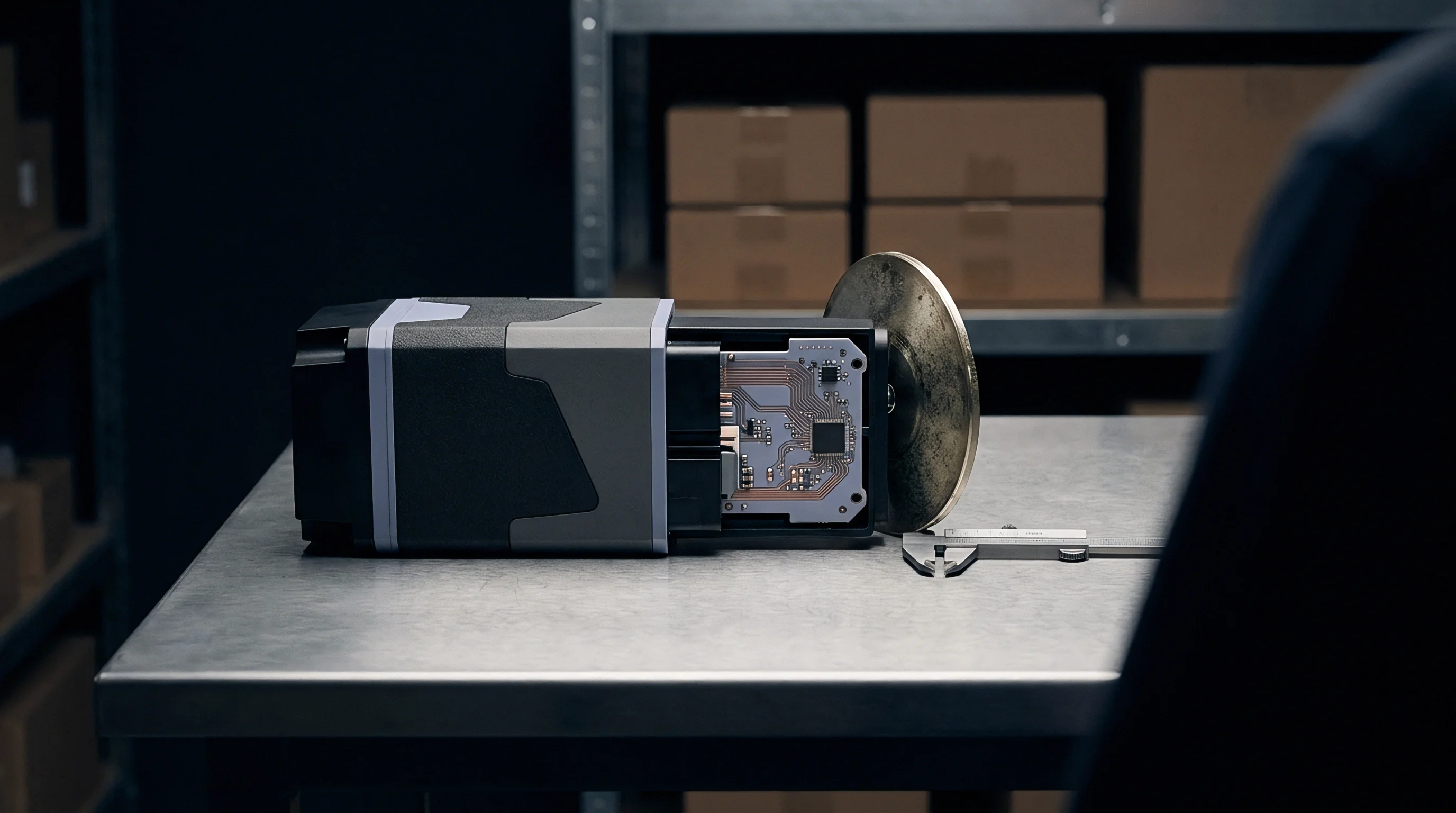
MOSFET load switches controlled by the microcontroller isolate the radio module from the primary cell whenever timers breach safety limits. Cutting main supply power eliminates sleep leakage from unconfigured GPIOs or internal standby circuits, ensuring zero quiescent current flows to the modem subsystem during deep sleep.
Hard power gating forces host firmware to manage cold-boot initialization on every wakeup. While cold boots add several seconds of registration overhead compared to waking from PSM, they eliminate microampere leakage over multi-day or multi-week sleep periods. Firmware calculates the breakeven point where cold-boot energy costs equal baseline PSM standby draw.
Non Volatile Event Logging Sequences
The microcontroller writes event records to non-volatile flash before cutting power to the system. These logs store historical timer parameters, network PLMN IDs, signal metrics, and override counts, providing an audit trail for engineers investigating unexpected battery drain in the field.
When the device connects to a test cell or optical maintenance interface, these event logs upload to central management servers. Engineering and sourcing teams analyze the data to flag non-compliant networks and update negotiation profiles across the fleet. Upon every cold boot, the microcontroller re-evaluates network timer behavior before allowing long-term power to the modem.