Selecting Hardware Battery Supervisors for Sub-GHz Transceiver Modules
Hardware battery supervisors prevent brownouts by holding sub-GHz transceivers in reset during current spikes while drawing nanoamp-tier quiescent current.
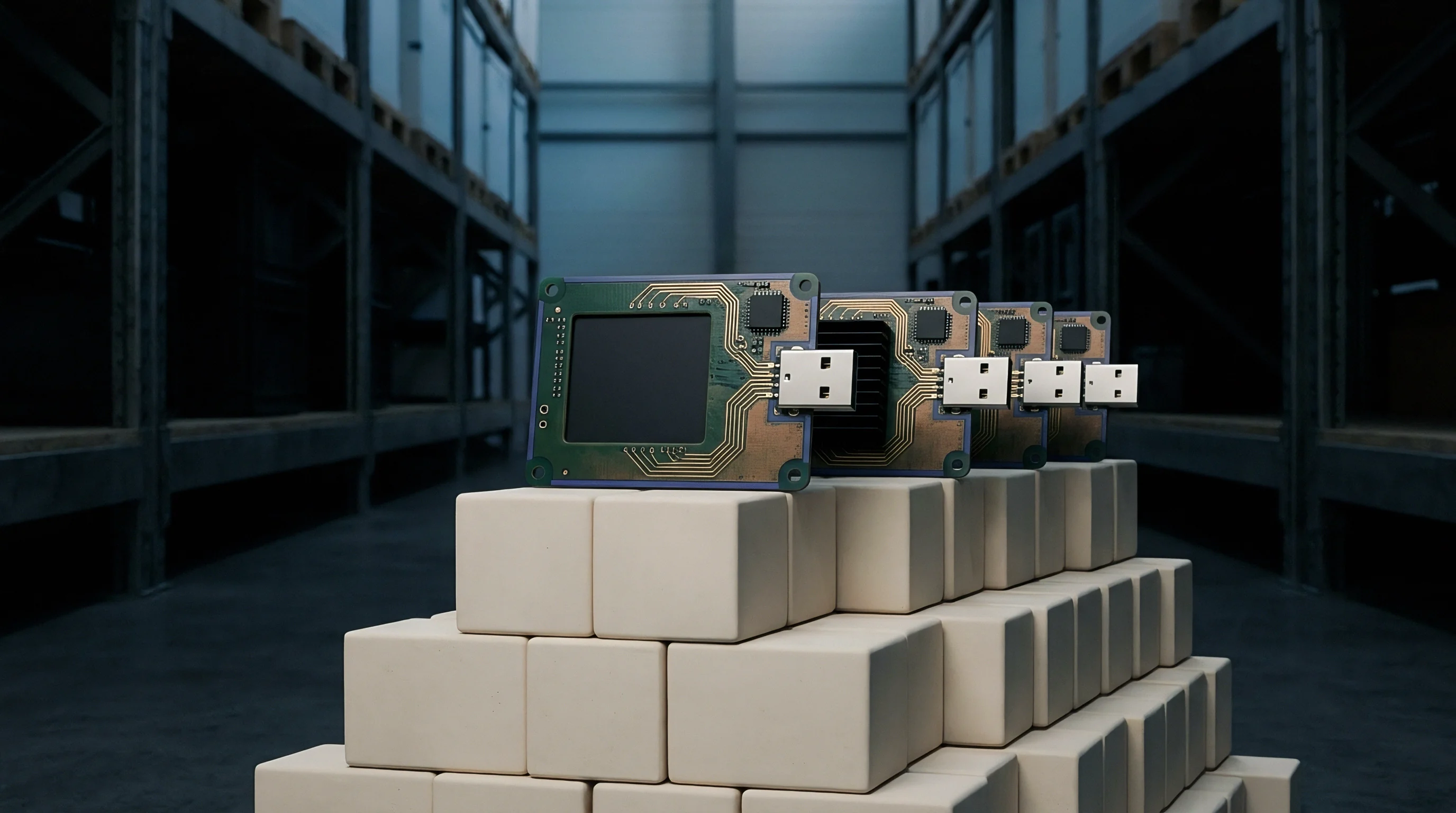

Dip
On an oscilloscope triggered during a +14 dBm LoRa transmission burst at 868 MHz, the supply rail drops from 3.60 V to 1.95 V within twelve microseconds. That collapse occurs as the power amplifier draws 84 mA against trace resistance and the internal impedance of an aged lithium thionyl chloride spool cell. Sub-GHz transceivers like the Semtech SX1262, the Texas Instruments CC1312R, and the Silicon Labs FG23 require minimum supply rails between 1.80 V and 2.10 V to maintain phase-locked loop synthesis and baseband state machine operation.
When transmit draw pulls the local rail below that operating floor, internal power-on reset circuitry trips mid-packet, aborting the transmission and dumping peripheral registers into uninitialized default states.
Integrated brownout detectors inside radio system-on-chip silicon regularly fail to intercept these transients. On-chip voltage monitors often operate on sample clocks between 1 kHz and 32 kHz to preserve microamp-tier sleep budgets, meaning a five-microsecond transient can pass entirely between sampling intervals. By the time an internal comparator registers a supply fault, the digital core logic may have already executed corrupt instructions from flash memory or written invalid calibration offsets into internal registers.
A dedicated external hardware battery supervisor IC monitors the power rail continuously through analog comparators, providing response times under two microseconds without depending on system firmware clocks.
A transmission pulse of 84 mA across a 15-ohm source impedance forces an instantaneous drop of 1.26 V on an unregulated supply rail.
Supply line sag degrades radio frequency performance well before a complete logic reset occurs. As rail voltage decreases below 2.40 V, internal linear regulators supplying the voltage-controlled oscillator lose regulation headroom. Phase noise degrades by as much as 8 dBc/Hz at 100 kHz offset, broadening the modulation spectrum and degrading adjacent channel power ratio compliance under European Telecommunications Standards Institute EN 300 220 specifications.
Receiver sensitivity on long-range spread-spectrum packets drops by 4 dB to 6 dB during weak supply conditions, shrinking link margin in dense clutter environments. Hardware supervisors arrest these degraded operational states by asserting hardware reset or generating a maskable interrupt before the transceiver operates outside its qualified radio frequency parameters. Failing to decouple supervisor assertion from burst duration leads to cyclic reboot loops that drain residual cell capacity prematurely.
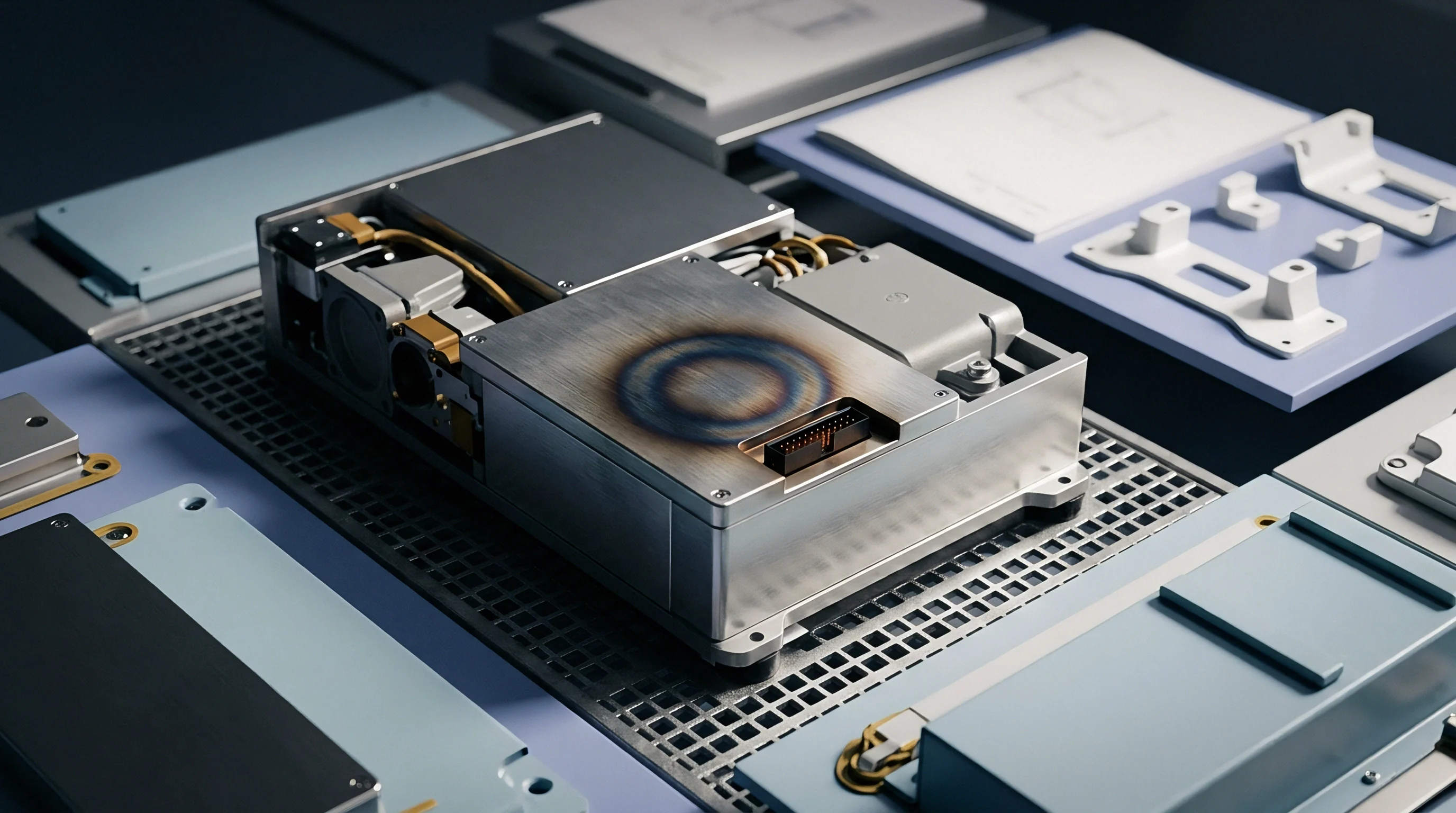

Threshold
Selecting a trip point requires balancing the discharge plateau of the battery against the minimum operating voltage of the transceiver and the tolerance of the supervisor itself. A supervisor configured with a nominal reset trip point of 2.00 V possessing a four percent manufacturing tolerance trips anywhere between 1.92 V and 2.08 V across industrial operating temperatures from -40 to +85 degrees Celsius. If a sub-GHz transceiver specifies an absolute brownout trip at 1.95 V, a supervisor tripping at 1.92 V permits silicon corruption before the hardware reset line asserts.
Conversely, setting the threshold too high terminates battery service life while substantial usable chemical energy remains locked inside the cell.

Could Brownout Transients Corrupt Nonvolatile Transceiver Registers?
Memory writes executed across sub-GHz transceiver nonvolatile storage during supply transients present severe risks of permanent field bricking. During over-the-air channel configuration or cryptographic key updates, transceivers write configuration words to internal electrically erasable programmable read-only memory or flash blocks. When a concurrent transmit burst droops the supply rail below the programming write margin, incomplete charge pump transfers result in bit flips and corrupted cyclic redundancy checks.
External supervisors with active-low open-drain reset lines clamp the transceiver reset pin, arresting the write sequence before corrupt states latch into nonvolatile registers.
| Device Model | Quiescent Current (nA) | Threshold Range (V) | Trip Accuracy (%) | Propagation Delay (μs) | Output Topology |
|---|---|---|---|---|---|
| TPS3839G25 | 150 | 1.20 to 3.30 | 1.0 | 15.0 | Push-Pull Active-Low |
| MAX16055 | 2500 | 1.57 to 4.63 | 1.5 | 20.0 | Open-Drain Active-Low |
| BD48E25G | 550 | 2.30 to 6.00 | 1.0 | 4.0 | Open-Drain Active-Low |
| NCP300LSN20 | 900 | 0.90 to 4.90 | 1.5 | 17.0 | Open-Drain Active-Low |
| S-1000N20 | 350 | 1.50 to 4.60 | 1.0 | 5.0 | N-Channel Open-Drain |
| APX803S-23 | 1000 | 1.20 to 5.00 | 1.5 | 10.0 | Open-Drain Active-Low |
Hysteresis built into the supervisor comparator prevents high-frequency rail oscillation. When a 100 mA transmit burst finishes, battery terminal voltage rebounds rapidly because load current falls back to microamp idle levels. Without adequate supervisory hysteresis, the rail rebound instantly de-asserts reset, prompting the transceiver firmware to re-initialize and transmit again, immediately collapsing the supply.
A hysteresis gap between 50 mV and 200 mV stabilizes the system against supply chattering.
Specifying a supervisor for a sub-GHz design comes down to six main electrical parameters:
- Detection threshold voltage fixes the precise level where supervisor outputs toggle to isolate the transceiver from sagging primary rails.
- Threshold temperature coefficient bounds drift across operating ranges to prevent premature resets during sub-zero field deployments.
- Built-in voltage hysteresis separates reset release points from assertion levels to eliminate high-frequency chatter under burst currents.
- Propagation delay speed dictates how rapidly the supervisor clamps peripheral control lines upon detecting a steep rail droop.
- Output stage topology determines whether pull-up resistors connect to unregulated cell rails or regulated sub-system supply planes.
- Manual reset input integration accepts external push-button triggers or secondary coprocessor watchdogs during remote recovery cycles.
Cold-weather field resets stem either from parasitic board trace inductance or uncharacterized temperature coefficient drift in the supervisor IC.

Quiescence
Sub-GHz remote telemetry nodes spend 99.8 percent of their design life in deep sleep states, awakening for milliseconds to transmit meter pulses or environmental telemetry. In these long-horizon deployments, the quiescent current drawn by monitoring silicon constitutes a primary drain on cell capacity. A supervisor consuming 1.5 microamps continuous quiescent current exhausts 131 milliamp-hours of battery capacity over a ten-year operational span.
When paired with a coin cell rated at 220 milliamp-hours, supervisory overhead alone claims sixty percent of total stored energy, starving the sub-GHz radio of airtime energy budget.
| Architecture Class | Nominal Iq (μA) | 10-Year Drain (mAh) | CR2032 Budget Share (%) | ER14505 Budget Share (%) |
|---|---|---|---|---|
| Ultra-Low-Power Comparator | 0.035 | 3.06 | 1.39 | 0.11 |
| Precision Nano-Supervisor | 0.150 | 13.14 | 5.97 | 0.48 |
| Standard Industrial Reset IC | 1.200 | 105.12 | 47.78 | 3.89 |
| Multi-Rail Window Supervisor | 4.500 | 394.20 | 179.18 | 14.60 |
| Continuous Active ADC Monitor | 12.000 | 1051.20 | 477.81 | 38.93 |
| Assumptions: 87,600 operating hours; constant 25 degrees Celsius ambient; self-discharge models excluded; battery capacities benchmarked at 220 mAh for CR2032 and 2700 mAh for ER14505 LiSOCl2 cells. | ||||
Supervisory quiescent draw must remain smaller than the chemistry self-discharge rate across all operating temperatures.
Modern sub-microamp supervisors like the Texas Instruments TPS3839 draw 150 nanoamps, while devices such as the Analog Devices MAX16169 drop quiescent draw to 30 nanoamps using switched-resistor divider stages. These nano-quiescent architectures keep total supervisory drain below five percent of battery self-discharge. Reducing quiescent current below 100 nanoamps introduces tradeoffs in comparator propagation delay.
Ultra-low-power supervisors throttle internal bias currents, widening comparator response times from two microseconds to thirty microseconds. A sub-GHz transmit burst that causes a violent supply collapse can reach fatal brownout depths before a thirty-microsecond supervisor completes its internal output transition.
Supply line filtering requires careful balance against supervisory input bandwidth. Ferrite beads and large bypass capacitor banks hold the transceiver rail stable during transmission bursts, but isolate the supervisor from seeing true battery terminal voltage. Placing the supervisor sense pin upstream of decoupling ferrite chokes provides immediate detection of core cell depletion while the local bulk capacitance continues feeding the radio power amplifier through the remainder of the active packet window.
The monitoring circuit current budget determines the ultimate limit of device longevity in remote metering hardware.


Topology
Circuit designers select between open-drain and push-pull output configurations based on the board power distribution scheme. Push-pull supervisors drive their output directly to the supervisor VDD rail or ground. This topology eliminates external pull-up resistors, saving bill-of-materials cost and removing continuous leakage paths through passive components.
When the sub-GHz radio operates on a switched power domain separate from the supervisor supply, a push-pull supervisor tied to an unswitched rail forward-biases the transceiver internal electrostatic discharge protection diodes, leaking current into unpowered silicon regions.

Which Monitoring Architecture Protects Deep Sleep Radios?
Open-drain architectures provide flexible voltage translation across split power domains. Connecting the open-drain output through a high-value pull-up resistor to the regulated transceiver rail ensures the reset line tracks the actual logic levels of the baseband processor. Values for pull-up resistors require calculation based on node capacitance and board cleanliness.
Selecting a ten-megohm pull-up resistor minimizes leakage during asserted reset states, but board contamination and flux residues create parasitic leakage paths that pull the reset line into undefined logic thresholds. Surface mount pull-up resistors between 470 kilohms and one megohm provide reliable noise margins while restricting leakage currents below three microamps during fault states.
Floating supervisory lines create indeterminate logic states that drain microamps through transceiver input buffers.
Transceiver sleep states expose unique vulnerabilities in supervisors incorporating integrated watchdog timers. Sub-GHz telemetry devices sleep for hours between brief ten-millisecond transmissions. Standard hardware watchdogs expect heartbeat pulses every 1.6 seconds, forcing the primary microcontroller to awaken frequently solely to service the watchdog.
That cyclic awakening destroys the system sleep budget. Windowed watchdogs with pin-programmable timeout intervals extending beyond sixty seconds, or supervisors providing watchdog disable pins routed to radio sleep status outputs, preserve long-term battery budgets without sacrificing lockup protection during active communications.
Improper layout and circuit design choices generate recurring hardware vulnerabilities across remote transceiver nodes:
- Phantom powering paths route leakage through internal clamp diodes when push-pull supervisor outputs stay high while transceiver supply switches open.
- Flux residue conductance degrades megohm-tier pull-up resistors to create floating reset logic thresholds across humid industrial outdoor installations.
- Ferrite decouple isolation blinds supervisory sense inputs from detecting rapid cell collapse when bulk capacitors mask battery rail degradation.
- High-impedance trace noise couples sub-GHz transmitter antenna harmonics directly into supervisor input comparator nodes, causing spurious packet aborts.
- Watchdog servicing overhead wakes sleeping baseband microcontrollers repeatedly, exhausting milliamp-hour reserves on unproductive clock cycles.
Whether multi-rail window supervisors justify their board real estate over single-rail supervisory ICs on nodes using separate power amplifiers remains an open debate among RF hardware architects.
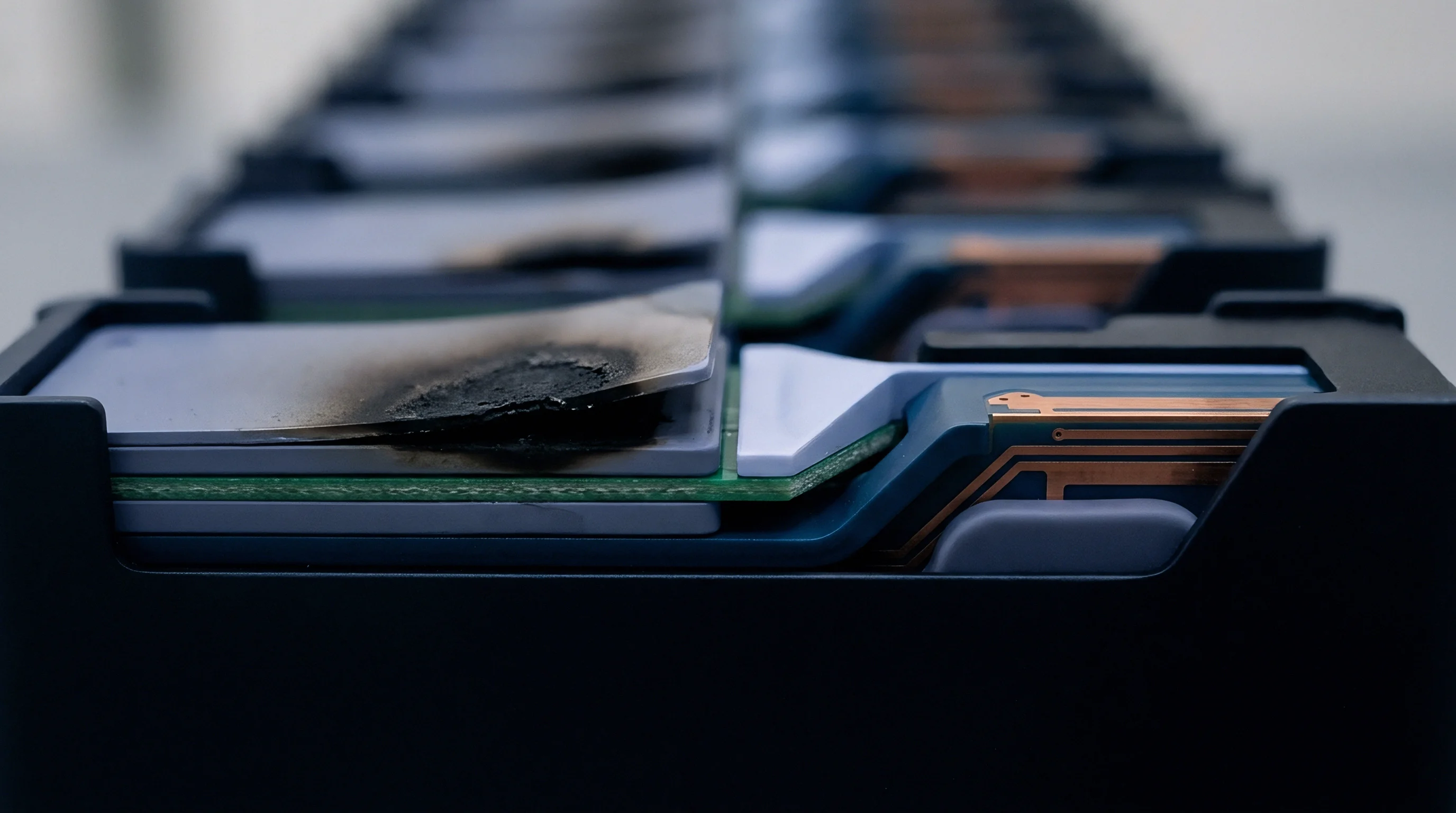
Delay
Power-on reset delay generation protects sub-GHz radios from starting transmission sequences during unstable battery voltage recovery phases. Primary lithium cells exhibit significant voltage recovery intervals following heavy discharge pulses. After an 80 mA LoRa packet transmission finishes, a lithium manganese dioxide cell requires between five and fifty milliseconds to restore its terminal voltage to nominal open-circuit levels.
If the supervisor de-asserts its reset line within 200 microseconds, transceiver firmware immediately initiates receiver listening or packet re-transmission while the chemical cell remains depressed, plunging the system into repetitive brownout oscillations.
Capacitor-programmable delay architectures allow hardware teams to tune reset timing to matching battery recovery curves. By sizing an external timing capacitor connected to the supervisor delay pin, engineers establish reset assertion windows between 10 milliseconds and 500 milliseconds. Fixed-delay supervisors eliminate external capacitors to save printed circuit board area, but force engineering compromises: choosing a short 20-millisecond delay risks false starts on cold cells, while selecting a 200-millisecond fixed delay locks the system into extended idle states that prevent rapid frequency hopping responses mandated by high-throughput protocols.
International electrotechnical standards require medical and safety telemetry equipment to maintain fail-safe reset states during supply interruptions exceeding two microseconds.
In high-reliability industrial monitoring hardware, automated validation protocols verify delay intervals across the entire operating temperature profile. Temperature swings from -40 to +85 degrees Celsius alter internal current sources used to charge external timing capacitors. A nominal 100-millisecond delay configured at room temperature shrinks to 65 milliseconds at hot extremes and expands to 160 milliseconds at freezing boundaries.
RF transceivers waiting on reset de-assertion to service critical regulatory carrier-sense intervals miss channel access windows if timing shifts uncalibrated across temperature extremes.
Procurement contracts and functional specifications enforce rigorous qualification requirements on battery supervisor components before production approval:
- Reset timeout verification measures delay duration across extreme operating temperatures to confirm rail stability before transceiver activation.
- Power supply glitch immunity documents the maximum pulse amplitude and duration the supervisor ignores without triggering invalid system resets.
- Reverse battery leakage ceilings constrain reverse currents below fifty nanoamps to prevent accelerated cell degradation during reversed field insertion.
- Output low-voltage clamp capability guarantees reset lines maintain valid logic-low clamping levels even when supply rails collapse down to 0.6 V.
Section 4.2 of the IEC 62368-1 safety standard dictates strict power fault behavior, compelling hardware designs to hold control logic in deterministic reset states during all categorized brownout events.

Passivation
Lithium thionyl chloride cells dominate long-range utility metering nodes because they deliver energy densities exceeding 650 Wh/kg and nominal operating voltages of 3.6 V. These cells form an internal lithium chloride passivation layer on the lithium anode during storage to prevent self-discharge. That protective layer acts as an electrical insulator. When the sub-GHz radio awakens from multi-month sleep to deliver an alarm packet, the sudden 100 mA current step meets an internal cell resistance exceeding 40 ohms.
The terminal voltage plummets below 2.0 V within three microseconds, tripping standard hardware supervisors instantly before depassivation occurs.
Mitigating passivation voltage delay demands hybrid power architectures paired with coordinated supervisor behavior. Hardware engineers place hybrid layer capacitors or lithium-ion capacitors in parallel with the primary lithium cell. The high-capacitance passive element supplies instantaneous burst currents for the sub-GHz power amplifier, buffering the primary cell while the lithium chloride layer chemically strips under sustained load.
The hardware supervisor must not trigger during the initial capacitive dip, requiring careful selection of glitch immunity filters or delayed supervisor engagement circuits.
A worked design illustrates the component math. Assume an automated gas meter node deployed in North America operates on the 902-928 MHz band using an SX1262 transceiver. The radio draws 118 mA at +22 dBm output power.
The power source comprises an ER18505 cell with an unpassivated internal resistance of 4 ohms, rising to 28 ohms when heavily passivated at -30 degrees Celsius. The transceiver requires a minimum rail of 2.10 V. The supervisor carries a nominal trip threshold of 2.25 V with a two percent tolerance band (2.205 V to 2.295 V). Drawing 118 mA across 28 ohms creates an instantaneous internal cell drop of 3.30 V, which would crash a 3.6 V cell to 0.3 V without buffering.
A parallel 15-farad hybrid layer capacitor with an equivalent series resistance of 150 milliohms restricts initial instantaneous drop to 18 millivolts, maintaining the rail at 3.58 V. Over a 50-millisecond transmit packet, the capacitor discharges: delta V equals (118 mA 50 ms) / 15 F, yielding an 0.39-millivolt droop. The rail stays above the 2.295 V supervisor maximum trip boundary, allowing the transmission to finish without a brownout reset.
Supply chain audits confirm that chemical passivation depths vary across manufacturing lots from battery vendors. Temperature logging data during oceanic shipping demonstrates that warehouse storage above 40 degrees Celsius accelerates passivation layer thickness by a factor of three compared to climate-controlled storage. Hardware teams counter this chemical reality by incorporating programmed depassivation routines into system startup: baseband processors use resistor loads to bleed small, controlled currents over several seconds, gradually breaking down the passivation film before enabling the high-current sub-GHz power amplifier.
Sourcing engineers specify hardware battery supervisors with programmable threshold delays and tight trip-point tolerances, ensuring remote sub-GHz telemetry transceivers survive cold winters and aging chemistry across their full operational deployment.