Meaning
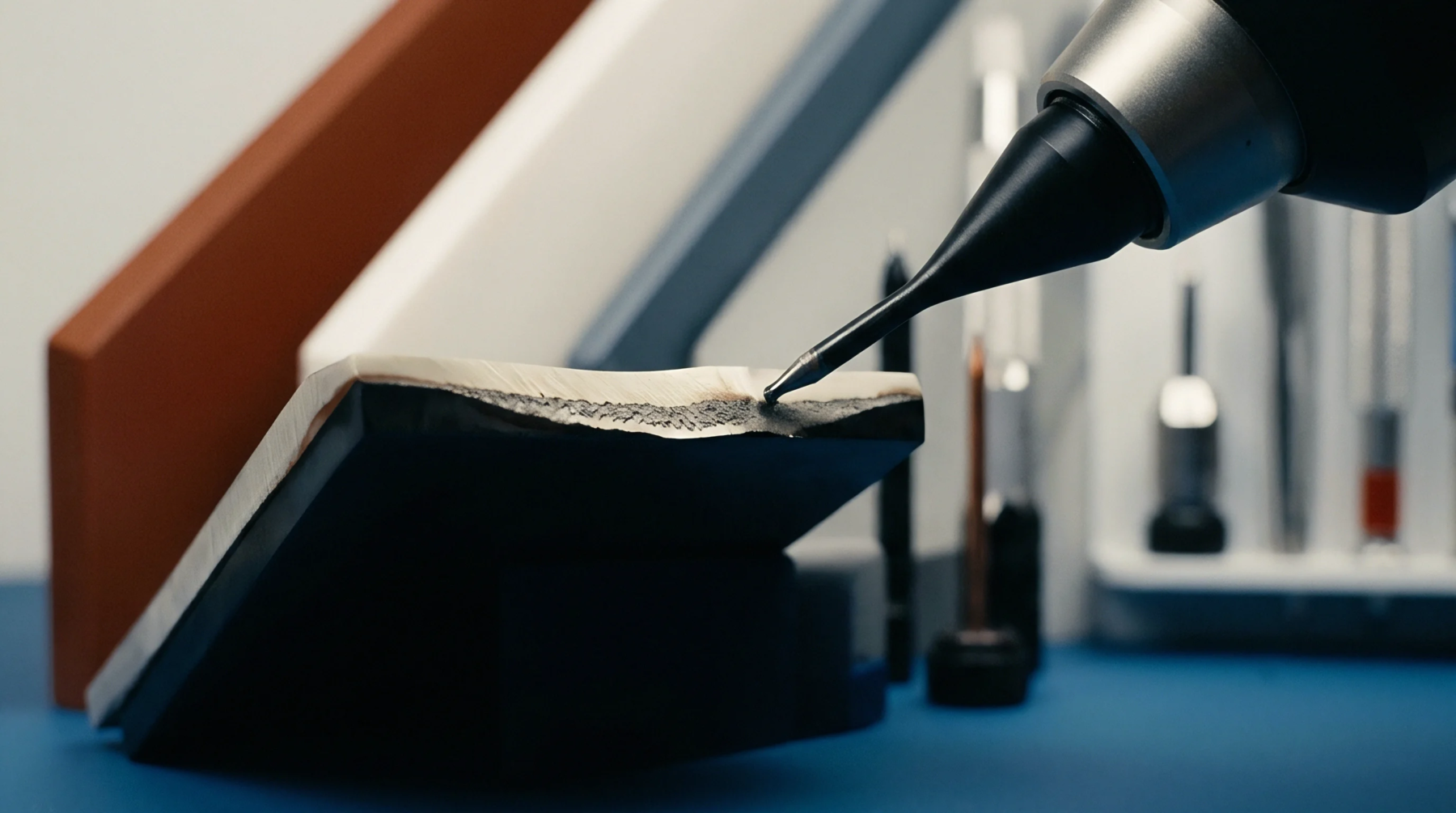
Localized adhesive wear and macroscopic surface disruption occur between contacting metallic bodies sliding under high normal loads without sufficient interfacial lubrication. The physical initiation of galling onset marks the transition where micro-asperities fuse through friction, causing tearing, metal transfer, and rapid surface gouging. This mechanical degradation governs metal-to-metal contact zones in stamping tools, threaded fasteners, and mechanical latching mechanisms inside smart device enclosures.
Its physical scope terminates when sliding motion stops or when macroscopic seizure locks the mating components entirely.
Contact Mechanics
Microscopic surface peaks experience plastic deformation under concentrated bearing pressures, rupturing protective passive oxide films on reactive alloys. Once clean metal surfaces touch, localized cold welding creates microscopic junctions with higher shear strength than the base material matrix. Continued sliding tears these microwelds, transferring bulk material fragments from one contact face to the opposing surface.
Progressive transfer rapidly increases friction coefficients, triggering exponential thermal growth in the interface zone. Engineers calculate surface shear thresholds against yield strengths to forecast whether sliding interfaces will survive mechanical assembly cycles.
Material Susceptibility
Austenitic stainless steels and pure titanium alloys exhibit severe susceptibility to adhesive transfer due to low work-hardening rates and thin native oxide films. Tooling steels alloyed with vanadium, chromium, or molybdenum resist surface tearing by embedding hard primary carbide phases within a tempered martensitic matrix. Surface treatments like physical vapor deposition of titanium aluminum nitride alter the chemical affinity between contact faces, delaying adhesive tear initiation.
Dry sliding tests run under ASTM G98 procedures define the threshold galling stress for specific tooling and part combinations.
Process Verification
Production stamping runs identify early adhesion through acoustic emission monitoring and punch drive current signatures. As adhesive wear begins, the drive motor draws elevated amperage to overcome rising sliding friction during tool stroke cycles. Enclosure stamping log sheets track workpiece rejection rates when deep vertical scoring appears along drawn sidewalls.
Tooling handover protocols require surface roughness inspections using optical profilometers before stamping dies enter volume manufacturing lines. Early surface repair using micro-polishing prevents complete tooling cavity destruction and preserves mechanical dimensional tolerances.