Meaning
Limits on harmonic currents emitted into public low voltage supply networks are established by GB 17625.1. This national standard governs electromagnetic compatibility requirements for electrical and electronic equipment drawing a phase current up to and including sixteen amperes. Compliance ensures that consumer devices and industrial terminals do not distort the sinusoidal voltage waveform beyond acceptable limits.
Current Limits
Equipment classification dictates the maximum allowable harmonic current emissions for a specific product. Class A covers balanced three phase equipment and household appliances excluding those specified in other categories, while Class B applies to portable tools. Class C targets lighting equipment, and Class D imposes strict absolute limits per watt for devices with a specific power input characteristic.
Testing requires the device to operate under specified loading conditions while a power analyzer records harmonic orders up to the fortieth component.
Thermal Budget
Power supply topology directly influences harmonic generation within the connected circuitry. Active power factor correction topologies reduce low frequency harmonic currents, which simultaneously decreases thermal stress on internal filter components and enclosure walls. Passive filtering networks rely on larger inductors and capacitors, adding mass and dissipating internal heat that must be accounted for during mechanical integration.
Exceeding harmonic current thresholds raises operational temperatures within the device, shortening the lifespan of electrolytic capacitors located near switching transistors.
Compliance Verification
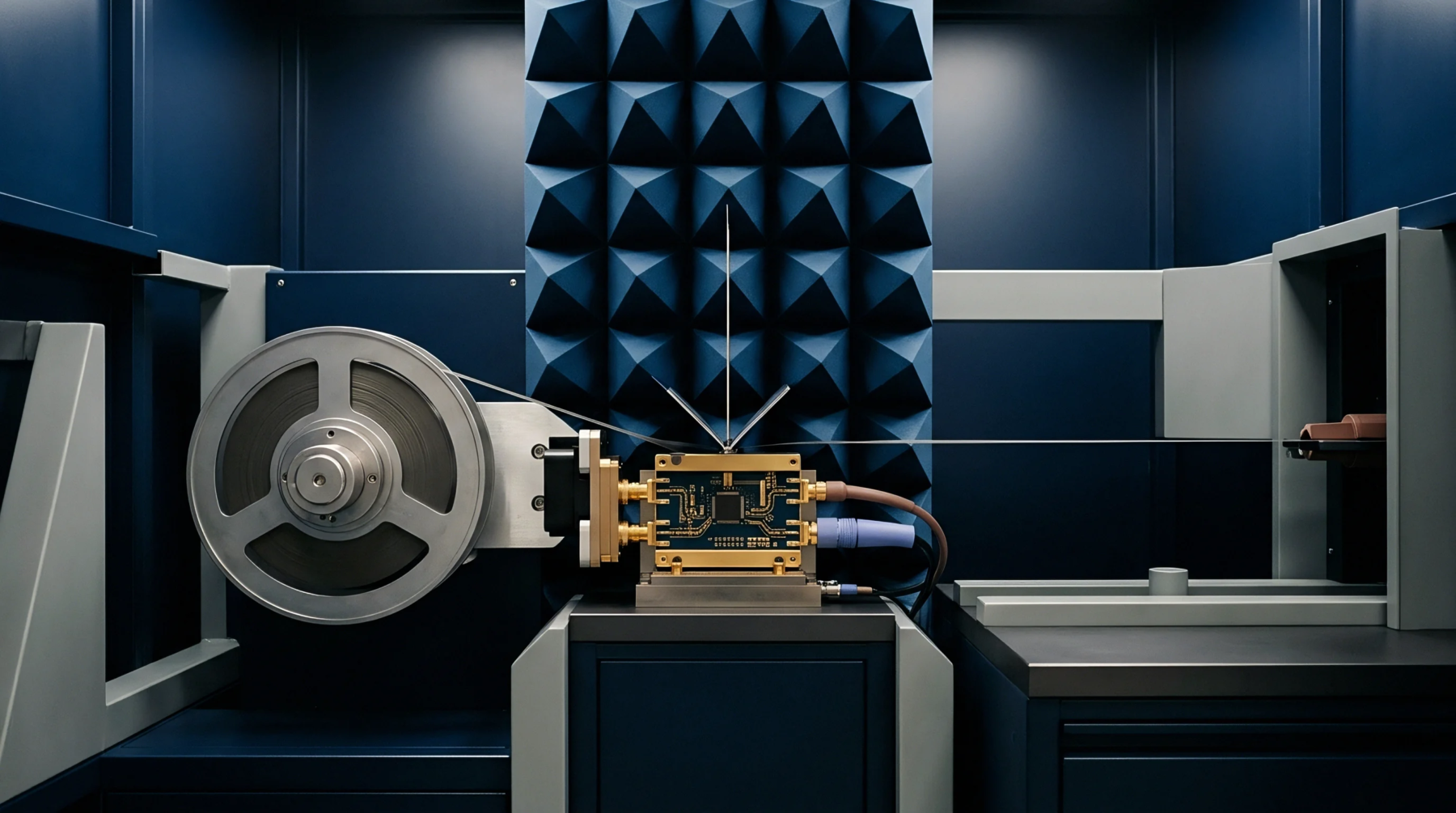
Production conformity assessment depends on type testing performed by accredited laboratories prior to market entry. Manufacturers compile technical documentation containing schematic diagrams, bill of materials, and test reports demonstrating adherence to emission limits. Test rigs connect the device under test to a reference impedance network that simulates actual grid conditions.
Verification at this stage validates that the assembly meets regulatory prerequisites before mass production commences.