Quantifying Direct versus Consequential Damages under International Supply Contract Epidemic Failure Clauses
Direct damages cover physical extraction, freight, and scrap; lost sales and channel fines remain unrecoverable consequential losses under standard supply contracts.

Breach
An epidemic failure clause aggregates scattered field returns into a single contractual default. In international electronics supply agreements, standard warranties deal with isolated component failures through piece-by-piece replacement. But when identical failure modes cluster above a negotiated statistical ceiling ~ typically between two and five percent of aggregate volume shipped within a rolling ninety-day window ~ the framework shifts from routine repair to collective liability.
Crossing that threshold renders every delivered assembly in the cohort presumptively non-conforming, stripping away the ordinary warranty protections that limit supplier liability to unit repair costs.
Disputes following an epidemic declaration usually turn on the legal divide between direct losses and consequential damages. Under Article 74 of the United Nations Convention on Contracts for the International Sale of Goods, recoverable loss extends to what the breaching party foresaw at contract execution. Common law regimes governed by Hadley v Baxendale take a narrower view: direct damages cover injuries arising naturally in the ordinary course of things, whereas consequential recovery requires proof that special circumstances were communicated during negotiations.
Because standard industrial manufacturing master service agreements contain blanket waivers barring consequential, special, and indirect damages, surviving a recovery claim depends on categorizing each line item on the direct side of that boundary.
Commercial waivers barring indirect damages leave the recovery of recall logistics dependent entirely on classifying transport and dismantling as direct performance losses.
Latent hardware defects expose this divide immediately. Microcontroller solder joints fracture from improper bismuth alloy proportions, circuit board via barrels crack under thermal cycles, or transceiver clocks drift after months in the field. When an entire production cohort fails, remediation expenses outstrip the original bill of materials value within weeks.
While buyers demand full indemnification for field campaigns, replacement hardware, freight surcharges, and lost market value, suppliers rely on consequential damages waivers to treat any cost beyond bare module replacement as an indirect effect of the breach.
Arbitral tribunals resolve this tension by examining how closely an expense links to the breached delivery obligation. Rework to extract defective subassemblies sits right on the fault line. One position treats de-installation labor as secondary damage caused by the buyer integrating the part into an enclosure; the counter-argument is that integration was the express operational assumption of the purchase agreement.
If a module cannot function outside an enclosure, removing it is simply the direct physical remediation of the delivery defect. That direct classification breaks down, however, once claims expand to assembly line downtime, retailer penalties, or damaged commercial reputation.

Crate
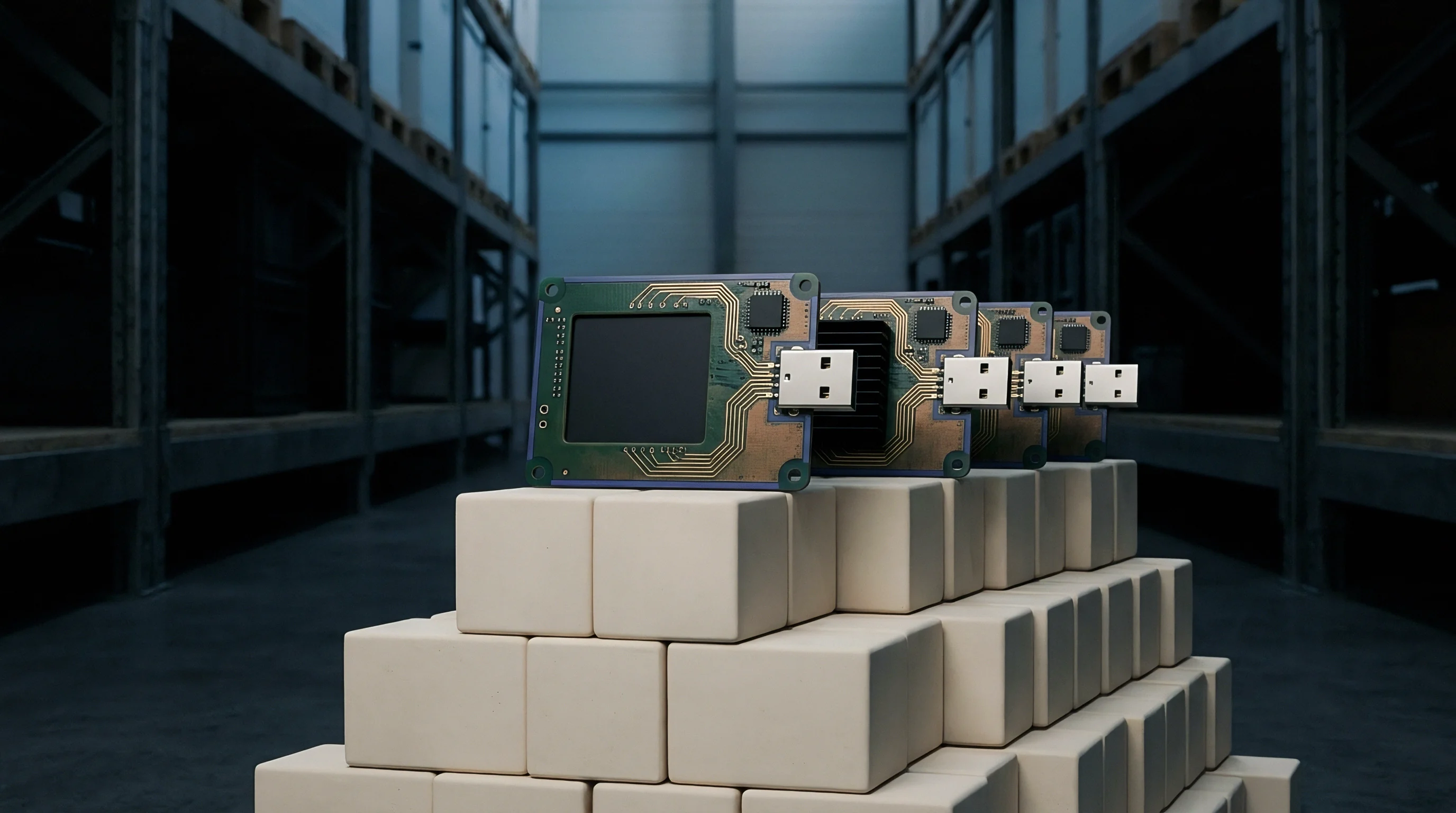
Quarantine and transit logistics generate the earliest hard invoices after an epidemic declaration. Pulling suspect inventory from distribution channels back to regional inspection depots racks up international air freight charges, ocean container demurrage, warehousing surcharges, and hazardous material repackaging fees well before forensic lab disassembly begins. Each line item faces categorization scrutiny under bilateral liability caps, which typically peg total exposure to a multiplier of annual purchase order value or a fixed ceiling such as five million dollars.
Treatment of reverse logistics costs varies across jurisdictions. Under English common law and Uniform Commercial Code Article 2-715, expenses reasonably incurred in the inspection, receipt, transportation, and care of rightfully rejected goods qualify as direct incidental costs, surviving boilerplate waivers of consequential loss. Expedited air courier charges, however, remain contested terrain: standard surface shipping defines the presumptive limit of reasonable mitigation, leaving the premium for air freight dependent on proving statutory duties or urgent contract requirements to prevent consumer safety hazards or factory line shutdowns.
| Expense Category | Classification Status | Contractual Defense Mechanism | Evidentiary Requirement |
|---|---|---|---|
| Reverse Oceanic Freight | Direct Incidental | Standard mitigation obligation | Bills of lading, carrier audit logs |
| Expedited Air Courier | Contested Incidental | Supplier claims unapproved upgrade | Line-down risk notices, safety logs |
| Quarantine Warehouse Space | Direct Incidental | Duty of care over rejected goods | Lease invoices, square-meter logs |
| Downstream Retailer Fines | Consequential | Waived under indirect damage bar | Retail vendor service level terms |
| Scrap Disposal and Carting | Direct Loss | Physical restitution of defective lot | Certified disposal manifests |
| Classification trends derived from arbitral awards applying international sales law to electronics manufacturing contracts. | |||
Physical pallet handling determines whether transit claims hold up under audit. Commingling verified failures with uninspected inventory on a single manifest gives a supplier clear grounds to challenge cargo liability. Operations teams isolate suspect lots the moment failure rates breach the statistical threshold, tracking crates through reverse distribution with radio frequency identification tags paired to surface-mount device serial numbers embedded in microcontroller firmware.
Unbroken chain-of-custody documentation prevents claims that functional inventory was scrapped unnecessarily at the supplier’s expense.
Cross-border movements add tariff liabilities to the ledger. Shipping defective electronic subassemblies back across international borders triggers duplicate duty assessments unless goods are entered under temporary export regimes or inward processing relief mechanisms. When an importer overlooks these relief programs, non-refundable import duties are categorized as avoidable consequential loss.
The party seeking indemnification bears an affirmative duty to mitigate avoidable administrative costs, and tribunals routinely strike duplicate duty lines from claims where simple customs declarations would have averted the liability.
Standard freight rates set the baseline boundary for recoverable transit under master supply agreements, leaving expedite fees subject to separate factual proof.
Dissection
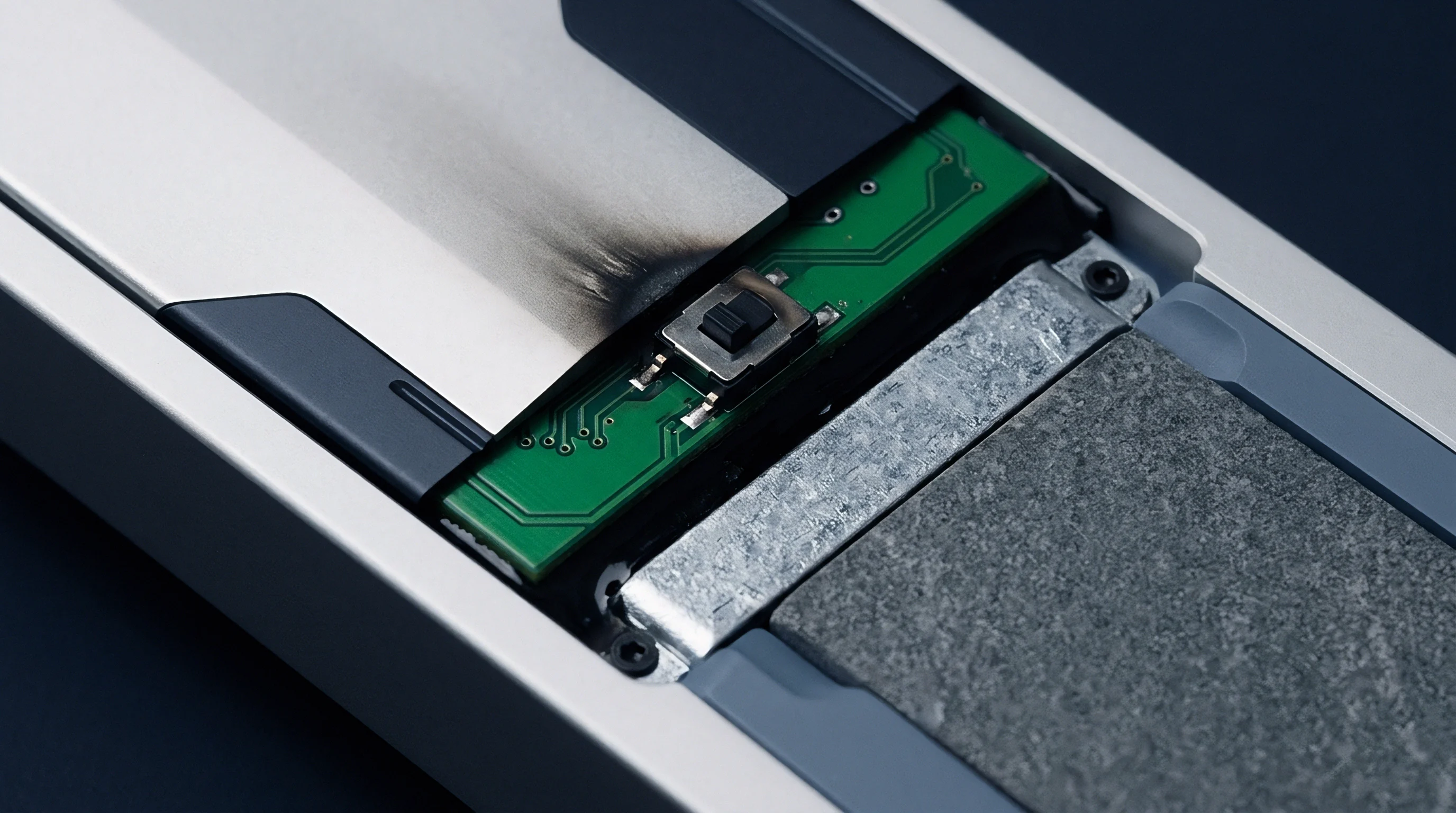
Extracting a failed subassembly from the host device consumes the bulk of internal rework labor. In compact internet-of-things devices and consumer hardware, radio modules are soldered directly to multilayer parent motherboards or buried under cured polyurethane potting compounds. Removing them requires dedicated rework stations, precise thermal profiles, scraping conformal coatings by hand, and diagnostic testing of adjacent traces.
Because of that complexity, extraction costs fluctuate significantly during claim negotiations.
Disassembly labor rates vary widely between automated manufacturing lines and manual repair depots. Establishing the baseline for direct extraction follows a straightforward calculation:
Direct Extraction Expense equals the product of Quarantined Assembly Volume, Fully Burdened Labor Rate per Hour, and the Standard Time per Extraction Sequence.
Disputes almost always focus on labor burdening. Claimants frequently bill corporate accounting rates that fold human resources allocations, facility depreciation, and executive management compensation into hourly bench costs. Tribunals routinely disallow these general overhead figures, trimming direct damages down to base technical wages, shift differentials, shop consumables, and electrical power drawn by the rework cell.
The unburdened technician wage plus statutory employment taxes represents the accepted floor, while fully burdened corporate charges exceeding one hundred and fifty percent of direct wage costs face downward adjustment.
Arbitration panels reduce labor recovery calculations to direct technician wages plus verified workplace taxes, rejecting executive and corporate facility overhead allocations.
Collateral damage during rework adds another layer to direct costs. De-soldering a Bluetooth Low Energy or cellular module via localized thermal reflow exposes surrounding silicon to thermal stress: flash memory chips can desolder, board-to-board plastic connectors melt, and multilayer ceramic capacitors crack from local thermal expansion. Replacing these surrounding parts qualifies as direct loss only if the repair bench followed IPC-7711/7721 rework guidelines.
Using uncalibrated heat guns or tearing traces off host circuit boards turns salvageable hardware into unrecoverable scrap caused by flawed repair technique.
Detailed bench documentation usually settles rework entitlement before arbitration begins. An effective claim dossier gathers specific operational records:
- Thermal Profile Logs recorded via thermocouple telemetry during hot-air module extraction sequences to prove IPC-7711 compliance and verify safe temperature bounds for adjacent host silicon.
- Time-Motion Video Studies capturing five consecutive manual disassembly runs across three separate technicians to document the true mean duration of the mechanical teardown cycle.
- Scrap Disposition Tickets signed by quality assurance leads verifying the unrecoverable destruction of surrounding components during physical delamination of bonded enclosures.
- Operator Certification Rosters establishing that personnel executing component rework held active IPC-A-610 or J-STD-001 specialist credentials at the moment repairs occurred.
Ultrasonically welded or resin-overmolded housings rule out non-destructive disassembly entirely. The host device and enclosure must be crushed, incinerated, or ground into raw resin scrap. In those instances, direct losses escalate from module repair fees to the complete landed manufacturing cost of the finished consumer product, less scrap salvage credits.
Without explicit salvage terms in the epidemic clause, full-system write-offs invite challenges characterizing total product loss as an indirect consequence rather than an inevitable physical result of the defect.
Under Section 2-714 of the Uniform Commercial Code, damages equal the difference in value between goods accepted and goods as warranted ~ a standard that supports complete unit write-downs when subassemblies cannot be separated without destroying the host device.

Reckoning
Factory line shutdowns, missed commercial deliveries, and retail channel cancellations form the traditional core of consequential damages. When an epidemic failure strikes during high-volume commercial scaling, production schedules collapse: assembly lines idle, channel partners cancel purchase orders, and major retailers issue chargebacks for missed stocking commitments under vendor compliance schedules. Unless the contract explicitly addresses these disruptions, standard limitation of liability clauses render nearly all of this commercial fallout uncollectible.
Lost retail margins rarely qualify as direct damages, though exceptions exist based on contract structure and foreseeability. In build-to-order arrangements where a supplier delivers components earmarked for specific downstream commitments, certain common law jurisdictions treat the loss of those purchase order margins as direct damages. Because the supplier accepted the order with direct knowledge of the matched retail delivery requirement, the margin loss stems directly from non-performance.
By contrast, where components feed generic assembly inventory or regional warehouse buffers, lost sales are uniformly ruled consequential, leaving the manufacturer to absorb commercial shortfalls under standard waiver language.
| Financial Loss Category | Legal Recovery Mechanism | Probability of Recovery | Typical Contract Exclusion |
|---|---|---|---|
| Downstream Retail Penalties | Consequential Damages | Low | Excluded by standard waiver clause |
| Idle Factory Assembly Labor | Direct Loss Mitigation | Moderate | Subject to direct mitigation proof |
| Lost Unit Sales Margins | Consequential Loss of Profit | Very Low | Waived under indirect damage terms |
| Third-Party Recall Management | Direct Remediation Cost | High | Survives under express epidemic terms |
| Brand Equity Degradation | Consequential Punitive Loss | Zero | Universally struck by contract |
| Customer Call Center Surges | Direct Remediation Expense | Moderate to High | Survives if tied to failure triage |
Emergency mitigation brings its own recovery rules. When an epidemic failure threatens assembly schedules, switching to a backup supplier often requires unit price premiums, expedited tooling runs, and non-recurring engineering fees for rapid requalification. Under established mitigation doctrine, an injured party can recover reasonable outlays made to prevent larger losses.
Spending five hundred thousand dollars on alternative parts to stave off five million dollars in contractual delivery penalties qualifies as legitimate mitigation, passing through as a direct recovery even if the underlying shutdown loss was consequential.
Expenses incurred to mitigate greater operational losses remain recoverable as direct damages even when the avoided injury constitutes an unrecoverable consequential loss.
Contract drafting controls this outcome. Master supply agreements often carve epidemic remedies out of the general limitation of liability clause, shielding teardown and replacement claims from indirect loss waivers. Another route relies on itemized indemnities or negotiated liquidated damages that define recoverable recall costs up front.
When an agreement lists third-party campaign managers, customer notifications, and distributor chargebacks as direct epidemic costs, arbitral panels can bypass common-law classifications and focus entirely on auditing the receipts.
Express epidemic remedies frequently operate as exclusive contractual mechanisms, precluding resort to broader statutory damages once designated remediation procedures have begun.

Audit
Root cause analysis controls whether an epidemic claim triggers at all. Conceding a systemic defect is rare without extensive laboratory verification. The buyer carries the evidentiary burden of proving that field returns share a single design flaw, component weakness, or assembly error, rather than electrostatic shock, environmental exposure beyond datasheet ratings, or improper integration on the factory floor.
Without technical consensus on failure etiology, commercial negotiations stall.
Arbitral tribunals rely on structured failure investigations structured around the 8D framework or equivalent metallurgical standards. A standard forensic protocol follows five stages:
- Statistical validation of returned serial numbers against factory surface-mount line manufacturing records to confirm production batch boundaries.
- Nondestructive acoustic microscopy and high-resolution micro-focus X-ray inspection to detect internal voiding, delamination, and wire bond shear patterns.
- Cross-sectional metallurgical analysis of solder joint intermetallic compound layers to evaluate brittle fracture propagation and thermal fatigue.
- Decapsulation of silicon dies combined with scanning electron microscopy to identify internal oxide puncture, gate degradation, or metallization electromigration.
- Environmental stress screening replication inside climatic chambers, subjecting healthy control modules to identical temperature profiles to recreate failure modes.
The statistical sample size determines whether the threshold holds up under scrutiny. Agreements frequently leave ambiguous whether failure percentages apply across multi-year program volumes or discrete production date codes. Hitting a two percent threshold across five million units delivered over three years requires massive field mortality.
That same two percent measured against a bi-weekly lot of fifty thousand boards triggers after one thousand returns. Measuring against isolated sub-lots invites immediate procedural challenges if the contract specifies cumulative volume, making close alignment between quality logs and accounting schedules essential before issuing formal notice.
Unilateral recalls present the steepest recovery hurdle. Pulling product from distribution channels before completing lab verification allows the defense to categorize the campaign as a discretionary commercial precaution. Expenses tied to voluntary recalls lacking regulatory mandates or confirmed component defects are routinely classified as unrecoverable business costs.
Proving direct causation requires demonstrating that the hardware carried a latent defect that would inevitably trigger operational failure under normal working conditions.
Intermittent firmware faults and fluctuating battery rails often produce module latch-up behavior that mimics component failure, creating technical ambiguity over whether liability belongs to hardware fabrication or host system design.

Drafting
Heading off damage disputes requires precise drafting within the epidemic clause itself. Boilerplate supply terms tend to fracture under the logistics costs of high-volume electronics returns. Explicit drafting resolves that vulnerability by enumerating teardown, freight, and diagnostic costs as direct contractual remedies, shielding recovery from broad waivers of consequential loss before high-volume tooling runs begin.
A workable clause begins with a clean trigger. The contract needs to state plainly whether failure rates apply to single batch codes, rolling quarters, or cumulative lifetime deliveries. It must also define what counts as a failure ~ dead-on-arrival field returns, SMT line dropouts during secondary assembly, or parametric drift uncovered in ongoing reliability audits.
Incorporating binding third-party lab arbitration with twenty-day turnaround limits prevents protracted technical disputes while field costs accumulate.
The remedy section should detail specific operational costs, turning expenses that risk consequential classification into explicit contractual duties:
- Direct Rework Reimbursement encompassing bench technician hours calculated at a specified fixed hourly rate, along with all diagnostic equipment usage fees.
- Secondary Component Attrition explicitly covering the landed cost of all host motherboards, plastics, and adjacent silicon destroyed during module desoldering and extraction.
- Dedicated Reverse Logistics containing ocean freight, ground transport, bonded quarantine warehousing, and hazardous waste recycling surcharges.
- Customer Remediation Administration covering call-center agent hours, certified notification mailings, field technician dispatch costs, and replacement unit staging expenses.
Coordinating the epidemic remedy with general limitation of liability terms is equally critical. The agreement should state clearly whether epidemic damages bypass the general liability cap entirely or sit beneath an independent ceiling set at three to five times annual contract value. Explicit language confirming that itemized recall expenses constitute agreed direct damages bars either party from later characterizing teardown, shipping, or quarantine charges as indirect losses.
Acceptance of an uncapped epidemic remedy is sometimes negotiated on the condition that the enumerated clause represents the sole and exclusive financial remedy available for latent component defects.

Payout
The claims process culminates in the damages dossier ~ a forensic accounting record linking inspection logs, transport waybills, bench hours, and scrap invoices into a single formal demand. If informal settlement fails, this document forms the foundation of the arbitral claim. Tying every dollar or euro to a specific, verified physical defect is what keeps recovery intact under cross-examination by opposing forensic auditors.
Take a typical dispute profile in industrial electronics: an OEM purchases one million cellular IoT communication modules at twelve dollars each for integration into fifty-dollar asset trackers deployed over twelve months. A plating defect in the surface-mount solder leads causes intermetallic embrittlement, producing field failures six months into deployment. The failure rate hits 4.2 percent, crossing the contractual three percent epidemic trigger.
By that stage, five hundred thousand units are active in the field and five hundred thousand remain in warehouse stock.
The ledger divides between direct recoverable damages and barred consequential expenses:
| Dispute Claim Item | Nominal Incurred Amount | Quantification Basis | Recoverable Amount |
|---|---|---|---|
| Replacement Module Stock | 12,000,000 USD | 1,000,000 units at 12 USD contract price | 12,000,000 USD |
| Reverse Transit and Quarantine | 1,850,000 USD | Freight bills, ocean containers, bonded storage | 1,850,000 USD |
| Field Retrieval and Teardown | 4,500,000 USD | 500,000 field units at 9 USD unburdened labor | 4,500,000 USD |
| Collateral PCB Destruction | 2,100,000 USD | 150,000 host boards scrapped during rework | 2,100,000 USD |
| End-User Service Credit Claims | 6,000,000 USD | Commercial rebates paid to maintain accounts | 0 USD |
| Downstream Retail Cancellation Fines | 3,200,000 USD | Retail partner late-delivery penalties | 0 USD |
| Emergency Second-Source NRE | 450,000 USD | Tooling and qualification for replacement | 450,000 USD |
Recoverable direct damages total twenty million nine hundred thousand dollars; nine million two hundred thousand dollars in channel fines and customer retention rebates disappear under the consequential loss waiver. The four hundred and fifty thousand dollar engineering line item holds up because qualifying an alternate source demonstrably contained further delay and retrieval costs. Similarly, reimbursement for collateral circuit board destruction survives because process telemetry proved technicians kept strictly within IPC-7721 thermal limits, establishing that board scrap was an unavoidable physical consequence of desoldering the defective module.
That divergence explains why the boundary between direct and consequential loss is so heavily litigated in industrial disputes. Without rigorous process telemetry, lot isolation records, and segregated labor accounting, substantial recovery sums remain uncollectible behind standard liability waivers.
Where subassemblies are encased in structural potting resin, direct extraction expense equals the total landed manufacturing cost of the finished unit less salvage scrap recovery.