Managing Software Transmit Power Allocation Constraints across International Type Approvals and Supply Chains
Software-defined transmit power allocation requires cryptographically secured regulatory domain tables matching regional grants to prevent certification failure.


Inventory

Software Defined Power Constraints across Global Radio Type Approvals
A radio module certified as an intentional radiator comes with conducted power limits established during its original laboratory evaluation. Once integrated into a host chassis, real-world operation rarely matches that baseline: thermal throttling cuts in under load, proximity sensors drop milliwatts near human tissue, and coexistence routines dial back output whenever cellular or Bluetooth links transmit simultaneously. Each adjustment alters the operating envelope submitted in the initial type approval filing.
Hardware teams frequently treat these software trim values as basic application settings, but spectrum regulators treat transmit power as a hard legal boundary permanently tied to the equipment grant.
Running a radio below its granted conducted limit sounds harmless, yet it opens regulatory fault lines across different jurisdictions. Under Title 47 CFR Part 2.1043, the Federal Communications Commission evaluates host-specific power modifications under strict change classifications. If those adjustments can be manipulated through user interfaces or non-factory access points, the device runs afoul of the software configuration controls in Part 2.944.
From there, equipment authorization rules in the United States, Europe, and Asia diverge quickly once software controls the final output stage.
In the European Union, host integrations using an approved module must align firmware power allocation tables with the Radio Equipment Directive 2014/53/EU, specifically ETSI EN 300 328 for 2.4 GHz equipment and ETSI EN 301 893 for 5 GHz systems. Both standards enforce distinct ceilings on equivalent isotropically radiated power alongside strict out-of-band domain masks and dynamic frequency selection thresholds. If a host relies on lower target power on specific operating channels to satisfy specific absorption rate thresholds, those throttled levels become the legal maximum for that product enclosure.
Increasing them later through an over-the-air firmware update breaches compliance across CE marking dossiers.
The type approval grant ceases coverage the instant production firmware loads power lookup tables unverified by an accredited test report.
Asian markets take an equally rigid view of dynamic power changes. Japan requires certification through Registered Certification Bodies under the Ministry of Internal Affairs and Communications Radio Law, where Article 49-20 of the Radio Equipment Regulations sets strict limits on antenna terminal power and effective radiated power for specified radio equipment. Any routine that alternates output based on geographic coordinates, sensor triggers, or attached accessories requires verifiable locking mechanisms.
South Korea enforces identical rigor through the National Radio Research Agency under the Radio Waves Act, while China operates the State Radio Regulatory Commission regime governed by the 2021 Regulations on the Management of Radio Transmission Equipment.
The disconnect between test bench conditions and production software images introduces serious operational liability. Test labs evaluate radios locked into test modes over serial interfaces, evaluating discrete channels at continuous wave or nominal duty cycles with fixed power index numbers. Production units run dynamic gain algorithms, board traces with real attenuation, and complex operating system domain tables.
Sourcing teams regularly acquire pre-certified modules assuming vendor documentation shields the finished good from laboratory re-evaluation. It does not: a single firmware misconfiguration mapping incorrect power codes to regional identification tables invalidates the modular grant across the entire supply chain.
When a production build maps incorrect power indices to regional tables, customs authorities hold shipments at the border, market surveillance programs execute product recalls, and accredited certification houses mandate complete re-testing schedules.


Register
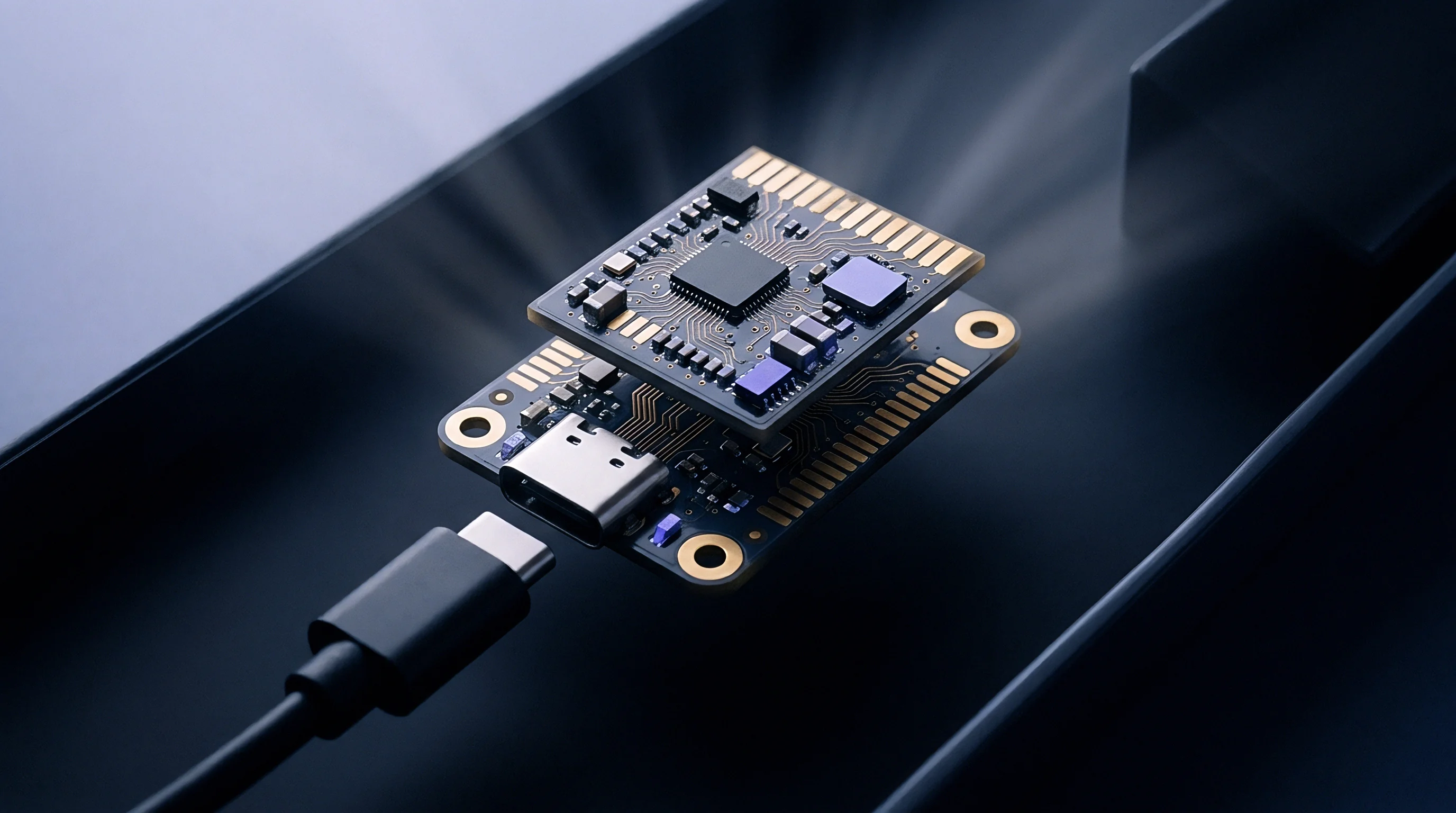
Regulatory Domain Tables and Nonvolatile Factory Storage
Modern wireless chipsets store geographic power boundaries in nonvolatile memory as regulatory tables or board configuration data. Chip vendors compile these tables into binary blobs burned into one-time programmable memory, dedicated electrical erasable read-only memory, or secure physical partitions of flash arrays. The regulatory table matches operating channels, channel bandwidths, modulation coding schemes, and country identification codes against maximum allowable baseband gain and analog front-end attenuation values.
If an original equipment manufacturer selects an incorrect board configuration file during manufacturing provisioning, the device radiates power levels misaligned with the intended destination market.
Securing these register locations against post-sale modification remains an explicit precondition for equipment authorization. The Federal Communications Commission establishes clear guidance under KDB 594280 D01 and D02 for software configuration control. Software must actively prevent unauthorized regional selection, frequency configuration, or power level overrides by end users or third-party operating systems.
If an open-source operating system or an administrative configuration utility allows a consumer to change the regulatory country code or elevate conducted power beyond certified thresholds, the device falls outside compliance boundaries.
Factory production lines write regulatory flags and calibration offsets during final functional test routines. Board-level component variations across power amplifier stages, matching networks, and trace layouts necessitate individual calibration passes. Automated test equipment measures radiated or conducted output, calculates difference vectors against target golden units, and commits trim parameters directly to device flash memory.
When supply chain disruption forces component substitutions within radio front-end circuitry, the previously validated power trim algorithms fail. A substituted balun or surface acoustic wave filter exhibiting 0.8 dB higher passband insertion loss may tempt firmware developers to bump power indices upward, unaware that this adjustment invalidates the modular declaration of conformity and triggers supplementary evaluation requirements.
| Destination Market | Statutory Authority | Harmonized Standard | Conducted Power Ceiling | Radiated Limit (EIRP) | Software Locking Clause |
|---|---|---|---|---|---|
| United States | FCC Part 15 Subpart C / E | ANSI C63.10-2013 | 1000 mW (Band Dependent) | 4000 mW (Point-to-Multipoint) | KDB 594280 D02 Section II |
| European Union | RED 2014/53/EU | ETSI EN 300 328 V2.2.2 | No Separate Conducted Limit | 100 mW (2.4 GHz DTS/FHSS) | RED Article 3.3(i) Compliance |
| China | MIIT SRRC | MIIT Notice No. 129 (2021) | 500 mW (2.4 GHz Band) | 2000 mW (2.4 GHz EIRP) | SRRC Technical Notice Article 4 |
| Japan | MIC Radio Law | MIC Ordinance No. 88 Annex 43 | 10 mW/MHz (Occupied Bandwidth) | 12.14 dBm/MHz (Standard Antenna) | MIC Technical Regulations Article 49 |
| South Korea | MSIT RRA | KS X 3123 Standard | 10 mW/MHz (Spectral Density) | 200 mW Total Radiation | RRA Software Control Notice 2020-7 |
The technical parameters compiled within regulatory binary files govern dynamic channel behavior alongside steady-state power ceilings. In the 5 GHz spectrum, Dynamic Frequency Selection requirements enforced by FCC Part 15.407 and ETSI EN 301 893 stipulate specific radar detection thresholds pegged to transmit power levels. Devices transmitting at equivalent isotropically radiated powers between 200 mW and 1000 mW must maintain radar detection sensitivity down to minus 64 dBm.
If an integrated system reduces radiated power below 200 mW via host power management profiles, the mandatory radar detection threshold shifts to minus 62 dBm.
Failing to recalibrate software detection algorithms alongside output power drops causes the receiver to misclassify ambient radio noise as weather radar sweeps, inducing unnecessary channel vacations. Conversely, allowing power to drift upward past nominal configuration thresholds without adjusting radar sensitivity values creates non-compliant operation during regulatory spot checks. Traceable software architectures lock radar threshold registers directly to power index registers, preventing configuration decoupling across international firmware builds.
Regulatory authorities retain legal power to inspect software locking architectures during post-market surveillance. Under European Union RED Article 3.3(i), radio equipment must support features ensuring that software can only be loaded where the compliance of the combination of the radio equipment and software has been demonstrated. If a customs inspection or market surveillance authority alters regulatory country codes through a standard debugging port or terminal command, product batches face immediate administrative impoundment.
Relying on physical board access to protect register settings fails in practice when test laboratories routinely uncover exposed serial headers that permit direct configuration writes.


Attenuation

Absorption Rate Mitigation and Simultaneous Transmission Rules
Mechanical enclosures reshape radio performance entirely. Placing an approved modular transmitter inside a portable host chassis transforms the exposure profile, bringing radiating structures into immediate proximity with human tissue. Specific absorption rate limits mandate severe power cutbacks once spacing drops below twenty millimeters.
In the United States, Title 47 CFR Part 2.1093 sets an exposure ceiling of 1.6 W/kg averaged over one gram of tissue. The European Union and the International Electrotechnical Commission apply a limit of 2.0 W/kg averaged across ten grams under IEC/IEEE 62209-1528. A radio operating cleanly at 23 dBm inside a free-space laboratory environment frequently demands reduction to 12 dBm or lower to pass absorption compliance when held next to the body.
Where human proximity sensors drop conducted radio gain to pass SAR checks, the platform must prove that fail-safe state machines drop power upon sensor disconnection.
Achieving regulatory compliance across portable form factors relies on dynamic proximity sensing algorithms. Hardware designers integrate capacitive copper pads, infrared time-of-flight sensors, or physical orientation switches to detect body proximity. Sensor interrupts trigger firmware hooks that switch transmit power tables within milliseconds, stepping down baseband gain and radio frequency front-end drive levels.
The real integration challenge appears inside the test chamber during specific absorption rate evaluation: laboratories do not simply measure the device at its lowest power state, but validate the dynamic trigger transition curves.
Under FCC KDB 616217 D04, capacitive proximity sensor implementations require detailed engineering validation before test results become acceptable for authorization. The measurement procedure maps trigger distances through millimeter-level approach and retreat vectors along all device axes.
- Capacitive proximity sensor triggers establish physical detection boundaries across spatial approach vectors, demanding verification through three-axis stepped mechanical jigs at one-millimeter increments.
- Look-up table power steps dictate precise attenuation values applied across specific modulation profiles, preventing thermal run-away while maintaining minimum connection stability.
- Sensor fallback fail-safe routines force the radio controller into its lowest certified power index immediately if communication between the host central processor and the proximity sensor is interrupted.
- Simultaneous transmission back-off logic calculates aggregate multi-band electromagnetic exposure ratios, cutting Wi-Fi power whenever cellular modems initiate high-duty-cycle transmission.
Simultaneous transmission creates intricate power allocation constraints. When a host incorporates a 5G New Radio data module, a Wi-Fi 6E transceiver, and a Bluetooth low-energy link within one enclosure, electromagnetic fields superimpose. The FCC evaluates exposure compliance using the Total Exposure Ratio or aggregate SAR summation methods.
If the sum of fractional ratios across active transmitters exceeds 1.0, the platform breaches regulatory thresholds. Firmware must apply dynamic inter-radio back-off protocols. When the cellular modem ramps up conducted power to 24 dBm to reach a distant base station, an internal coexistence interface commands the Wi-Fi transceiver to throttle conducted output from 18 dBm down to 9 dBm.
The regulatory bottleneck centers on auditability. Modular grants for off-the-shelf transceivers rarely describe host-implemented dynamic multi-radio attenuation algorithms. If a modular grant does not explicitly list dynamic power reduction via sensor control, the host integrator cannot rely on simple modular integration procedures.
The platform owner must file an FCC Class II Permissive Change under Part 2.1043, submitting physical SAR test reports along with comprehensive descriptions of the software proximity algorithms, sensor schematics, and factory calibration protocols. European Union compliance similarly demands a revised technical file under RED Article 3.1(a), documenting health and safety assessments via an updated Risk Assessment dossier and revised Declaration of Conformity.
Failing to document dynamic software back-off mechanisms leaves the technical file incomplete, exposing the importer to market bans under regional product safety regulations.


Filing

Permissive Change Mechanics and Grant Scope Boundaries
Host integration structures fall into clear legal categories that dictate testing requirements and laboratory fees. Procuring an approved modular radio provides no universal exemption from electromagnetic compatibility, radio frequency exposure, and spurious emission requirements. The original grant issued by a Telecommunication Certification Body in the United States or a Registered Certification Body in Japan defines the absolute operating boundary: antenna types, peak antenna gains, frequency spans, and maximum conducted power values.
If an engineering team adopts a trace layout, an antenna design, or a software power ceiling misaligned with those grant conditions, the host platform loses legal authorization.
Altering power through software generates specific filing pathways under the Federal Communications Commission framework. If power levels remain strictly lower than the granted maximum across all operating modes, and no physical hardware modifications occur on the radio module, the integration may qualify for documentation via an internal engineering change record. This path assumes no SAR-mandated power back-off routines are active.
However, when software power reduction is implemented deliberately to pass SAR evaluation within a host enclosure, an engineering memo is legally insufficient. The host manufacturer must execute a Class II Permissive Change to add the specific host platform, its custom antenna, and its dynamic power allocation software parameters to the original equipment authorization dossier.
| Modification Parameter | United States (FCC) | European Union (RED) | Japan (MIC) | China (SRRC) |
|---|---|---|---|---|
| Static Software Power Lowering | Host Evaluation Record / No Filing | Technical Dossier Update | No Filing (Internal Log) | Record Modification Filing |
| SAR-Mandated Dynamic Power Back-off | Class II Permissive Change Required | Notified Body Opinion Recommended | Technical File Re-examination | Full System Retest at Accredited Lab |
| Antenna Gain Exceeding Original Grant | Class II Permissive Change Required | Updated RED Radio Assessment | New Category Certification Filing | Complete Re-application Process |
| Software Interface Change for Power | Software Configuration Authorization | Software Integrity Risk Assessment | Construction Type Re-evaluation | Type Approval Certificate Revision |
The European Union treats power modifications through a self-declaration structure backed by post-market liability. Under Directive 2014/53/EU, the manufacturer assumes complete legal responsibility for radio performance through the Declaration of Conformity. Harmonized standards such as ETSI EN 300 328 impose stringent limits on transmitter unwanted emissions in the spurious domain (minus 30 dBm over 1 GHz to 12.75 GHz for operating states).
When software lowers baseband drive power, the radio frequency power amplifier transitions into non-linear operational zones, altering the relationship between carrier output and intermodulation products.
Operating a transceiver at reduced power can degrade the margin against spurious emission limits due to changes in power amplifier bias states. An assumption that lower power automatically increases compliance headroom fails when non-linear effects emerge within the amplifier. If bench verification confirms elevated harmonic emission spikes after applying power step-down profiles, the technical documentation must contain full sweep traces proving margins remain compliant across the entire operating range.
In Asian certification systems, modular grant flexibility is significantly more restrictive. China’s State Radio Regulatory Commission does not recognize modular derivative filings for devices with altered operational power characteristics. Changing the output power configuration from the registered module specification requires a full host-level certification filing at a recognized Chinese laboratory.
This process requires importing physical host prototypes under customs clearance quotas and submitting the device to state laboratories for complete conducted and radiated testing. Sourcing professionals budgeting for modular access often discover that a three-week paperwork exercise becomes an eighteen-week laboratory queue with testing fees exceeding twenty-five thousand dollars.
Accepting a module certificate without the underlying test report detailing its configured power table leaves an integrator with an unverified paper trail.

Allocation
Worked Power Budget Optimization for Multi-Market Deployments
Designing a single hardware platform for global shipment requires optimizing software power allocation across diverse regulatory frameworks. Consider a dual-band Wi-Fi 6 (802.11ax) IoT gateway deployed inside an industrial plastic housing, operating across the 2.4 GHz band (Channels 1 to 11, 2412 to 2462 MHz) and 5 GHz UNII bands. The industrial host integrates a dipole antenna array exhibiting peak gains of 3.2 dBi in the 2.4 GHz spectrum and 4.8 dBi in the 5 GHz band.
The supply chain demands a single worldwide stock-keeping unit with localized radio properties governed purely by software configuration during factory provisioning or over-the-air deployment.
To evaluate regulatory margins, an engineering team calculates the maximum permissible conducted power level for each market, factoring in antenna gain and statutory radiated limits. The target markets are the United States (FCC Part 15), the European Union (ETSI), Japan (MIC), and China (SRRC). In the 2.4 GHz band, ETSI EN 300 328 caps EIRP at 20.0 dBm (100 mW).
With an antenna gain of 3.2 dBi, the maximum allowable conducted power delivered to the antenna terminal is 16.8 dBm (20.0 dBm minus 3.2 dBi). For FCC Part 15.247, the statutory conducted limit is 30.0 dBm (1000 mW), but out-of-band band edge compliance on Channels 1 and 11 typically forces substantial power reduction.
Band edge restrictions under FCC rules govern the operating envelope. Channel 11 sits adjacent to the restricted band spanning 2483.5 MHz to 2500.0 MHz defined in Title 47 CFR Part 15.205. The radiated field strength in this restricted zone cannot exceed 54 dB microvolts per meter at three meters (equivalent to an EIRP of minus 41.2 dBm).
Operating at the nominal 16.8 dBm conducted power permitted by European standards on Channel 11 will violate this FCC band edge limit due to spectral regrowth and sideband emissions inherent to wideband digital modulations.
Measurements on an automated turntable show that suppressing band edge emissions to meet Part 15.205 requires throttling conducted power on Channel 11 to 11.5 dBm when transmitting an 802.11ax 40 MHz channel format. The international firmware table must reconcile these conflicting constraints.
| Operating Channel | Channel Center | FCC Limit (USA) | ETSI Limit (EU) | SRRC Limit (China) | MIC Limit (Japan) | Unified SKU Target |
|---|---|---|---|---|---|---|
| Channel 1 (20 MHz) | 2412 MHz | 13.0 dBm | 16.8 dBm | 16.8 dBm | 16.8 dBm | 13.0 dBm |
| Channel 6 (20 MHz) | 2437 MHz | 19.5 dBm | 16.8 dBm | 16.8 dBm | 16.8 dBm | 16.8 dBm |
| Channel 11 (20 MHz) | 2462 MHz | 12.0 dBm | 16.8 dBm | 16.8 dBm | 16.8 dBm | 12.0 dBm |
| Channel 11 (40 MHz) | 2462 MHz | 11.5 dBm | 16.8 dBm | 16.8 dBm | 16.8 dBm | 11.5 dBm |
| Channel 36 (80 MHz) | 5180 MHz | 17.0 dBm | 18.2 dBm | 15.2 dBm | 15.2 dBm | 15.2 dBm |
| Channel 149 (80 MHz) | 5745 MHz | 21.0 dBm | 19.2 dBm | 18.0 dBm | Disabled | 18.0 dBm |
The table reveals the cost of hardware unification. If the procurement strategy enforces a single global software image lacking dynamic geographic awareness, the device must transmit at the lowest common denominator across all operating channels. Under this static model, Channel 11 is locked to 11.5 dBm worldwide, forfeiting more than 5 dB of link margin throughout European deployments where 16.8 dBm is legally permissible.
This 5 dB reduction cuts effective indoor operational coverage by nearly forty percent, degrading system reliability.
Developing dynamically managed firmware containing discrete regulatory domain profiles recovers that performance. The host platform queries its operational context via cryptographically signed provisioning files, mobile country codes from co-located cellular hardware, or fixed manufacturing serial sequences. When the software confirms location within the European Union, it unlocks the higher 16.8 dBm limit on Channel 11.
When deployed within North America, the software restricts transmission to 11.5 dBm. If an unknown or unverified location state occurs, the software must drop back to the safest minimum profile.
The engineering time required to build, test, and document this geographic allocation engine expands development schedules by six to ten weeks. However, it preserves radio link performance while preventing international regulatory non-compliance.
The unresolved engineering dispute centers on whether automated geographic determination using cellular base station data satisfies the strict anti-tampering provisions of every regional regulatory body without secondary hardware locking.


Qualification

Laboratory Test Configuration and Turntable Realities
Verifying software-defined power allocation requires rigorous chamber testing across operating modes. Accredited test facilities evaluate radio compliance using specialized automation software that sweeps power, frequency, and rotational geometry. The device sits on a turntable inside a semi-anechoic or fully anechoic chamber, surrounded by calibrated antennas connected to spectrum analyzers and receiver test assets.
A comprehensive test plan for software-controlled transceivers must evaluate performance across minimum, nominal, and maximum power configurations.
Chamber engineers do not simply take stated firmware power levels at face value. Measurements verify conducted power at the radio frequency connector using wideband average power sensors before positioning the unit inside the anechoic chamber. If the firmware commands 14.0 dBm but calibration drift delivers 15.5 dBm, the error cascades into radiated scans.
The turntable then rotates through 360 degrees while the measurement antenna mast cycles between one and four meters in elevation to detect peak field strength and harmonic spikes. These tests repeat across horizontal and vertical antenna polarizations.
- Connect the device under test to an automated radio communication analyzer via conducted coaxial links to verify firmware power index stability across all modulation schemes.
- Install the production antenna array and seat the assembled device on the chamber turntable, establishing baseline link states via non-intrusive signaling protocols.
- Execute automated radiated spurious emission sweeps up to the tenth harmonic while continuously commanding the internal software through maximum, nominal, and proximity-throttled power states.
- Subject dynamic proximity sensors to controlled dielectric phantom exposure, capturing oscilloscope traces of power step-down response latencies to confirm compliance with regulatory exposure envelopes.
Chamber scan time carries substantial capital cost. Standard commercial laboratory rates range from two thousand to three thousand five hundred dollars per eight-hour shift. Evaluating a dual-band platform with dynamic software power control across three orthogonal axes requires four to six consecutive shifts.
If an uncalibrated firmware release produces excessive harmonics on channel edges, the scan halts. Debugging an errant power table register on a test laptop while chamber time ticks away rapidly erodes development margins.
When the platform fails harmonic scans due to power amplifier saturation, engineering teams often attempt rapid software attenuation tweaks. Dialing down conducted power by 1.5 dB may drop a third-harmonic emission below the regulatory limit line, but it alters the operational envelope established in prior tests. Every software adjustment made during chamber qualification invalidates earlier data sets, requiring complete re-scans of occupied bandwidth, channel power, and specific absorption rate.
Maintaining rigorous firmware version control during laboratory qualification prevents expensive re-testing cycles.
Submitting an unverified beta firmware build to a commercial laboratory creates substantial schedule slippage when unexpected power register states force full re-scans.


Traceability

Can Over-The-Air Firmware Updates Invalidate Global Certifications?
Modern connected devices rely on continuous over-the-air firmware updates to introduce features, address vulnerabilities, and enhance operational efficiency. In radio frequency platforms, these updates frequently alter operational drivers, baseband algorithms, and power management profiles. Sourcing and compliance teams must recognize that software changes carry the same regulatory weight as physical component swaps.
Updating software power controls without validating regional limits can invalidate market authorizations and trigger administrative penalties.
Regulatory authorities actively monitor over-the-air modifications. The United States Federal Communications Commission established explicit rules under Docket No. 13-49 addressing Software Defined Radios and equipment authorization. Under Title 47 CFR Part 2.944, any radio whose transmitter output characteristics can be altered via software must implement security measures preventing unauthorized software changes.
If an over-the-air update inadvertently increases power on a channel bounded by a restricted band, the device transmits in violation of statutory parameters. The update transforms compliant field hardware into unauthorized intentional radiators.
Every over-the-air update package must embed signed hashes validating that updated radio firmware preserves regional power restrictions identical to the certified baseline.
Supply chain contracts must clearly define compliance liabilities between hardware vendors, software development teams, and commercial brand holders. Module procurement agreements must include provisions addressing firmware maintenance and regulatory domain stability. A standard purchase order clause should stipulate that the vendor warrants radio firmware integrity across all distributed software revisions.
The clause must require the supplier to maintain cryptographically signed firmware images, notify the buyer ninety days before distributing updates that alter radio parameters, and cover laboratory re-evaluation costs if a software update breaches granted regulatory limits.
Without explicit contractual protections, buyers assume liability when downstream software updates degrade regulatory compliance. Customs authorities and market surveillance inspectors hold the commercial brand owner accountable, not the software contractor who pushed the update. Implementing continuous compliance monitoring across the software pipeline provides the only reliable defense against regulatory drift.
Failing to implement cryptographic signature verification across the distribution chain permits third parties to flash unauthorized firmware, voiding equipment authorizations and exposing the platform importer to regulatory enforcement action.