Meaning
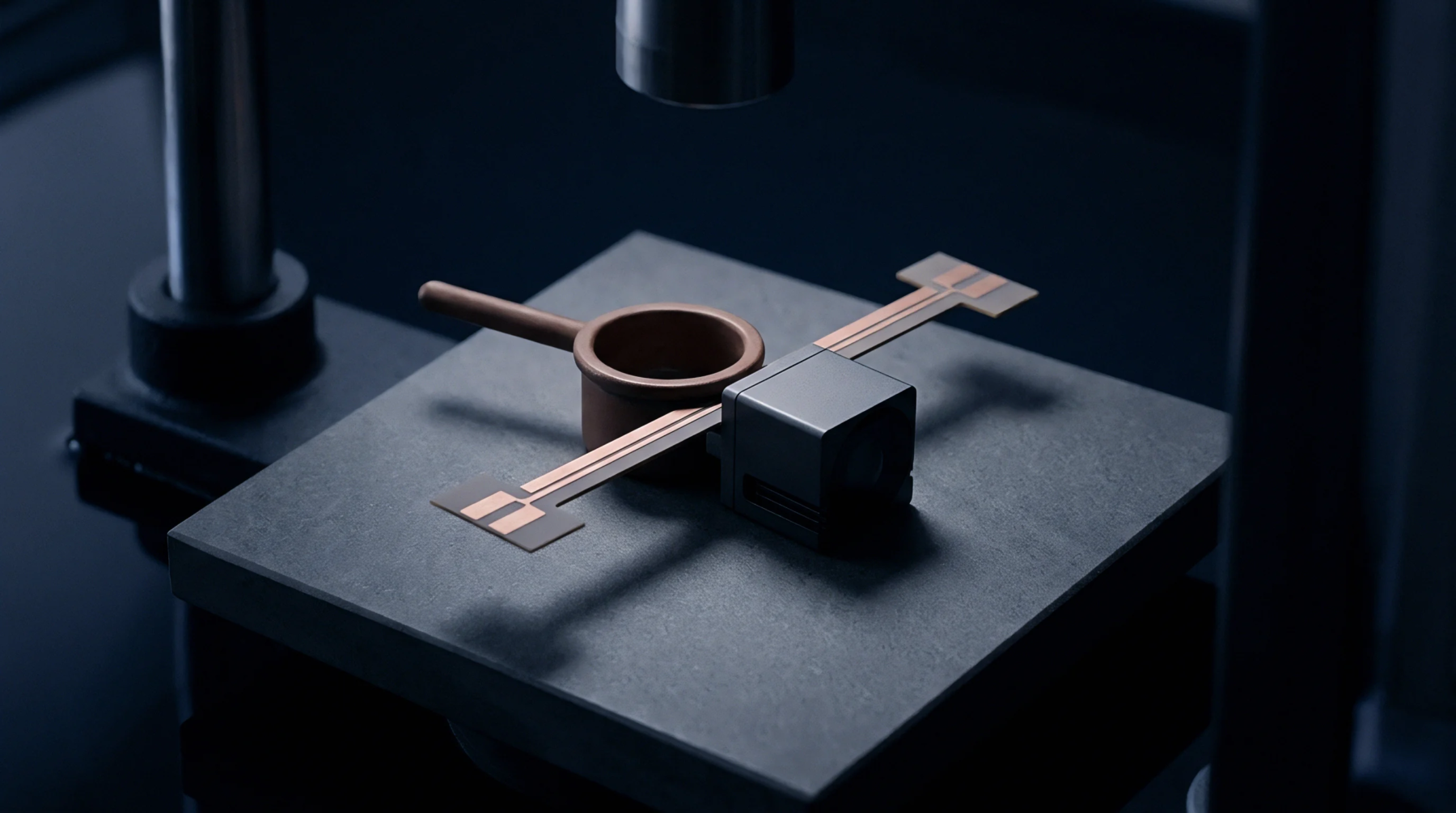
High precision assembly fixtures require dimensional stability to maintain the correct positioning of optical and radio frequency modules during thermal cycling tests. The invar tooling frame provides this stability due to the extremely low coefficient of thermal expansion of the nickel iron alloy used in its construction. This metal maintains its physical dimensions across a wide operating temperature range, preventing false failures during environmental testing of assembled wireless devices.
It holds the reference sensor array in a fixed spatial relationship relative to the device under test.
Thermal Stabilization
An alloy composed of approximately thirty six percent nickel and sixty four percent iron undergoes specific heat treatment to minimize internal stresses before machining. The resulting invar tooling frame exhibits a thermal expansion coefficient of less than two parts per million per Kelvin. This value remains constant through repeated transitions between minus forty and plus eighty five degrees Celsius.
Assembly tooling made of standard aluminum or steel would distort the positional readings, leading to incorrect validation of the device antenna array alignment.
Structural Support
Mechanical rigidity ensures that the delicate circuit board assemblies are not subjected to bending moments during the enclosure fastening step. Heavy tooling plates support the pneumatic clamps that secure the housing components in place. This rigidity prevents the transmission of external vibration from the factory floor to the sensitive microelectronic components.
Calibration Reference
The frame incorporates pre drilled mounting locations for photogrammetric reference targets. Technicians measure these fixed positions with a laser tracker during weekly quality audits to confirm that the fixture has not suffered mechanical deformation. This measurement step is recorded in the manufacturing equipment logbook to satisfy the qualification requirements of the buyer.