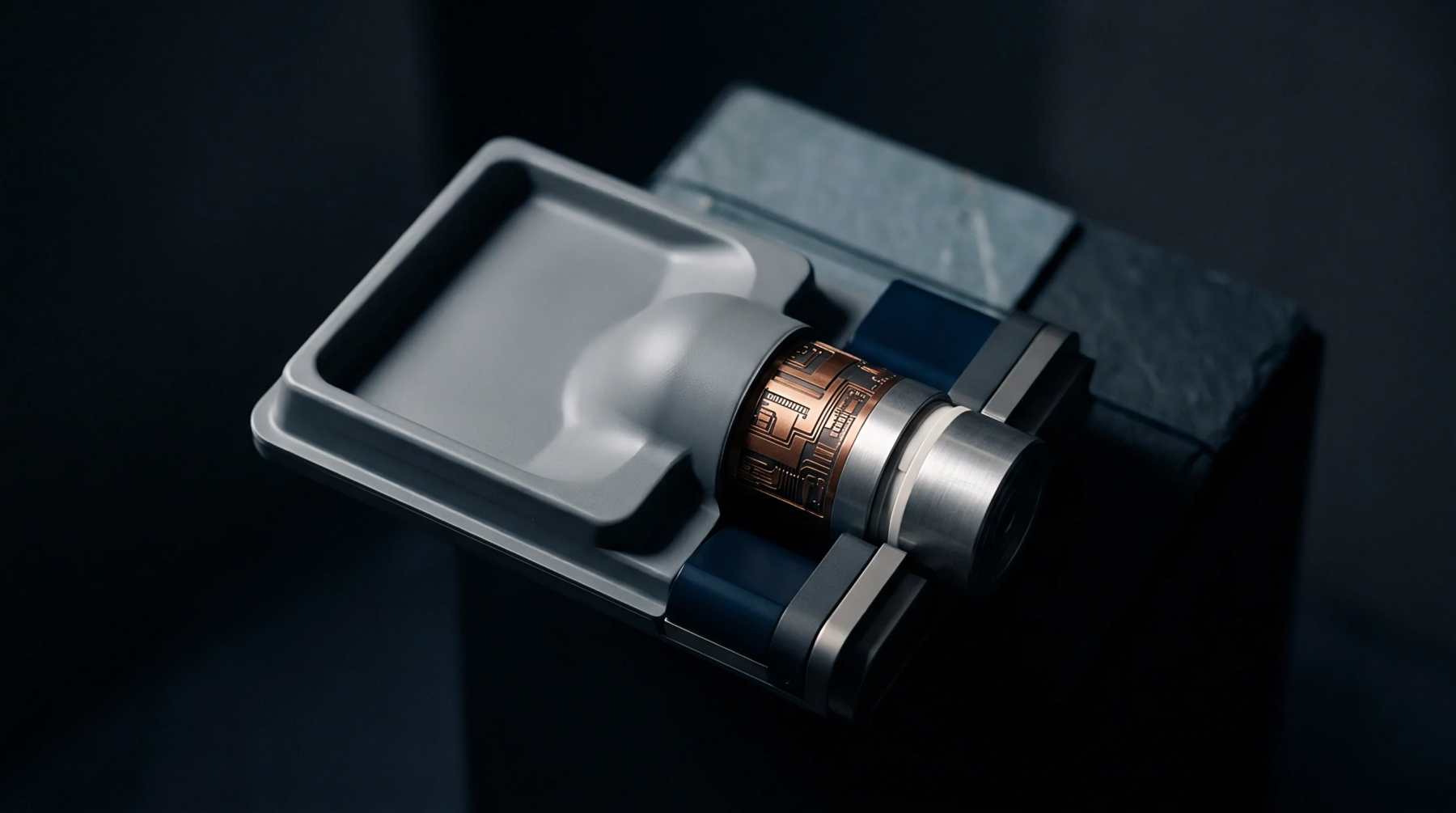
Electromagnetic Absorption Characteristics of Conductive Polymer Composites
Conductive polymer composite absorption depends on balancing complex permittivity and skin depth to eliminate surface reflection and satisfy radiated emission limits.
Radio frequency compliance verification requires an official national validation before hardware enters local distribution networks. The kc certification mark serves as the mandatory statutory validation for telecommunication equipment entering South Korean markets. South Korean regulatory authorities demand this specific conformity evidence for any intentional radiator operating within defined frequency bands.
The assessment process verifies that transmitter output power, spurious emissions, and receiver blocking characteristics meet national statutory limits. Hardware compliance stops at the border of domestic commercial distribution, meaning foreign manufactured assemblies require local testing agency involvement before receiving the label. Testing laboratories evaluate physical radio modules against designated technical regulations published by national authorities.
Manufacturers submit engineering samples to accredited domestic testing facilities for comprehensive radio frequency evaluations. Laboratories measure harmonic radiation, frequency stability under thermal stress, and modulation accuracy using calibrated spectrum analyzers. Engineers verify that internal shielding prevents unwanted electromagnetic coupling between adjacent digital processors and transceiver circuits.
Technical documentation files must include complete schematics, bill of materials, and block diagrams detailing every RF stage. National authorities review test reports to confirm that device parameters remain within legal transmission limits. Successful evaluation concludes with the issuance of a conformity certificate permitting the physical application of the regulatory label onto the product enclosure.
Physical placement of the conformity symbol on the product casing demands careful coordination during mechanical design phases. Enclosure tooling must reserve sufficient flat surface area near the serial number label for legible laser etching or permanent silk screening. Radio module integrators face strict legal boundaries when incorporating pre-certified transmitters into larger host systems.
Host manufacturers verify that combined system emissions do not exceed original module certification limits during simultaneous multi-band operation. Antenna placement inside the final chassis requires spatial separation from power supply switching components to prevent radiated susceptibility failures. Factory production lines apply the symbol only after final assembly testing confirms identical build quality to the submitted engineering sample.
Procurement teams verify conformity documentation before issuing purchase orders for volume component shipments destined for Asian markets. Component distributors maintain valid certification certificates for every production lot to satisfy customs clearance inspections at destination ports. Factory audits conducted by national authorities ensure that manufacturing quality systems maintain continuous compliance during mass production runs.
Component substitutions require formal engineering change requests to prevent unauthorized hardware alterations from invalidating the original compliance status. Unverified design modifications trigger immediate cancellation of distribution rights and force expensive product recalls from retail channels. Market surveillance inspectors routinely purchase retail samples for random laboratory retesting to enforce ongoing adherence to national transmission standards.
Conductive polymer composite absorption depends on balancing complex permittivity and skin depth to eliminate surface reflection and satisfy radiated emission limits.
Expertise is a utility, not a secret. sentiention™ publishes its working knowledge as open reference: intelligence layer covering the materials it sources, the markets it enters, and the reference that serves both.