Meaning
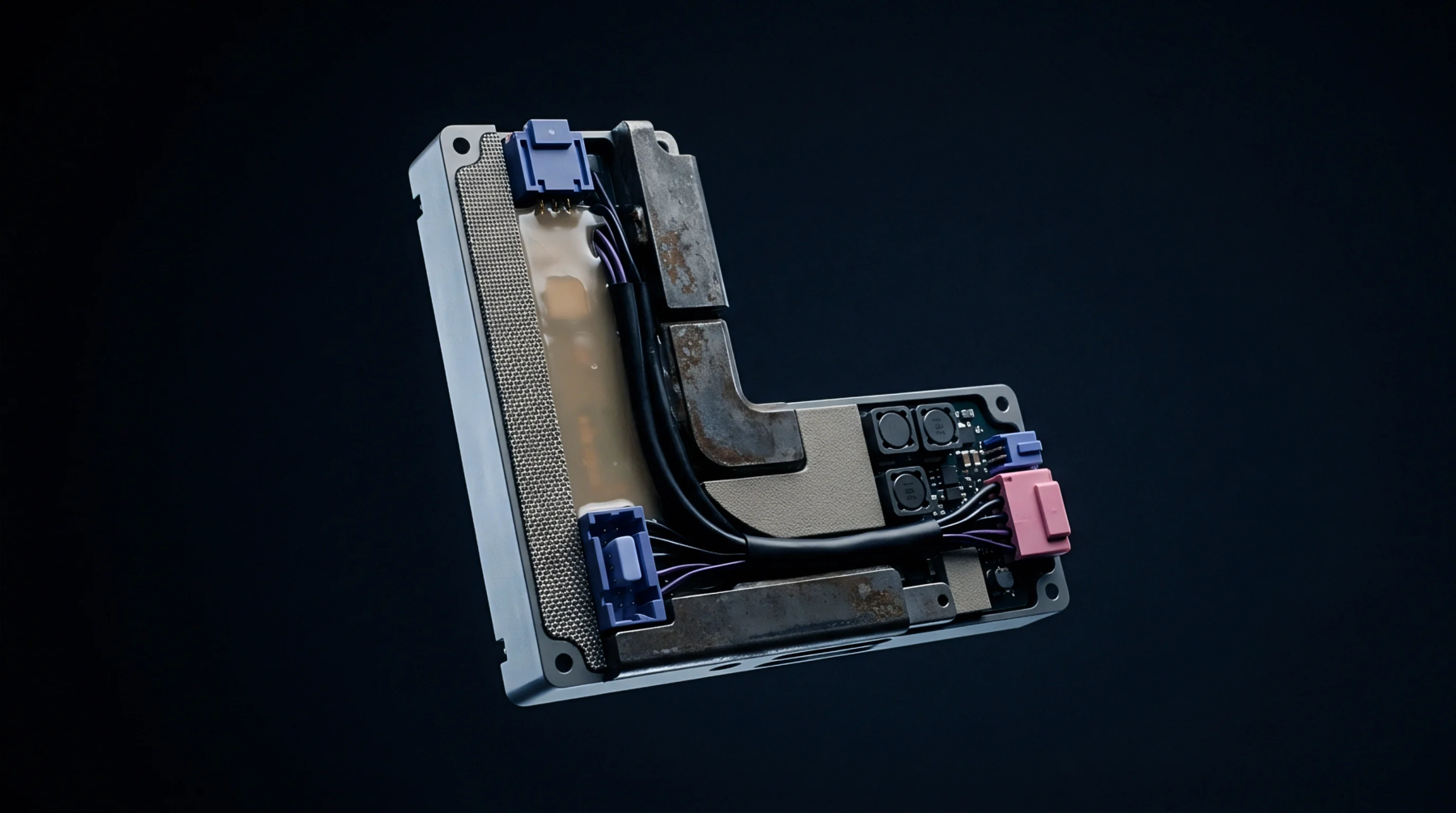
Flexible composite substrate material attenuates electromagnetic wave energy within high-frequency electronic enclosures by converting incident field power into localized thermal dissipation through magnetic and dielectric loss mechanisms. Placed between noise-generating microprocessors, radio frequency shields, and antenna cavities, a lossy absorber sheet suppresses cavity resonances, edge radiation, and board-level cross-coupling across compact smart devices. The component governs spatial energy attenuation within near-field and far-field regimes from hundreds of megahertz up to millimeter-wave bands.
Its function stops at the point of thermal dissipation limits or when shielding can be achieved entirely through continuous conductive ground planes.
Material Composition
Elastomeric binders filled with magnetic flake alloys or carbonyl iron particles establish high imaginary permeability values across targeted frequency decades. The structural composition of a lossy absorber sheet balances mechanical flexibility with electromagnetic absorption efficiency, allowing die-cut shapes to adhere to metallic shields or inner plastic housings via pressure-sensitive adhesive backings. Carbon-loaded variants emphasize dielectric loss tangents to suppress higher gigahertz resonances without relying on heavy ferromagnetic fillers.
Thickness profiles range from fractions of a millimeter to several millimeters depending on the operational wavelength and available enclosure clearances.
Cavity Damping
Metallic shielding cans placed over power amplifiers and system-on-chip modules frequently create resonant cavities that amplify parasitic oscillations and degrade receiver sensitivity. Affixing a lossy absorber sheet to the internal ceiling of the shield suppresses circulating surface currents and dampens internal quality factors without shorting surface components. Signal integrity across adjacent high-speed trace lines stabilizes as radiant coupling drops below noise thresholds.
Thermal conductivity within the sheet assists in drawing heat from hot dies toward the shielding lid, preventing localized hotspots under sustained compute loads.
Enclosure Integration
Integration verification occurs during radiated spurious emission testing within anechoic chambers to confirm compliance with regulatory limits. Incorporating a lossy absorber sheet into device housings attenuates stray electromagnetic leakage around display ribbon cables and enclosure seams, protecting nearby integrated antennas from desensitization. Assembly drawings designate precise positional tolerances and surface preparation guidelines to ensure stable adhesion over extended product operational lifecycles.
Mechanical compression tests verify that the elastomeric sheet retains its thickness and damping performance under long-term mechanical clamping within tightly sealed environmental enclosures.