Meaning
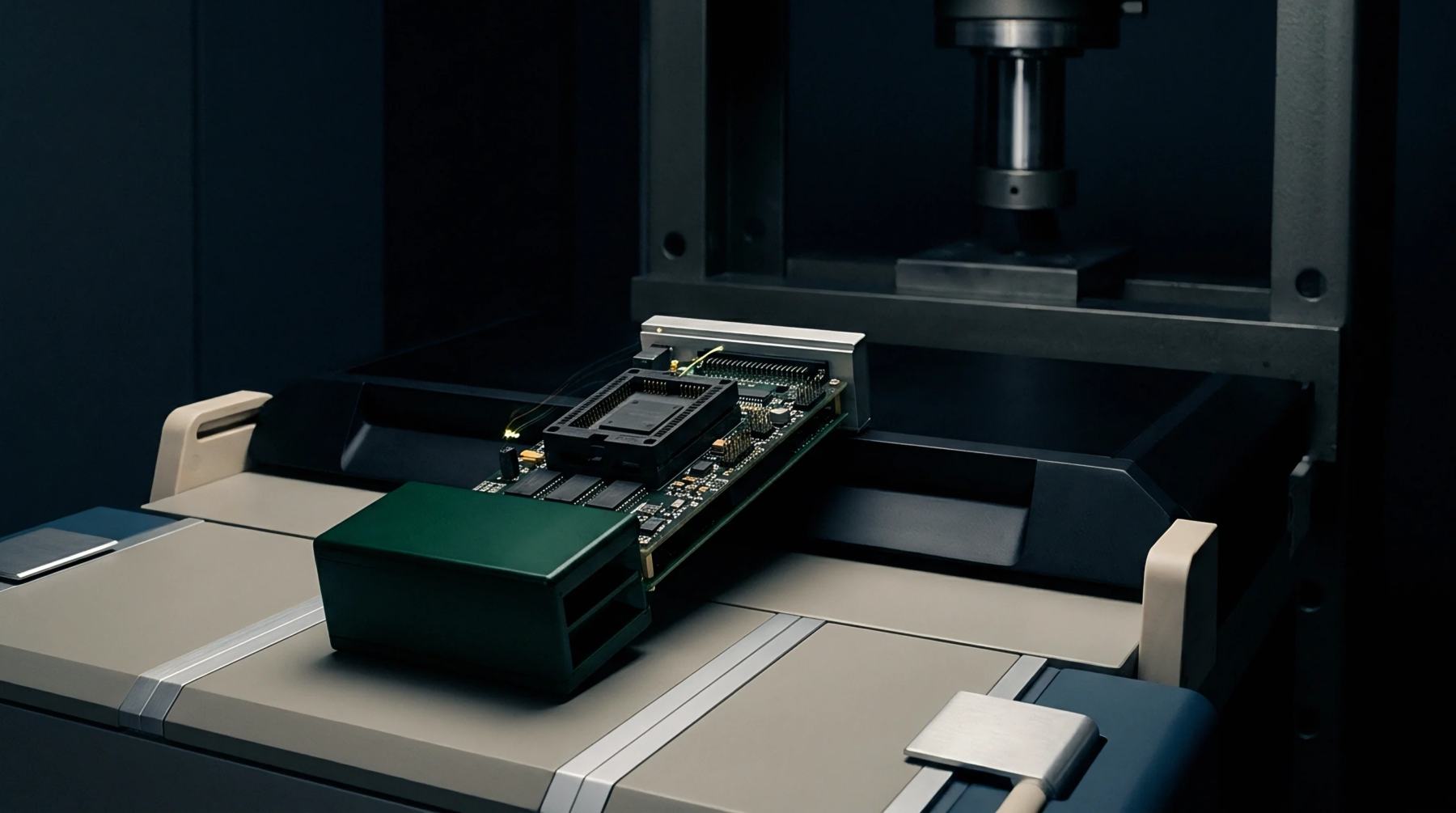
A hardware interface module provides a high-density, modular connection point for routing multiple signal types between test instrumentation and a target device. The mass interconnect receiver sits at the physical boundary of a test system to accept a mating fixture loaded with contact probes. This component facilitates rapid changeovers in automated test environments by grouping radio frequency, power, and digital input lines into a single, lockable engagement mechanism.
Mechanical Constraint
Thermal expansion across the contact field introduces alignment drift between the pins and their corresponding pads. Precision guides on the frame keep the two halves of the assembly centered during the locking sequence to prevent pin deformation. Rigid mounting prevents vibration from causing intermittent signal loss during high-speed data acquisition cycles.
Signal Integrity
High-frequency signal paths require controlled impedance to minimize reflections throughout the transition zone. Shielding internal to the receiver housing isolates crosstalk between sensitive analog lines and noisy power delivery circuits. Short trace lengths minimize insertion loss while maintaining the necessary ground plane continuity required for signal validation.
Operational Lifecycle
Validation protocols define the maintenance cycle based on the number of full engagement and disengagement operations. Periodic cleaning of the contact surfaces preserves the electrical performance of the assembly against oxidation or particulate accumulation. Frequent testing of the spring force on individual contacts confirms that the mechanical engagement force remains within specified tolerance limits for reliable operation over time.