Meaning
Advanced antenna architecture utilizes multiple small radiators and electronic phase shifters to direct radio energy without moving parts. A millimeter wave phased array operates in the high frequency bands between 24 and 100 gigahertz where small wavelengths allow for many elements to fit within a compact footprint.
Spatial Multiplexing
Miniaturization of the radio frequency front end allows the integration of the power amplifiers and phase shifters directly onto the antenna substrate. In a millimeter wave phased array, the spacing between elements is usually half a wavelength, which at 28 gigahertz is approximately 5 millimeters. This extreme density requires advanced thermal management and low loss materials to prevent signal degradation and overheating.
Surface mount technology enables the assembly of these arrays on standard multi layer printed circuit boards.
Integration Density
Electronic control of the signal phase at each radiator allows the system to change its radiation pattern in microseconds. By utilizing a millimeter wave phased array, a system can form multiple beams simultaneously to support high throughput communication for several users. This agility is a core requirement for 5G mobile networks and high speed satellite links.
Control algorithms manage the beamforming weights to maximize the signal to noise ratio.
Performance Validation
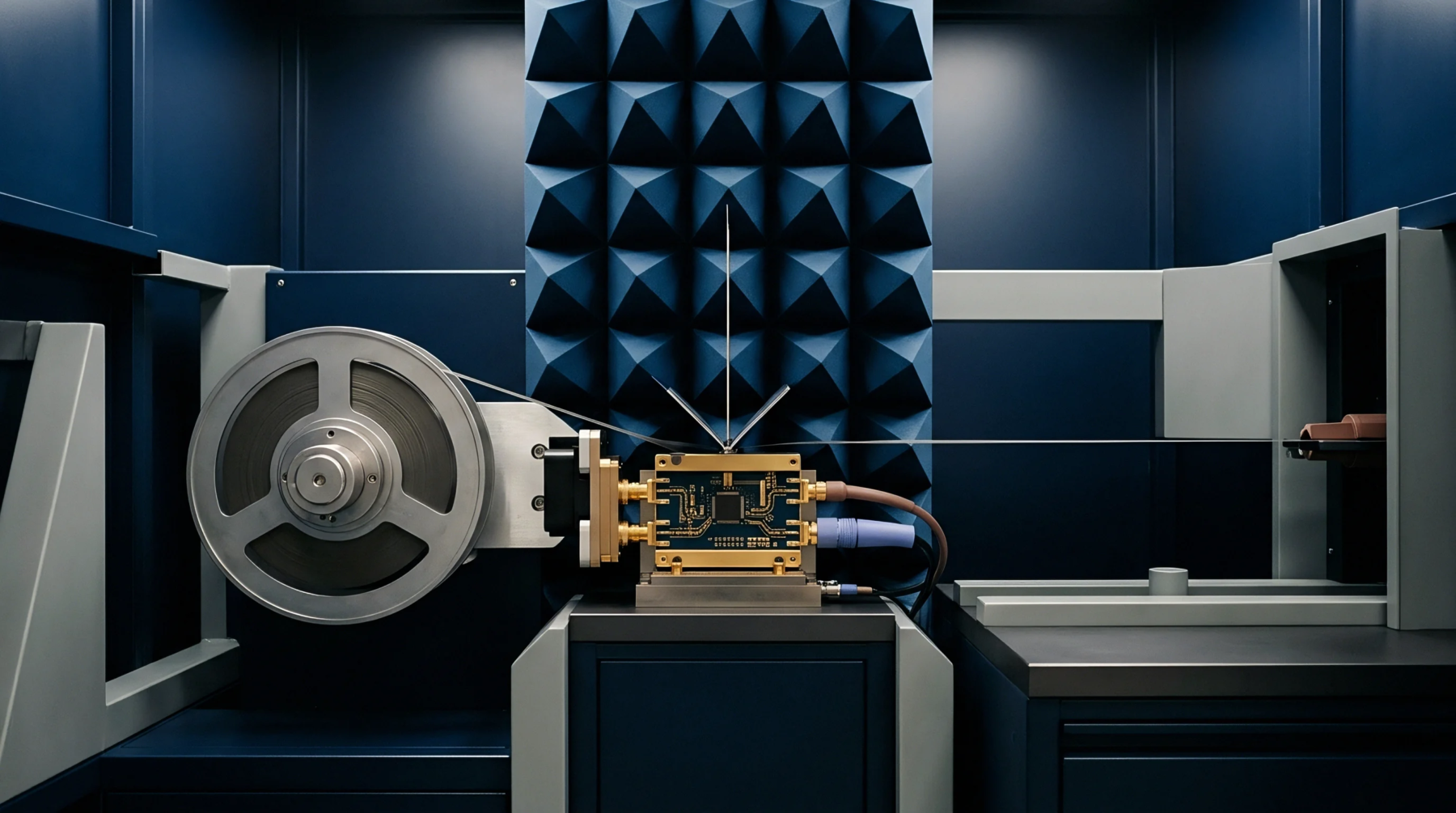
Evaluation of these systems requires specialized chambers because the traditional conducted test ports are often unavailable due to the high level of integration. Engineers measure the millimeter wave phased array performance using far field or near field scanning to characterize the beam shape and steering accuracy. Total radiated power and equivalent isotropically radiated power are the primary metrics used for regulatory approval.
These tests verify that the array maintains its gain and side lobe levels across the entire operating bandwidth.