Meaning
An electrochemical energy storage device designed for single-use discharge where chemical reactions are not electrically reversible defines a primary battery. In connected product integration, non-rechargeable cells provide high volumetric energy density, negligible internal leakage, and multi-year operational life for devices without access to utility grid power or energy harvesting sources. Standard chemistries include lithium thionyl chloride, lithium manganese dioxide, and zinc-air, each exhibiting distinct open-circuit potentials, operating temperature envelopes, and passivating surface dynamics.
The component governs the autonomous lifetime of remote asset trackers, environmental loggers, smart utility meters, and medical telemetry tags. Its role stops applying when an application requires internal energy replenishment, where secondary rechargeable cells like lithium-ion take over despite higher maintenance overheads.
Chemical Reaction Dynamics
Discharge occurs through the spontaneous transfer of electrons from an active metallic anode across an internal separator to a cathode material through an electrolyte solution. Once the active chemicals convert into their discharge products, the cell potential collapses completely and the internal structure cannot be recovered by applying reverse electrical currents. Attempting to charge a primary battery generates internal pressure, gas evolution, and thermal runaway that risks rupturing the protective seal.
Lithium thionyl chloride cells feature a lithium metal anode and a liquid cathode absorbed in high-surface-area carbon, yielding energy densities exceeding four hundred watt-hours per kilogram. This chemistry exhibits an initial voltage delay caused by a passive lithium chloride film that forms on the anode, requiring depassivation techniques when high current pulses are demanded.
Passivation Layer Management
Passivation protects the internal lithium metal from self-consuming when idling across years of deployment, keeping shelf degradation beneath one percent annually. This insulating layer introduces significant transient resistance during sudden transitions from microampere sleep modes to multi-ampere radio transmissions. When an active wireless modem turns on, this internal resistance causes a steep cell voltage drop that can trip the microcontroller supply monitor, causing unexpected processor reboots.
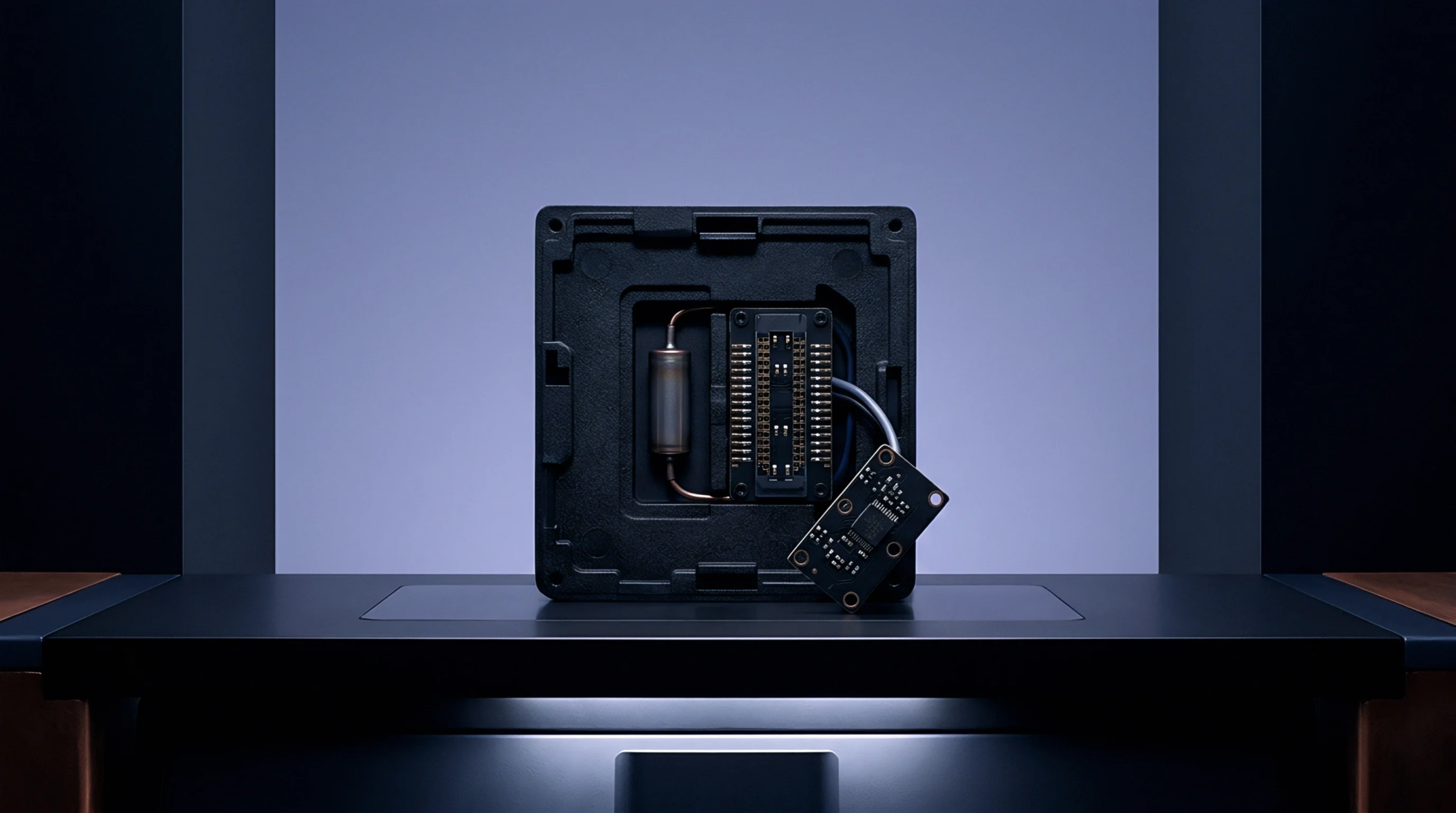
Hardware designers resolve this issue by placing hybrid layer capacitors or large tantalum storage banks across the primary battery terminals. These passive capacitors supply peak RF transmit bursts, while the primary cell trickle-charges the auxiliary bank during long quiescent periods.
Mechanical Enclosure Seal
Primary cell integration requires physical accommodations for chemical outgassing, mechanical shock, and moisture exclusion within the host housing. Hermetic glass-to-metal seals prevent electrolyte venting over decade-long deployments, but environmental thermal cycling induces stresses across welded battery tabs and contact springs. Battery clips introduce contact resistance variations over time, leading many industrial IoT integrators to specify permanent laser-welded axial pins soldered into the printed circuit board.
Device enclosures must avoid complete airtight potting around chemistries that generate trace reaction gases, providing burst-disc vents or localized expansion voids. The selected primary battery assembly determines the physical dimensions, operating thermal limits, and service intervals documented in the product warranty specification.