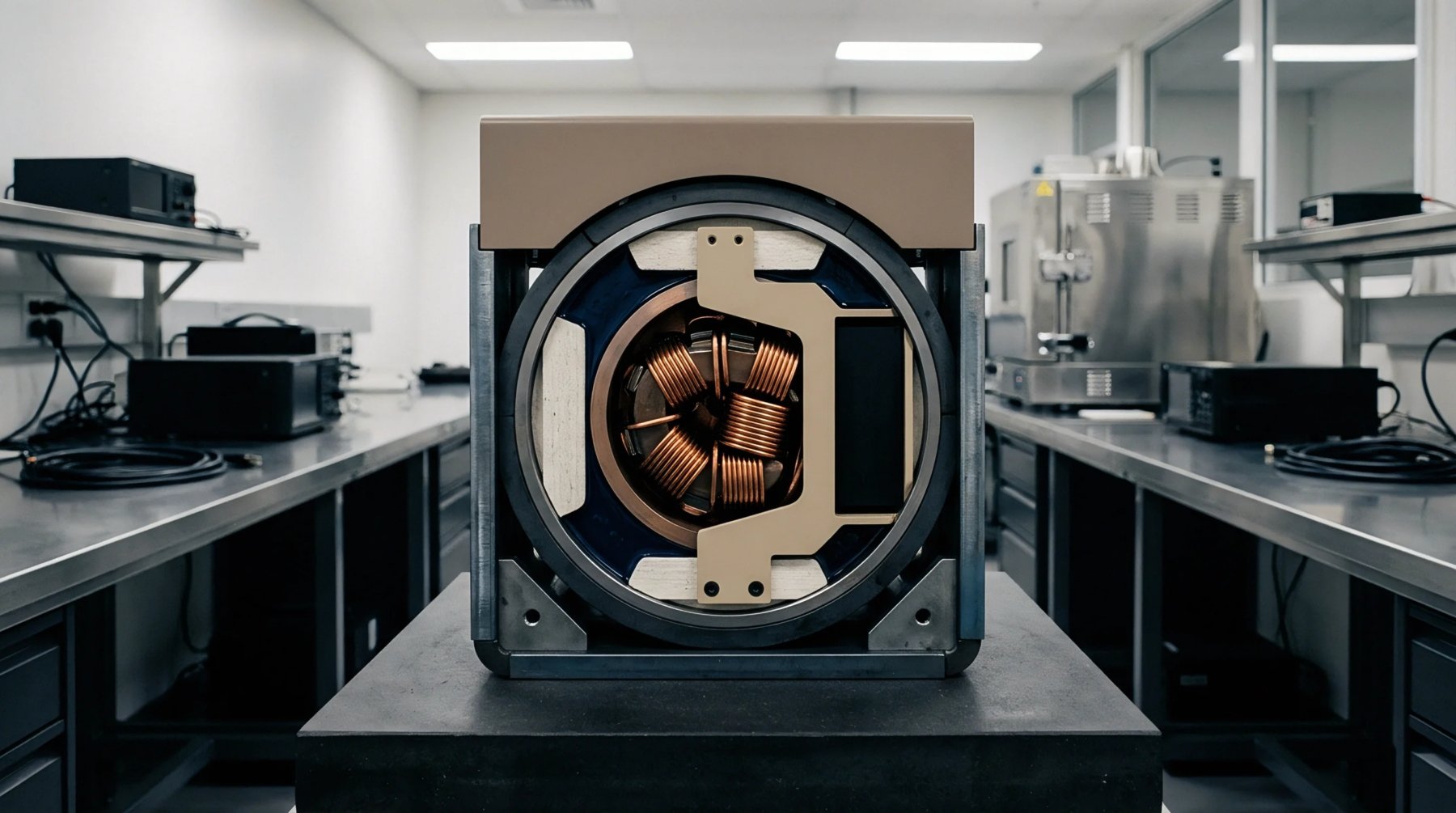
Host Level Radiated Spurious Emission Pre Scan Chamber Verification Protocol
Host level pre scan verification systematically isolates host radiated spurious noise before accredited certification testing to prevent market entry delays.
An electromagnetic verification protocol establishes the spatial boundaries within which wireless hardware maintains functional integrity while operating near high sensitivity radio equipment. quiet zone qualification defines the specific geographic coordinates or signal attenuation thresholds where external interference sources fall below the noise floor of a receiving antenna array. Measurements dictate the perimeter beyond which active emitters must cease operation to protect sensitive reception. Validation activities rely upon site survey data to map existing field strengths against the required sensitivity levels of the target system.
Certification procedures verify that the designated area avoids transient electromagnetic pollution generated by local infrastructure or transit nodes. These protocols apply exclusively to stationary sites where signal detection demands absolute environmental stability and do not extend to mobile platforms or temporary communication hubs.
Technicians deploy broadband spectrum analyzers across the intended site to construct a detailed heat map of ambient radio activity. quiet zone qualification demands that field measurements undergo comparison with baseline sensitivity parameters defined during the initial hardware design phase. Engineers identify every source of unwanted radiation through systematic site sweeps while the equipment under test remains powered down to differentiate background interference from actual operational noise. Analysis of these signals determines if the ambient environment satisfies the necessary isolation requirements for high fidelity data reception.
Documentation from this survey forms the technical basis for regulatory filings that prevent future encroaching installations from degrading the site performance. Persistent monitoring of this zone ensures that secondary environmental changes do not violate the initial site integrity status.
Assessment of the link margin involves calculating the difference between the incoming signal power and the interference threshold established by the hardware sensitivity level. quiet zone qualification ensures this margin remains positive even during peak periods of external noise floor elevation. Factors such as multipath reflections off nearby structures influence the signal budget and require careful attenuation strategies to mitigate degradation. Accurate modelling of the signal propagation characteristics allows for the determination of exact buffer distances between the antenna location and potential industrial or commercial sources of noise.
Effective management of this budget determines the operational reliability of radio astronomy or high accuracy satellite tracking facilities.
Final acceptance of a site requires the reconciliation of measured noise floors with the specific tolerance limits of the installed receiver hardware. quiet zone qualification acts as the definitive hurdle for commissioning radio systems before full scale production data collection commences. Compliance indicates that the hardware maintains its specified signal to noise ratio without needing active filtering or software suppression of incoming data streams. Successful certification proves the electromagnetic compatibility of the installation relative to its wider urban or rural environment.
Proper site certification provides the requisite assurance that the installed hardware delivers consistent data quality regardless of external radio interference levels.
Host level pre scan verification systematically isolates host radiated spurious noise before accredited certification testing to prevent market entry delays.
Expertise is a utility, not a secret. sentiention™ publishes its working knowledge as open reference: intelligence layer covering the materials it sources, the markets it enters, and the reference that serves both.