Meaning
Receiver performance measurements evaluate the ability of a complete, assembled wireless device to detect and decode weak incoming radio signals from its integrated antenna. This radiated sensitivity takes into account the performance of both the antenna and the receiver circuitry, as well as any internal electrical interference. It is measured in a specialized test environment and does not rely on direct cable connections.
Chamber Measurement
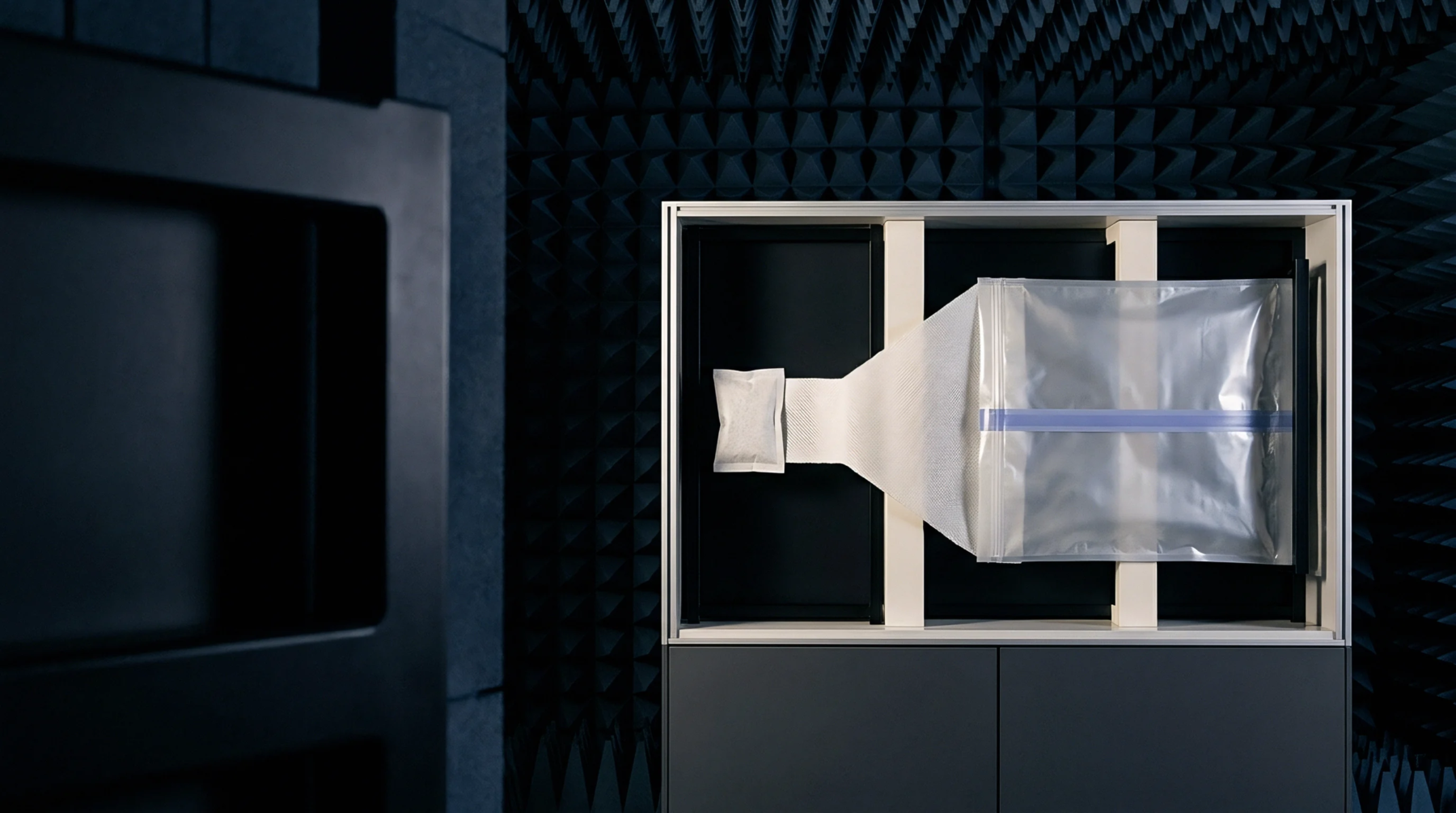
Testing must be conducted inside an anechoic chamber to shield the device from external radio signals and reflections. The device is placed on a rotating table, and the receiver sensitivity is measured from multiple angles to create a complete three-dimensional performance map. This ensures that the device can receive signals regardless of its orientation.
Noise Coupling
Electromagnetic interference from the device’s own internal processor or display can couple into the antenna and degrade receiver performance. Identifying and shielding these internal noise sources is a major challenge during the design phase. Even a tiny amount of coupled noise can severely reduce the effective range of the device.
Product Acceptance
Mobile network operators require devices to meet specific sensitivity targets before they can be certified for use on their networks. This testing ensures that the device will provide a reliable connection even at the edge of the coverage area. It is a key requirement for product launch.