Meaning
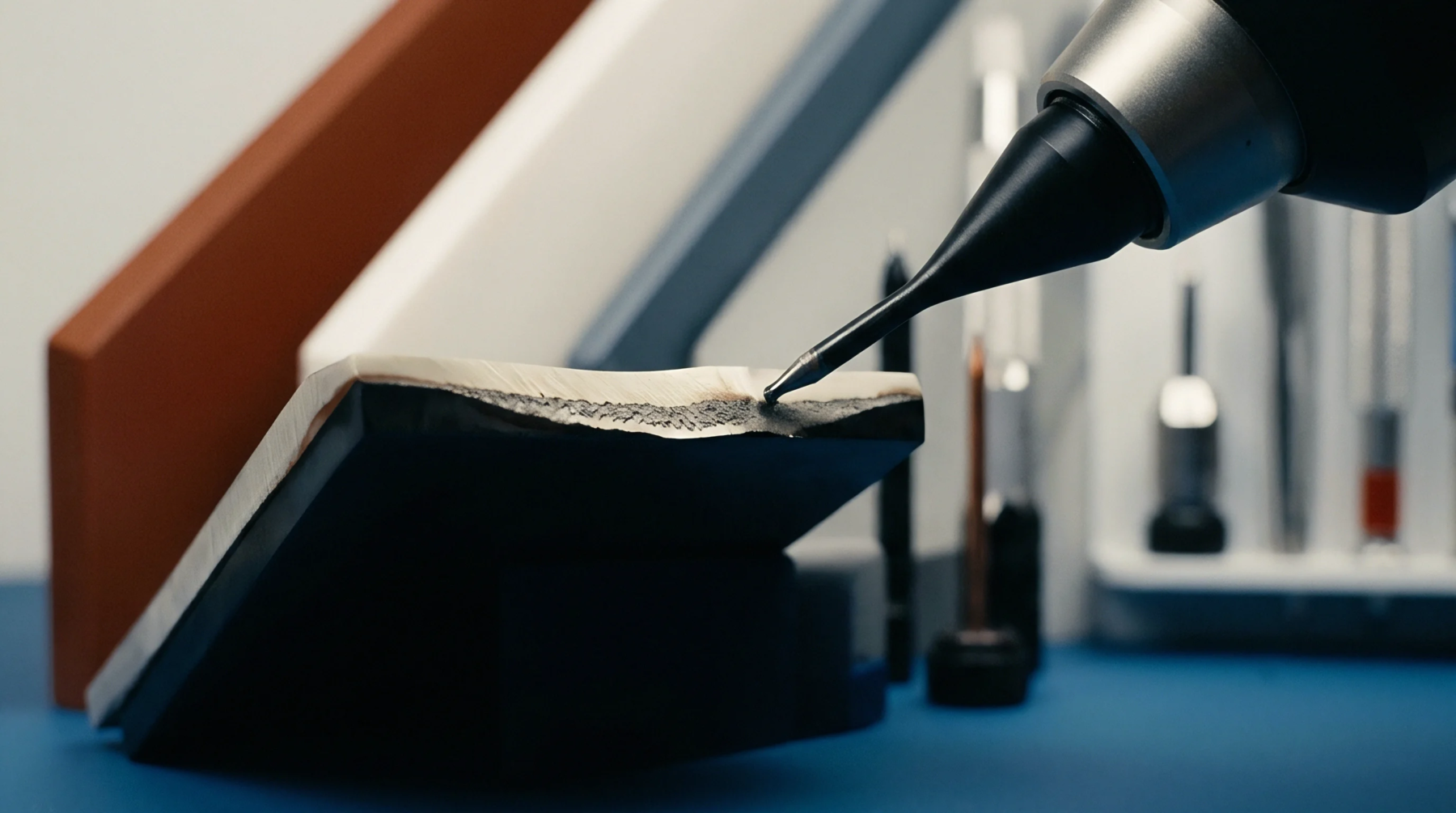
A non-destructive analytical method uses ultrashort pulses of electromagnetic radiation in the terahertz range to probe the properties of a material. This terahertz time-domain spectroscopy measures the changes in the electric field of the pulse as it passes through or reflects off a sample. It provides simultaneous information about the refractive index and the absorption coefficient of the substance across the far-infrared spectrum.
Signal Generation
Femtosecond lasers excite a photoconductive antenna or a non-linear crystal to produce the broadband terahertz pulses required for the measurement. This signal generation is the first step in the terahertz time-domain spectroscopy process.
Material Analysis
The interaction between the radiation and the molecular vibrations of the sample creates a unique spectral signature. This material analysis uses terahertz time-domain spectroscopy to detect hidden defects in composite enclosures or to identify chemical residues inside sealed packages. Unlike x-rays, these waves are non-ionizing and can safely penetrate plastic, paper, glass and ceramic materials.
The system captures the time-of-flight information to calculate the thickness of individual layers in a multi-component structure. This capability makes it an effective tool for quality control in the production of high-frequency radomes and electronic housings.
Signal Processing
Fourier transform algorithms convert the recorded time-domain waveform into a frequency-domain spectrum for detailed study. This signal processing allows the terahertz time-domain spectroscopy to resolve fine details in the dielectric response of the sample.