Meaning
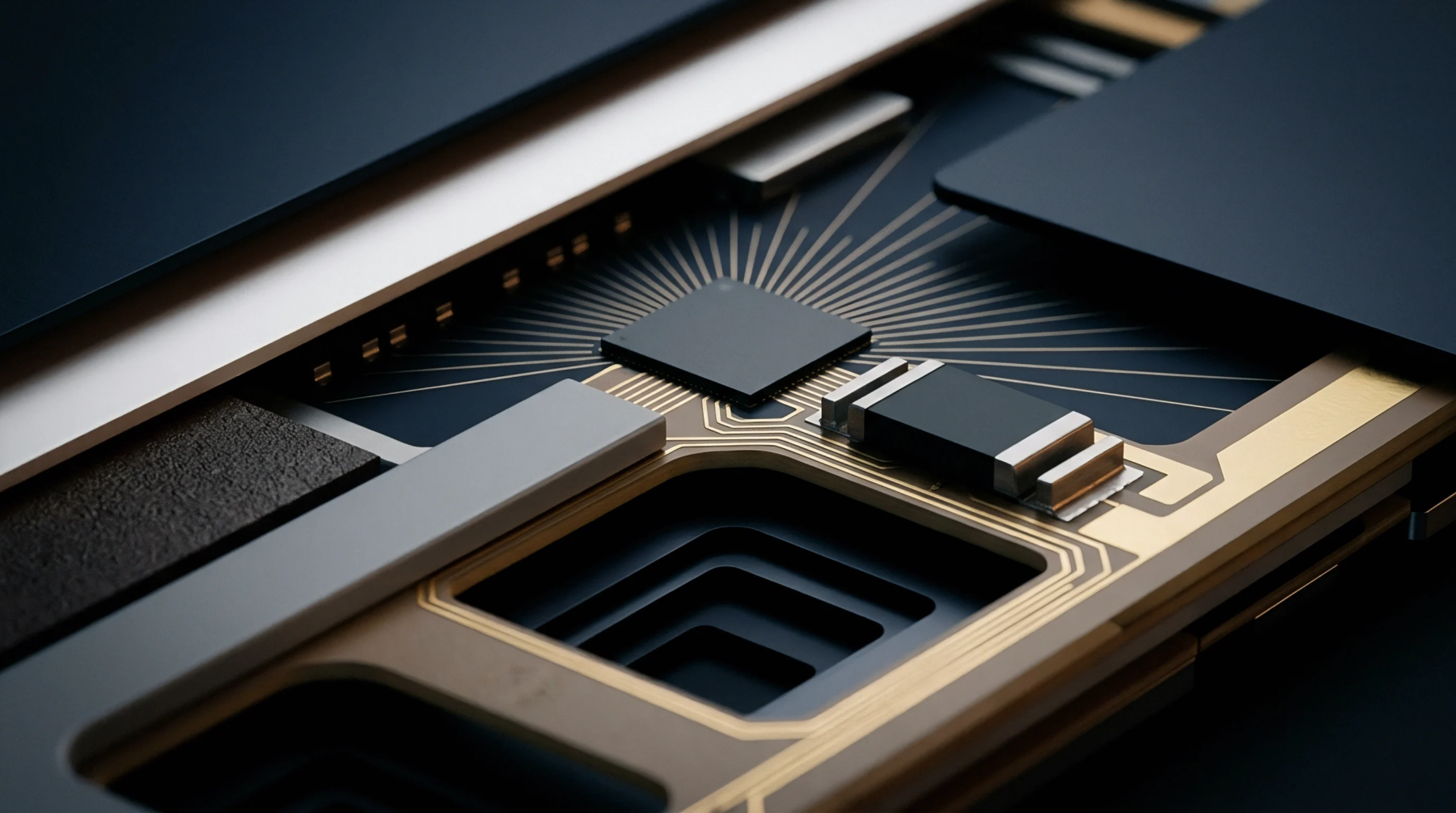
Electronic assembly created by depositing conductive, resistive or insulating pastes onto a ceramic substrate using a screen-printing process. A thick film microcircuit provides high reliability in harsh environments where standard printed circuit boards might fail. This technology is frequently used for power modules and sensor interfaces in automotive systems.
Manufacturing Process
Pastes are applied through a fine mesh and then fired in a high-temperature kiln to bond the layers to the substrate. In a thick film microcircuit, the resistors can be trimmed using a laser to achieve very precise electrical values. This capability eliminates the need for manual calibration of the finished device.
Thermal Management
Ceramic bases like alumina conduct heat away from active components much more effectively than fiberglass materials. A thick film microcircuit is ideal for high-power applications that generate significant waste heat. Direct mounting of bare silicon chips further improves the thermal path to the external heat sink.
By reducing the operating temperature of the internal transistors, the design extends the mean time between failures for the entire system.
Mechanical Durability
Sturdy bonds between the fired layers and the substrate resist the effects of vibration and thermal cycling. The thick film microcircuit remains stable over thousands of operation hours in demanding industrial settings. Protective coatings are often added to prevent corrosion from moisture or chemicals.