FRAM Non-Volatile Phase Register Calibration across Multi-Year Duty Cycle Aggregation Window Boundaries
Non-volatile phase registers preserve duty-cycle tracking across multi-year aggregation windows to prevent regulatory violations during brownouts.

Boundary
Tracking high-power radio transmissions over multi-year deployments creates calibration discrepancies once non-volatile accumulators begin logging partial fractions of duty-cycle windows. Under ETSI EN 300 220-1 sub-band rules or regional utility telemetry frameworks, transmitters face strict percentage-based limits per hour, day, or year. Field devices running on long-term battery installations routinely log transmission time to ferroelectric random-access memory (FRAM) so resets and brownout events do not wipe running totals.
Energy budgets fall apart when non-volatile write routines fail during line-voltage drops. Standard flash requires sector erasures and draws 10 to 30 milliamperes during programming, making on-the-fly logging impractical during transient dips. Instead, industrial microcontrollers couple internal or external ferroelectric storage with 16-bit or 32-bit register arrays dedicated to RF airtime totals.
A 42 milliseconds burst at 14 dBm in the 868 MHz ISM band must be recorded cleanly to respect a regional one percent hourly limit. Discrepancies emerge when an aggregation epoch rolls over during active link maintenance.
Industrial telemetry tracking demands non-volatile accumulation updates within 150 nanoseconds to prevent regulatory non-compliance during sudden supply rail collapse.
Ferroelectric cells retain data through crystalline polarization states rather than charge trapped on a floating gate. Switching between positive and negative remnant polarization permits byte-level updates in tens of nanoseconds at microampere current levels. Enforcing multi-year limits requires rolling tiny, fractional bursts into long time horizons.
When an aggregation window closes during an open transmission, the handover logic must carry fractional remainder ticks across the non-volatile registers. Without proper phase calibration, that rounding error compounds across operational cycles.
Uncalibrated aggregation engines overflow or drop remainder counts during leap-interval corrections, pushing radios outside regulatory envelopes.

Decay
Repeated domain switching eventually fatigues the lead zirconate titanate crystal lattice. While high-density flash cells fail around 100,000 cycles, ferroelectric film configurations sustain 10 to the 14th power read-write operations at room temperature. That budget shrinks drastically once hardware encounters sustained heat outdoors.
Elevated junction temperatures accelerate imprint mechanisms, wherein internal spatial charge displacement locks the dipoles into a preferred orientation.
Imprint alters the coercive field needed to reverse remnant polarization. If an endpoint writes fractional airtime every few seconds, the least significant bits of the phase register toggle hundreds of millions of times per year. This uneven activity across specific accumulation bytes degrades the physical cells at different rates.
Across a five-to-ten-year outdoor meter deployment, an uncompensated byte register is prone to read-disturb errors during low-voltage brownout recovery.
| Operating Temperature | Switching Endurance Cycles | Polarization Retention Span | Read Disturb Sensitivity |
|---|---|---|---|
| 25 Degrees Celsius | 1.00e14 | 100 Years | Nominal |
| 55 Degrees Celsius | 1.00e13 | 20 Years | Low |
| 85 Degrees Celsius | 1.00e12 | 10 Years | Moderate |
| 105 Degrees Celsius | 1.00e11 | 3 Years | Elevated |
Domain relaxation also cuts into write-phase synchronization margins. At 85 degrees Celsius, relaxation reduces the readable charge envelope by approximately 15 to 25 percent compared with nominal laboratory conditions. The tracking engine must rotate bits and actively wear-level registers to prevent early failure in high-turnover accumulation bytes.
Splitting phase registers into dual-word shadow structures counteracts raw lattice fatigue. A firmware driver alternates aggregation epochs between reciprocal memory banks, verifying bit parity before invalidating preceding data registers. Static lookup tables provide temperature-dependent timing corrections: as solar loading pushes enclosure interiors past 60 degrees Celsius, write pulse widths adjust from nominal 50-nanosecond windows up to 120 nanoseconds, maintaining stable domain alignment across every multi-byte accumulator block.
Long-term data loss in uncalibrated registers results from thermal acceleration factors rather than baseline silicon flaws.
Drift
Duty-cycle boundary logic depends on real-time clocks driven by tuning-fork quartz crystals, which remain vulnerable to aging and thermal drift. A standard 32.768 kHz tuning fork crystal exhibits a parabolic frequency-temperature curve with a turnover point near 25 degrees Celsius and a thermal coefficient close to negative 0.035 parts per million per degree squared. Across an industrial envelope of negative 40 to positive 85 degrees Celsius, uncompensated crystals accumulate timing offsets exceeding 150 parts per million, generating roughly 13 seconds of operational variance per day.
Aggregate transmission caps set across 24-hour or one-year sliding windows depend on clean time synchronization. If a field radio miscalculates the physical boundary of an accumulation bucket, transmissions assigned to a depleted historical epoch bleed into a fresh aggregation window. The radio firmware then risks transmitting at full power during what local telemetry servers flag as an over-allocated period.
Continuous calibration requires tracking the fractional remainder between raw crystal oscillator pulses and formal regulatory windows.
Uncompensated crystal turnover curves introduce timing offsets exceeding 78 minutes per year across harsh environmental swings.
External cellular network synchronization or GPS time stamps allow embedded devices to true their internal time standards during active listening intervals. An NB-IoT or LTE-M tracker receives 3GPP network time markers during periodic Tracking Area Update routines, providing millisecond-accurate absolute references. LoRaWAN end devices using Class B or Class C operation utilize network beacon timing or DeviceTimeReq messages to align internal timers with global gateway coordinates.
Between these wide-interval synchronization updates, local crystal registers continue drifting away from network-derived reference frames.
Firmware aggregation engines manage time-scale variance by maintaining fractional tick accumulators inside dedicated non-volatile sectors. Rather than relying on simple integer counters, the aggregation engine maintains a fractional accumulator with high sub-microsecond precision. The following failure conditions emerge when crystal drift exceeds phase register compensation limits:
- Window compression skew contracts the logical aggregation period, forcing early transmission throttles that artificially restrict link bandwidth.
- Epoch boundary overlap assigns high-power retransmission bursts to exhausted allocation pools, violating regional telecommunications requirements.
- Fractional remainder truncation discards sub-second ticks during device sleep phases, skewing cumulative duty-cycle arithmetic across multi-year deployments.
- Oscillator aging saturation shifts the native crystal baseline by up to 5 parts per million annually, creating compounding alignment errors without periodic reference recalibration.
Crystal baseline calibration updates must execute without disrupting ongoing non-volatile storage routines. The device tracks instantaneous temperature via on-chip sensors, cross-references factory polynomial correction curves, and adjusts phase increment registers within the ferroelectric accumulator structure. This mathematical truing keeps the local duty-cycle tracking model aligned with external regulatory boundaries.
An improper calibration routine leaves local time counters desynchronized from gateway receivers.
Bench
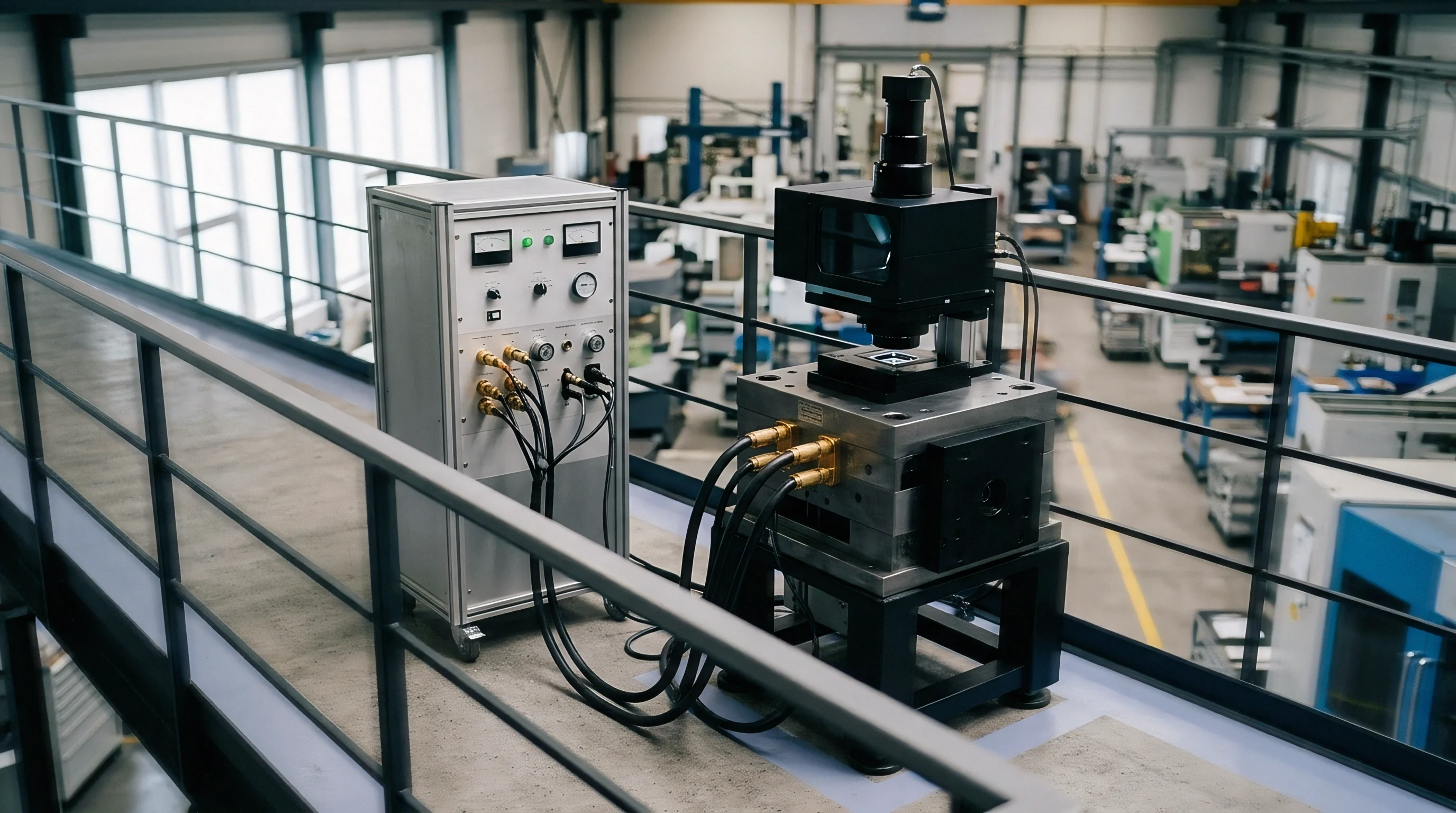
Verifying multi-year airtime tracking requires hardware-in-the-loop test fixtures running under accelerated conditions. The bench setup connects an ultra-low-noise programmable DC power supply to an active telemetry node on an evaluation carrier board, while a high-speed logic analyzer monitors SPI bus traffic between the processor and external memory. Current consumption profiles pass through a precision digital multimeter monitoring power rails down to microampere resolution.
Simulating five calendar years of operational airtime accumulation requires compression algorithms executing through automated bench scripts. The test environment drives high-speed synthetic serial injection commands that simulate millions of transmission triggers within scaled multi-hour run intervals. High-speed oscilloscopes evaluate physical ferroelectric drive waveforms under artificial supply-rail droop scenarios, confirming that register state transitions finalize before operational voltage falls below retention thresholds.
| Test Parameter | Nominal Setting | Stress Limit | Measured Discrepancy |
|---|---|---|---|
| Supply Voltage Stability | 3.3 Volts DC | 1.8 Volts DC | Zero Bit Flips |
| Thermal Chamber Profile | 25 Degrees Celsius | 85 Degrees Celsius | 0.002% Drift |
| SPI Clock Bus Frequency | 8.0 MHz | 24.0 MHz | Zero Bus Drops |
| Synthetic Event Interval | 1000 Milliseconds | 15 Milliseconds | 0.001% Latency |
Validating phase calibration requires intentional brownout interruptions during the active write phase. An arbitrary waveform generator pulls the 3.3-volt rail down to 1.6 volts midway through a multi-byte phase synchronization sequence. The microcontroller must catch the brownout interrupt, finish writing current airtime data via capacitive decoupling reserve, and set non-volatile flag structures.
On subsequent power-up cycles, validation logic confirms that the aggregation state engine reboots without arithmetic divergence or memory corruption.
Extended stress cycles surface corruption patterns that short functional tests never catch. Cycling through 500,000 continuous boundary handoffs exposes numerical quantization artifacts that shift airtime accounting by hundreds of milliseconds. Analyzing these signal traces establishes the operational safety margins required for field firmware.
Data integrity claims often overlook that the qualification setup sustained pristine operating voltages throughout the entire trial.

Arithmetic
Calculating the true airtime footprint requires evaluating packet duration across physical radio parameters. A LoRaWAN transmission running Spreading Factor 7 with a 125 kHz bandwidth and a coding rate of 4/5 over an 868 MHz carrier exhibits an entirely different spectral duration than an industrial proprietary FSK link operating at 50 kbps. The radio system engineer must model exact preamble durations, header overhead, payload bytes, and physical cyclic redundancy check segments down to microsecond intervals.
Consider a sub-GHz metering application operating under ETSI regulations. The device transmits on an 868.0 to 868.6 MHz channel, restricted to a 1.0 percent duty-cycle limit per hour. This limitation allows precisely 36.0 seconds of transmission time across any rolling 3,600-second window.
- Transmit packet payload length totals 48 application bytes plus 13 bytes of protocol framing overhead.
- Physical data rate configuration: LoRa Spreading Factor 8, 125 kHz bandwidth, yielding a chirp duration of 2.048 milliseconds.
- Calculated packet duration equals 164.35 milliseconds per single transmission burst.
- Application transmit frequency: exactly one telemetry packet scheduled every 45 seconds throughout standard operation.
Eighty bursts an hour at 164.35 milliseconds each total 13,148 milliseconds, or 13.148 seconds of total airtime per hour. This profile leaves an airtime budget balance of 22.852 seconds within the 36.0-second ETSI hourly allowance. However, retransmissions, frequency hopping sync sequences, and acknowledgment checks rapidly consume the remaining headroom.
When an aggregation interval concludes, remaining fractions must migrate cleanly into the subsequent time container. The calculation model below illustrates this aggregation handoff structure across extended window boundaries.
| Operational Cycle | Burst Duration | Logged Airtime | Carry-Over Residual |
|---|---|---|---|
| Cycle Index N-1 | 164.35 Milliseconds | 35,880.00 Milliseconds | 120.00 Milliseconds |
| Boundary Event | 0.00 Milliseconds | Window Shift Triggered | 120.00 Milliseconds |
| Cycle Index N | 164.35 Milliseconds | 164.35 Milliseconds | 284.35 Milliseconds |
| Cycle Index N+1 | 164.35 Milliseconds | 328.70 Milliseconds | 448.70 Milliseconds |
Non-volatile phase registers store these numbers as fixed-point integers to prevent floating-point calculation drift within small eight-bit or thirty-two-bit microcontrollers. If the firmware rounds fractional milliseconds to the nearest integer, an operational profile executing 1,000,000 bursts over several years accumulates systematic rounding errors that misrepresent legal duty-cycle standing.
Contract annex specifications determine whether fractional microsecond residues must transfer into adjacent aggregation windows or reset at strict astronomical hour markers.
Protocol
A device’s radio architecture directly dictates its airtime aggregation model. Choosing between cellular IoT technologies, mesh arrangements, or point-to-point sub-GHz networks establishes distinct hardware requirements for non-volatile airtime tracking.
Can Dynamic Airtime Regimes Maintain Regulatory Compliance across Window Boundaries?
Modern radio standards handle spectrum allocations through diverse physical-layer approaches. An NB-IoT (Narrowband IoT) link governed by 3GPP standards delegates duty-cycle compliance to base station scheduling commands. The local cellular base station assigns transmission parameters, eliminating the requirement for manual sub-band tracking by the client device.
However, devices operating in unlicensed bands must implement self-governed tracking hardware to enforce legal constraints autonomously.
LoRaWAN installations demand strict protocol-level enforcement of regional spectrum parameters. In European markets using the 863-870 MHz band, nodes must comply with ETSI limits without carrier management intervention. A LoRa device running firmware without non-volatile memory resets its airtime accumulator upon cycling battery rails, introducing vulnerabilities where deliberate or unintended resets allow spectrum abuse.
Zigbee and Thread modules operating within the worldwide 2.4 GHz ISM band do not face equivalent duty-cycle constraints, but encounter heavy coexistence challenges and interference-driven power adjustments.
Cellular technologies like LTE-M trade deterministic channel occupancy for dynamic carrier-controlled scheduling. Transmission events occur within narrow resource blocks, consuming high peak current pulses between 250 and 500 milliamperes at 3.3 volts. Tracking energy dissipation alongside spectrum usage becomes paramount for battery longevity.
A battery-powered cellular tracker must monitor cumulative joules dissipated across multi-year lifespans to predict cell passivation and end-of-life brownouts.
The operational protocol fixes the legal tracking architecture. When designing hardware platforms destined for multiple global territories, modular firmware engines must support diverse accumulation strategies:
- The regional band engine reads geolocation or network configuration data upon initialization.
- The aggregation algorithm loads territorial rules: strict percentage sliding windows for Europe, listen-before-talk policies for Japan, or frequency hopping thresholds for the United States.
- Dedicated non-volatile phase registers dynamically reconfigure byte layouts to support either short-window sliding integrations or long-horizon yearly accumulators.
- The transmission scheduler throttles or permits packets based on mathematical checks against active non-volatile limit records.
Unlicensed sub-GHz bands mandate autonomous hardware-level accumulation while cellular operators manage channel time via base station resource scheduling.
Integrating non-volatile ferroelectric registers within custom system-on-chip architectures reduces component footprints in constrained utility-metering designs. Standalone serial ferroelectric memory chips add roughly twenty to fifty cents to total bill-of-materials costs, yet protect against regulatory breaches that can halt device shipments in strict European distribution hubs.
A buyer who signs off on radio modules lacking dedicated non-volatile tracking logic assumes direct legal exposure under European market surveillance authorities.
Procurement
Module qualification dossiers must detail specific non-volatile endurance and tracking mechanics prior to volume sign-off. Sourcing teams frequently review high-level radio specifications that tout peak transmit power, receiver sensitivity, and sleep current, yet ignore the physical resilience of internal state registers under long-term thermal exposure. A failure in data logging registers risks operational paralysis or regulatory rejection across major utility rollouts.
Audit procedures require testing production samples under extreme operational profiles. Quality engineering teams demand verifiable test logs demonstrating register retention after 1,000 hours of continuous thermal exposure at 85 degrees Celsius. Sourcing agreements must explicitly state permissible component degradation limits, identifying which supplier assumes financial liability if crystalline wear leads to early field corruption.
Secondary-source components demand rigorous parity testing. A microchip swap from a tier-one memory manufacturer to an alternative domestic supplier can disrupt register write timings. If a second-source memory unit exhibits extended page-write latencies or requires higher programming current, the host microcontroller may experience voltage brownouts during low-battery transmission spikes.
Production testing must evaluate write-recovery curves on every inbound silicon lot.
Long-term operational resilience directly influences landed project economics across ten-year metering lifecycles. A single field recall to address non-volatile register lockup quickly wipes out initial procurement savings, transforming a low-cost module purchase into a catastrophic deployment balance sheet loss.
What remains unsettled across international standards bodies is whether fractional microsecond remainders should be standardized across disparate regional band regulations.