Managing Grant Discrepancies during Import Inspections
Resolve import grant discrepancies by transferring cargo to bonded storage, executing Class II permissive changes, and completing supervised relabeling.


Seizure
Customs inspectors route forty-foot shipping containers onto terminal examination pads the moment electronic entry filings trigger automated alerts. That friction between physical radio hardware and paper filings plays out on the dock well before commercial release. Discrepancies that prompt an inspector to intervene usually involve narrow mechanical, documentary, or electrical deviations between the device in the carton and the technical grant dossier lodged with market surveillance authorities.
Border authorities cross-check commercial invoices, bills of lading, and customs declarations against active regulatory authorizations. For wireless transceivers entering the United States, Customs and Border Protection works directly with the Federal Communications Commission; inside the European Union, national customs services coordinate with market surveillance authorities under Regulation (EU) 2019/1020. Dockside officers are not testing RF performance.
Instead, technicians verify typographical concordance between enclosure markings and equipment authorization records. A single missing alphanumeric character on a shipping manifest or an undocumented modular suffix stops clearance on the spot.
Importers file the formal entry packet together with proof of telecommunications compliance. If a finished host device uses an integrated modular grant, entry papers must pair the exact modular identifier with the host model designation. A mismatch between the model number on the bill of lading and the identifier recorded in the FCC Equipment Authorization System or an EU declaration of conformity halts the clearance sequence.
Once a hold flag settles onto an entry, the importer loses unilateral control over the freight.
Customs Form 4647 gives importers thirty calendar days to resolve marking discrepancies before liquidated damages assess at three times entered value.
Administrative detention turns routine shipping windows into protracted commercial crises. Warehouses wait on backlogged stock while marine terminals assess penal daily storage rates on detained containers. Resolving these holds requires working familiarity with agency precedents, laboratory test filings, and bonded facility logistics.
Entry documentation has to reflect physical reality down to the circuit board revision; failure to establish that documentary congruence results in lot confiscation, mandatory export destruction, or full commercial forfeiture of the entered shipment value.


Mismatch
Problems surface the moment printed serial labels conflict with equipment authorization grants recorded in regulatory databases. Regulatory agencies maintain publicly searchable digital archives containing grant notes, exterior photographs, schematics, and test reports. When physical inspection reveals deviations from these records, border agents issue formal detention notices.
What Triggers an Electronic Database Flag?
Automated customs screening systems query the Federal Communications Commission Equipment Authorization System and European market surveillance registers simultaneously. Discrepancies generate automated rejections during document reviews. Paper manifests match silicon or fail.
- Grantee code incongruity occurs when the three or five-character prefix on the physical label belongs to an entity other than the declared importer or listed authorization holder.
- Omitted host containment text invalidates shipments when an end-use product containing a certified module lacks the mandatory external wording indicating that the enclosure encloses an authorized transmitter.
- Unregistered frequency designations cause automated entry halts whenever shipping paperwork itemizes wireless bands absent from the referenced grant line items.
- Output level discrepancies emerge when shipping manifests list conducted transmission ratings higher than the maximum power confirmed in certified laboratory test filings.
These four parameters represent the initial electronic filter. If automated screening detects any variance between entry summaries and regulatory filings, the shipment shifts from green-lane clearance to intensive secondary examination.

Modular Grant Notes versus Enclosure Reality
Original equipment manufacturers often integrate certified wireless modules expecting minimal host-level testing. That assumption collapses whenever integration deviates from the grant notes. Full modular approvals under FCC Part 15.212 dictate rigorous physical constraints, explicitly detailing minimum separation distances, chassis shielding attributes, and distinct antenna configurations.
A modular grant specifying a minimum separation distance of twenty centimeters designates the module exclusively for mobile applications. Integrating that identical module into a handheld instrument classifies the device as a portable installation under FCC Part 2.1093, which mandates specific absorption rate testing. When customs agents cross-reference the host product description with the modular grant restrictions, an unapproved portable classification stops the container immediately.

Antenna Substitution and Firmware Power Deviations
Procurement teams frequently swap RF components to circumvent supplier shortages. Substituting an antenna with an unapproved alternate component breaks the legal equipment authorization. Even when the replacement antenna operates within the same frequency band, variations in peak directional gain alter equivalent isotropically radiated power.
Conducted power deviations exceeding 0.5 dB from the filed maximum at 2440 MHz invalidate modular grant compliance under FCC Part 15.247.
A supplier may swap an internal omnidirectional trace antenna with a higher-gain dipole to improve link margins, but that substitution increases radiated field strength beyond authorized limits. Firmware adjustments produce identical regulatory failures. Factory technicians frequently upload updated power tables to compensate for production batch variances; if the updated firmware drives an RF power amplifier beyond the specific conducted power ceiling logged in the grant test report, the transmitter operates outside its certified parameters.
| Inspection Parameter | Grant Specification Ceiling | Physical Hardware As Found | Regulatory Classification | Customs Disposition |
|---|---|---|---|---|
| Antenna Peak Gain (2.4 GHz) | +2.1 dBi Omnidirectional Dipole | +3.8 dBi High-Gain Patch | Unauthorized Permissive Change | Notice of Redelivery Issued |
| Host Enclosure Marking | Contains FCC ID: 2AXZZ-MOD01 | Unmarked Exterior Housing | 47 CFR Section 15.212 Violation | Mandatory Bonded Relabeling |
| Operating Bands | 2412-2462 MHz (802.11b/g/n) | 2412-2472 MHz (Channels 1-13) | Operation on Uncertified Frequencies | Border Seizure and Detention |
| Conducted Output Power | 18.4 dBm Peak Conducted | 20.1 dBm Factory Firmware Drive | Out-of-Specification Operation | Commercial Release Revocation |
| RF Exposure Category | Mobile (Greater Than 20 cm) | Handheld Enclosure (8 cm) | Uncertified SAR Configuration | Summary Re-Export Demanded |
Discrepancies identified on the examination dock are rarely intentional attempts to bypass compliance rules; internal engineering teams routinely switch a component to save three cents per board without realizing the external certificate lost legal validity.

Crate
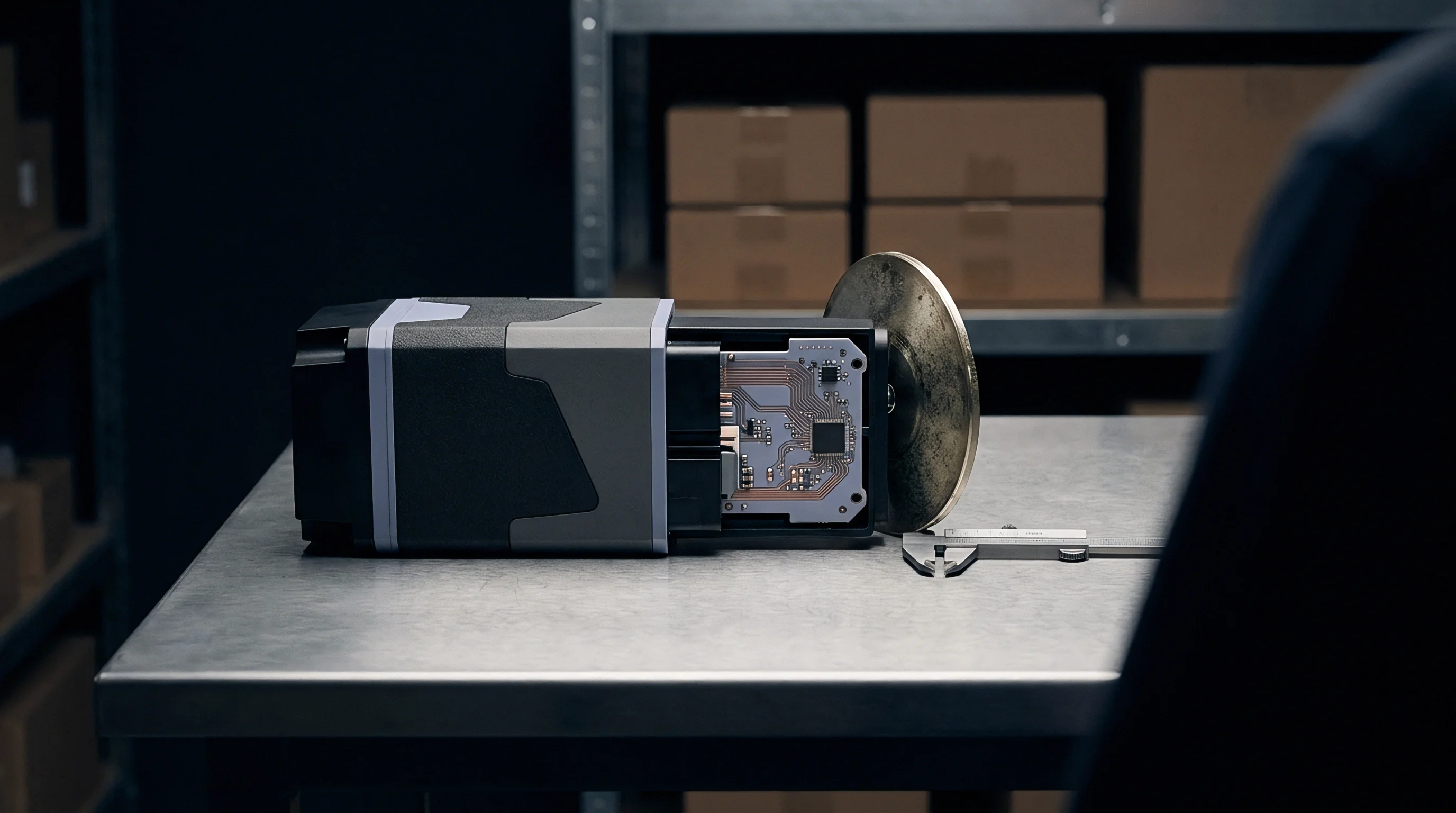
Customs examination officers open physical cartons within bonded container freight stations to inspect hardware enclosures firsthand. The physical examination evaluates visible marking durability, typography, component placement, and board topography against accredited laboratory filings.

Physical Inspection Routines on Staged Pallets
Terminal officers use stratified random sampling to extract five units from separate master cartons, working through established structural verification gates.
- Officers select master cartons across distinct pallet levels using statistical random sampling to isolate suspect production batches.
- Customs technicians scan external enclosure identifiers with optical readers to match regulatory registration strings against commercial invoice packing lists.
- Technicians strip internal shielding to inspect the surface of embedded modular radio assemblies against photographic archives stored in regulatory equipment authorization dossiers.
- Field engineers record antenna part numbers, trace geometry, and connector configurations to confirm adherence to original laboratory test filings.
A failure at any single verification gate terminates the inspection sequence. Once a physical variance is logged into the port inspection system, the clearing agent receives a formal notification detailing the non-conformity.
Verification of Integral and External Antennas
Inspectors dismantle plastic housings to access internal printed circuit boards, focusing directly on the RF pathway between the transceiver output pin and the antenna radiating element. When a grant specifies an integrated microstrip trace antenna, the physical geometry of the copper trace must replicate the dimensions documented in the test report exhibits.
Customs agents compare external label typography directly against high-resolution photographs submitted in original test filings.
A trace widened by 0.2 millimeters alters characteristic line impedance, potentially generating spurious harmonics that violate emissions standards. In one published calibration baseline from a designated national testing facility, a trace width expansion of 0.15 millimeters on FR-4 substrate reduced antenna return loss from -18 dB to -7 dB, elevating second-harmonic radiated emissions past FCC Part 15.209 limits. That finding rests on four-layer 1.6 mm board runs evaluated under standard chamber conditions at 20 degrees Celsius; alternative substrates with higher dielectric tolerances might absorb that deviation without exceeding radiated limits.
If an imported device features an external reverse-polarity SMA connector where the grant specified a permanent internal IPEX connection, inspectors halt clearance immediately. Mechanical alterations invalidate the original test report and render the equipment unauthorized for commercial distribution.
The operational mechanics of international supply chains mirror maritime vessel charters, where slight documentary discrepancies between shipping manifests and dangerous cargo manifests prompt harbor masters to cancel dockage rights. A standard purchase order warranty clause assigning regulatory demurrage liabilities directly to the vendor shifts all terminal detention charges back to the seller.

Remedy
Consignees confronted with redelivery demands face immediate administrative choices. Importers possess thirty calendar days from notice issuance to present corrected documentation, execute physical alterations, or export the cargo.

Permissive Changes against Import Deadlines
Telecommunication certification bodies handle technical amendments through formal engineering filings. When hardware changes alter electrical performance without exceeding regulatory thresholds, a Class II Permissive Change provides legal relief. A Class II filing requires comprehensive re-testing at an accredited ISO/IEC 17025 laboratory, where technicians evaluate spurious radiated emissions and band-edge compliance on three production samples.
Laboratory turnaround times present severe logistical hurdles. An expedited three-day chamber test slot costs between 4,500 and 7,500 dollars, depending on the frequency spectrum, while certification body review demands an additional five to ten business days. If the thirty-day customs clock expires before the authorization body uploads the approved permissive change to the official database, customs authorities proceed with bond forfeiture actions.

Will Customs Permit In-Bond Product Rework?
Importers request permission to alter non-compliant markings inside designated foreign trade zones or bonded facilities, though approval rests entirely within the discretion of the port director. Manipulating merchandise under customs custody requires a formal application on Customs Form 3499 detailing the exact physical protocol, the specific facility address, and the supervision mechanisms employed.
- Bonded warehouse transfer removes containers from expensive marine terminal docks to preserve capital during multi-week regulatory filings.
- Class II permissive filing resolves component substitutions through technical data submission when antenna gains remain equal to or below originally authorized specifications.
- Physical relabeling under supervision corrects typographical grant numbers or missing host warning strings inside customs-approved facilities.
- Supervised commercial destruction eliminates non-compliant hardware through certified scrap processors when technical clearance proves impossible, relieving bond penalties.
Bonded rework allows companies to apply supplemental adhesive overlays bearing the correct FCC ID, CE conformity marks, or host statements. Customs technicians oversee the relabeling process or require photographic verification of every modified carton, re-inspecting the lot before granting formal commercial release. Whether international customs authorities will accept real-time cryptographic firmware verification in place of physical module relabeling remains an open industry dilemma.

Demurrage
Ocean carriers and terminal operators tally storage costs from the exact minute free time expires. Standard container dwell agreements grant five business days of terminal storage before demurrage activates. Once an administrative customs hold attaches to a bill of lading, container movement freezes entirely while terminal charges accumulate.
Landed Cost Escalation during Custody Holds
Terminal detention tariffs compound daily, creating severe cash flow drains on delayed inventory. Tiered marine terminal tariffs escalate exponentially to discourage long-term storage on active port aprons. A carrier detention assessment compounds terminal demurrage, producing a double cost tier that threatens product gross margins.
Terminal storage fees accumulate faster than re-testing costs, making bonded warehouse transfer preferable to terminal dispute resolution.
Consider a typical commercial shipment containing 5,000 wireless IoT gateway units packed across two forty-foot containers, carrying an entered customs value of 450,000 dollars. If external labels omit the mandatory modular containment statement, the port director freezes release. The dispute consumes 26 calendar days: 14 days to obtain authorization for bonded cartage, 7 days to transfer cargo into a bonded warehouse and complete supervised relabeling, and 5 days for final administrative sign-off.
Under standard terminal demurrage schedules, days six through ten accrue at 220 dollars per container daily. Days eleven through fifteen jump to 380 dollars daily, while days sixteen through twenty-six assess at 510 dollars per container daily. Across two containers, cumulative terminal storage totals 17,200 dollars.
Added carrier detention charges add 8,840 dollars. Bonded warehouse transfer drayage, segregation labor, and relabeling fees contribute another 7,650 dollars. Total administrative remediation costs reach 33,690 dollars, inflating unit landed cost by 6.74 dollars per gateway and entirely erasing commercial operating margins.
Bond Liabilities and Re-Export Penalties
Customs surety companies hold importers financially accountable for unfulfilled redelivery notices. Basic import bonds guarantee compliance with customs regulations. When an importer fails to redeliver non-compliant merchandise to customs custody within the specified window, the port director issues a demand for liquidated damages assessing at three times entered value.
| Cost Component | Direct Port Clear (Baseline) | Moderate Hold (14 Days) | Severe Hold (30 Days) | Supervised Rework Escalation |
|---|---|---|---|---|
| Terminal Demurrage (2 Containers) | $0.00 | $5,200.00 | $21,400.00 | $8,200.00 (Early Bonded Pull) |
| Carrier Equipment Detention | $0.00 | $2,640.00 | $10,200.00 | $3,800.00 |
| Bonded Drayage and Cartage | $0.00 | $0.00 | $1,850.00 | $2,450.00 |
| Supervised Relabeling Labor | $0.00 | $0.00 | $0.00 | $5,200.00 |
| Customs Broker Administrative Fees | $450.00 | $1,250.00 | $3,100.00 | $2,800.00 |
| Total Direct Surcharge | $450.00 | $9,090.00 | $36,550.00 | $22,450.00 |
| Values reflect prevailing 2024 demurrage structures across Tier-1 United States container ports for two forty-foot marine containers carrying 450,000 dollars in declared hardware value. | ||||
Field data from regional customs brokers indicates that approximately 12 percent of imported wireless entries encounter documentation delays, though tracking the exact proportion that escalates into formal redelivery demands remains statistically elusive due to private broker-client settlements. Importers manage this uncertainty by securing continuous customs bonds calibrated to double their projected annual duty liabilities rather than relying on minimum statutory floors. Moving stalled freight into private bonded custody preserves working capital while regulatory disputes grind through agency dockets.