Meaning
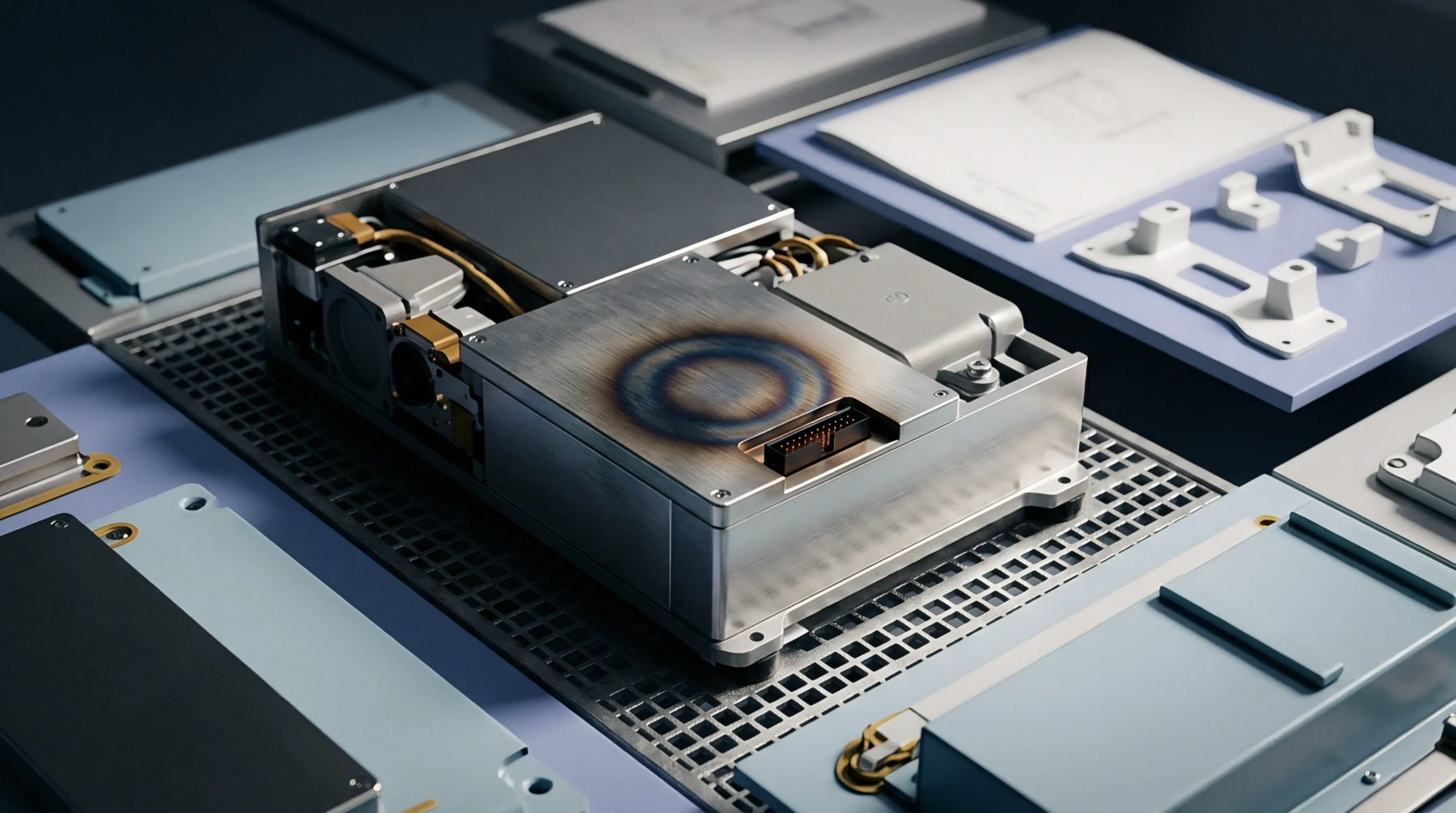
Industrial mechanisation systems execute repeated physical joining and component placement operations according to deterministic software logic without real-time manual intervention. Modern high-volume electronic manufacturing lines rely on assembly automation to mount printed circuit board assemblies into final mechanical housings, connect internal radio-frequency cabling, and dispense conductive gaskets within positional tolerances below fifty micrometres. The scope of this qualification boundary covers the handling machinery, programmable screw-driving spindles, vision-guided robotics, and inline verification fixtures, but excludes upstream surface-mount component fabrication.
Operations cease when the enclosure fasteners are torqued, optical alignment checks confirm connector seating, and the integrated unit is transferred to electrical validation stations.
Kinematic Constraint
Multi-axis robotic end-effectors require rigid fixtures to prevent mechanical stress from transferring into internal printed circuits during component mating. High-speed pick-and-place arms position daughterboards and miniature coaxial leads using pneumatic vacuum grips coupled to closed-loop optical feedback. If mechanical runout exceeds connector insertion limits, gold-plated contacts peel or crack the surrounding solder joints.
Assembly automation prevents this failure mode by executing sub-millimetre compliance routines that monitor insertion forces along the insertion axis. Controlled linear actuators decelerate immediately upon sensing abnormal resistance.
Fastening Protocol
Enclosure closure demands multi-stage motor torque profiles to compress elastomeric environmental seals uniformly across perimeter screw bosses. Standard single-stage driver routines induce uneven compression, bending thin aluminium baseplates and generating gaps that compromise electromagnetic shielding. Programmable drivers resolve this by advancing screws to a seated threshold, pausing to permit gasket settling, and executing a final angular rotation to reach design clamping load.
This controlled cycling eliminates strip-out risks in tapped die-cast alloys and guarantees uniform radio-frequency contact resistance across mating metal flanges.
Yield Verification
Automated end-of-line manufacturing execution systems log insertion force displacement curves and screw angle signatures for each serialised device. Statistical process control monitors these recorded assembly automation profiles to identify tooling wear before out-of-spec products reach radio-frequency test chambers. An unexpected shift in the peak torque angle relationship signals plastic boss deformation, particulate contamination within threaded holes, or misplaced internal wire harnesses.
The mechanical assembly process verifies housing integrity before high-frequency test benches energise radio circuitry.