Contractual Exclusivity Enforcement and Microcode Rights in Shared Semiconductor Assembly Programs
Lock microcode execution to foundry-burned silicon IDs via authenticated key tokens and own all tooling NRE to stop shared assembly lines leaking IP.


Partition
Clean demarcation between buyer property and subcontractor infrastructure decides whether a shared semiconductor assembly program functions as an outsourcing asset or forfeits the product architecture. Contract manufacturing facilities running System-in-Package assemblies and multi-die connectivity modules routinely aggregate high-density surface-mount, wire-bonding, and flip-chip lines across direct market competitors. Exclusivity covenants written into supply agreements fall flat on factory floors when assembly houses pool physical carriers, gang test fixtures, and shared flash-programming machines during production runs.
Hardware lines simply assemble whatever bitstreams feed their gang-programmer banks.
Microcode rights establish the boundary condition for manufacturing autonomy. When a design house supplies bare-die silicon or packaged microcontrollers into an outsourced assembly line, the firmware executing hardware bring-up and radio calibration divides into static boot ROM, physical layer calibration microcode, vendor hardware abstraction libraries, and user application space. Turnkey assembly suppliers routinely seek blanket binary distribution rights under the guise of yield optimization and automated line test, merging proprietary register settings with factory test harnesses.
The buyer who signs a standard assembly quotation without separating factory test microcode from functional device firmware surrenders legal leverage over off-shift line utilization.
Under Section 8.3 of standard JEDEC commercial manufacturing frameworks, non-exclusive assembly engagement lines retain ownership of unified test routines unless explicit exclusions govern binary deposition.
Shared assembly lines create physical leakage paths that non-disclosure agreements cannot seal. Program segregation depends upon three separable engineering layers across line operations: wafer and die inventory isolation, binary encapsulation during gang programming, and parametric test isolation. Assembly margins dictate subcontracting paths.
When assembly programs utilize external packaging contractors for quad flat no-lead or ball grid array encapsulation, suppliers attempt to streamline bills of materials by standardizing passive decoupling arrays, substrate metallization layers, and internal wire-bond profiles across competing customer designs.
| Integration Level | Assembly Scope | Microcode Delivery Format | Exclusivity Enforcement Mechanism | Secondary Source Transfer Penalty |
|---|---|---|---|---|
| Turnkey Standard | Substrate design, component placement, packaging, automated test | Monolithic pre-compiled binary blob flashed by subcontractor | None; supplier retains binary build recipes and line yield offsets | Total redesign of substrate layout and firmware adaptation |
| Semi-Custom | Substrate layout to customer schematic, surface-mount assembly, RF shielding | Split image: factory bootloader separated from customer application code | Contractual territorial restriction backed by lot-code serial tracking | Nine to twelve months for qualification of replacement packaging facility |
| Directed Subcontract | Assembly strictly against customer-supplied GDSII, bill of materials, and pick-and-place maps | Encrypted target-side execution using customer private keys burned into one-time-programmable silicon | Physical hardware security modules integrated into factory programming rigs | Tooling recreation cost alongside third-party wafer probe re-certification |
| White-Label Carrier | Customer die co-packaged inside vendor multi-chip module carrier | Vendor driver blob integrated beneath customer application payload | Volume-commitment milestone clauses with automated release triggers | Loss of carrier substrate tooling and custom leadframe stamping masks |
Engineering scope definitions require exact partition lines within statements of work. When suppliers bundle automated optical inspection scripts, in-circuit test boundary-scan vectors, and radio frequency trimming routines into assembly line setup charges, they claim shared ownership over calibration profiles. That shared ownership allows an assembly partner to reuse optimized register write sequences across competing accounts manufacturing on adjacent surface-mount lines.
Protection demands that all register configuration tables, trimming coefficients, and initialization microcode remain categorized as customer foreground work product, regardless of whether line operators contributed calibration adjustments to pass regulatory emission thresholds.
- Monolithic packaging scripts fuse customer radio performance calibration with foundry substrate tolerances, exposing internal RF matching network adaptations to competing line runs.
- Integrated test fixtures run concurrent multi-board gang programmers that store plain-text binaries on local server caches accessible across internal factory networks.
- Generic leadframe configurations encourage shared procurement across accounts, allowing factories to substitute alternate molding compounds without customer design engineering change authorization.
- Shared automated handling trays introduce electrostatic discharge variability when operators swap trays between unrelated product runs on identical packaging lines.
Assembly line operators prioritize machine uptime across multi-tenant production shifts. That commercial baseline means an assembly subcontractor treats unencumbered microcode as production-line lubricant, modifying register configurations to keep package yields above scrap-penalty thresholds.


Fuse
Hardware security architectures provide physical enforcement when legal paper fails across international jurisdictions. Assembly partners operating in shared fabrication regions routinely run extra unauthorized night-shift lots using customer-paid packaging tooling, selling overrun components into grey distribution channels. Microcode governance therefore requires hardware-enforced cryptographic boundaries burned into the silicon die before bare wafers ever touch third-party assembly dicing saws.

Where Does Exclusivity Evaporate during SMT Runs?
Surface-mount assembly lines execute high-speed component placement using common automated feeders, bulk solder reflow ovens, and automated test heads. Exclusivity breaches occur during the post-reflow electrical bring-up phase. If an assembly partner holds unencrypted microcode images to perform in-line testing, line technicians load that image onto unauthorized board lots assembled from secondary component markets, leaving discrepancies visible only when foundry logs are matched against finished batch counts.
Preventing unauthorized binary execution requires silicon-level hardware root of trust architectures. Modern radio frequency microcontrollers and application-specific integrated circuits incorporate one-time programmable electrical fuses. Blowing these internal e-fuses permanently sets hardware configuration registers, switches off Joint Test Action Group debug ports, and writes cryptographic public key hashes into internal read-only memories.
When the assembly line operates under a strict microcode partition, the wafer foundry blows primary key hashes during wafer sort testing before wafer delivery to the packaging house. The assembly house receives silicon that only accepts images signed by the customer private key.
Every unsigned microcode blob delivered to an offshore programming station converts an engineering budget into free line tooling for subsequent factory customers.
Hardware-enforced serialization isolates shared assembly runs by matching physical die identification with cryptographic signatures. The wafer fab generates a unique 64-bit electronic die identifier within the one-time-programmable array on every silicon die. During board-level automated testing, the programming station must query the die identifier, transmit the identifier through an authenticated tunnel to a customer-controlled licensing server, and receive an encrypted, single-die authorization token.
Without this token, the bootloader locks execution registers, halts clock generation to the radio transceiver, and holds the processor core in permanent reset while masking the underlying registers.
- Wafer-level key injection burns asymmetric root keys during automated probe testing, preventing assembly subcontractors from modifying the boot verification sequence.
- Cryptographic debug disablement severs physical JTAG and serial-wire connections through laser-fuse ablation or internal e-fuse transitions, eliminating post-packaging bus taps.
- Encrypted bootloader execution forces the central processing unit to decrypt application microcode inside internal static RAM blocks without exposing external memory lines.
- Dynamic token handshakes demand single-device authorization calls from factory test benches to buyer key servers, throttling assembly volume to approved purchase order limits.
Microcode rights remain unenforceable when an assembly vendor controls the cryptographic signing infrastructure. Subcontractors often argue that maintaining remote network access to a customer key server creates line latency, degrades automated test head utilization, and risks manufacturing line standstills during network dropouts.

Registry
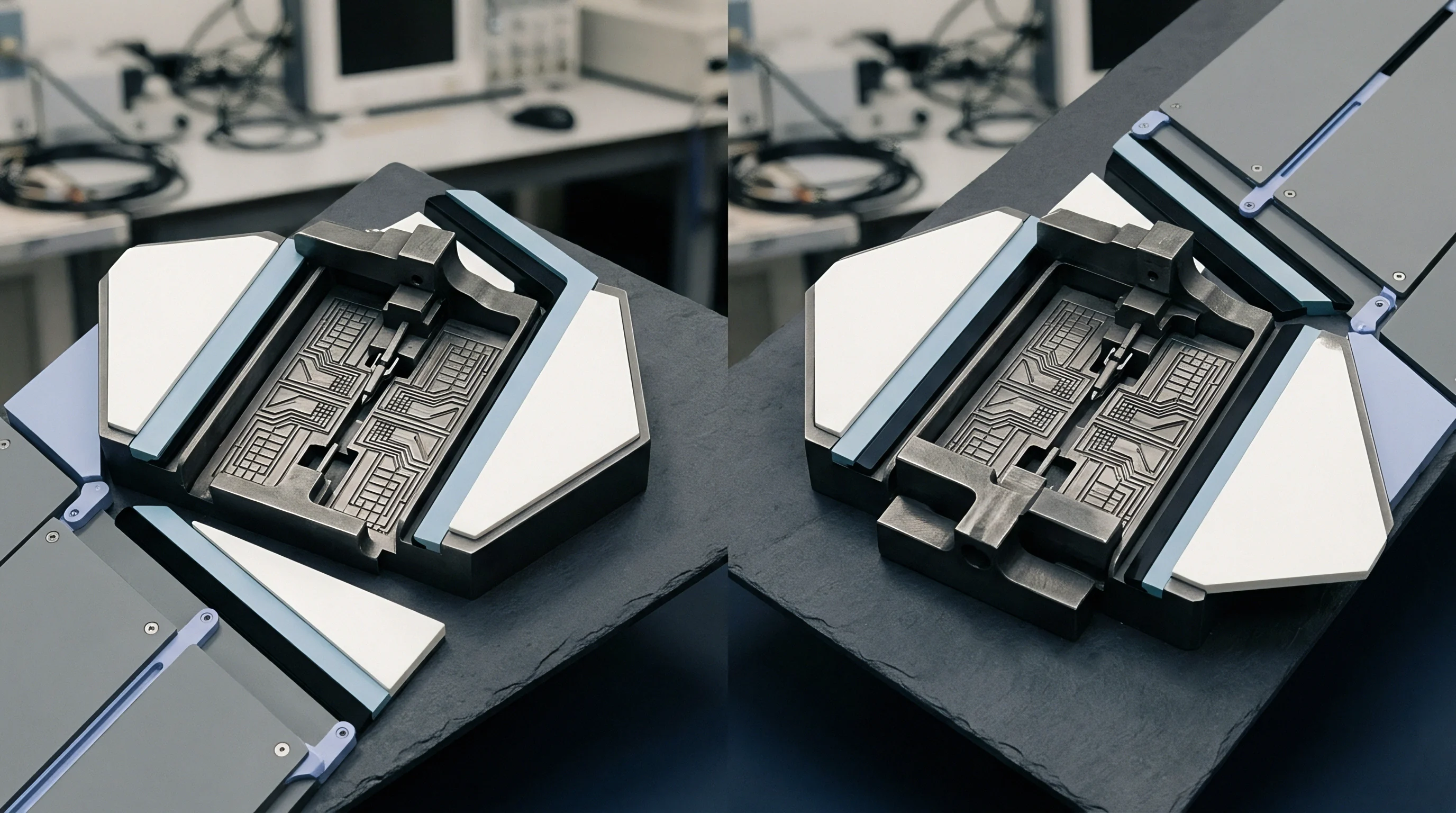
Verification of assembly limits requires an immutable, verifiable ledger of silicon consumption, microcode binary revisions, and automated test logging. Software escrow mechanisms protect the buyer against sudden manufacturing house insolvency, yet traditional source-code escrow fails to address operational continuity in microcode-dependent assembly programs. An escrow repository that holds uncompiled C-code without the exact target build environment, specific compiler toolchains, linker scripts, and board bring-up scripts is practically useless during line transfers.

Whose Build Environment Survives Line Shutdown?
Transferring an active semiconductor assembly program between competing packaging facilities exposes technical debt within microcode documentation. Assembly houses maintain custom production branches of microcontroller initialization code, incorporating register adjustments designed to compensate for board-level parasitics, power trace impedances, and automated handling speeds. If these register adjustments stay buried within factory-floor test benches, a secondary assembly contractor will fail to produce passing yields, despite receiving the complete hardware design transfer package.
The contract must mandate escrow deposits that include containerized build images alongside bit-exact compilation pipelines. Every production build deposited into escrow contains the compiler version, linker maps, memory allocation definitions, cryptographic build manifests, and the automated programming harness configuration scripts. Verification audits must compile the deposited source files, generate binary outputs, and execute byte-by-byte comparison against running factory images pulled directly from random production-line units.
A complete manufacturing transfer package contains every script, board calibration profile, and toolchain dependency necessary to compile identical binary targets without supplier intervention.
- The buyer issues a formal audit notice demanding immediate extraction of golden production binaries directly from three randomly selected gang-programmer sockets on the active production line.
- The escrow agent receives the exact containerized build environment from the supplier, including all proprietary hardware abstraction layer source libraries and register map files.
- The independent verification auditor executes the compilation script within an air-gapped test chamber, outputting the production binary image without network connectivity.
- Binary analysis software computes cryptographic SHA-256 checksums across the compiled output and compares the resulting hash against the extracted factory-floor binary.
- The auditor confirms functional parity by flashing the compiled binary to ten golden board assemblies and running radio frequency vector signal analyzer tests across the entire frequency band.
Failure to match binary hashes reveals unauthorized factory-floor modifications or undeclared software dependencies. If the factory binary diverges from the escrowed source, the assembly house has modified machine code without customer engineering change orders, breaking part-change notification covenants and compromising qualification pedigrees across regulatory filings.
Remedy
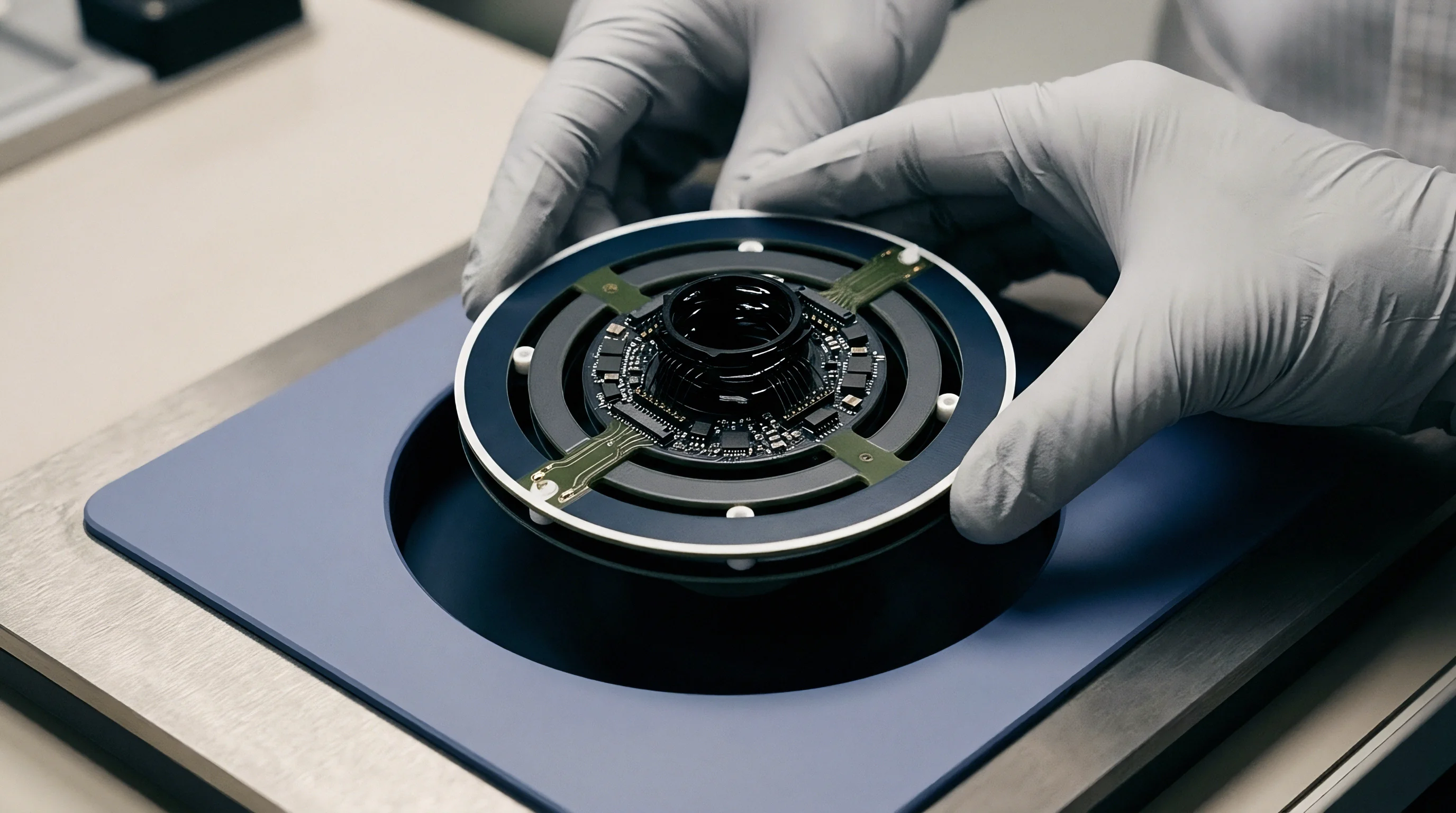
Proving an exclusivity breach or unauthorized microcode reuse across shared assembly lines presents complex technical hurdles. Subcontractors conceal unapproved production overruns by stripping customer silkscreen markings, flashing alternative vendor application code over proprietary hardware-abstraction layers, and shipping devices directly through secondary packaging channels. Sourcing agreements must establish distinct evidentiary standards, automatic audit rights, and tiered liquidated damages structures tied to component serialization and register map duplication.
Contract language must decouple the legal standard of proof from trade-secret misappropriation statutes, which impose grueling discovery burdens on the injured buyer. Modern manufacturing agreements replace common-law damage proofs with contractual liquidated damage formulas linked directly to component identification and production line capacity. If customer proprietary initialization sequences, RF calibration tables, or cryptographic authorization sequences appear on devices outside verified purchase order batches, the supplier incurs predefined financial damages per detected unit, alongside immediate forfeiture of buyer-funded tooling, test jigs, and leadframe stamping dies.
| Breach Classification | Technical Detection Vector | Evidentiary Standard | Liquidated Damages Base | Equitable Tooling Remedies |
|---|---|---|---|---|
| Unauthorized Overrun Production | Silicon electronic die identifier mismatch against authenticated cloud token records | Automated testing logs showing active clock generation without server authorization call | Five times component target sale price per unauthorized unit produced | Immediate transfer of physical stamping dies and automated placement feeders to buyer custody |
| Microcode Abstraction Reuse | Byte-pattern matching of proprietary register initialization maps on competing customer boards | Decompiled binary images exhibiting identical clock tree initialization and RF trimming routines | Three times non-recurring engineering investment for initial microcode development | Revocation of all vendor integration licenses and immediate cancellation of ongoing assembly runs |
| Shared Tooling Cross-Contamination | Leadframe geometric inspection revealing customer-specific thermal pad dimensions on alternate SKUs | Coordinate measuring machine scans matching stamping die cutouts down to five-micron tolerances | Full refund of initial tooling amortization costs across all preceding lots | Subcontractor replacement of worn die cavities at zero expense to buyer |
| Off-Shift Line Operation | Power consumption profiles and optical inspection time-stamps on unassigned line stations | Independent factory power monitoring records demonstrating off-schedule machine operation | Fifty thousand dollars flat penalty per unassigned shift shift-hour recorded | Unrestricted unilateral termination of supply contract without inventory takeback obligations |
Physical tooling retention clauses grant immediate injunctive relief without protracted court intervention. When contracts permit assembly partners to co-fund packaging molds or test fixtures, suppliers leverage partial ownership to refuse physical asset release during contractual disputes. Sourcing desks counter this trap by funding one hundred percent of specialized tooling through explicit non-recurring engineering line items, securing complete title ownership under Uniform Commercial Code Article 2 filings or international equivalents.
The contract dictates that upon any verified exclusivity breach or unauthorized microcode execution, the buyer takes immediate physical custody of all substrate masks, wire-bond coordinate files, automated optical inspection recipes, and specialized test fixtures, using line audits to uncover unallocated component reels. Liquidated damages clauses must mandate that the supplier pays all freight, packaging, and re-installation costs incurred while transporting tooling assets to a certified secondary manufacturing site.
Section 14.4 dictates that discovery of non-registered electronic die identifiers executing customer binary sequences entitles the buyer to immediate, unannounced physical retrieval of all program tooling assets within forty-eight hours of written notice.
Executing sudden tooling extractions leaves suppliers with cold production lines and dead component inventory. Contractual structures must enforce this consequence unambiguously to make exclusivity compliance cheaper than line-cheating profits.

Severance
Terminating a compromised assembly engagement requires an operational extraction protocol executed alongside legal notice. Suppliers facing cancellation routinely hold work-in-progress inventory hostage, withhold final board bring-up calibration scripts, or brick existing product runs by corrupting programmable logic configurations. A methodical severance framework isolates production assets before the supplier recognizes the commercial termination.
The severance procedure begins by cutting network access to external key authorization servers. When the cloud licensing bridge shuts down, active assembly lines running unauthenticated components halt immediately at the board-test phase, preventing further grey-market accumulation. The buyer simultaneously exercises immediate off-site inventory audits across packaging substrate warehouses, wire-bonding stations, and finished goods lockers.
Independent inspectors verify that all unfinished lots, unpackaged wafer inventory, and bare-die trays are accounted for against recorded wafer probe counts.
Secondary source bring-up depends entirely upon the completeness of the design transfer package extracted during severance. Sourcing teams cannot assume an incoming assembly partner can reconstruct missing manufacturing tolerances from Gerber files and bills of materials alone. Production files must include IPC-2581 or ODB++ digital product descriptions, complete coordinate placement files, automated optical inspection pass-fail threshold tables, solder stencil thickness profiles, and vector network analyzer RF trace characterization logs.
If the outgoing assembly partner withheld microcode build scripts, the incoming facility spends quarters reverse-engineering board parasitics to meet regulatory carrier emissions limits.
Whether the incoming secondary packaging house accepts bare dies without factory calibration tables hinges on whether the engineering team secured raw wafer test datasets alongside board-level trimming routines before serving termination notices. Transferring semiconductor assembly programs between competing factories remains a high-stakes trade execution where procedural rigor and silicon-level microcode control determine survival.