Meaning
Optical phase distortion arises when different spectral components of an ultrashort light pulse reflect from layered thin-film coatings at different depths. Dielectric mirror dispersion describes this variation in phase delay as a function of optical frequency. In ultrafast laser cavities, this behavior determines the stability and pulse duration of the output beam.
Spectral Phase
Phase variations are mathematically described by expanding the spectral phase in a Taylor series. The second derivative of this expansion represents group delay dispersion, while the third derivative governs third-order dispersion. These higher-order terms must be controlled during mirror manufacturing to prevent temporal broadening.
Coating Architecture
Thin-film structures use alternating layers of high and low refractive index materials to achieve high reflectivity. By varying the individual layer thicknesses, engineers design chirped mirrors that compensate for dielectric mirror dispersion. This geometric design creates a wavelength-dependent penetration depth.
Pulse Distortion
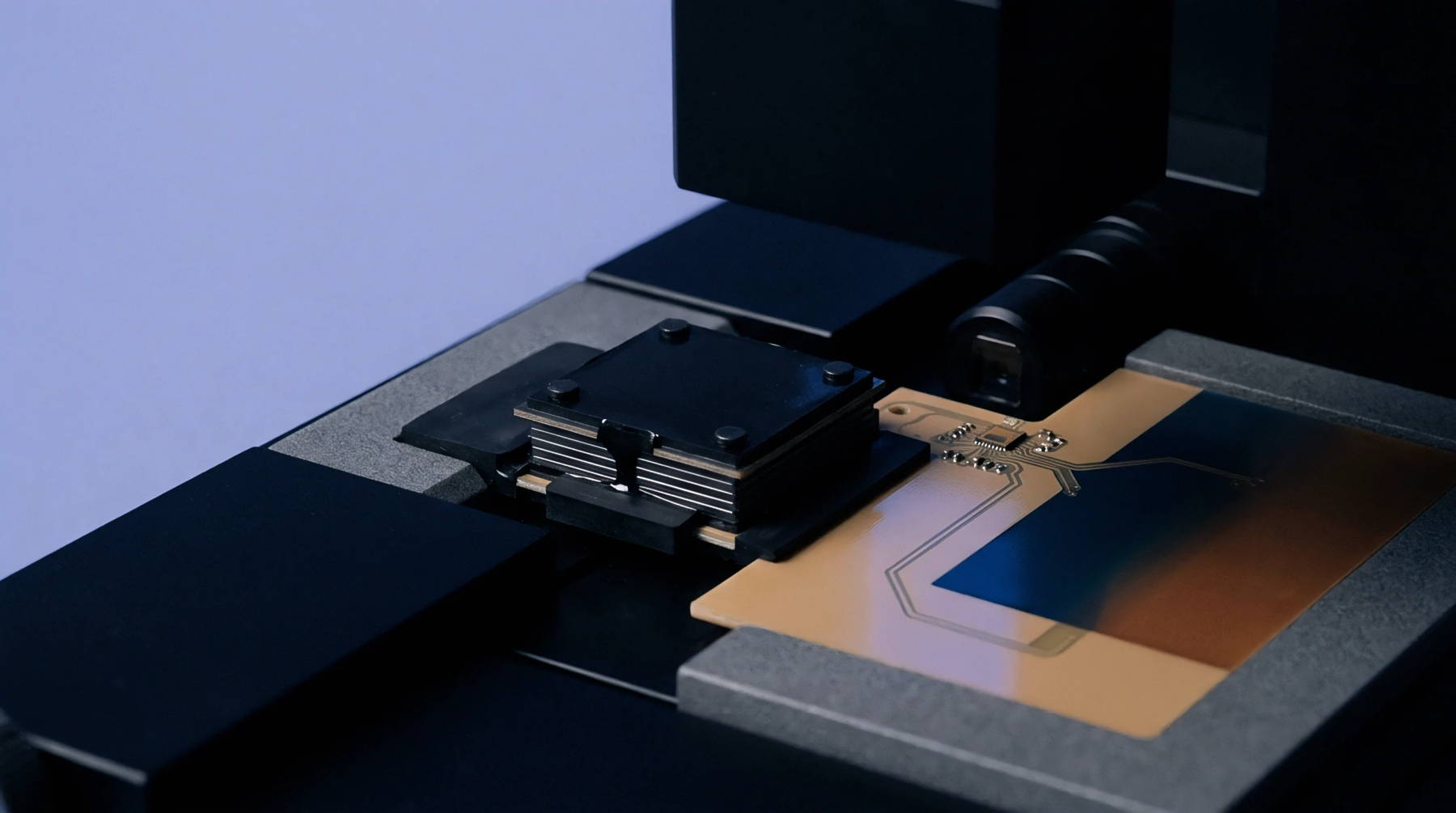
Uncompensated phase delays lead to temporal stretching of sub-picosecond pulses. In high-power laser systems, such distortions reduce the peak power and lower the efficiency of non-linear processes like frequency doubling. Precise measurements of the group delay are typically performed using white-light interferometry before the mirrors are installed in the laser cavity.
These measurements verify that the mirror maintains the required phase response across the entire gain bandwidth.