Meaning
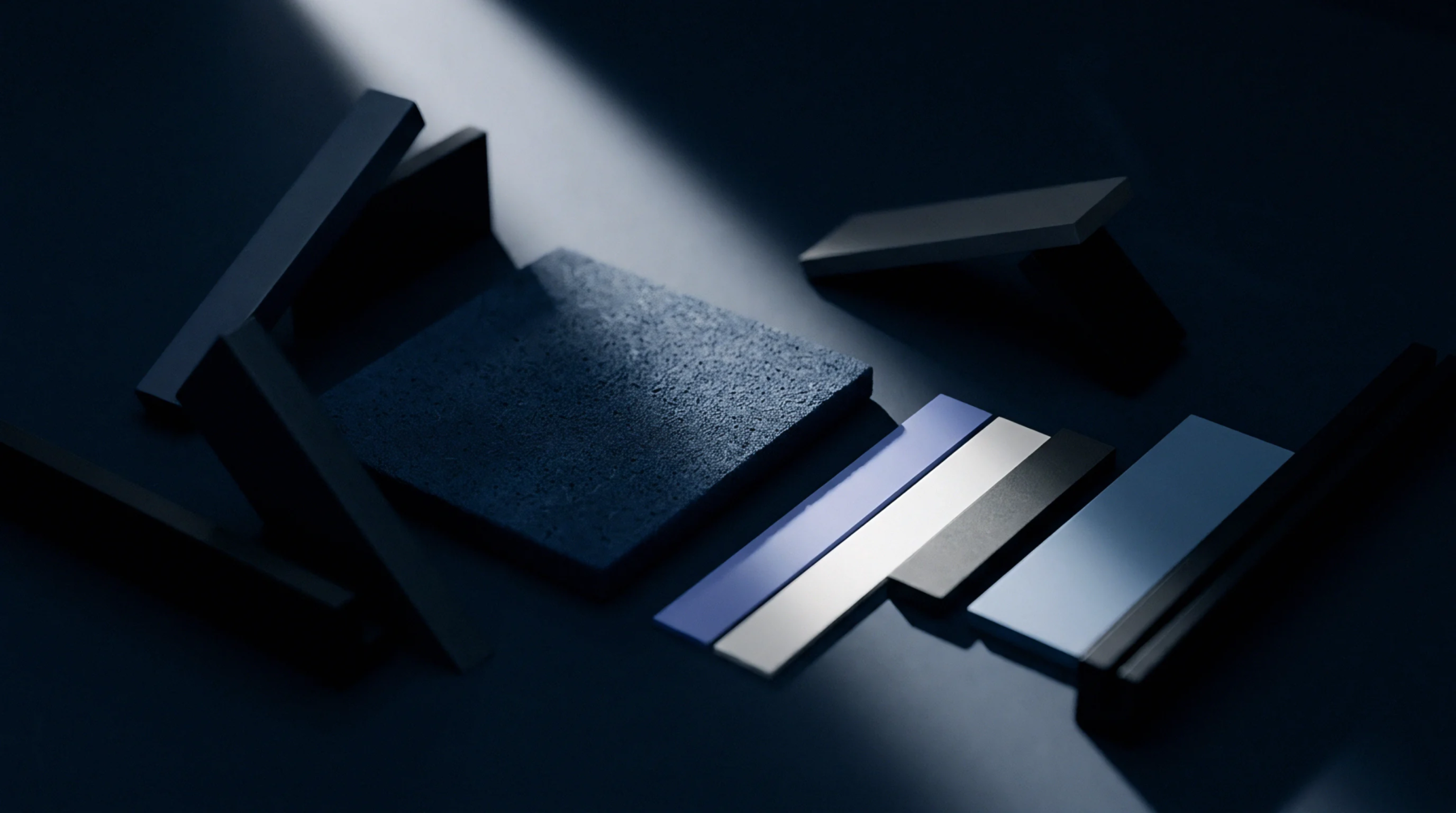
Sintered ceramic tiles are mounted on the interior surfaces of shielded rooms to prevent radio frequency reflections. A ferrite tile absorber converts electromagnetic energy into heat through magnetic hysteresis losses, primarily at lower frequencies where foam absorbers are less effective. This material is essential for creating high-performance anechoic chambers with limited space.
Magnetic Mechanism
High magnetic permeability is provided by the material composition within a thin physical profile. When a wave strikes a ferrite tile absorber, the high magnetic loss of the iron oxide compound attenuates the reflected wave. This attenuation occurs over a broad frequency range, typically from thirty megahertz to one gigahertz.
Chamber Optimization
Engineers combine different absorber types to cover the entire test spectrum. In many chambers, a ferrite tile absorber is used as the base layer, and dielectric foam pyramids are mounted on top of them to handle higher frequencies. This hybrid approach provides excellent absorption across a very wide frequency band without requiring excessively deep wall treatments.
The resulting space savings allow for a larger usable volume inside the test chamber.
Physical Integrity
Mechanical mounting must support the substantial weight of the ceramic blocks. Because a ferrite tile absorber is heavy and brittle, it is typically secured to the metal walls of the chamber using high-strength adhesives and mechanical rails. This secure mounting prevents panels from falling or breaking during thermal cycling.