Meaning
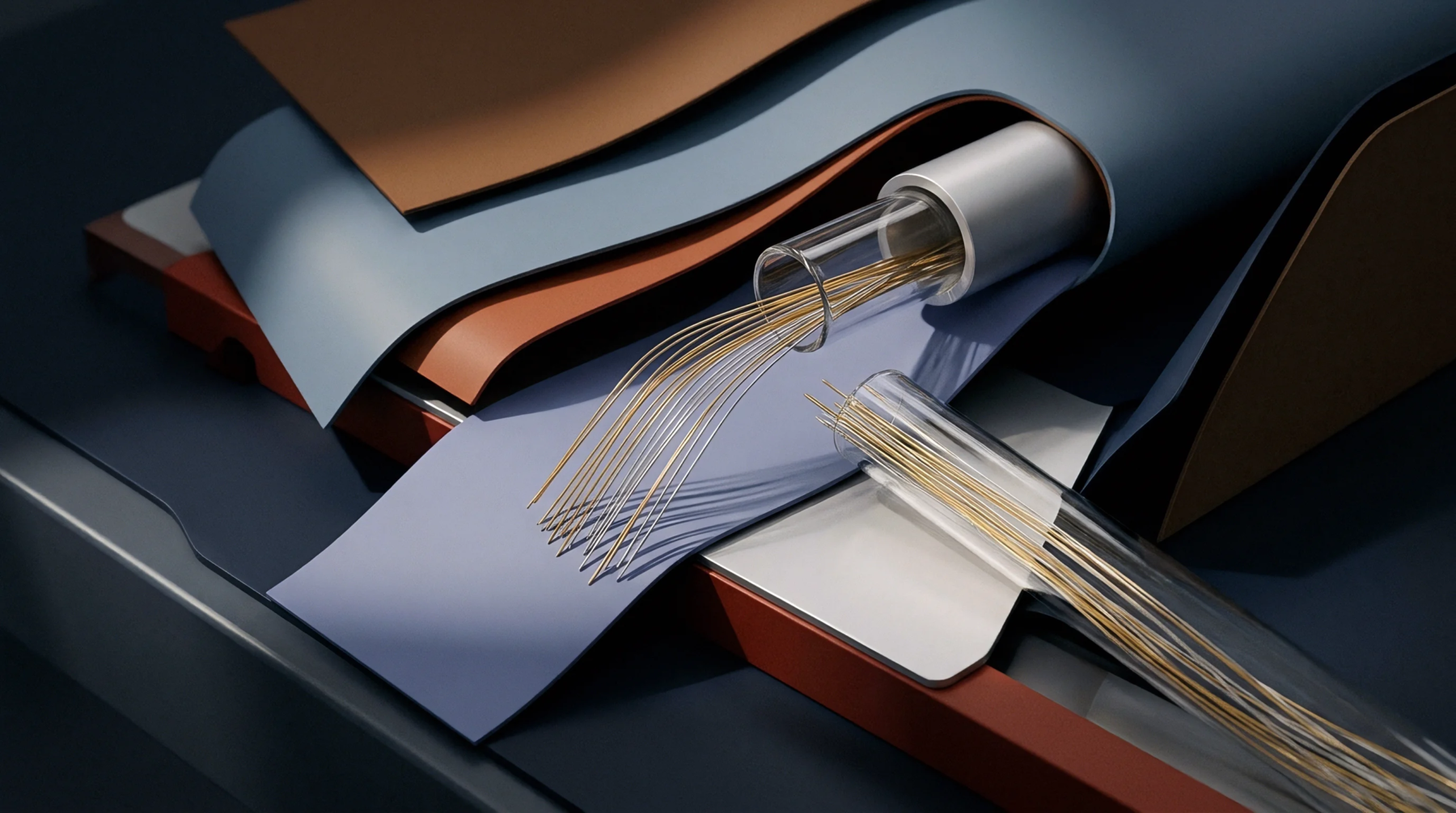
Electromagnetic signal distortion occurs in high-speed printed circuit boards due to the structural heterogeneity of the underlying laminate material. This phenomenon, known as the glass weave effect, arises because the glass bundles and the epoxy resin that make up the substrate have different dielectric constants. Signals traveling over traces that run directly above a glass bundle experience different propagation speeds compared to those running over the resin-rich gaps, causing localized impedance variations and timing issues.
Signal Distortion
Differential skew happens when the two traces of a high-speed differential pair experience different dielectric environments. The glass weave effect causes one signal to arrive slightly ahead of the other, destroying the phase alignment needed for clean receiver reconstruction. This timing discrepancy increases jitter and degrades the eye diagram at multi-gigabit data rates.
Substrate Geometry
Laminate manufacturers use different styles of woven glass, ranging from loose open weaves to tightly spread fabrics. The impact of the glass weave effect is more pronounced in coarse weaves, where the resin-filled gaps are larger and more frequent. Choosing a flat, spread-glass style minimizes the dielectric variations across the board.
Mitigation Strategy
Designers can rotate the circuit board traces relative to the weave direction to distribute the dielectric variations evenly. Routing traces at an angle, such as ten degrees off the weave axis, ensures that both traces of a differential pair cross the glass bundles and resin gaps equally, mitigating the glass weave effect. This layout technique is widely adopted in high-frequency designs where laminate customization is not economically viable.